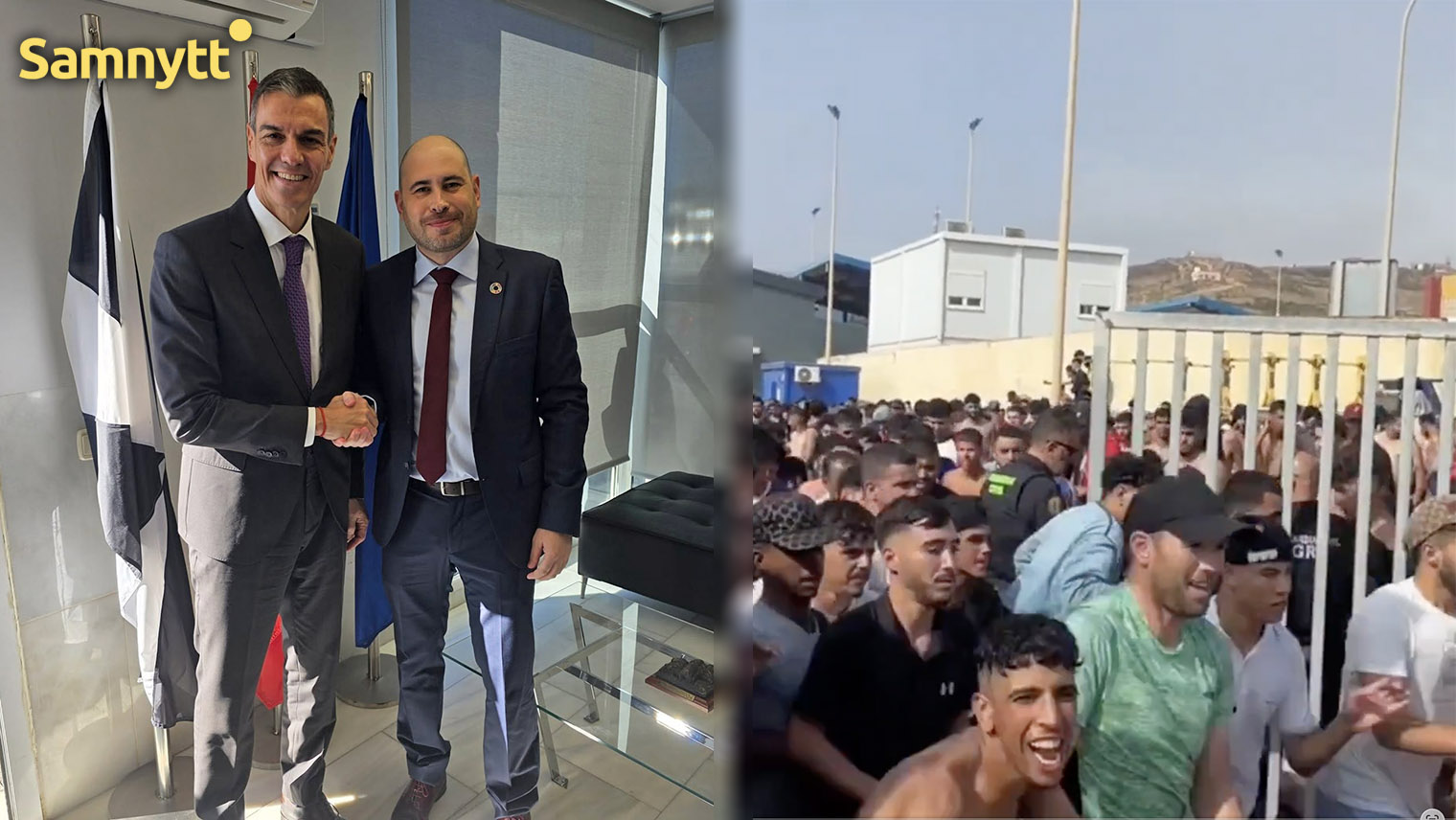
Spain’s socialist government is escalating its conflict with the country’s autonomous regions after the massive illegal migrant influx in Ceuta. The government is now warning that prosecutors may be brought in against regions that refuse to accept the thousands of so-called unaccompanied migrants that Madrid wants to redistribute from the heavily pressured enclave. This declaration comes at the same time as reports circulate of a possible new mass invasion on August 15.
The political battle over the consequences of the historic storming of the Spanish enclave of Ceuta has now entered a new phase. During a press conference on Thursday, the government’s representative in Ceuta, Miguel Ángel Pérez Triano, stated that the ongoing redistribution of unaccompanied migrants to Spain’s autonomous regions is continuing.
At the same time, he delivered sharp criticism of those regions—primarily governed by the Partido Popular (PP) and Vox—that are opposing the acceptance of more migrants. According to Pérez Triano, the matter will ultimately be decided by the prosecutor’s office.
“It will be the prosecutor who decides,” he said when questioned about the regions’ resistance to the government’s reception plan.
Conflict Over Regional Autonomy
This statement has further heightened the conflict between the central government and several regional governments. Although Spain is not a formal federation, its 17 autonomous regions possess far-reaching constitutional self-government, with extensive powers including in healthcare, education, and social services.
Several regions therefore argue that Madrid is now attempting to use the judiciary to force political decisions in areas where regions themselves have significant responsibility and authority. Critics argue that the government’s stance represents a serious intrusion into regional autonomy and risks setting a precedent whereby central authorities use prosecutors to pressure democratically elected regional governments to implement the government’s migration policy.
The government, for its part, points out that unaccompanied minors are covered by special legal protection under Spanish and international law.
Ceuta Still in Crisis Mode
Meanwhile, the situation in Ceuta remains tense after the massive illegal border storming of July 30–31, when an estimated 60,000 people entered the Spanish enclave from Morocco—mainly by swimming around border barriers or climbing over via the pier. According to authorities, most have since returned to Morocco, but the consequences are still substantial.
The government has now opened a special unit to handle reports of missing persons. So far, 32 formal reports have been received from relatives, while DNA work is ongoing to identify those who died during the chaotic border crossing.
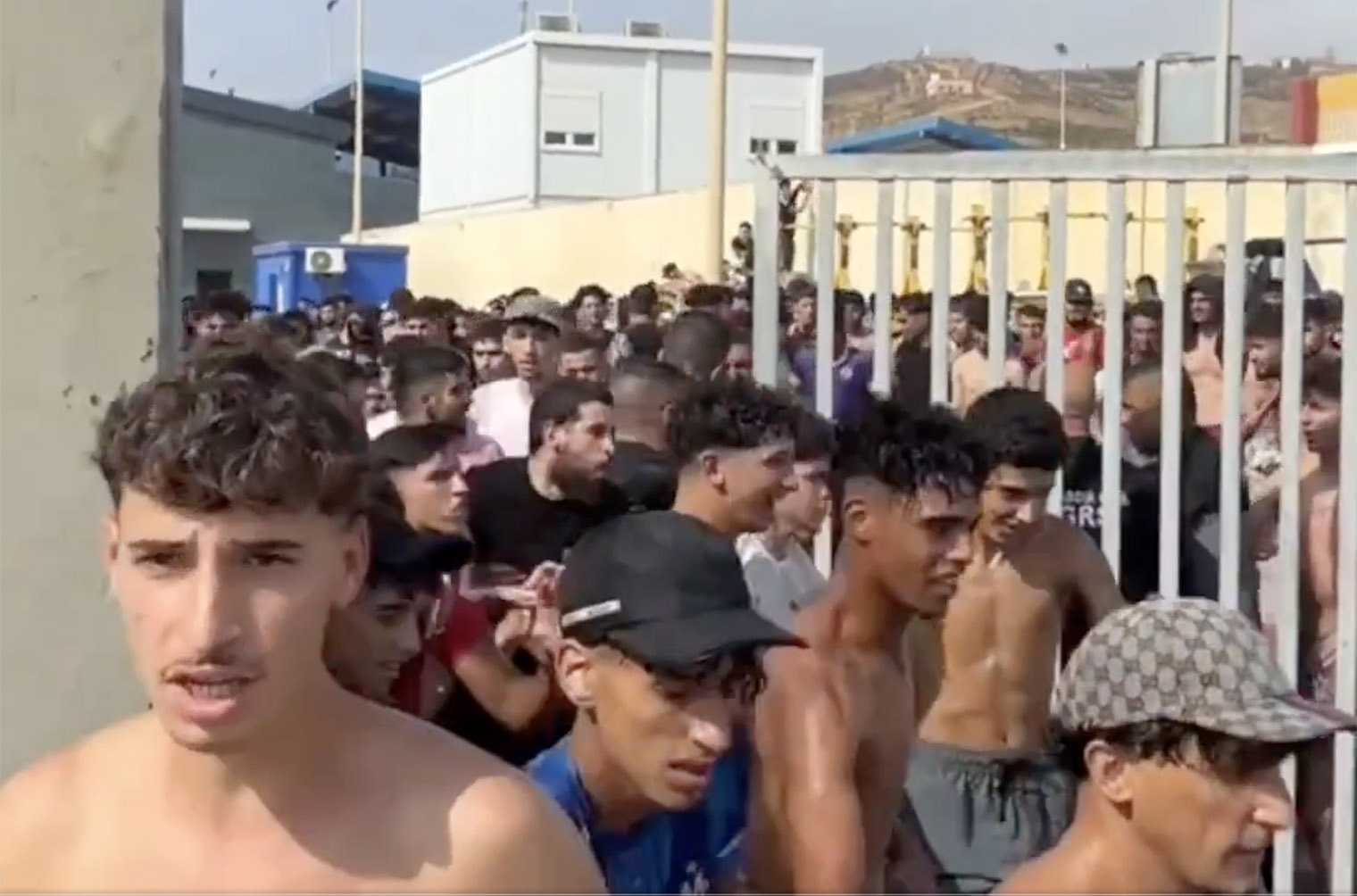
Authorities also admit that resources are severely strained. Families with children are reportedly still sleeping outdoors in Ceuta, and the government describes the situation as the city’s capacity being “overwhelmed” by the large number of migrants.
The Government Wants to Disperse Thousands of Migrants
The main political conflict centers on the thousands of individuals claiming to be minors. Prime Minister Pedro Sánchez’s government wants about 7,000 so-called unaccompanied minors to be placed in reception systems throughout Spain instead of returning to Morocco.
Several regional governments oppose the plan and warn that it risks becoming an additional pull factor by signaling that anyone who manages to reach Spain and claim to be underage is in practice guaranteed permission to stay.
Reports of a New Storming on August 15
At the same time, both Spanish and European authorities are monitoring developments with great concern ahead of August 15. Over the past week, hundreds of posts and discussions—mainly on WhatsApp and Facebook—have covered a new attempt to storm Ceuta. In groups with a combined membership of hundreds of thousands, travel routes, gathering points, and different ways of crossing the border are being discussed.
According to Spanish media, the Guardia Civil has prepared a special intelligence report on the campaign. The authorities assess that there is active digital mobilization around the date; however, they emphasize that it is still not possible to know whether it will result in a new mass attempt or how many people would participate.
The European Commission also states that it is closely monitoring developments ahead of August 15 and remains in close contact with both Spanish and Moroccan authorities. At the same time, it is stressed that many rumors circulating on social media have yet to be verified.
The Government Rejects Criticism
The government’s representative in Ceuta has also dismissed claims that the central government ignored warning signs ahead of the mass incursion. According to Pérez Triano, Madrid was continuously informed about the deteriorating migration situation, and reinforcements were requested for both the Guardia Civil and the national police immigration units before the storming took place.
READ ALSO: The migrant storming could end EU’s free movement: “Invasion”
He also noted that, according to the government, the migration situation deteriorated following a notable ruling in Spain’s Supreme Court, which many interpreted as limiting the possibilities for quick expulsion of migrants arriving by sea—a view that, according to both Spanish and Moroccan authorities, was then spread and amplified via social media.