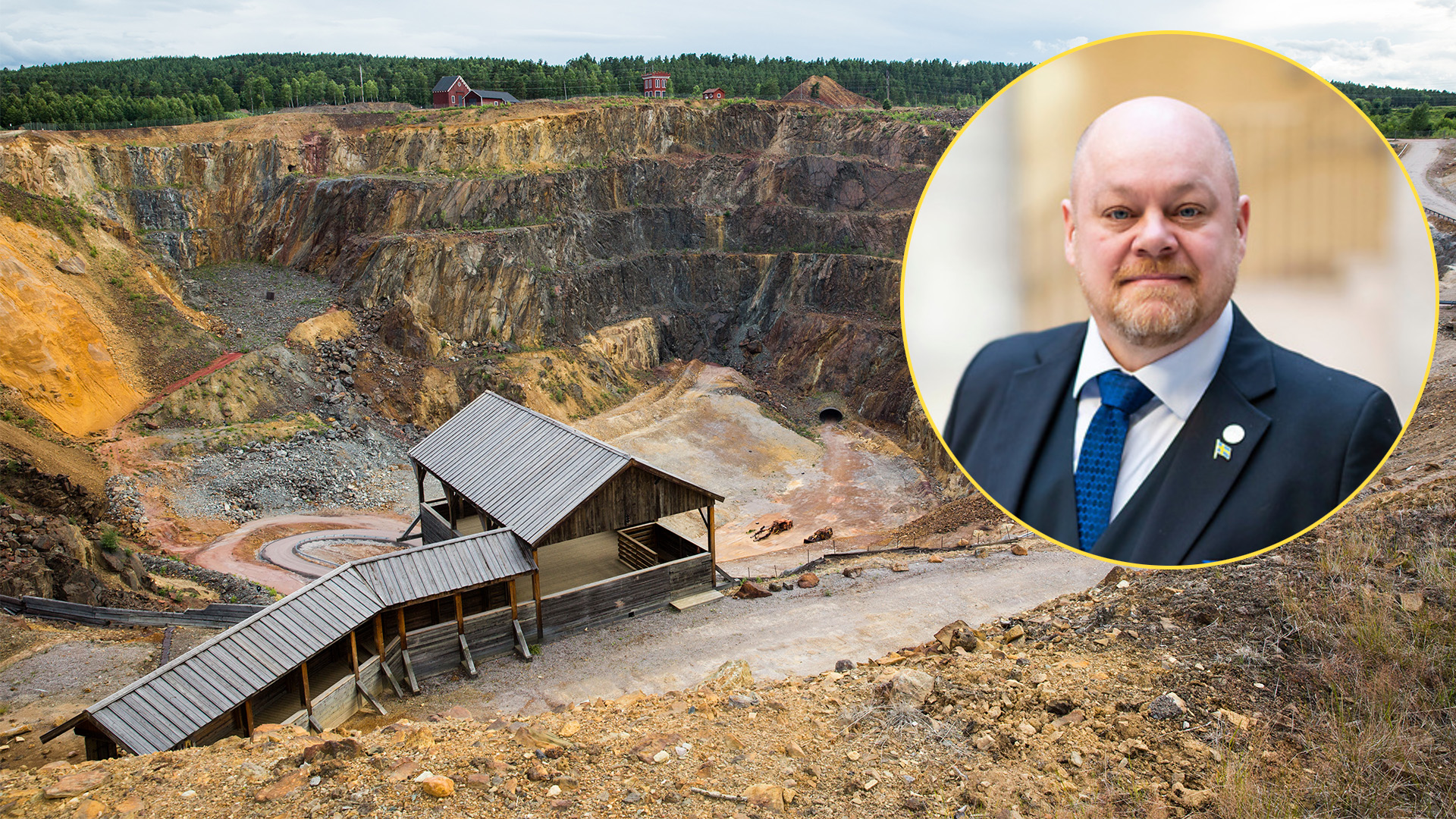
The Sweden Democrats previously demanded that mineral compensation be raised from today’s 0.2 percent to five percent. Now, the party instead wants a broader review where the total taxes and costs for the mining industry are taken into account. This is according to Eric Palmqvist, the party’s spokesperson on these issues, in a statement to Samnytt.
– Increasing mineral fees by 25 times without other reliefs would be unrealistic and would reduce Sweden’s competitiveness, says Eric Palmqvist, the Sweden Democrats’ representative in the Riksdag’s Industry Committee.
The government recently presented Sweden’s new mineral strategy, aiming to strengthen the mineral industry, increase exploration, and create the foundation for more mines.
At the same time, Samnytt recently reported that in 2025, the Swedish state only received about SEK 5.7 million in mineral compensation. According to statistics from the Geological Survey of Sweden (SGU), total mineral compensation amounted to just under SEK 23 million. Of that, about SEK 17.2 million went to landowners and SEK 5.7 million went to the state.

Currently, mineral compensation equals 0.2 percent of the calculated value of extracted minerals. Three-quarters goes to property owners within the concession area, and a quarter to the state. The state’s share thus corresponds to only 0.05 percent of the mineral value.
The Sweden Democrats proposed in their mineral policy motion in 2018 that mineral compensation should be increased from two per mille to five percent. Landowners’ compensation would remain at the same level, while the rest would go to the state. The demand was repeated in the party’s mineral policy motion in 2019. SD there described the country’s mineral resources as “the Swedish people’s assets” and maintained that a larger share of the value should benefit citizens.
However, in the party’s motion for the 2024/25 parliamentary session, no proposed percentage is specified. There, SD instead requests a review of the structure, level, and distribution of mineral compensation.
Palmqvist does not give a direct answer as to whether the five percent demand has been formally abandoned. He makes clear, though, that such an increase is not on the table without comprehensive changes to other taxes and costs.
“Sweden has high costs”
According to Palmqvist, international comparisons are misleading when the mineral fee is considered in isolation. Countries with high fees may at the same time have lower taxes, subsidized fuels, or other reliefs for the mining industry.
– The Swedish mineral fee is very low if you only look at the single fee. But you have to consider the overall cost burden on mining companies. Sweden has high production costs and already requires a great deal of efficiency, he says.
A sharp increase, according to Palmqvist, would shift the threshold for what deposits are economically viable to mine.
– Many Swedish deposits contain relatively low concentrations. If costs rise, some of them will no longer be profitable to extract. This could affect both existing mines and future establishments.
He states that the mining industry does not necessarily oppose all changes to mineral compensation, but companies demand that competitiveness not be diminished.
– We are prepared to review both the level and the distribution. But it must be done alongside an analysis of all taxes, fees, and costs affecting the industry.
Wants to Give More Money to Mining Municipalities
In recent years, SD has mainly advocated that the property tax on industrial and electricity production properties should fully or partially go to the municipalities and regions where the activity takes place.
In a motion from Eric Palmqvist and Johnny Svedin, it was proposed that the conditions for a regionalized property tax on, among other things, industrial properties be investigated.
Palmqvist rejects the idea that the proposal is a way to avoid the issue of mineral compensation. Instead, he sees it as a separate attempt to increase local acceptance for mining operations.
– Mining municipalities have to live with major interventions in nature and significant impacts on the local community, while much of the revenue ends up with the state. There is justifiable sentiment that municipalities bear the risks without receiving reasonable economic returns.
The mines today produce larger volumes with fewer employees than before. Many employees also commute from other municipalities, which, according to Palmqvist, means that host municipalities get less local tax revenue despite expanding operations.
– The tax system is outdated in this respect. Municipalities need to receive clearer economic compensation for the extraction of natural resources locally, and in my view, the industry would welcome changes in this direction. However, he says that future proposals in this area must be designed so that the increased revenues are not neutralized by reduced grants in the municipal equalization system.
However, he says the proposal must be designed so that increased revenues do not disappear through reduced grants in the municipal equalization system.
– Otherwise, it may end up being a zero-sum game. The intention, of course, is for mining municipalities to actually see a net gain.
Rejects State Ownership
Palmqvist stands by the description of minerals as a common Swedish asset. However, he rejects the idea that the state should automatically become a co-owner in private mines or reintroduce the state right to half of a mineral deposit that was abolished with mining law changes in the early 1990s.
– The Sweden Democrats do not assume that the state is best at running companies. State ownership is no guarantee that operations are managed better, he says, referring among other things to criticism of the state-owned LKAB’s handling of Hybrit and community transformation in the ore fields.

According to Palmqvist, the party has not discussed any proposal regarding state ownership shares in new mineral deposits.
– Our discussion is rather about taxes, fees, and how revenues should be distributed. Above all, we want local communities to receive greater economic compensation.
He also emphasizes that Sweden’s value lies not only in the minerals themselves but also in the industries and technological businesses built around the mining sector.
– The ore has limited value if it is not mined and processed. The greatest societal benefit comes from the entire value chain: the mines, the steel, copper products, exports, and the mining technology developed by companies like Epiroc and Sandvik.
Too high taxation of mining itself could, he says, threaten these activities as well.
– It may sound simple to collect much more tax at the mine. But if extraction becomes unprofitable, you also risk the industries and technical value chains that depend on Swedish raw materials.
LKAB’s Profits Go to the State
An argument for a higher mineral fee is that mining companies, in years with high metal prices, can report very large profits. Since LKAB is wholly owned by the Swedish state, the company’s dividends go to the state treasury.
Palmqvist does not think, however, that individual years of high profit tell the whole story.
– LKAB’s profits already go to the state. At the same time, mining requires very large and long-term investments. When a new main level is opened or an open-pit mine is expanded, it involves enormous costs and projects over many years.
According to him, mining companies must be able to use profits from good years to finance investments when existing ore bodies become harder to reach.
– It takes several profitable years to deepen a mine, open a new level, or replace machinery and other infrastructure. Therefore, you cannot just look at profits in a single high-price year.
Points to Developments in Finland
Finland introduced a special tax on mining minerals at the beginning of 2024. The tax on metal ores was originally 0.6 percent but was increased to 2.5 percent from 2026.
After the increase, Boliden announced that the company had paused the decision on an investment of about one billion euro to extend operations at the Kevitsa mine beyond 2034. At the same time, negotiations were started about changes that could affect up to 285 employees.
Palmqvist argues that developments in Finland illustrate the risks of rapidly increasing costs for mining companies.
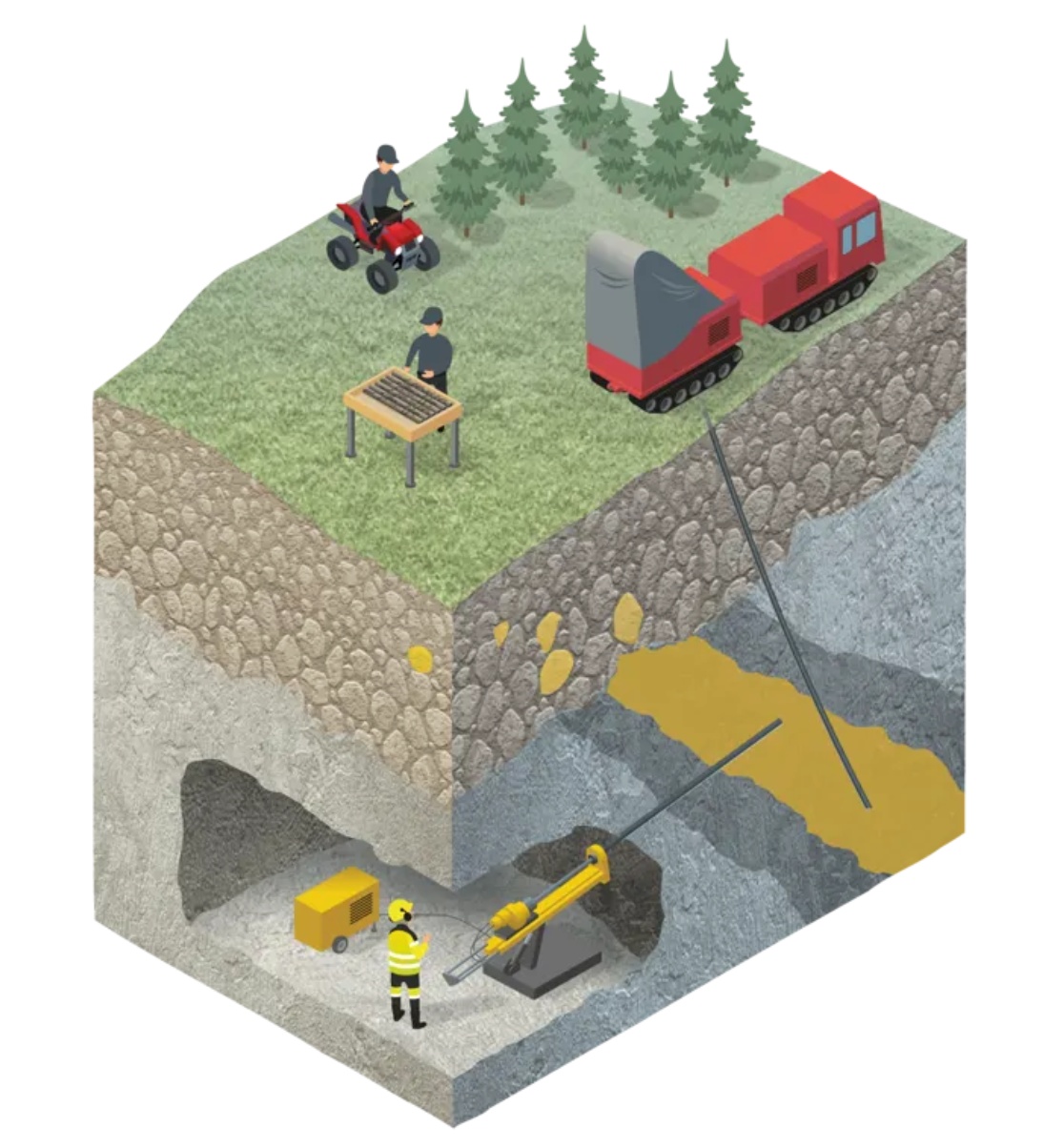
– Companies have paused investments and interest in exploration has decreased. This is especially serious since today’s exploration is the prerequisite for mining in ten, twenty, or thirty years.
However, he does not make a clear distinction between the effects of Finland’s original tax level of 0.6 percent and the later, much higher increase to 2.5 percent.
This also means that the Finnish example does not in itself show what the outcomes of a more modest Swedish increase – for example from 0.2 to 0.6 percent – would be.
The SD’s position, together with the other parties in the Tidö Agreement, has instead been to increase exploration in Sweden.
– Sweden had built up a large exploration deficit. When you stop looking for more ore, it can look as though the mines are nearing the end, but when exploration is intensified, new resources can be discovered. That is why we want to make Sweden more attractive for exploration, not less.
No Concrete New Level
Asked what level mineral compensation should be set at in the future, Palmqvist does not specify a percentage. Nor does he currently advocate a profit-based mineral fee or a system with state ownership.
– We are open to reviewing both the level of fees and the distribution of money. But changes must not harm Sweden’s competitiveness, investments, or jobs.
According to Palmqvist, SD’s clearest priority is that a larger share of the economic value should remain in the municipalities where the minerals are extracted.
– Mining municipalities must gain a more tangible financial benefit from the operations. That’s where we see a clear need for change.
Palmqvist explains that the five percent demand existed in the Industry Committee’s motions even before he entered Parliament in 2018. When the party’s mineral policy was later revised, the demand was downplayed after internal discussions and with input from the party leadership.
– Over time, the party has gained a deeper understanding of the mining industry’s significance to Swedish industry. The greatest values are mainly generated by a competitive mining industry and the companies, jobs, and tax revenues surrounding it. That is why we have toned down the demand for a sharply increased mineral fee and instead put more weight on local compensation. However, we do not rule out a future adjustment of the fee, depending on the industry’s overall costs.