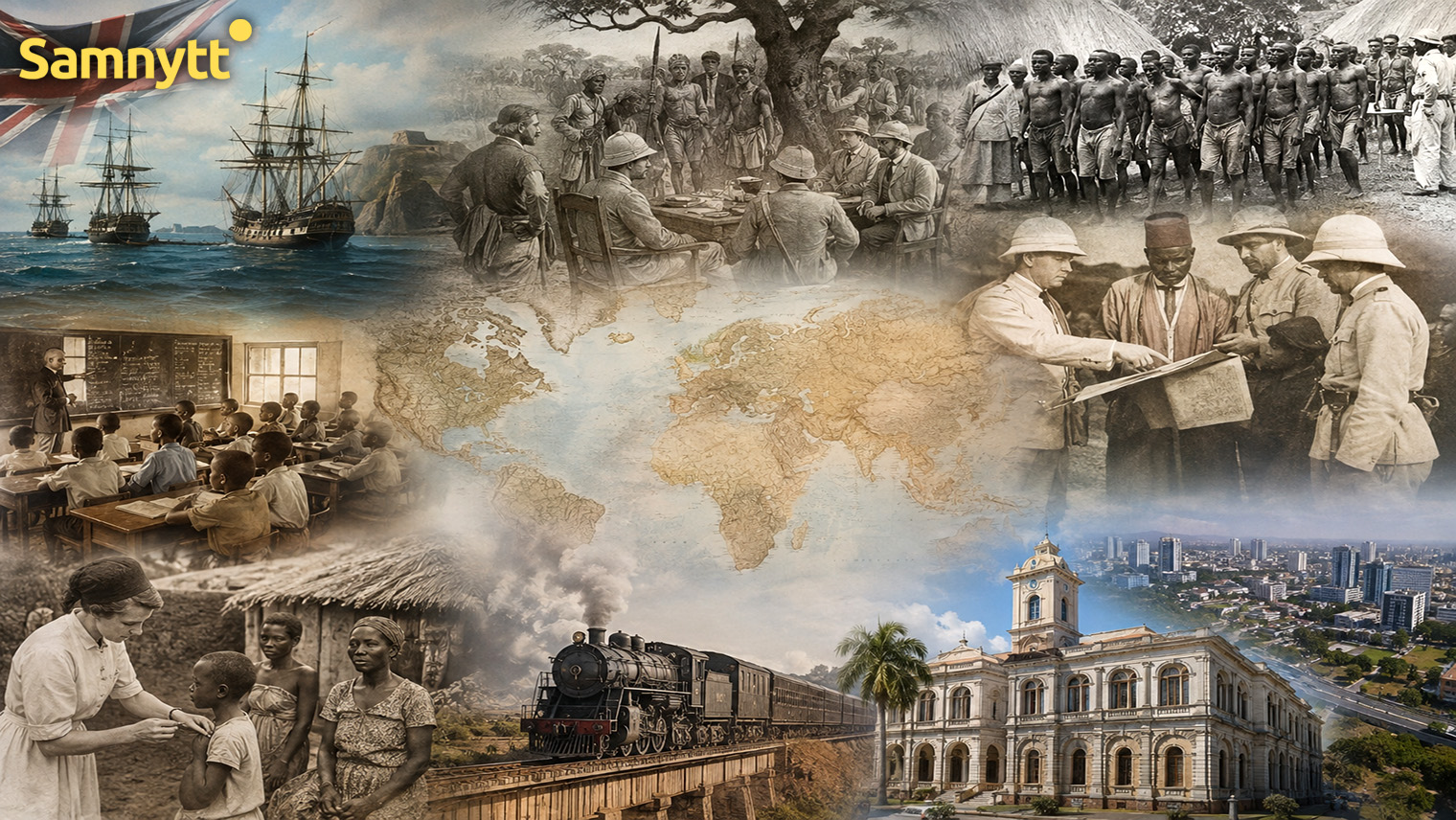
EDITORIAL • In recent decades, European colonialism has come to occupy a special place in Western historiography. From a left-wing perspective, it’s described as the original sin of the modern world—the root of poverty, racism, conflict, and underdevelopment in much of the globe—and has come to distort today’s migration debate. Anyone attempting to provide nuance risks being dismissed as an apologist or a historical revisionist, even though it is exactly the colonial historical revisionism that they are trying to confront.
But history is not a morality play where everything must be divided into heroes and villains. It deserves to be treated with greater intellectual honesty than that.
It is not controversial to acknowledge that European colonialism encompassed racism, exploitation, abuse, and at times outright massacres. These aspects of history are well documented and should not be downplayed. The truly interesting question is another—does this make up the whole story?
Researchers Attempt to Provide Nuance
Two scholars who in recent years have tried to answer that question are the British ethics professor Nigel Biggar and the American political scientist Bruce Gilley. They do not hold identical positions.
Biggar does not argue that the British Empire was “on the whole” good, but rather opposes the idea that it was an unequivocal moral evil. He maintains that history must be able to encompass both real abuses and real progress.
Gilley goes further and claims that Western colonialism in most cases brought greater societal benefits than disadvantages, and that many of the greatest catastrophes in Africa and Asia occurred only after decolonization.
You don’t have to agree with Gilley’s conclusions to recognize that the question he poses is legitimate. The crucial flaw in much of today’s debate is that it seldom raises this historical counter-question.
What Would Have Happened Otherwise?
Historians cannot be content simply to remark that a historical event included abuses. Nearly all major historical processes have. The question is always what the realistic alternative would have been.
Even researchers who draw significantly more negative conclusions about colonialism, like Leander Heldring and James Robinson, emphasize that any serious analysis must start from a reasonable counterfactual scenario—in other words, what likely would have happened without colonization. This question is often entirely absent from public debate.
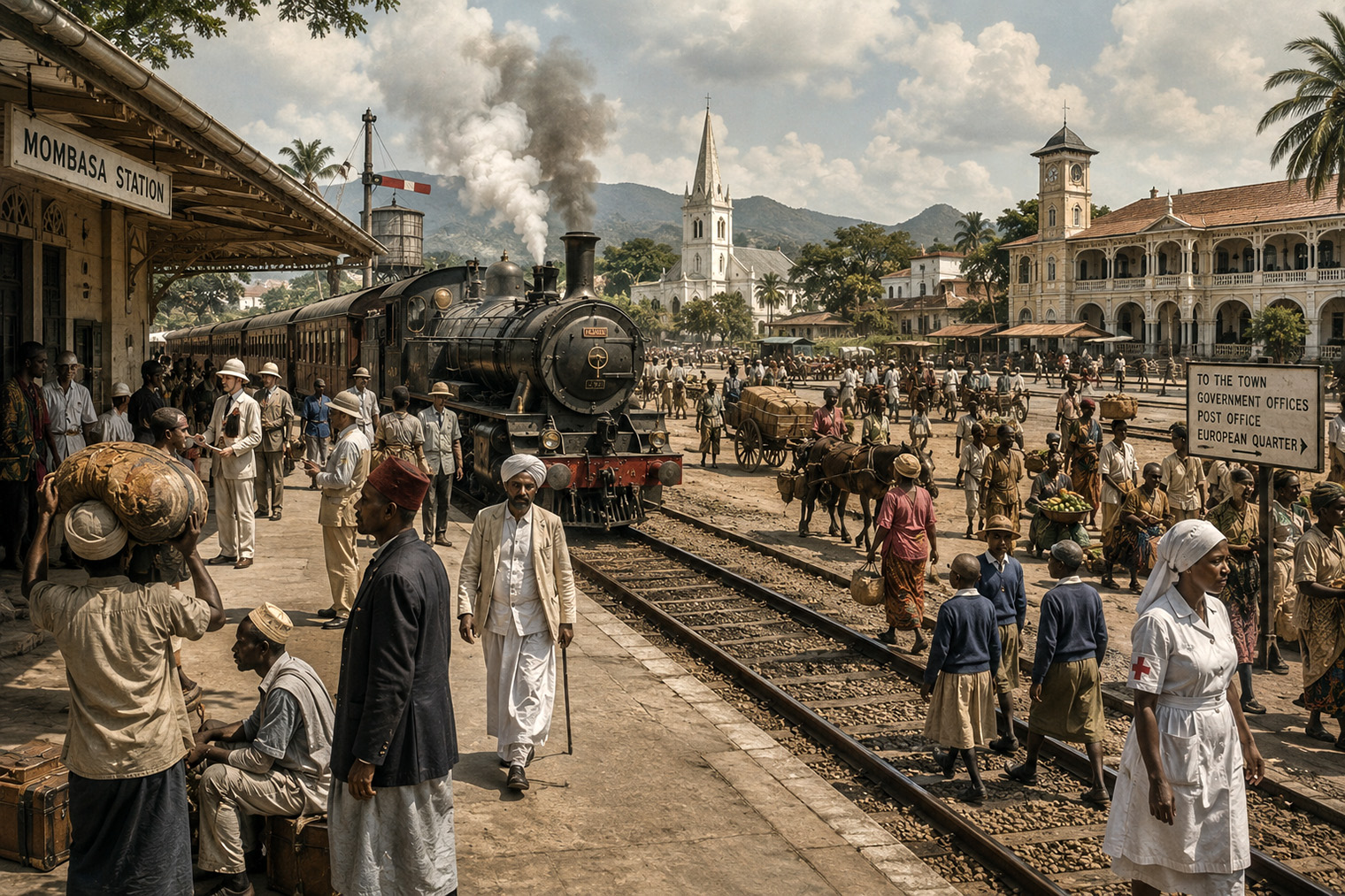
The colonial powers did not confront stable liberal democracies. In much of Africa, societies were characterized by local wars, slave trade, weak state formation, and rival power centers.
There are few good reasons to assume that leaving these parts of the world alone would have resulted in modern rule-of-law states, industrialization, and high standards of living. On the contrary, much suggests that development in many areas would have been significantly slower. The institutions we today take for granted—professional public administration, legal systems, modern healthcare, universities, national infrastructure, and integration into the global economy—emerged to a large extent due to Western influence.
It is entirely possible that colonialism stifled certain indigenous paths of development. But it is far from obvious that these paths would have led to modern, prosperous, and democratic societies. Those who claim this carry at least as great a burden of proof as those who argue the opposite.
The counterfactual question becomes even more interesting if we also include the period after decolonization. The European presence did not end in 1960. It changed form. Colonial administrations were replaced by development aid, technical cooperation, educational efforts, medical programs, and economic support on a scale unparalleled in history.
If large parts of Africa were truly facing rapid and independent modernization, then why has the Western world, for more than half a century, continued to shoulder a significant part of the costs of building state institutions, healthcare, education, and infrastructure?
None of this means that colonization can therefore be considered morally justified in all respects or that it had only good motives. But it does mean that the comparison is not between colonialism and some ideal, peaceful, prosperous development, but rather between colonialism and the actual alternatives that existed.
Institution Building as the Most Important Legacy
The most enduring legacy of the colonial era is probably not about railways or harbors, even though these are often mentioned. It’s about institutions.
In recent decades, economic research has increasingly emphasized the critical importance of institutions for long-term development—rule of law, property rights, impartial courts, professional public administration, public education, and effective administration. Daron Acemoglu, Simon Johnson, and James Robinson have made this insight one of the foundations of modern development economics.
This raises an uncomfortable question. If institutions are vital for development—and many of the institutions now considered self-evident were introduced or expanded during the colonial era—how can the institutional legacy of colonialism simultaneously be described as purely destructive?
Gilley points to numerous examples—modern public administration, education systems, public healthcare, judicial systems, tax systems, infrastructure, improved administration, and the abolition of the slave trade in many areas. He also claims that countries that continued to build on these institutions after independence often developed better than those that dismantled them.
Of course it can be argued that the institutions were often built for the colonial power’s own purposes. That is true. But institutions change. Courts once established for an empire can later serve an independent rule-of-law state. Universities founded under colonial rule today educate the citizens of independent nations. That a system has a certain origin does not mean its later function lacks value.
Participated in But Also Abolished the Slave Trade
The same nuance applies to the slave trade. It existed everywhere in the world long before the colonial era. It is historically correct that European powers participated in the transatlantic slave trade. But it is equally correct that it was Britain that, after 1807, used its navy and major government resources to combat the international slave trade throughout the rest of the 19th century.
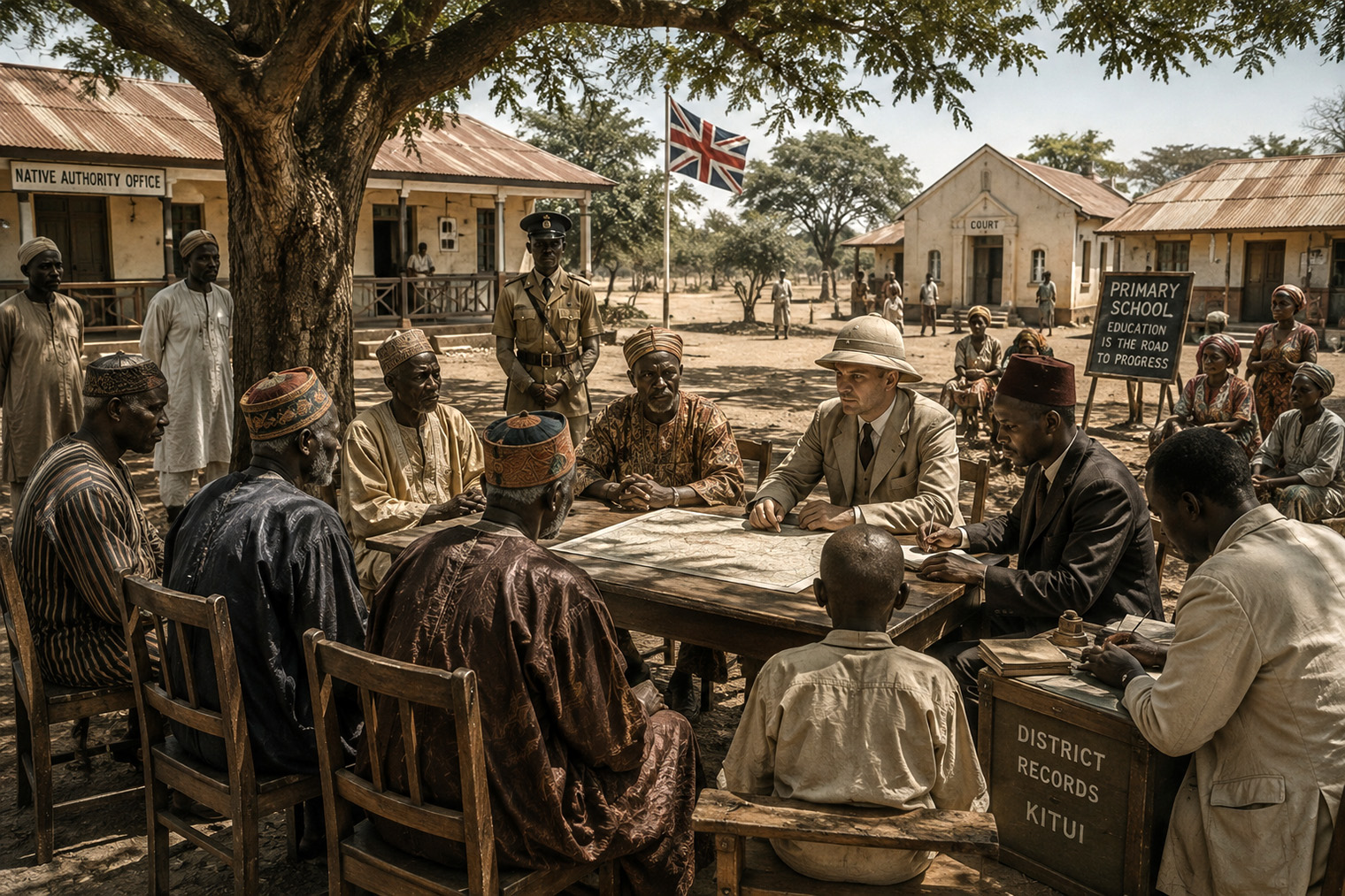
Biggar thus points out that the British Empire encompassed both oppression and liberation—both slavery and abolitionism. This dual reality doesn’t fit well into today’s simplistic narrative.
Decolonization and Independence Often Out of the Frying Pan into the Fire
Just as rarely do we discuss what actually happened after independence. During the 1950s, 60s, and 70s, the optimism was enormous. Decolonization would pave the way for democracy, economic development, and national self-determination. In many countries, the outcome was quite different—military coups, one-party states, communism, corruption, and recurring civil wars.
Gilley claims that postcolonial development in many cases caused greater human suffering than the colonial era itself, using countries like Guinea-Bissau as examples.
This does not mean that colonialism is thereby absolved of responsibility. But it does mean that responsibility cannot be placed solely on the European colonial powers. Independent governments also made their own decisions, many of which had catastrophic consequences.
Has Distorted the Migration Debate
The one-sided narrative of colonialism that has become so dominant is strongly left-ideological and has also distorted the view of the postcolonial period and large-scale migration from the Third World to the West.
It offers a selfishly one-eyed moral explanation for a much more complex history. The West is made into the sole perpetrator, the rest of the world only victims. Such a narrative frees both historians and contemporary politicians from harder questions about institutions, leadership, responsibility, and independent choices.
Deserves a More Honest Historiography
But history does not become truer by being simplified with political overtones. Quite the opposite. To acknowledge colonialism’s positive legacy does not mean excusing its abuses. Just as acknowledging its abuses does not mean one must deny its contributions to the creation of modern state institutions, education systems, rule of law, and economic, technical, and medical development.
European colonialism ended more than half a century ago. Yet Europe and North America continue to finance schools, hospitals, courts, universities, vaccinations, water supply, and public administration in large parts of the former colonial world.
If the institutions of the modern state would have naturally developed on their own, why does this support still continue on a scale no one believes will end anytime soon? This question does not answer whether colonialism was right or wrong. But it signals that the question is not binary and that counterfactual history is much more difficult than the one-sided story suggests.
An Idea That Still Lives On
The fundamental idea that underpinned large parts of colonialism—that modern institutions can be transferred from one society to another—still lives on. Today, most of us no longer call it colonialism but development cooperation, state-building, capacity development, or aid. We no longer send governors but experts. Not soldiers but consultants. Not colonial administrators but advisors from the World Bank, UN, EU, or Sida.
Nor is postcolonial aid policy uncontroversial. For many on the left, extensive aid is justified by a historical debt that the colonial powers are still seen as carrying. From more conservative quarters, it is often argued that long-running aid risks creating dependency, feeding corruption, and propping up authoritarian regimes rather than building independent, prosperous, and democratic societies.
Whatever one’s view of aid, both its proponents and critics rely on the same underlying assumption—that many of the world’s poorest states have still not been able to develop sufficiently strong institutions on their own. That is precisely why aid continues to be discussed, funded, and reformed more than sixty years after decolonization.
European colonialism was neither a civilizational crusade nor a single, cohesive crime against humanity. Like most major historical processes, it was a contradictory mix of power politics, self-interest, idealism, exploitation, reforms, and institutional building. Therefore, it deserves to be judged as history—not as a dogmatic political creed.