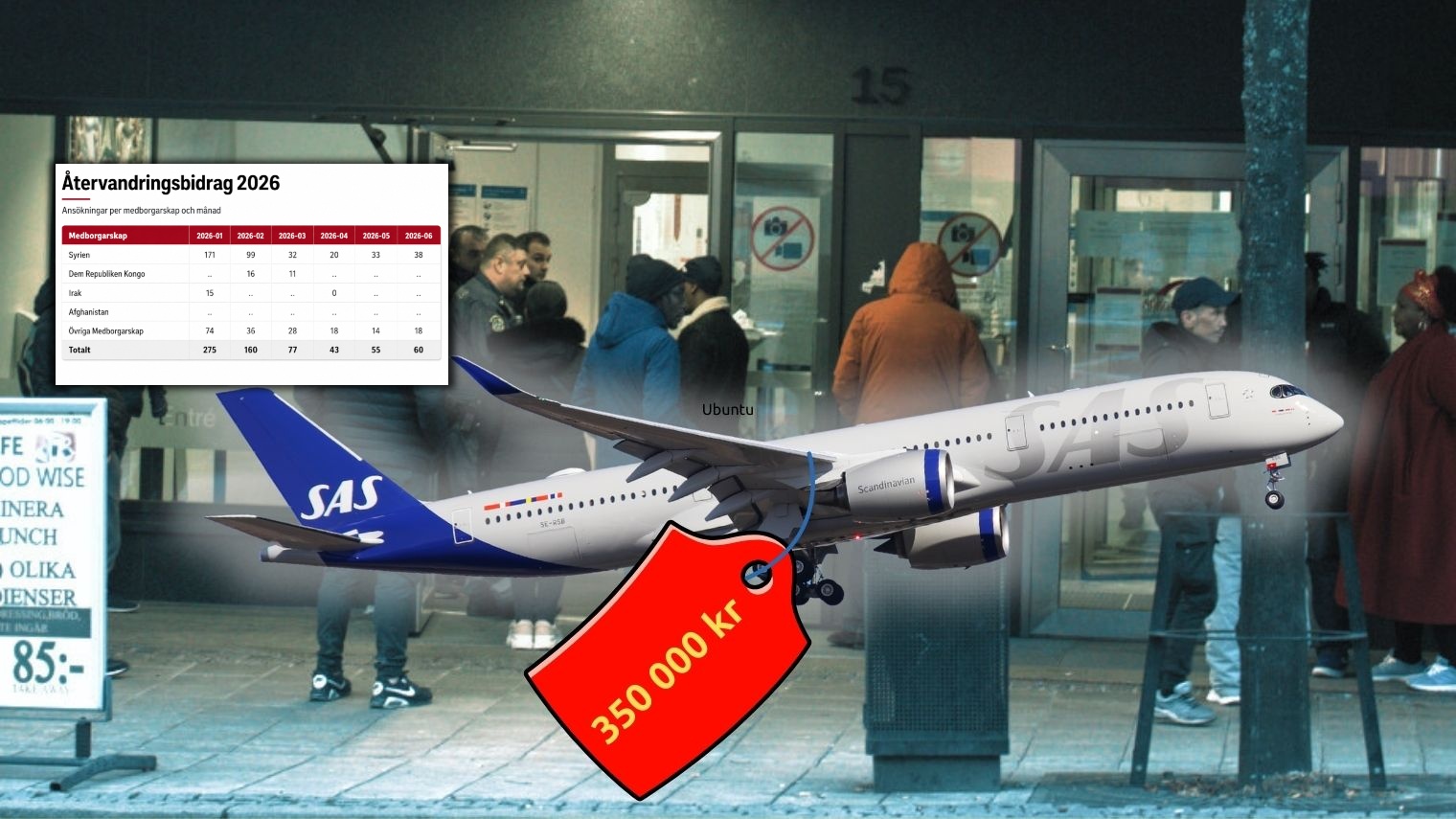
The repatriation grant for non-citizens who wish to leave Sweden has increased significantly under the Tidö parties’ term in power. In January 2026, the amount was drastically raised from a maximum of 40,000 SEK per household to up to 600,000 SEK per household. However, since its introduction, it has seen very limited use. But now, the Sweden Democrats want to go further.
The repatriation grant is not new; it has existed in various forms since the 1980s. Up until the 2025/2026 New Year, the support was capped at a maximum of 10,000 SEK per adult, 5,000 SEK per child, and 40,000 SEK per family. Therefore, the grant had been used to a very limited extent.
As part of the Tidö Agreement, the government and the Sweden Democrats decided to significantly increase the support for people who voluntarily want to leave Sweden and settle permanently in another country. The purpose is to make repatriation a more realistic option for people who have not established themselves in Swedish society or who wish to return to their home country.
The new rules, which came into force on January 1, 2026, mean that an adult can receive up to 350,000 SEK. For married couples or cohabitants, the cap is 500,000 SEK, while a household can receive a maximum of 600,000 SEK. For children, the grant amounts to 25,000 SEK.
Also for Swedish citizens
Despite the substantial increase, the reform has so far had limited impact. According to statistics from the Swedish Migration Agency, 609 applications had been received as of May. Of 423 cases processed, only 118 had been approved, according to Dagens Nyheter. By the end of May, barely 5.7 million SEK had been paid out—far below the amounts that the reform makes possible on paper.
By mid-July, the number of applicants had only risen to 617, while about 250 had been rejected, reported Sveriges Radio. Many of the rejections are due to the fact that applicants have already become Swedish citizens and are thus not covered by the rules. This outcome led the Sweden Democrats to propose that even Swedish citizens should be able to receive the grant, provided that they renounce their citizenship.
The party wrote on Facebook:
We want more people to leave Sweden. Therefore, we want people who have become Swedish citizens to also be eligible for the repatriation grant of 350,000 SEK, provided they renounce their Swedish citizenship.
Largest nationality
During the first six months of the year, a total of 670 applications for the repatriation grant were submitted to the Swedish Migration Agency. Of these, 393 concerned Syrian citizens, corresponding to nearly six out of ten applications. Next were people from the Democratic Republic of the Congo (35 cases), Iraq (32), and Afghanistan (22). Another 188 applications came from people with other citizenships. This data comes from the Migration Agency’s statistics on the repatriation grant.

By June, 503 cases had been decided. Of these, 164 were approved, 282 rejected, and 57 concluded in other ways, such as dismissal, withdrawal, or the applicant retracting their application. The most common grounds for rejection were that the applicant did not have the right type of residence permit, which was the reason for 117 of the rejections. This was mainly due to them having become Swedish citizens.
Other recurring reasons included debts with the Enforcement Authority or CSN, that the residence permit was granted after September 12, 2024, that the person was not deemed to intend to leave Sweden permanently, or that the person could not be received in the intended destination country. The conditions for eligibility for the grant are described in more detail by the Migration Agency here.
The fact that the visible rows in the table of incoming cases do not always add up to the total for the month is due to the Migration Agency’s confidentiality policy. Small numbers are replaced with the designation “..” when there is a risk that individuals could otherwise be identified. The hidden numbers are still included in the total, which is why the reported figures cannot be added together exactly.