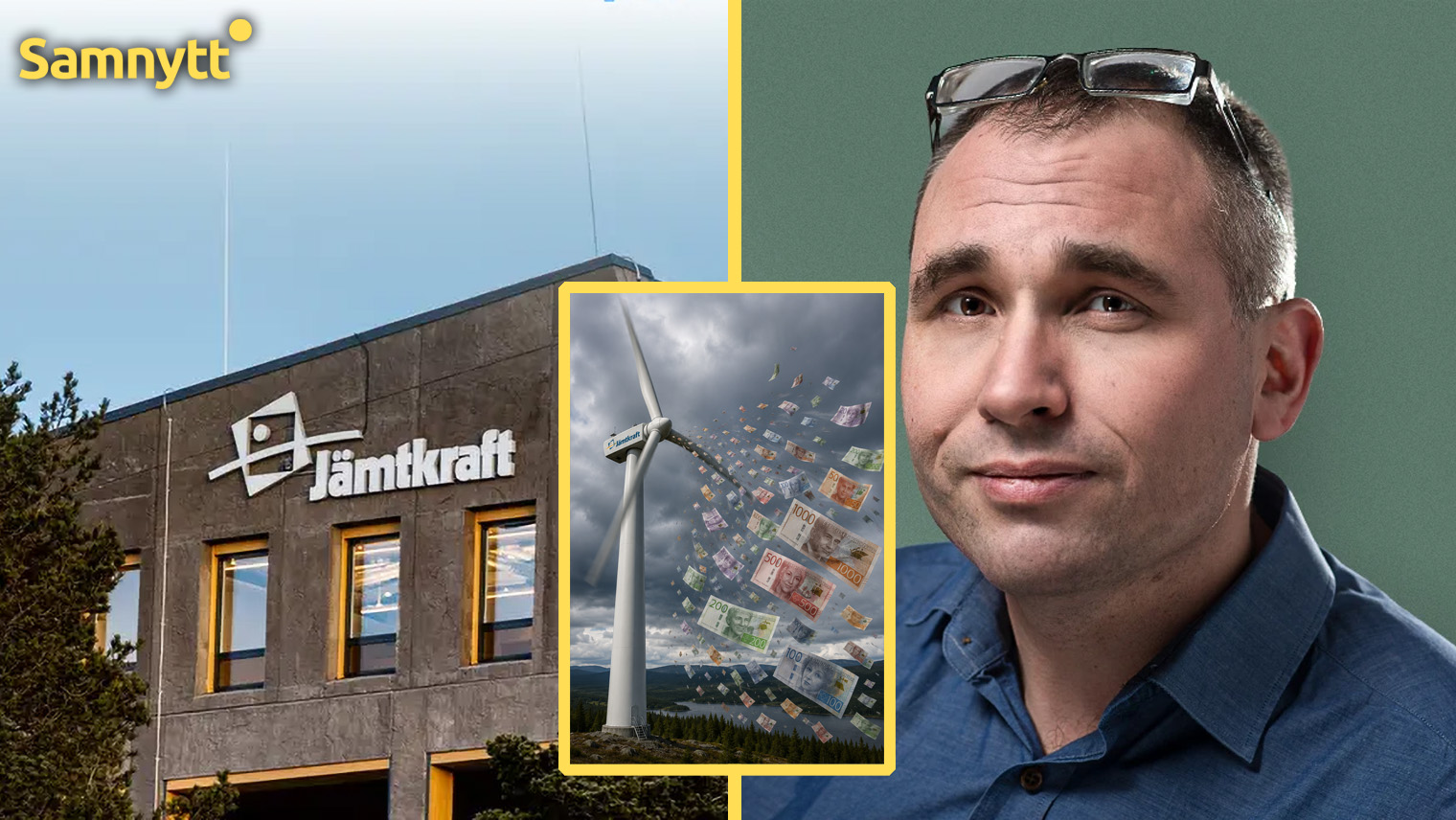
Jämtkraft’s extensive investments in wind power and the green transition are facing harsh criticism from business economist Christian Steinbeck. In an investigative opinion piece, he questions both the profitability of the company’s investments and the secrecy surrounding several of the deals. According to Steinbeck, billions of the municipality inhabitants’ assets risk being tied up in projects that do not generate sufficient revenue, while the decision documents are withheld from public scrutiny.
The sharpest criticism is directed at the Hocksjön wind farm, which Jämtkraft decided to build in 2019. The investment amounted to approximately SEK 1.2 billion, the majority of which was financed by loans.
According to Steinbeck, the decision was made based on an incomplete analysis, despite the project entailing significant technical and financial risks. He describes the initiative as a high-risk project and notes that experience with wind turbines of this size was limited at the time of the decision.
Steinbeck points out that the investment roughly corresponds to one third of Östersund municipality’s annual tax revenue and believes that the financial consequences for the municipality’s residents are thus considerable.
Classified Calculations Raise Questions
A central part of the criticism concerns the transparency of Jämtkraft’s business deals. According to Steinbeck, the company has refused to release the financial calculations that formed the basis for the decision to build Hocksjön.
He writes that all key figures in the documents released have been redacted, which according to him makes it impossible to independently review the assumptions that underpinned the investment.
“Jämtkraft refuses to release the calculations behind the decision. They block out all the numbers,” writes Steinbeck.
READ ALSO: Municipality’s wind power investment became a costly fiasco
He argues that the secrecy is particularly remarkable since it concerns a municipally-owned company whose operations are ultimately financed by and impact the municipality’s residents.
Claims Market Trends Were Against the Investment
Steinbeck claims that several assumptions that may have underpinned the investment were already questionable at the time the decision was made. He points out, among other things, that the rapid expansion of wind power in Sweden over several years has pushed down electricity prices when it’s windy, which directly negatively affects the profitability of wind power production.
Furthermore, he notes that wind power produces the most when there is already a surplus of electricity in the system, and that in some situations production must be limited because the power grid cannot absorb all the energy.
According to Steinbeck, this means that revenues from the facility risk being significantly lower than what the investment calculations assumed.
Claims Revenues Don’t Cover Capital Costs
Basing his opinion on his own calculations, Steinbeck estimates that electricity sales from the Hocksjön facility do not generate enough revenue to even cover the interest costs on the loans used to finance the investment.
He also emphasizes that Jämtkraft does not provide any separate figures for the facility’s finances, which according to him makes it difficult to verify how the project is actually developing.
According to Steinbeck, there are also uncertainties regarding the facility’s technical lifespan and future operating costs. This further affects the financial calculations.
Links Investments to Reduced Welfare Resources
Steinbeck also criticizes the political priorities behind the investments. He argues that large sums are tied up in projects whose social benefit is, at best, uncertain—while public services face economic challenges.
As an example, he highlights the healthcare situation in Östersund and notes that the Hocksjön investment sum corresponds to very significant resources that could have been used in other municipal operations.
At the same time, Steinbeck points out that Jämtkraft’s indebtedness has increased in step with its investments in the green transition. He argues the consequences could negatively affect the municipalities’ finances for a long time to come.
Calls for Review of Alleged Profitability
Jämtkraft officially continues to report profits and is often highlighted as a successful municipal energy company. Steinbeck, however, believes that the lack of transparency makes it difficult to assess the real profitability of the green investments and calls for closer examination of both the company’s reporting and audits.
“Simple calculations suggest the situation is not under control,” writes Steinbeck.
The business economist, who has extensive experience as a CFO, controller, and head of accounting and has previously published analyses of wind power’s economics in several national media outlets, states that his review of Jämtkraft’s business will continue.
Previous Criticism over Charging Investment
Jämtkraft has previously been criticized for its longstanding investments in electric vehicle charging infrastructure. Business economist Christian Sandström described the initiative in June as a costly prestige project where municipal funds were invested in thousands of charging stations in Sweden and elsewhere in Europe despite recurring losses and a lack of a sustainable business model.
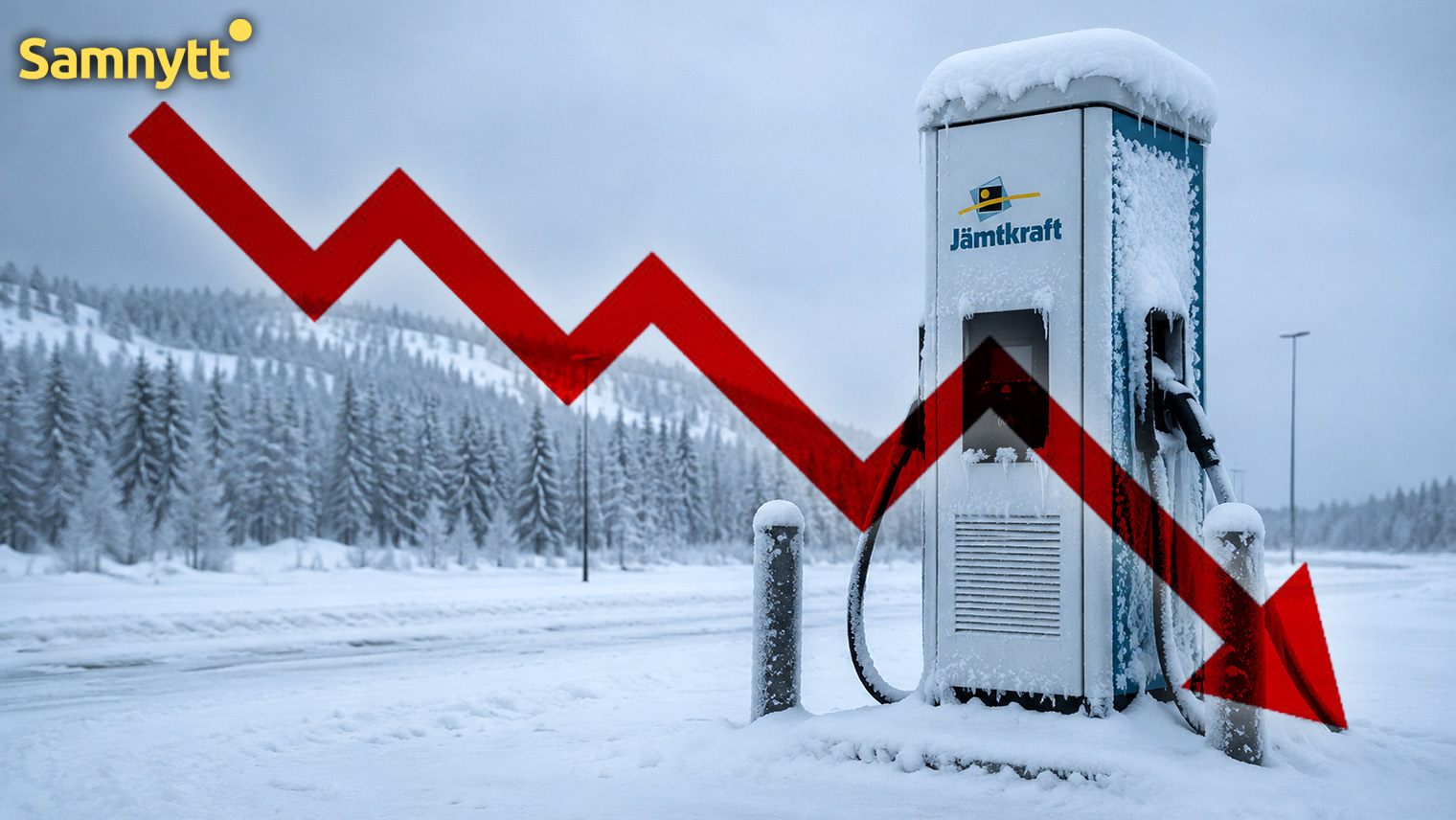
According to Sandström, about SEK 325 million were invested in the operation, which, after ten years, was still losing money. The criticism also concerned the fact that, according to him, a municipally-owned energy company had no clear mandate to compete with private actors in the charging market. When the operation was finally audited in 2024, it was required to be valued at zero kronor.
READ ALSO: Business economist: Jämtkraft’s charging investment an expensive prestige project
Sandström estimated Jämtkraft’s loss at around SEK 108 million. He also criticized the company for not wanting to disclose the conditions for the sale of its holdings, citing business secrecy, despite the operation being ultimately owned by the municipality’s residents. According to Sandström, the charging investment thus became yet another example of major green investments being carried out with limited transparency and weak financial results.