With an economic situation expected to ease in 2026, residents in a large number of municipalities will pay less tax next year. Only in a dozen or so municipalities will the opposite occur and taxes increase.
A certain improvement is visible in the Swedish economy in 2025. This is the assessment from Statistics Sweden (SCB), which notes that activity also increased during the third quarter of the year, with the main contributions coming from household consumption, investments, and exports.
— The overall picture of the Swedish economy is positive. In the third quarter, the year-on-year GDP growth was the highest in almost four years, says Caroline Ahlstrand, economist at SCB.
SCB’s business cycle clock, which consists of 14 economic indicators, signals a stronger economic outlook.
READ ALSO: Swedish municipalities’ finances a ticking time bomb
According to the agency, residents in 45 municipalities will see their taxes decrease next year, while taxes will increase in 16 municipalities.
— The economic outlook towards 2026 looks better than it has historically, says Emelie Värja, chief economist at the Swedish Association of Local Authorities and Regions (SKR), to TT.
Widespread tax reductions in Stockholm
According to Värja, the lower taxes are due to the fact that municipalities are not as financially pressured anymore. On average, the tax rate in 2026 will decrease by three öre to 32.38 percent.
Since Region Stockholm is lowering its tax by five öre, 26 municipalities in Stockholm County will see tax reductions next year. In 15 of the 16 municipalities where taxes are increasing, it is due to Region Västerbotten increasing its rate by 50 öre.
The biggest tax cut is in Lekeberg, down by one krona, followed by Haninge with 50 öre. The lowest tax is in Österåker at 28.93 percent, while the highest is in Dorotea at 35.65 percent.
Revised forecast
On Tuesday, Finance Minister Elisabeth Svantesson (M) also held a press conference where she presented a revised forecast for the Swedish economy. The message from the Tidö government is that the Swedish economy is on the road to recovery.
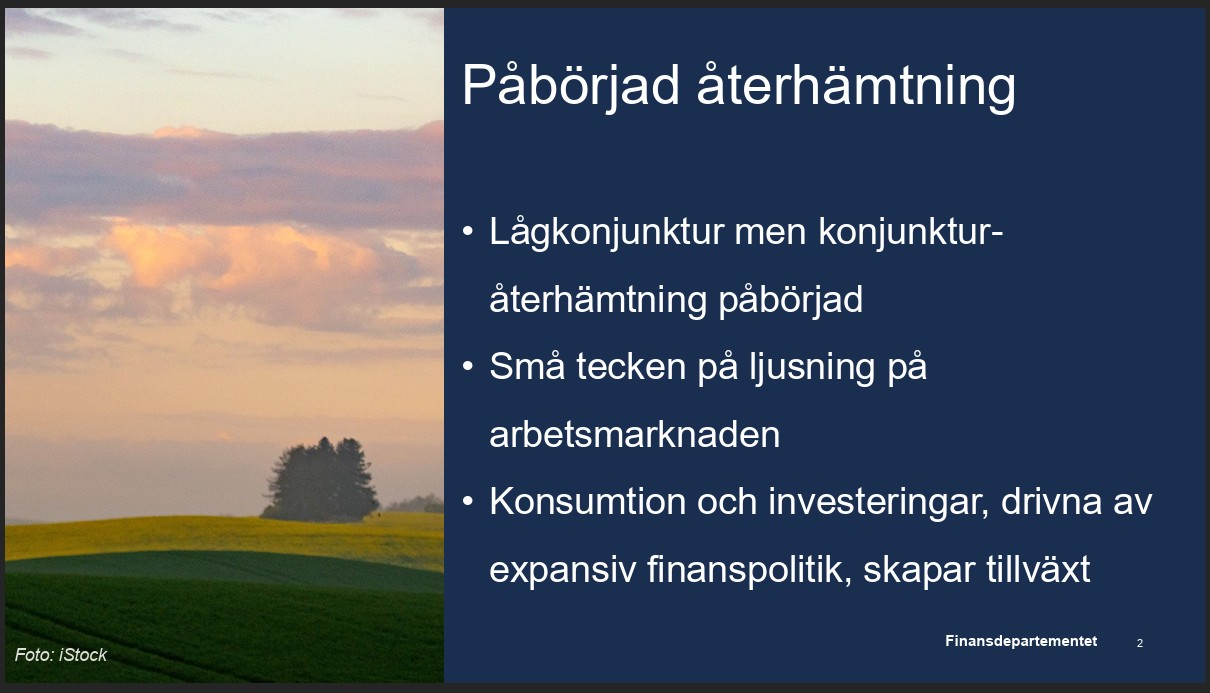
— Now the recovery of the Swedish economy is underway. By ensuring that everyone has more money in their wallets, while also making investments in public consumption and investments, fiscal policy is supporting the recovery and the recession is expected to be over by 2027, says Svantesson.
The recession is expected to persist into next year, but Sweden will see stronger growth.
The press conference:
READ ALSO: Swedes choose security over consumption