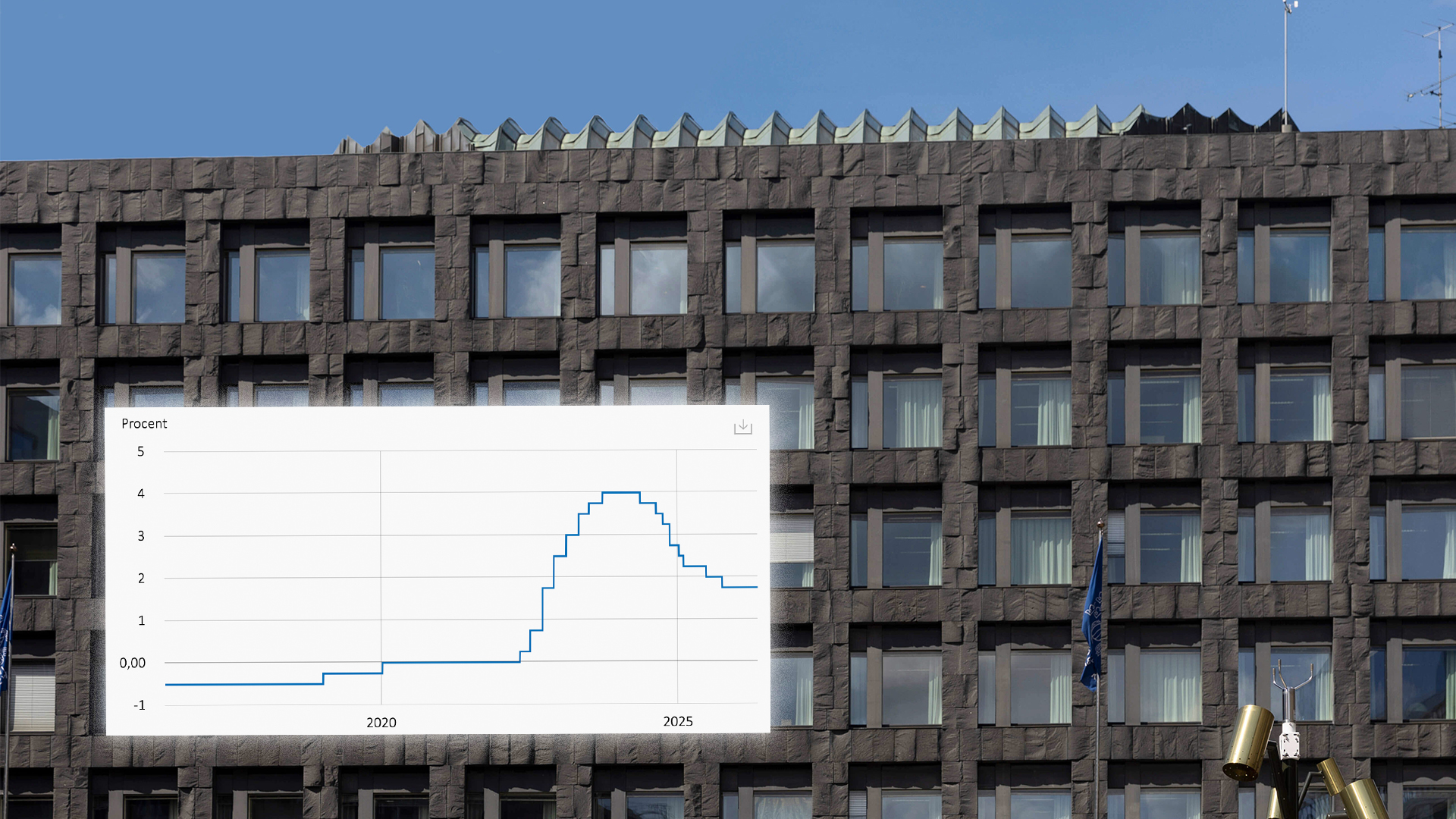
The Riksbank is leaving the policy rate unchanged at 1.75 percent. The announcement comes as the authority warns that the war in the Middle East could increase the risk of higher inflation.
According to the Riksbank, inflation is currently below target, and the most recent outcomes have been clearly lower than the forecast in March. At the same time, the economy is described as weak.
This means the Executive Board considers there is room to wait for a clearer picture of the economic effects of the war and the supply disruptions that may follow.
According to the Riksbank, the ongoing war in the Middle East continues to shape :censored:6:cdd6bbaa89: developments. The longer the war lasts, the greater the perceived risk of rising inflation and negative effects on economic performance.
The oil price remains at an elevated level and has fluctuated significantly due to various statements from the parties involved in the war. Prices of other commodities have also been affected. According to surveys, parts of the business sector are also experiencing increased cost pressures.
Fuels are the clearest effect
The Riksbank notes that, so far, higher fuel prices have been the most noticeable economic effect of the war. Meanwhile, the financial markets are still expecting oil prices to fall back later in the year.
In March, the Riksbank assessed that, fundamentally, there were good prospects for a stronger economy, but that the war had somewhat dampened short-term outlooks. Since then, signs have emerged that growth was unexpectedly weak at the beginning of the year.
At the same time, the risk of higher inflation as a result of the war has increased somewhat. But since inflation is currently below target and the economic climate is weak, the Riksbank has chosen not to raise the rate.
The current level of the policy rate, according to the Riksbank, provides a good starting point for adjusting monetary policy if needed to protect the inflation target.
May raise rates if inflation picks up
The Riksbank emphasizes that the uncertainty is significant and the situation requires vigilance. If the war has major effects on the :censored:6:cdd6bbaa89: economy and leads to a broad and lasting increase in inflation, the policy rate may need to be raised.
At the same time, the authority points out that the economy has performed more weakly than expected and that domestic inflation pressures are currently low.
In addition to the war in the Middle East, according to the Riksbank, there are several other risks that could affect inflation and economic prospects. The authority writes that the range of potential outcomes ahead is wide and that developments are being closely monitored.