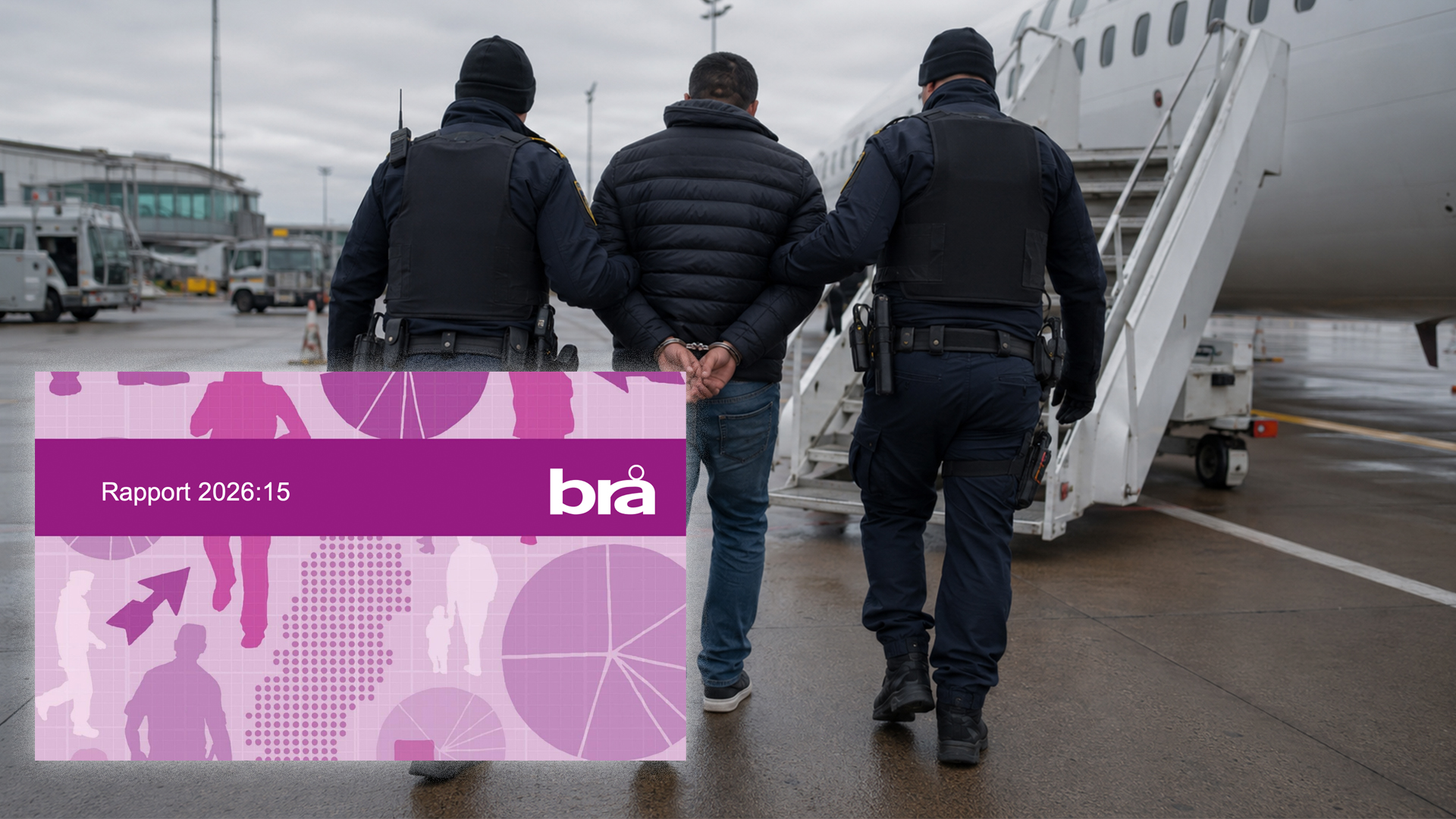
Fewer than half of foreign nationals sentenced to deportation in connection with a prison sentence have actually been deported. This is shown in a new report from the Swedish National Council for Crime Prevention (Brå).
The report, Foreign Nationals Sentenced to Deportation in Criminal Cases, is based on data concerning everyone with a deportation order included in a prison sentence who completed their incarceration between 2013 and 2023. This information was then cross-referenced with police statistics on enforced deportations and the prosecution register for 2013–2024.
In total, the report covers 5,826 individuals. Of these, 48 percent had their deportation order enforced during the follow-up period. According to Brå, deportation most commonly takes place within the first twelve months following release from prison.
Significant Differences Between Countries
The report also reveals major differences depending on citizenship. The highest proportion of enforced deportations was among nationals of Western European countries, where 82 percent of decisions were enforced. Among those from North African countries, the corresponding figure was 32 percent.
Among the countries with the lowest proportion of enforced deportations, Brå cites, among others, Russia and Algeria, where the rate is around 25 percent. For those with citizenship in Belarus, Syria, Morocco, and Afghanistan, the proportion is about 32–37 percent.
Brå points to several possible explanations for why deportations are not enforced. These may include difficulties establishing identity, obtaining travel documents, lack of readmission agreements, or the security situation in the receiving country. The agency also highlights organizational shortcomings in the actual enforcement process as a possible factor.
Nearly One in Five Prosecuted Again
The report also shows that 18 percent of people sentenced to deportation were prosecuted for new crimes in Sweden during the follow-up period. Together, they account for 4,197 prosecuted offenses, equivalent to 0.2 percent of all prosecuted offenses during the period.
The new crimes are mainly concentrated in the period shortly after release. According to Brå, 3 percent committed new crimes as early as within the first month after finishing their prison term. After four months, the share was 11 percent; after one year, 16 percent; and after five years, 25 percent.
The largest crime category among new prosecutions is theft-related offenses, excluding robbery, which make up 37 percent of the crimes. Next come drug and smuggling offenses. Brå concludes that these results generally follow the same pattern as recidivism in crime overall.
At the same time, Brå notes that repeated prosecutions among those sentenced to deportation may undermine the purpose of deportation orders, even if this group represents a small share of total criminal prosecutions.
The proportion of deportations enforced within one year has, however, increased over time. Among people who completed their prison sentence in 2013, 18 percent of deportations were enforced within a year. In 2019, the level was 60 percent, and among those who finished in 2023, the proportion was 58 percent.