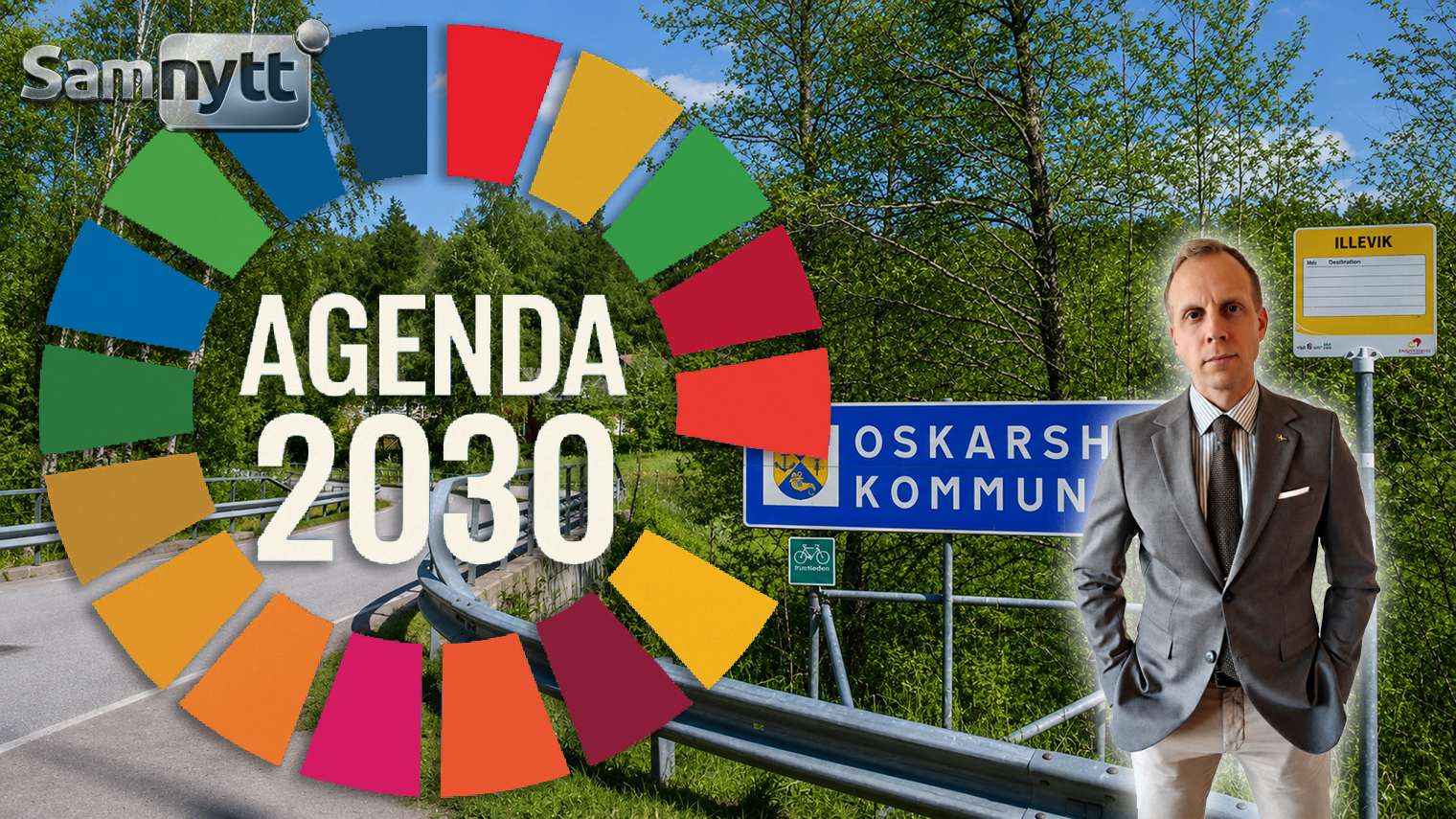
DEBATE • Should :censored:6:cdd6bbaa89: (leftist) values govern Swedish municipalities? This is a question that is becoming increasingly relevant as more municipalities now integrate Agenda 2030 into their governance models.
All across the country, there is currently a shift underway where municipal decisions are increasingly linked to :censored:6:cdd6bbaa89: goals. In some municipalities, this is already fully implemented, in others, it is on its way into governance. A recent example is Oskarshamn, where a new model is about to be introduced, requiring every goal and every decision to be tied to Agenda 2030.
Politicized UN Framework…
Agenda 2030 is a :censored:6:cdd6bbaa89: framework developed by the UN, aiming to direct the world’s development. But the criticism is substantial. It is described as a political and ideologically colored project, where vague and far-reaching goals are used to drive a certain societal development without clear democratic grounding.
ALSO READ: The Wind Power Lobby – A Threat to Local Democracy
The goals are so broad that they can be interpreted to justify virtually any policy, making them difficult to scrutinize. At the same time, the framework risks leading to increased bureaucracy, more reporting requirements, and a governance where the focus shifts from concrete results to fulfilling abstract indicators.
…governs Swedish decision-making processes
The problem arises when this becomes a superior governance tool in Swedish municipalities. When every decision must be filtered through :censored:6:cdd6bbaa89: goals, a governance system is created that pushes even more power away from local decision-makers and citizens. The result is more administration, less freedom of action, and a more slow-moving public sector.
A central player in this development is the Swedish Association of Local Authorities and Regions (SKR), which pushes municipalities and regions to integrate Agenda 2030 into overarching governance systems. SKR is an employer and interest organization but has, in practice, acquired a norm-setting role in how municipalities are governed. At the same time, SKR is political, controlled by the Social Democrats, Left Party, Centre Party, and Green Party, but lacks the transparency required by government agencies and municipalities. This means that guidelines and recommendations with significant impact on the entire country are developed without full democratic oversight.
Researchers have pointed out that SKR, in many respects, acts as an authority, but without being subject to the same requirements for openness and accountability. When SKR also pushes for Agenda 2030 to be integrated into municipal governance, a clear ideological pressure from above emerges.
Distracts from More Pressing Problems
This occurs at a time when many municipalities are struggling with other, much more urgent issues, such as crime, threats and violence in schools, staffing, or making local businesses function. These are the types of challenges that require focus, decisive action, and clear priorities.
ALSO READ: The Wind Power Lobbyists’ Constant Attempts to Influence – Time to Speak Up
It is a wrong path to further build out governance systems, increase administration, and add more layers of :censored:6:cdd6bbaa89: demands—without funding—to the operations. More :censored:6:cdd6bbaa89: frameworks will not reverse the trend in Swedish municipalities.
Respect Municipal Self-Government
What is needed is a return to the core of municipal self-government. Decisions should be made close to the citizens, based on local needs and conditions. Governance should rest on the Local Government Act and the laws that actually apply—not on :censored:6:cdd6bbaa89: goals that lack direct democratic legitimacy in Sweden.
Sweden is already one of the most sustainable countries in the world. Further tying municipalities up in comprehensive frameworks risks hindering rather than strengthening development.
If we want to take municipal self-government seriously, we must also dare to say no to governance models that shift power away from the citizens.
Ted Nyberg (Sweden Democrats)
Parliamentary candidate, Kalmar County