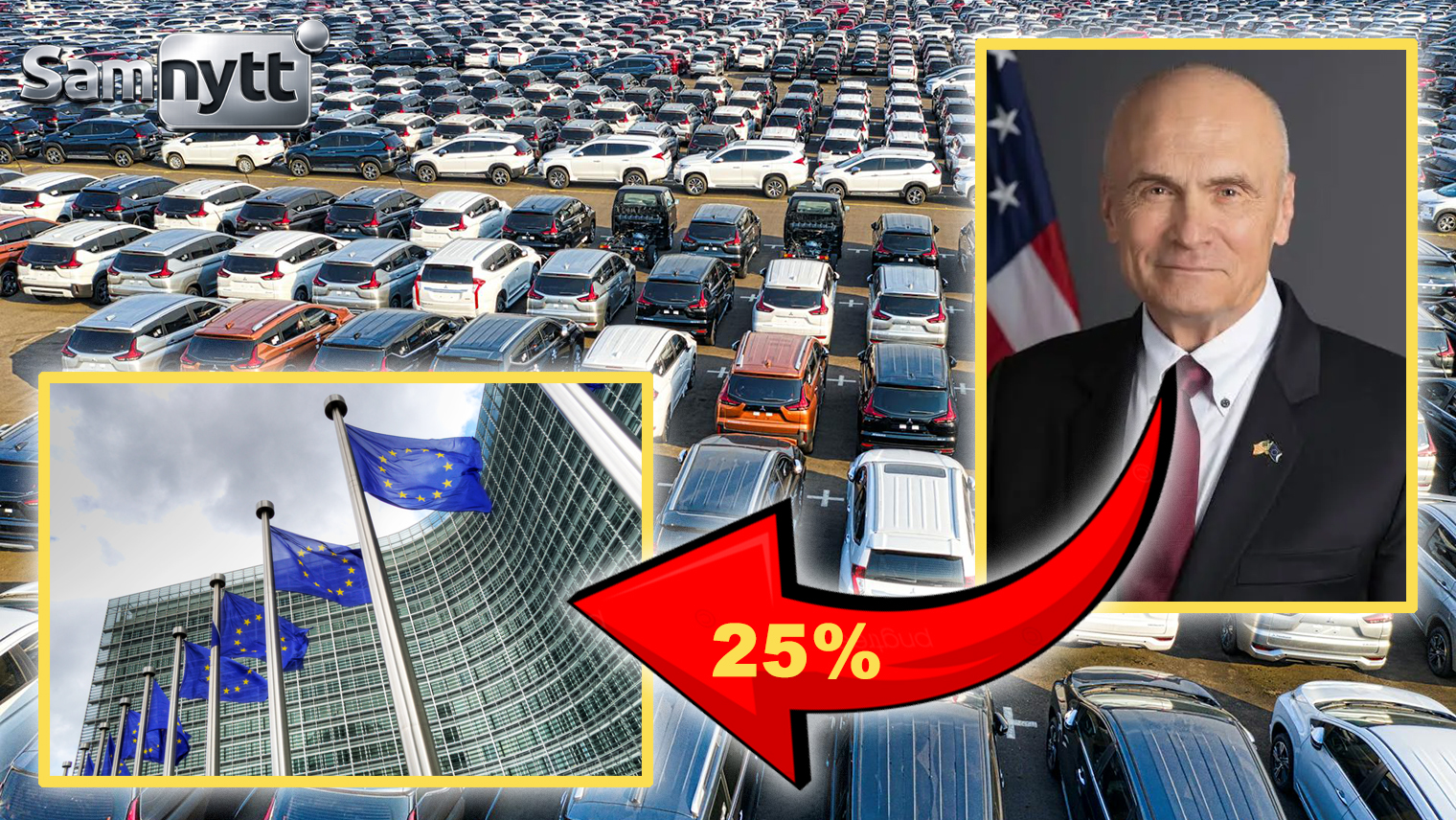
The US signals that new tariffs on European cars may be introduced soon if the EU does not quickly approve a trade agreement that has long been delayed in the ratification process. The statements, reported by Bloomberg, put additional pressure on negotiations and deepen already strained transatlantic relations.
The US ambassador to the EU, Andrew Puzder, says that the US is ready to impose 25 percent tariffs on cars and trucks from the EU “in the near future” if progress is not made quickly in the trade talks.
Puzder emphasizes that patience in Washington is running out. According to him, President Donald Trump believes the process has dragged on without sufficient results.
An Agreement that Has Stalled
The trade agreement in question was essentially reached already in July last year but has not yet been fully ratified. According to the original deal, the EU would remove tariffs on American industrial goods, while the US set a cap of 15 percent for most European products, including cars.
READ ALSO: EU postpones criticized trade agreement after protests
The imposition of 25 percent car tariffs would therefore break this cap. At the same time, the EU believes that certain US measures have already undermined the agreement, including the expansion of high tariffs on steel and aluminum to more products.
EU Wants to Avoid Escalation
On the European side, there is a desire to preserve the agreement and avoid escalation. The EU’s Trade Commissioner, Maroš Šefčovič, has said that the union aims to have the core parts of the agreement in place by July, while calling on the US to respect previous commitments.
US representatives, however, signal that this may be too slow. The message from Washington is that the process is already delayed and faster results are required.
Negotiations under Pressure
At the same time, intensive discussions are ongoing within the EU regarding possible changes to the agreement, including questions of time limitations and implementation details. The US has criticized attempts to renegotiate parts of the deal and warned that it may leave the agreement entirely if new trade barriers are introduced.
READ ALSO: EU and India in major trade agreement – opens the door for massive immigration
A possible increase in car tariffs would hit Germany especially hard, where the automotive industry is central to the economy. The country’s economy minister has stressed the importance of finding a joint solution.
Part of Larger Tensions
The trade dispute reflects broader changes in transatlantic relations. French representatives have warned that the :censored:6:cdd6bbaa89: trading system is becoming more unstable, with increased use of economic dependencies as political tools.
Meanwhile, disagreements have also arisen on other issues, such as security policy and technology regulations, further contributing to a more strained relationship between the US and the EU.
The US threat of sharply increased car tariffs increases the pressure on the EU to quickly finalize the trade agreement. At the same time, the EU is attempting to avoid an escalation and safeguard the accord. The conflict illustrates a broader shift in relations between the parties, where both trade and politics have become more confrontational.