That mass immigration to Sweden has been catastrophic is something that few now deny. But despite Sweden’s rapid shift from a role model to a cautionary tale, there are still certain municipalities where politicians claim they want more migrants and that immigration contributes to Sweden’s development.
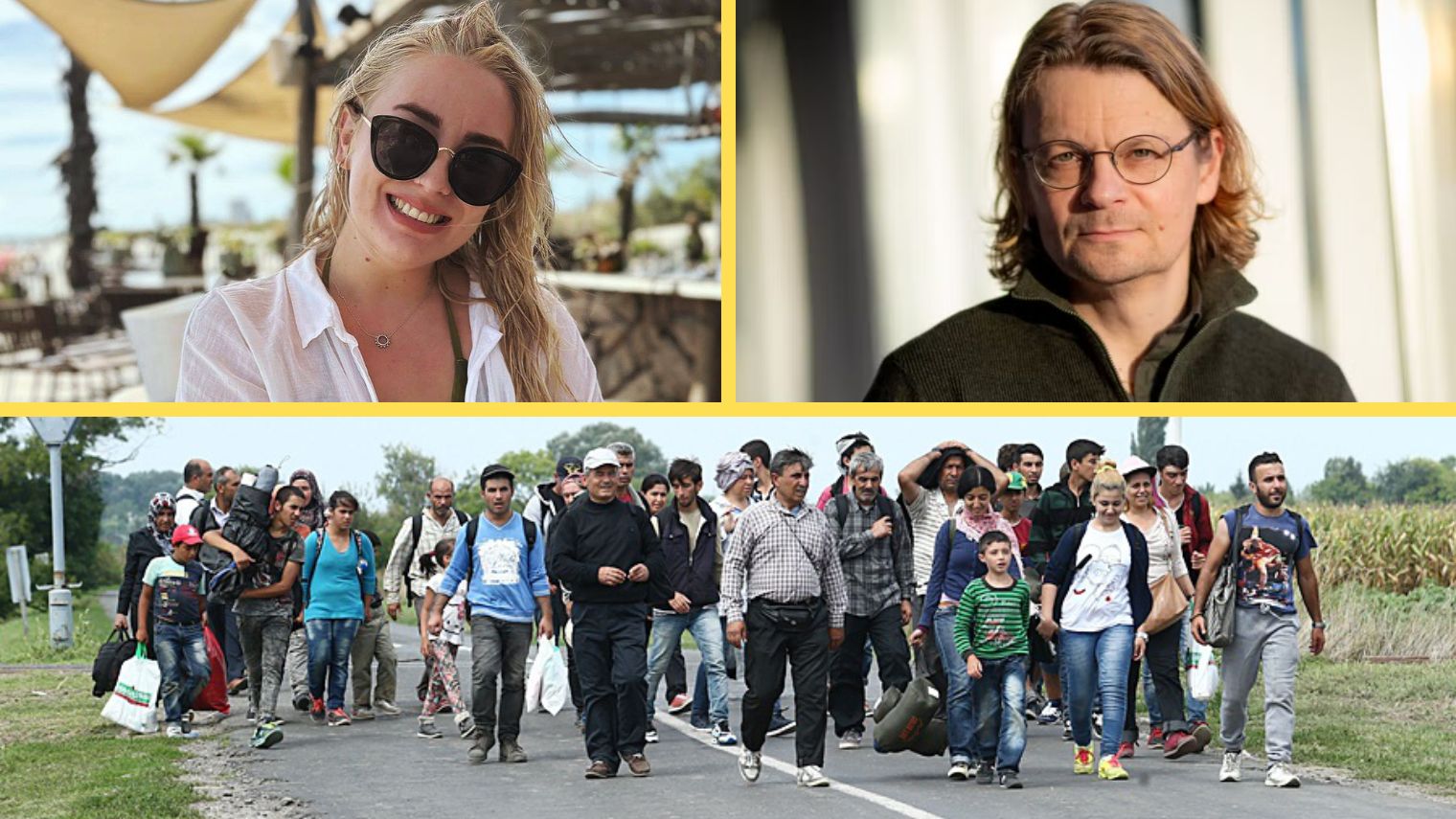
“Unlike how it often sounds from the government and parliament, several local politicians do not see refugees and labor migrants as problems and burdens,” write Peo Hansen, professor of political science at Linköping University and adjunct professor in migration and security at Johns Hopkins University, together with Ellen Rahm, doctoral student at the Institute for Research on Migration, Ethnicity and Society at Linköping University, in a joint opinion piece.
“Instead, they are appreciated community members who help solve the municipalities’ difficult situation with demographic aging, depopulation, and lack of skilled labor in both the public and private sectors,” they continue.
The interest in increasing immigration is something they have observed in their own research, where they recently conducted a survey with all Swedish municipalities. The response rate, however, was just under 60 percent. They claim that “the majority of municipalities distance themselves from national politics’ dismissive stance on migration”.
When asked whether continued refugee reception contributes positively to the municipality’s development, 82 percent of responding municipalities agreed. Municipalities that believe refugee reception contributes negatively make up only 2 percent. As for how refugee reception benefits municipalities, demographic development tops the list, closely followed by the supply of skills in both public and private sectors, ethical and social aspects, and economic growth. These results contradict the image painted by national politics.
In these municipalities, migrants are seen as “a resource—an indispensable one—for Swedish welfare, business, and society at large,” and every third municipality that responded is said to have both the right conditions and the need for more newcomers.
According to Hansen and Rahm, national politics normalizes proposals that “were previously considered extreme” while local politics is “practically oriented and focused on concrete issues.” They also claim that “without immigration, Swedish welfare could not fulfill its mission.”
The duo also criticizes the Tidö government’s increased incentives for voluntary return migration, claiming that it “fuels racism and is an insult to all those who risked their lives fleeing oppression and armed conflict.”
Advocates of Multiculturalism and Immigration
In 2023, Peo Hansen was named the 25th “ambassador” attached to the national campaign Keep Sweden Together, and wrote the following:
Sweden and the EU should accept refugees to protect human rights. In terms of economic aspects, there is really not much to debate. By receiving and investing in refugees—that is, people and therefore real resources—societies in Sweden and the EU have little choice but to benefit.
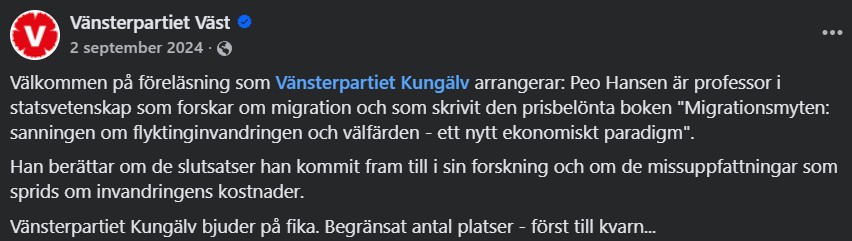
In 2024, Hansen lectured for the Left Party:
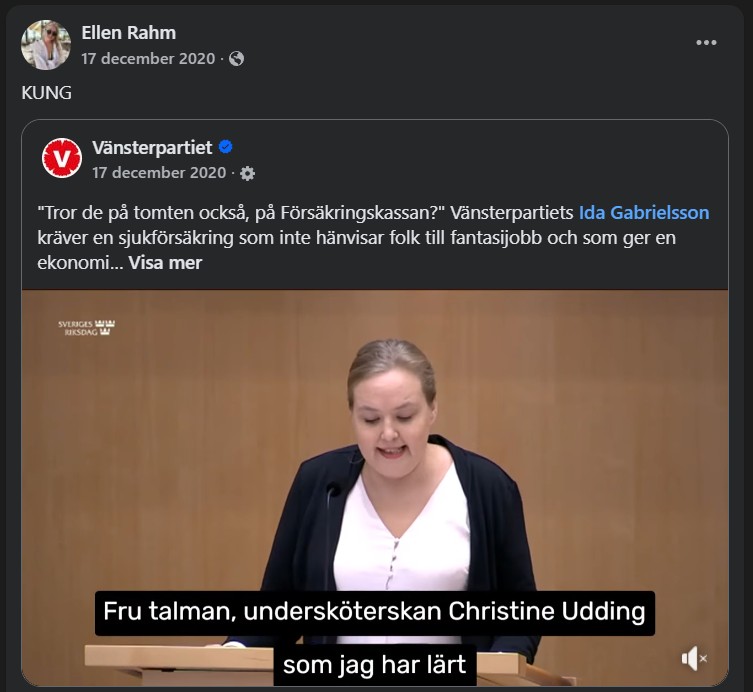
Ellen Rahm is also an experienced advocate for more immigration and supports the Left Party:
READ ALSO: EU countries join forces – want to send home more migrants