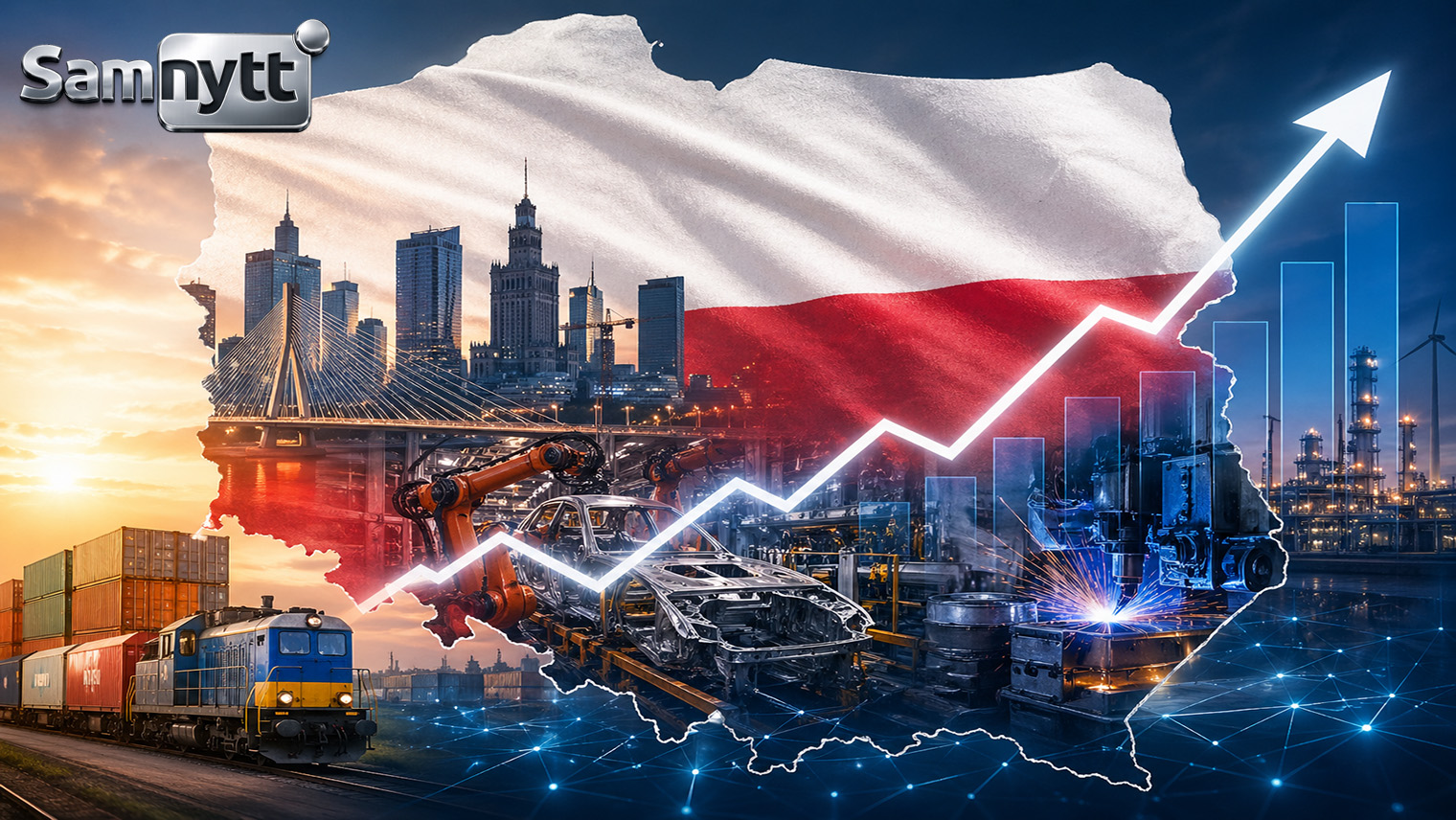
Just a generation ago, Poles stood in line for sugar and flour. Wages were far below Western European levels, infrastructure was neglected, and confidence in the future was weak. Today, Poland has grown into one of Europe’s most dynamic economies, has surpassed Spain in purchasing power-adjusted income per capita, and claimed a spot among the world’s twenty largest economies. The country’s journey is not only a national success story—it also challenges many of the political narratives that have dominated debates in Brussels and Western Europe.
For many years, Europe’s economic discussions have centered on Germany, France, and to some extent Italy. But while several of these traditional engines have sputtered along with low growth, weak productivity, and recurring structural problems, Poland has continued its strong advancement.
According to data highlighted by outlets such as Deutsche Welle, Poland’s GDP grew by around three percent in 2024—well above the EU average. Forecasts for 2025 and 2026 have also remained robust. This is not a question of a temporary bounce after the pandemic, but rather the culmination of a longer trend, where since joining the EU in 2004, Poland has grown faster than almost all of Western Europe.
READ ALSO: Two EU countries – two different realities: Samnytt visited Christmas markets in Poland and Germany
Perhaps the most striking aspect is not only the pace but the sustainability of the growth. While other countries have had brief upswings followed by stagnation, Poland has continued to converge upward—year after year.
From Planned Economy to Highways, Factories, and Tech Hubs
Poland’s modern economic history begins in the ruins after the collapse of totalitarian communism in 1989. The country was poor, inefficient, and institutionally weak, like all other countries where the communist social experiment was attempted. But the reforms that followed gradually created something unusual for the region—a functioning market economy without being entirely captured by oligarchs, systemic corruption, or political chaos.
EU membership in 2004 was a turning point. The country took the best—all the benefits of access to the single market, foreign investments, and extensive EU aid gave Poland the capital to build roads, railways, logistics networks, and modern public infrastructure. At the same time, Poland rejected much of what has eroded several western member states—the most notable being the liberal migration policy, which has been an enormous economic and social burden for countries like Germany and Sweden.
There was also something else—the workforce. Poles were well educated, technically skilled, and significantly cheaper than Western European workers. The combination proved magnetic to investors.
First came the factories. Then financial centers, IT services, and engineering firms. Now, research, AI, and advanced technology are growing in cities like Poznań, Warsaw, and Wrocław.
An Economic Miracle—even Under Law and Justice
This is where the political dimension comes in. For much of the past decade, Western media often described Poland as a country drifting away from Europe, descending into democratic backsliding and institutional crisis under the conservative Law and Justice Party (PiS), which ruled from 2015–2023.
READ ALSO: Poland’s new president refuses to accept the EU migration pact
The criticism of the government was massive—especially from more liberal circles in Brussels and Western Europe—and in scope was only really comparable to that aimed at Fidesz in Hungary. But the economic reality was much more complicated and contrasting than the political narrative.
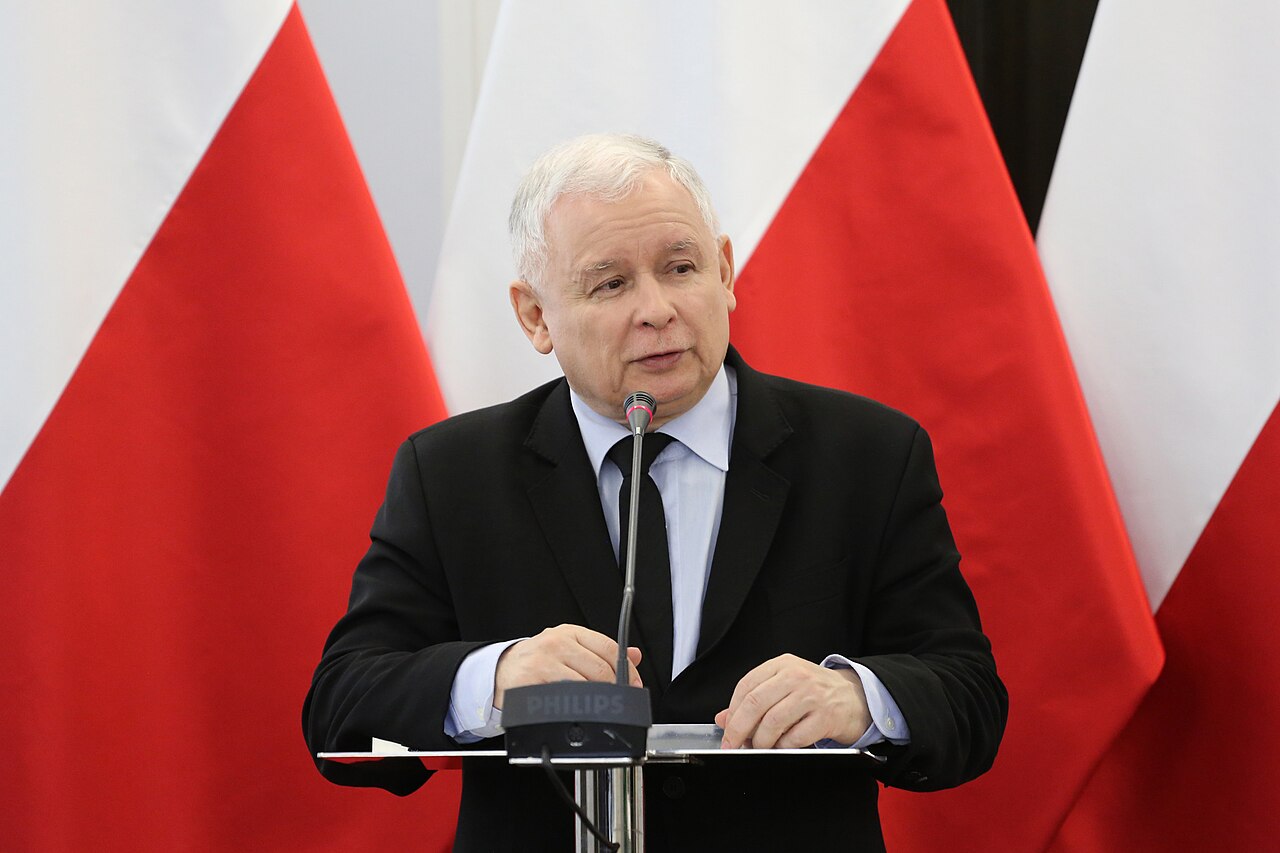
It was precisely during these PiS years that much of Poland’s catch-up occurred. Real wages rose, unemployment fell to low levels, families with children received stronger support through generous transfers, and domestic consumption became an engine for the economy. At the same time, the country continued to attract investments, strengthen industry, and improve infrastructure.
To claim that Poland was heading for the abyss during these years doesn’t match up with the economic data now at hand. Rather, the country continued—and in several respects accelerated—its journey from Europe’s backyard to its growth center.
Donald Tusk Returned to a Country on the Rise
When Donald Tusk returned to Polish politics after his years as “president” in Brussels and regained power in 2023, he was met by a country with a strong labor market, improved living standards, and continued strong growth prospects—not the country in decline he himself had described during his absence.
READ ALSO: Poland’s new president: Poland first, Poles first
This doesn’t mean Tusk lacks a historic role. On the contrary, he also led the government before 2015, during a period when Poland laid key foundations for its ascent—EU integration deepened, investments grew, and modernization continued. He thus deserves some of the credit, but also criticism for a range of authoritarian measures against opponents and the media after his latest electoral victory.

Still, the widespread portrayal of PiS as an obstacle to Poland’s development—particularly by Tusk himself—is hard to square with the fact that the same period coincided with ongoing economic progress. The more reasonable conclusion is that Poland’s success rests on something broader than party politics—a strong work ethic, institutional continuity, opportunities from the EU market, and a national will to catch up.
Poland Overtakes Spain—and Chases the UK
When Euronews reported that Poland had overtaken Spain in purchasing power-adjusted income per capita, it was symbolically significant. What was long considered “cheaper Eastern Europe” is now overtaking established Western economies in actual living standards measured by what your money can buy.
READ ALSO: Left-liberal scandal in Poland – EU funds used for luxury boats and a swingers’ club
The country is also approaching the UK by this metric. That doesn’t mean everything has been won. Spain and the UK still have greater wealth, more accumulated capital, and other social strengths. But the direction of development is clear—Poland is moving rapidly upward.
Why Did Poland Succeed While Others Got Stuck?
Several factors recur in analyses from Euro News, Fortune, DW and others.
Factors
- Strong education levels: A large share of young Poles have higher education, especially in technology and the sciences.
- Competitive wages: For a long time, high skills were combined with lower costs than in Western Europe.
- EU integration: Access to the EU’s internal market and extensive support funds provided tremendous leverage.
- Domestic consumption: Growth was driven not only by exports, but also by Polish households having more spending power.
- Entrepreneurship: Polish companies have gone from subcontractors to technological leaders in several sectors.
- Political continuity despite conflict: Both liberal and conservative governments have in practice continued much of the economic modernization agenda.
Clouds on the Horizon
No success story is without flaws and risks. Poland faces growing budget deficits, high defense spending, and an aging population. Birth rates are low. Public debt is expected to rise. Housing is expensive for young people, and the gap in prosperity between urban and rural areas remains large.
Moreover, the step from efficient manufacturing nation to true innovation superpower still remains. According to economic observers, that will determine the next phase.
The Broader Lesson for Europe
Poland’s journey says something important about today’s Europe. Growth and modernization are not reserved for old core countries in the West. They can just as well occur in previously peripheral states that have emerged from the oppression of communism and combine education, realism, investment, and national ambition.
READ ALSO: Tusk’s left-liberal Poland: Here the security service arrests a member of parliament
It also shows that political caricatures often miss economic realities. A country can be the subject of a fierce culture war in Brussels while delivering stronger results than many of its critics.
From “Rags to Riches”—But Not There Yet
Thirty-five years ago, Poland was rationing sugar. Today, the country is building AI centers, exporting advanced industrial products, and is mentioned as a possible future heavyweight in Europe.
The journey isn’t over. But it is already one of the most remarkable economic transformations in modern European history.
While many derided Poland as a problem country, it kept getting richer. Only now, as the country once again has a liberal government, do its detractors admit what had long been denied—that it is equally possible, if not easier, to lift a country economically under conservative as well as liberal rule.