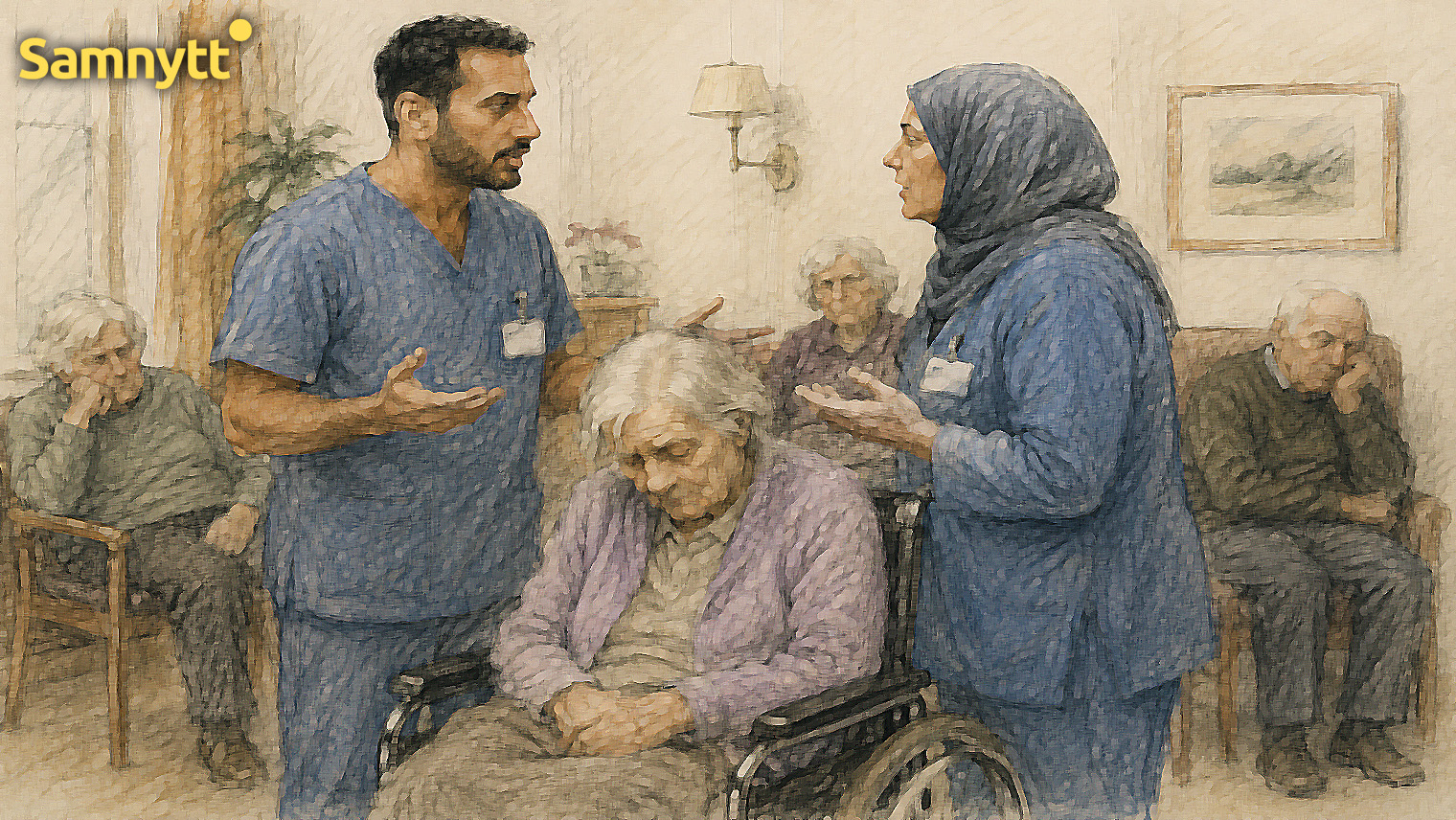
An elderly woman in Hässleholm municipality was placed in a short-term care home after a hospital stay, despite both her own statements and her son’s indicating she wanted to return home. In the following weeks, her health deteriorated sharply, and later the municipality tried to have a legal guardian appointed, something the supervisory authority ruled could not be used for the purpose the municipality intended. The case raises questions regarding legal support, administrative authority, and the individual’s right to decide over their own living arrangements.
The conflict escalated after the woman was treated at Central Hospital in Kristianstad for sepsis, a serious infection likely linked to a catheter according to healthcare staff. When she was deemed ready for discharge, she reportedly told Frilagt’s reporters that she wanted to return to her home in Hässleholm, where she lived with her son.
Instead, the municipality decided to forcibly place her in a short-term care facility in another municipality. According to the son, he was not informed about her whereabouts until after the fact, and for a time he struggled to make contact with her. He later reported the municipality to the police for misconduct, arguing that the decision had been made against his mother’s explicit wishes.
Concern reports became central to the case
In parallel with the placement, concern reports (or “orosanmälningar”) were filed by both municipal home health care and the local health center. The reports claimed there were deficiencies in the home environment, and accused the son – who was supporting his mother’s wishes – of hindering her care.
READ ALSO: Poor Swedish language skills in elderly care in three out of four municipalities
The son has consistently denied the accusations, claiming several details were incorrect or outright false. Frilagt also reported that municipal officials later admitted that some information in the concern reports was not accurate.
According to the son, the reports were used as a basis for decisions affecting his mother’s situation, without him being given the opportunity to review or respond to their contents.
Starved and neglected in short-term care
During her stay in the short-term care home, the woman’s health deteriorated markedly. When Frilagt visited the facility in early May, she was described as severely emaciated and very weak — on the edge of starvation. Shortly thereafter, a doctor was called for.
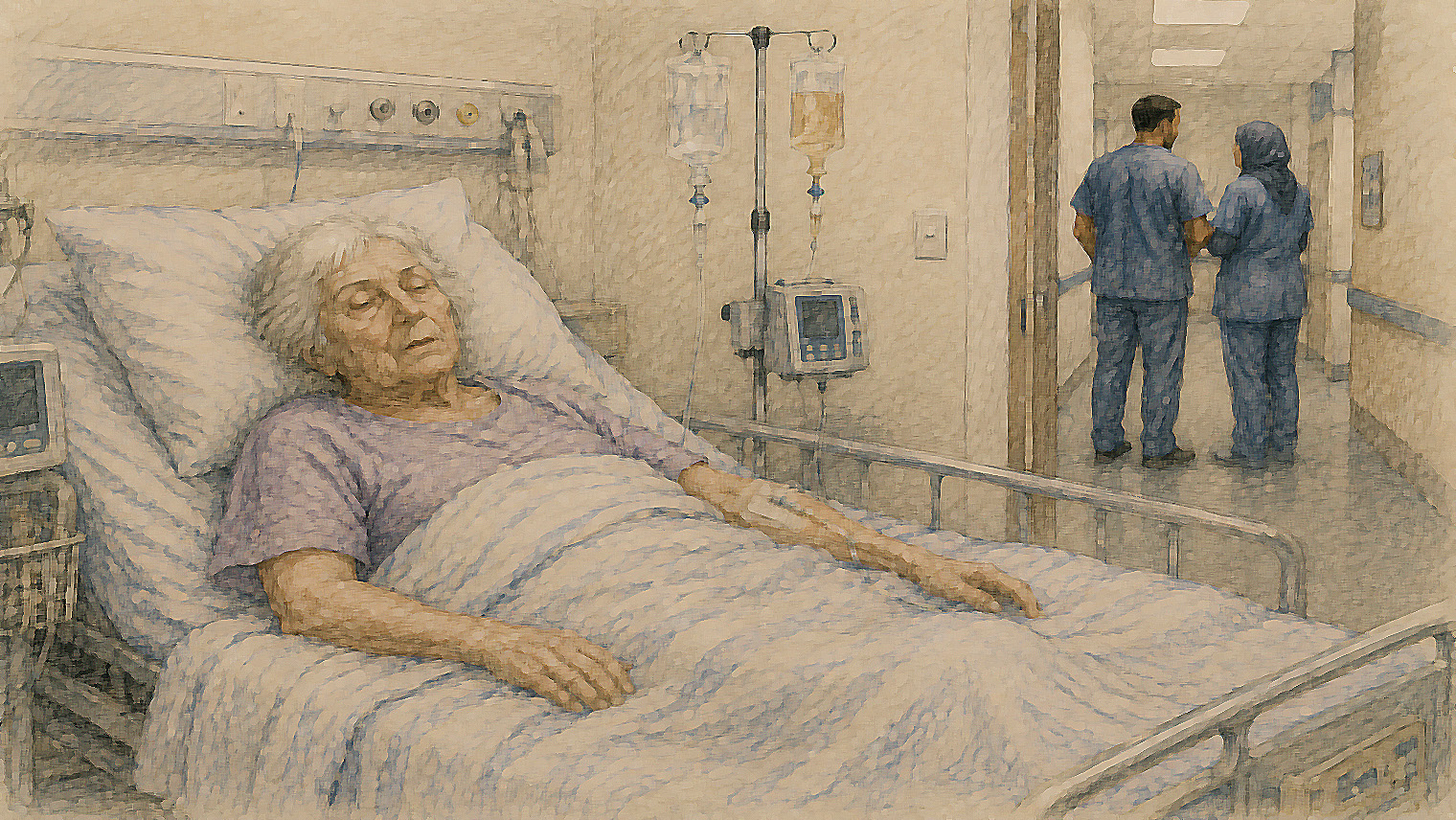
According to Frilagt’s reporting, the doctor determined that the woman had received very limited amounts of food and fluids over a prolonged period. She was considered so frail that transport to the hospital might involve risks. Instead, intravenous fluids were administered at the care home as an acute measure.
After treatment, her condition improved rapidly. She began to speak again, reiterating that she wanted to leave the care home and return home.
Municipality reversed its decision
A few days later, the municipality decided the woman could return to her residence in Hässleholm. Upon her return, her son reported that she started to eat better and recover gradually.
READ ALSO: Pensioner given vinegar substitute instead of juice by home care staff – several similar cases
At the same time, it was revealed that she had developed pressure ulcers while staying at the care home. According to Frilagt, representatives of the facility stated the incidents should be investigated as deviations, and that an assessment of whether a care injury had occurred could be warranted.
Attempt to appoint a guardian stopped
After her return home, another part of the case emerged. The care administration had reported to the supervisory authority (“överförmyndare”) that the woman should have a guardian appointed.
The accompanying documents claimed, among other things, that she lacked capacity to consent to necessary care. However, the supervisory authority made a different assessment and dismissed the case.
READ ALSO:
In its decision, the authority stated that the action requested by the municipality was not supported by laws regulating guardians’ powers. The supervisory authority further noted that a guardian cannot force a person to move to a special care home. The decision meant that no application was ever submitted to the district court.
The care administration defends its action
Municipal care authorities have since defended the handling of the case. Officials have claimed to Frilagt that the situation was assessed as acute and that measures were taken based on the information available at the time.
READ ALSO: Dagerlind: The forbidden election issue — how Sweden failed its elderly
At the same time, the same officials have confirmed in interviews that elderly care lacks legal grounds to force a person who can express their wishes to move to a short-term or special care home. The municipality’s own statements thus reinforce the perception that the woman’s right to self-determination was not respected.
Continuing controversy
The case has become one of the most noted elder care cases in Hässleholm in recent years. Frilagt’s investigation has prompted questions about how concern reports are used, how relatives are informed, and the legal boundaries that apply when municipalities consider that elderly people need more extensive care.
For the woman herself, the process ended with her returning home. But the legal and principled questions raised in the case remain disputed.
READ ALSO: Christer, 76, on life in a care home: “If you criticize, you’re called xenophobic”