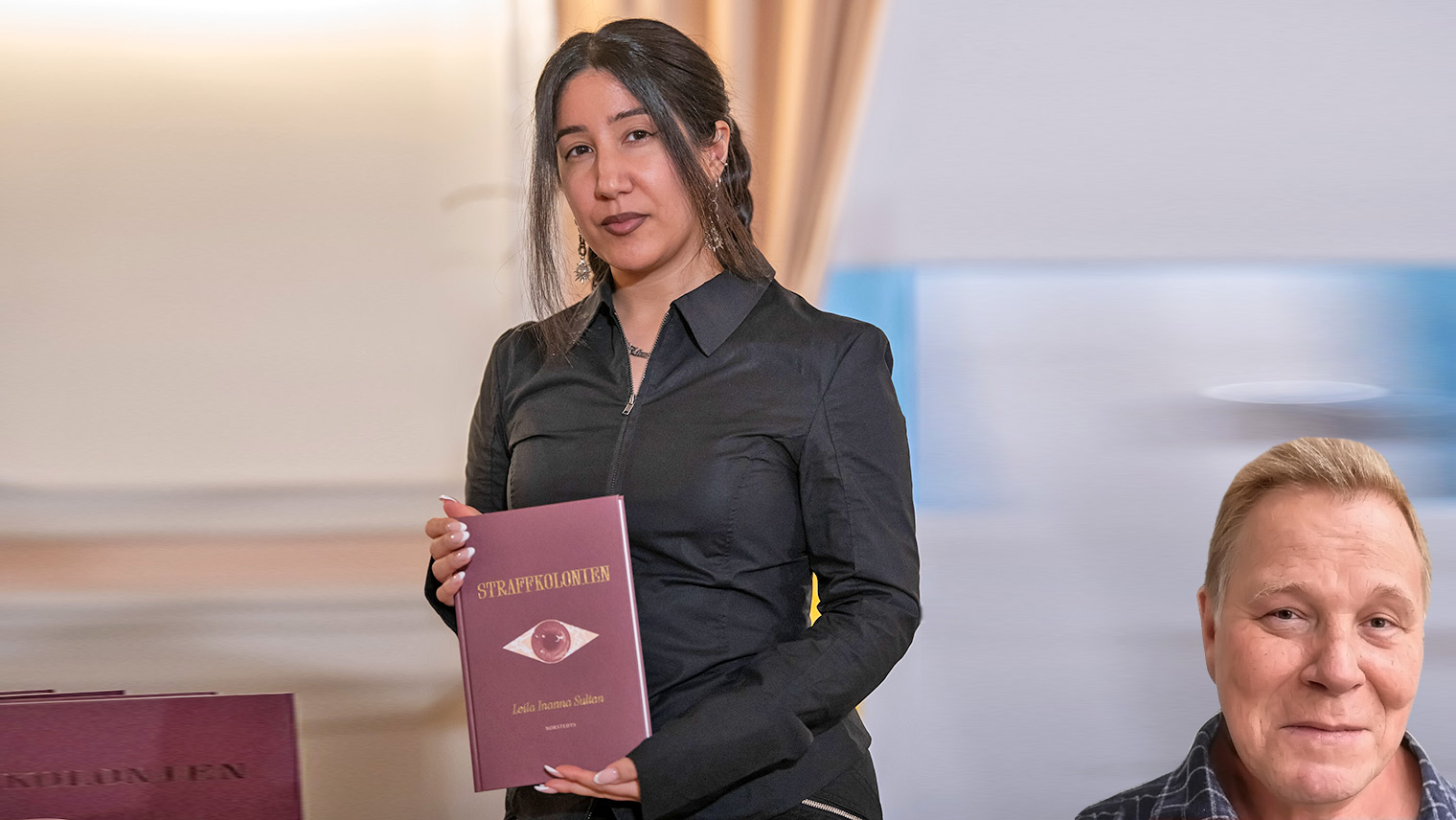
EDITORIAL • When a poetry collection authored by a young woman with an asylum-related immigrant background describes Sweden as a “penal colony,” one might dismiss it as mere poetic exaggeration or adolescent identity-seeking immaturity. But when one knows that this image goes unchallenged—instead, it is accepted, rewarded, reinforced, and made a norm within the Swedish cultural establishment—then it is no longer about a single book, but about a society that has lost all sense of proportion.
A news brief flickers past in the news feed. A debut award has been handed out. One of those literary prizes known to hold prestige, even if they rarely make it beyond the culture pages. The name, Leila Inanna Sultan, means nothing to me, but the formulation “A poetry collection portraying the oppression of the safety machine” raises suspicions. What kind of poetry is written and celebrated in Sweden today?
I read the jury’s reasoning and click over to the publisher, where my fears are confirmed. Sultan’s collection is about a world of detention, despair, and a system that “inscribes the punishment on the body of the condemned.” The feeling of being unwanted, rejected, doomed. These are strong words, and in another context, they might have been justified.
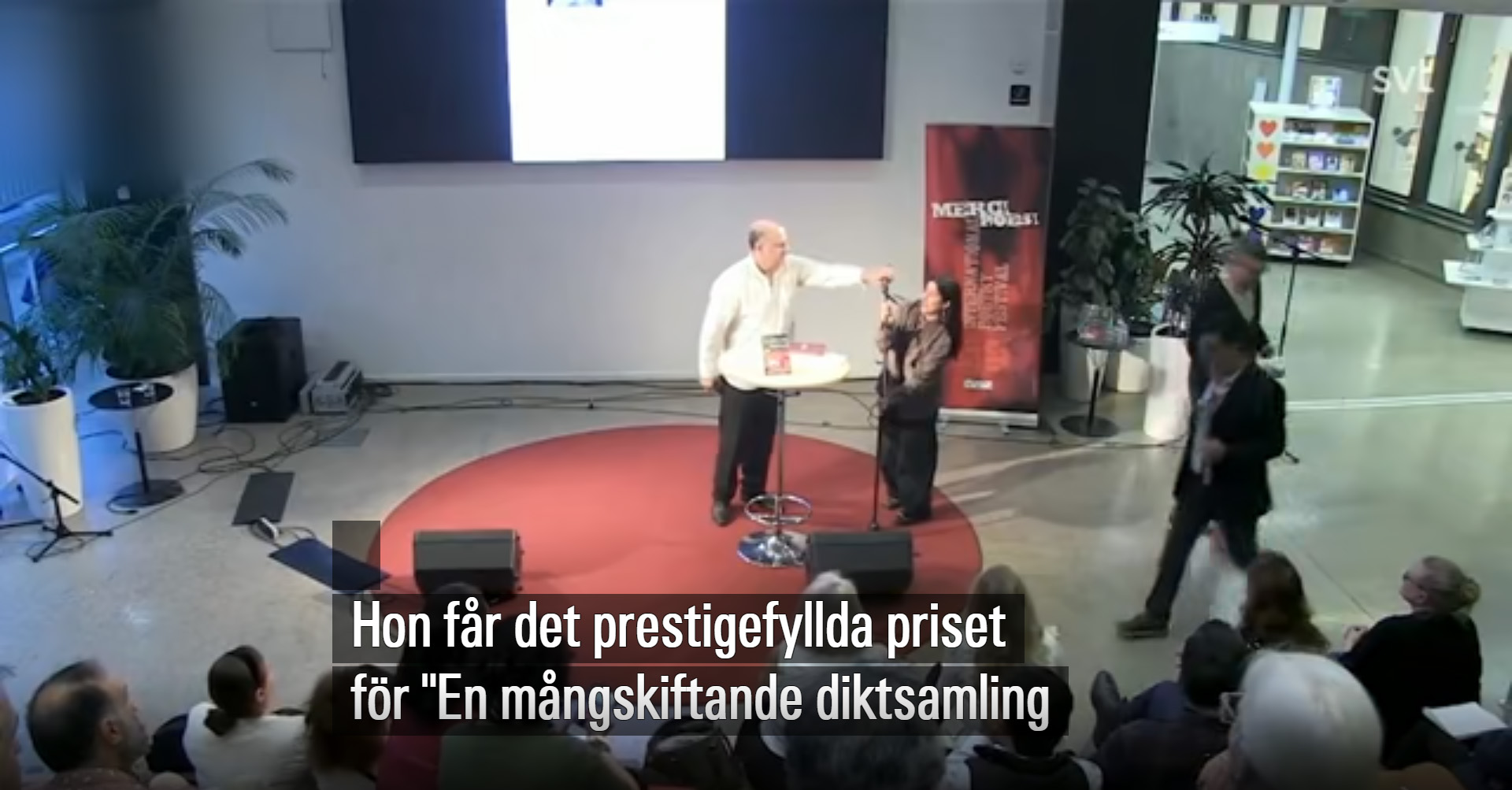
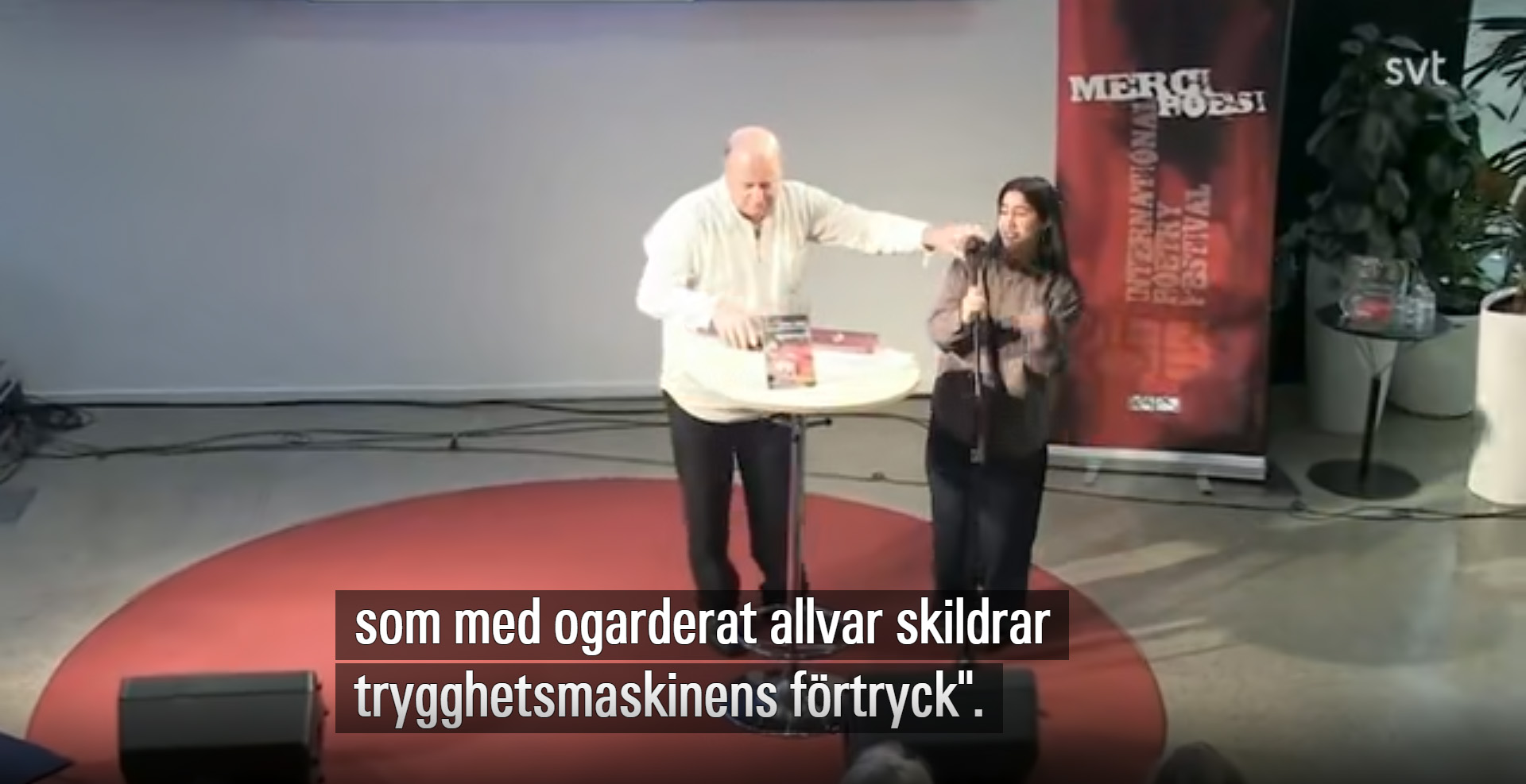
But here, to say the least, friction arises. Because the society described as a penal colony—on par with that in Franz Kafka’s novella, from which the title is stolen—is not the former homeland that Leila fled, but Sweden—a country that for decades has been a refuge and one of the world’s most open to migration, with extensive rights, social safety nets, individual freedom, and opportunities for self-actualization, not least for women like Leila.
Questions previously asked return anew. How did we end up here? Why is it this oikophobic image that is not just accepted, but encouraged and rewarded by the Swedish cultural elite? With what agenda does this happen, and in what way does it serve Leila to be saddled with such a victim identity?
From Working Class to Identity
This development has a historical background. For a long time, the working class was the obvious protégé of the left. When this group refused to be agitated into revolution and instead increasingly shifted politically in another direction, a void arose.
Socialism, Marxist planned economies, and the dictatorship of the proletariat—in reality, euphemisms for a dogmatic political elite with an iron fist—imploded everywhere it was tried in Europe, with frightening results.
In the aftermath, the need for new protégés emerged. One of the more prominent became the ethnified lumpenproletariat of low-educated migrants. An alleged class oppression was repackaged as a racist oppression based on identity.
Not all immigrants initially realized just how vulnerable, marginalized, and structurally oppressed they were when coming from a dirt floor to a modern three-room rental, from poverty to generous benefits, and from war and chaos to peace and order. It became the left’s task to have them fit into this narrative, to make this subordination their self-image, and to stigmatize those who did not comply as “house slaves.”
The Distorted Perspective
Segregation exists. Failed integration exists. Discrimination exists too—but more often than not, it stems from prejudices confirmed by a reckless migration policy. With a more responsible policy, immigrants in Sweden would have a good reputation. Moreover, with terms like diversity and representation, an institutional discrimination against Swedes has been established—in the housing market, job market, and educational system.
Racism exists but has a different profile than the left claims. Swedes consistently rank at the top in international surveys as one of the least racist peoples in the world. Many of the migrants’ countries of origin are found at the other end of the spectrum—Arabs hating blacks unless united in hatred against Jews. Even within seemingly the same group, people may hate each other depending on clan or which branch of Islam they confess to.
Working-Class Culture Then and Now
The cultural world, and its symbiosis with the cultural pages of the media, plays a decisive role in establishing society’s self-image, both as a mirror and as an amplifier. For the past 50 years or so, it has mostly been about reflecting and reinforcing left-wing perspectives, often radical ones.
Before the intellectual (well, sort of) ’68 left took over, there was a sort of genuine working-class culture. Authors such as Ivar Lo and Eyvind Jonson came from the working class and wrote both about and for it. When lured into the salons of high culture, things did not always go well.
When Jonson, together with Harry Martinson, first received seats in the Swedish Academy and later the Nobel Prize in Literature, they were more deprived than rewarded. Today, that problem no longer exists. Among the eighteen with so-called “genius and taste” in the Börshuset, there are many leftist demagogues, but neither their roots nor their audience lie in any underclass.
They write directly for the culture pages, which in turn write about them. The working class reads other things. The ethnified lumpenproletariat is barely literate at all and has no idea what poets like Leila Inanna Sultan or Athena Farrokhzad write—and wouldn’t, even if it were comprehensible poetry instead of “pretentious words in a weird order,” as someone I know with an authentic working-class background dismisses it, barely concealing their disgust.
It thus falls to the cultural left to elevate stories of vulnerability, exclusion, and structural oppression high above the heads of workers and immigrants, granting them high status. A review of a collection like ‘The Penal Colony’ is as incomprehensible as its subject; the reviewers write for other leftist intellectuals, and there is no public education in the traditional sense.
And it doesn’t matter what political profile the newspaper has. The right-leaning SvD’s review of the collection is just as left-leaning and devoid of criticism as all others. There is neither daring to question the author’s spitting on Sweden and Swedes, nor any suggestion that the work is particularly gifted, literarily speaking.
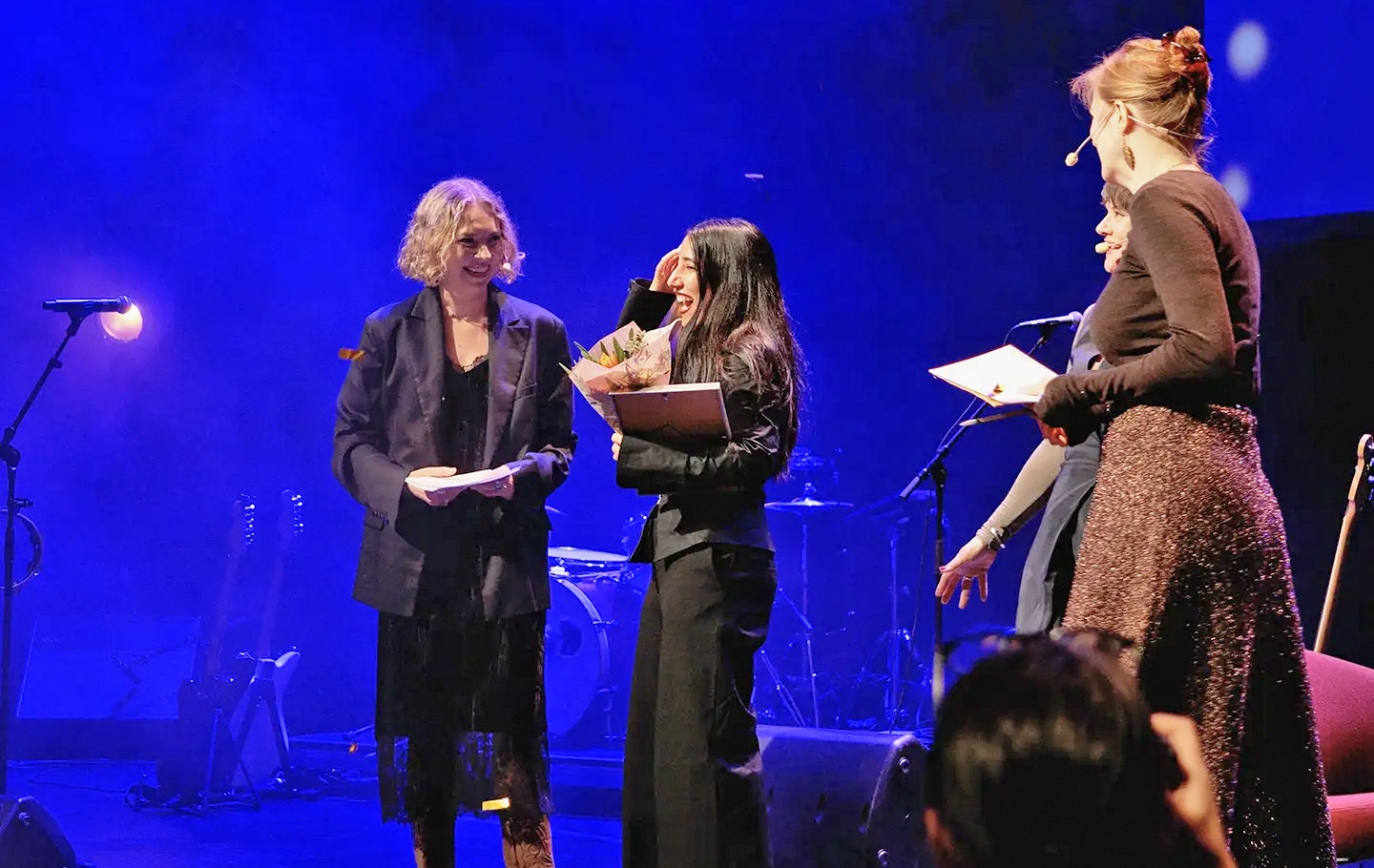
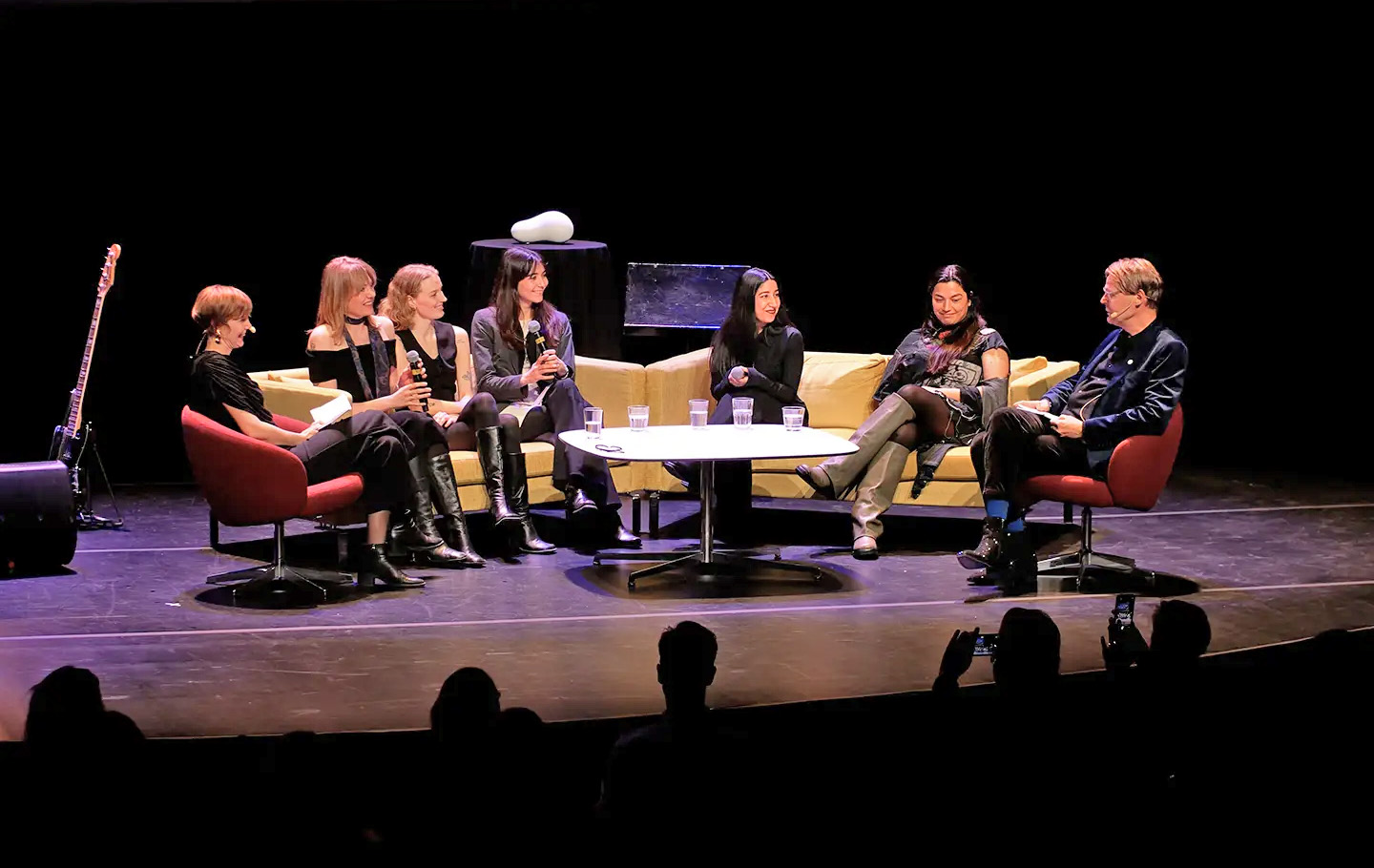
At the award ceremony, held in the refined academic environment of University of Borås, bus drivers, cleaners, home care staff, and welfare recipients from the local “vulnerable areas” Norrby and Hässleholmen were conspicuously absent. Altogether, it was very white and middle class both on and off stage.
Leila Among Sweden’s Most Privileged
The Swedish working class has been abandoned, not even claimed as honorary representatives anymore, and the new protégés in the suburbs are reduced to battering rams for new leftist virtue-signaling. It is telling that Karin Moberg at SVT’s culture desk dominates the entire segment about Leila Inanna Sultan receiving a prestigious poetry award, and that the audio is muted on the film clips where the laureate thanks for the award.
Voices like Leila’s are attributed a certain genuineness by virtue of background and become new touchstones in the established left-leaning interpretive pattern, confirming a morality and worldview where guilt and responsibility lie clearly with others than the individual. The benefit-supported migrant whom Sweden has raised to a standard of living a hundred times higher than they could have hoped for in their home country is still oppressed and vulnerable, simply because there are Swedes who are even better off.
No one tells Leila how privileged she really is, able to sit and write navel-gazing, self-pitying poetry and be lauded for it—instead of being married to a cousin back home and, as one of his four wives, exist more as a slave than a life partner. She probably did not originally attribute to herself the perspective-less victim identity of someone in a penal colony in Sweden, but was coached into it by the same cultural left now rewarding her for toeing their line and agenda.
Even for those with the same background, the poetry collection is an affront—all the immigrants who toil in low-paid jobs, contributing their part so that society in Sweden can keep turning, while Leila goes to writing school and basks as the exotic showpiece of the cultural elite. More ‘house slave’ than those the left accuses of being so.
The unhealthiness of letting Leila sit and wallow in some form of self-harm behavior, instead of enjoying the life of a free woman in a free country—the kind of life her sisters at home do not have access to—does not concern the cynical, exploitative cultural left in the slightest. The same pattern recurs elsewhere, where the left allows children and youth to live in a constructed climate or sexual-identity angst, which can be exploited for its own political ends.
Gangsta Rap and the Romanticization of Destructiveness
This lack of genuine care for those they claim to stand up for becomes especially clear in the approach to the cultural phenomenon of gangsta rap. Here, it’s not just about depicting a reality, but often about aestheticizing it. Violence, crime, and destructive life choices become markers of identity and cultural capital.
When this cultural form is not only tolerated but actively promoted and rewarded, it is hypocrisy, cynicism, and exploitation at the highest level. This works completely counter to every political ambition to break the recruitment chain to criminal networks and to provide these kids and youth with tools and values to create a better future.

The glorification of the gang-criminal lifestyle in this musical genre serves not only as a recruitment tool targeting young, impressionable people. The gangs also get help from society—free advertising, whitewashing, and a distorted image that serious criminals are in reality victims of racism and oppression from Swedish society, supposedly left with no other choice but to kill and bomb.
The result is that today we have 13-year-old child soldiers lining up to commit contract murders for the criminal immigrant gangs. Misguided left-liberal legislation adds fuel to the fire as an incentive, but the cultural left also contributes greatly in steering young people’s choices towards a path where they ruin their lives before they even have a chance to start.
The Import of a Foreign Narrative
One more dimension of the Swedish left’s warped imagery is how concepts and ideas are imported from other contexts, concepts that become entirely misplaced when applied to Sweden. Terms like “racialization” and structural racial oppression come from societies with a completely different soiled past—such as the USA’s history of crimes against Indigenous peoples, slavery, and racial segregation.
Translating these perspectives to Sweden is entirely wrong. Immigrants from the third world walking on Swedish soil are not descendants of slaves, and Swedes owe them no historical debt to repay. On the contrary, we have lifted them to a standard of living and freedom they could only dream of in their homelands—and most of that lift, they get for free, by merely coming here.
The new left’s depiction of Sweden and Swedes is false and deeply unjust, and for decades it has served as the basis for erroneous integration-policy decisions, where the responsibility has lain with society and not the individual to adapt. The result is a monumental failure. Parts of society are sobering up, but the left’s embrace of a poetry collection that depicts Sweden as a penal colony for asylum seekers shows that the penny hasn’t dropped everywhere. Indeed, we now see a recoil where the left claims that tightening immigration policy has “gone too far,” when in reality we have barely begun to rebuild a functioning Sweden.
A Need for Proportion
The debate on migration policy has lacked all sense of proportion for decades. The prevailing narrative has been that we have done too little, although we have done more than all others; that we are oppressors to people to whom, in fact, we are benefactors; and that the responsibility for integration is ours, not the individual’s.
Sweden has subjected itself to public shame in a wholly undeserved manner. The shame we—or at least those steering the Swedish ship—should feel is for what has been inflicted on the Swedes: all the hundreds of billions spent on migration instead of welfare, all Swedish pensioners tricked out of their money and belongings, all the girls raped, all the children subjected to humiliating robberies, all those murdered and abused by people who should never have set foot in this country. The transformation of our country to one of near-unrecognizability.
Another Narrative is Possible
The story Sweden needs about itself is not the mendacious, false, and perspectiveless one that Leila Inanna Sultan writes and the cultural establishment praises. What we need are more stories from society’s real victims.
If Sweden has become a penal colony, it is Swedes who have been punished, who have had their lives limited, who are the victims. They are the ones whose situation has, at best, been worsened and, at worst, had their lives shattered, while migrants like Leila have seen their quality of life improved a thousandfold.
But Swedes are not inclined to drape themselves in victimhood and write self-pitying poetry about it. And if they rightly did, their stories of vulnerability would not open any doors at Norstedts publishing. However, we should listen more to their stories on social media, in letters to the editor, and comment sections on platforms like the one you’re reading now, and from the Sweden Democrats and other newly awakened opinion-makers.
The Left Deserving of Penal Colony
The cultural establishment is a swamp in need of draining. The left needs to be led out of it, ear first, no matter how much they howl to the heavens. We need good forces to encourage those trying to rebuild what others have torn down, to instill justified pride in Swedes instead of oikophobic shame and guilt, to give people like Leila Inanna Sultan a constructive self-image and identity that promotes her participation in society and psychological well-being—and even more so, the 13-year-olds in the suburbs now wondering whether to graduate school or become contract killers.
I do not want to go so far as to advocate that the cultural left be exiled to some “penal colony”—which is a favorite trope on their end for dissidents. It is enough to simply exile them from the salons and have them contribute some real social good instead, if they are able to.