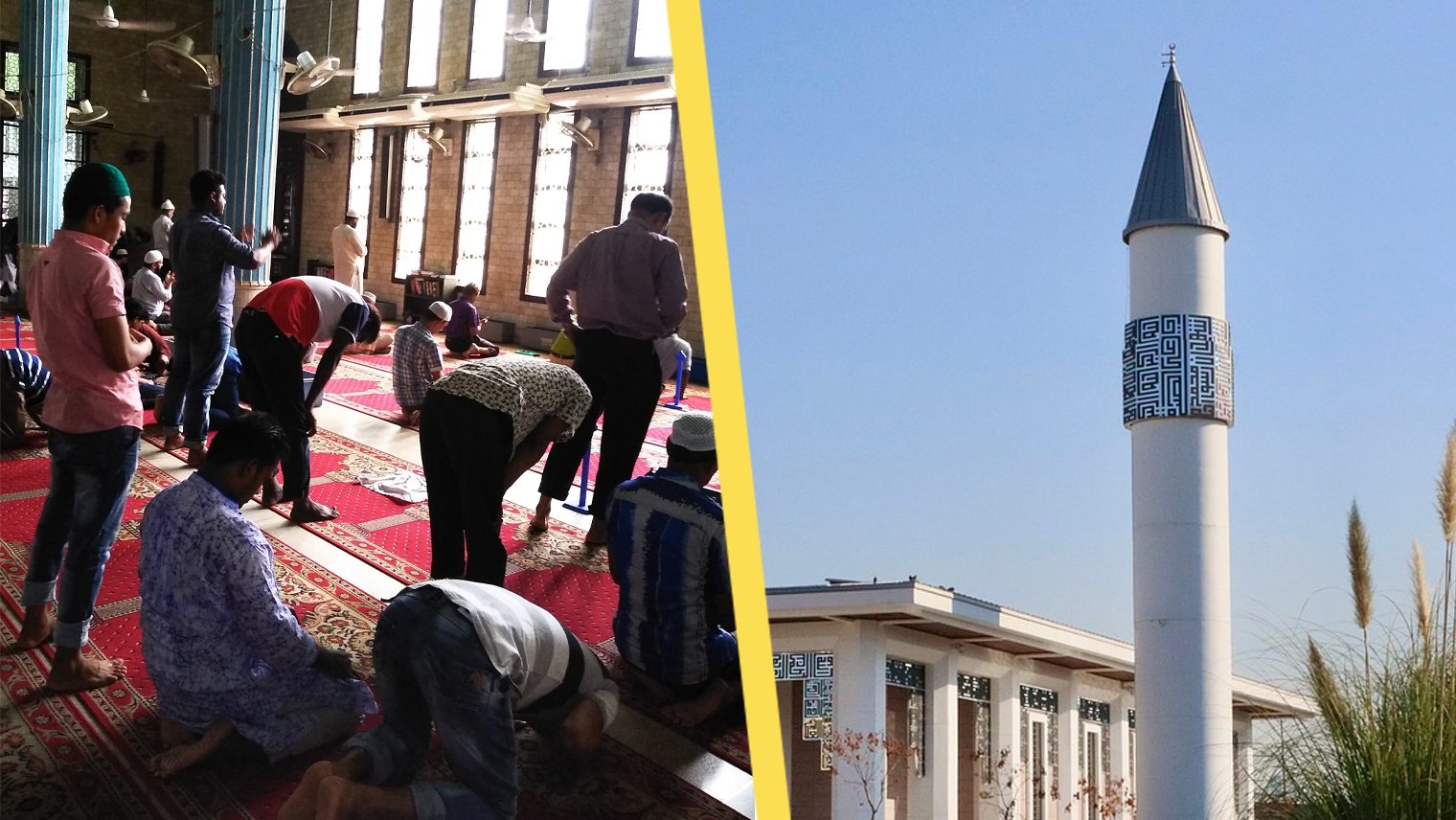
Guidance from Barcelona’s City Hall recommends that schools adapt activities during Ramadan – including avoiding music and dance, as some Muslims may find these inappropriate during the holy fasting month.
Barcelona’s City Hall, through the city’s Office for Religious Affairs, has distributed guidance to schools on how activities can be adapted during the Muslim fasting month of Ramadan. The document recommends, among other things, that schools avoid activities like music and dance during this period.
The guide, which according to Spanish media has been sent to schools in the city, is titled “Guidelines for Educational Centers on Ramadan” and contains advice for school leadership on how to be considerate of Muslim students’ religious observance. This year, Ramadan takes place from February 18 to March 20.
The document notes that some Muslims may view music and dance as inappropriate during the fasting month.
Some Muslim individuals may consider music or dance to be activities that are not suitable during Ramadan, as the month is regarded as a time devoted to spirituality where it is especially important to maintain a devout attitude.
Against this background, schools are encouraged to take this sensitivity into account when planning activities, or to offer alternative activities.
Part of a broader debate on religion
The guidance was presented during an information session organized by the city’s Office for Religious Affairs together with Barcelona’s Department of Interculturality and Religious Pluralism.
It has also been published at a time when religious education in Catalan schools is the subject of debate. Catholic religious instruction, according to the current agreement between the state and the Vatican, is supposed to be offered in schools, but teaching unions have claimed for several years that in practice the subject is often not presented to families at school enrollment.
Certain associations of religious education teachers argue that the recommendations in the Ramadan guide risk adapting schools to stricter religious interpretations of Islam.
The union PREC, which organizes teachers of religious subjects, states that it views positively initiatives that aim for inclusion and respect for students’ religious beliefs – but believes that the same respect should also apply to Catholic religious education in public schools.
Advice on fasting during school hours
The guide also contains recommendations on how schools can handle Muslim students’ fasting during Ramadan.
Schools are encouraged to respect students who are fasting and, if possible, to offer alternative spaces at lunchtime instead of having them sit in the dining hall while others eat. At the same time, it is emphasized that schools should not prevent children from eating or drinking if they wish, even if the family wants the child to fast.
“The school cannot stop a child from eating if they want to,” the document states, which also points out that schools should not act as “guardians” of family religious rules. Such a situation, according to the guidance, could mean that the school’s responsibility for the child’s well-being is neglected.