
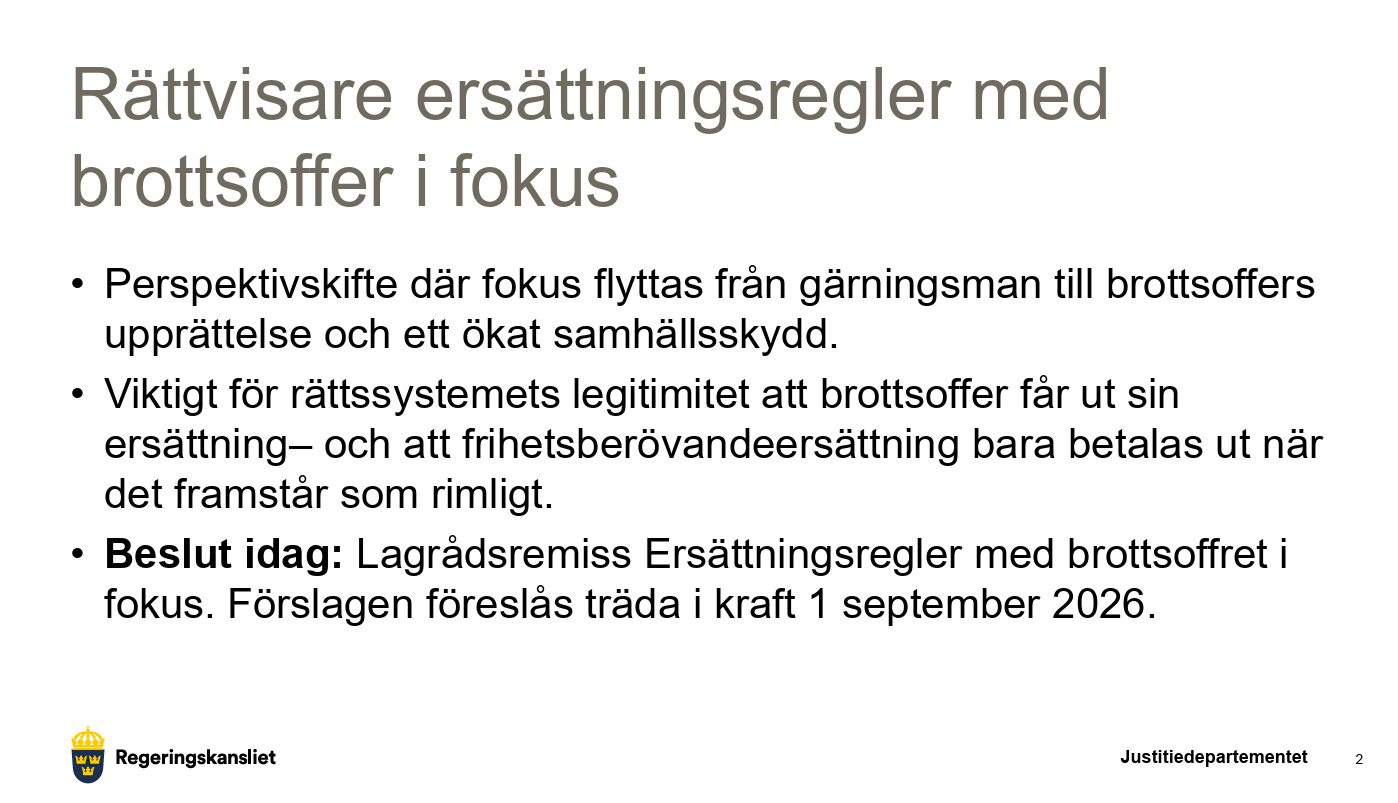
Crime victims will be able to receive financial compensation faster and avoid having to collect damages from perpetrators themselves. This is at the core of a new legislative proposal from the government and the Sweden Democrats, who also want to tighten parental responsibility when children commit crimes and change the rules for compensation in cases of deprivation of liberty – serious offenders should not receive millions for having been detained.
The government has submitted a draft legislative proposal with new compensation rules intended to strengthen the status of crime victims and make the process of receiving compensation simpler and quicker. Among other things, the proposals mean that crime victims will more often be able to receive crime victim compensation directly from authorities instead of having to demand the money themselves from the perpetrator.
Minister of Justice Gunnar Strömmer says in a comment that these changes are part of the government’s efforts to strengthen crime victims’ right to redress.
– Crime victims should be spared the trouble and discomfort of collecting their compensation from perpetrators. The system will become more fair and decent.
Direct Compensation from the State
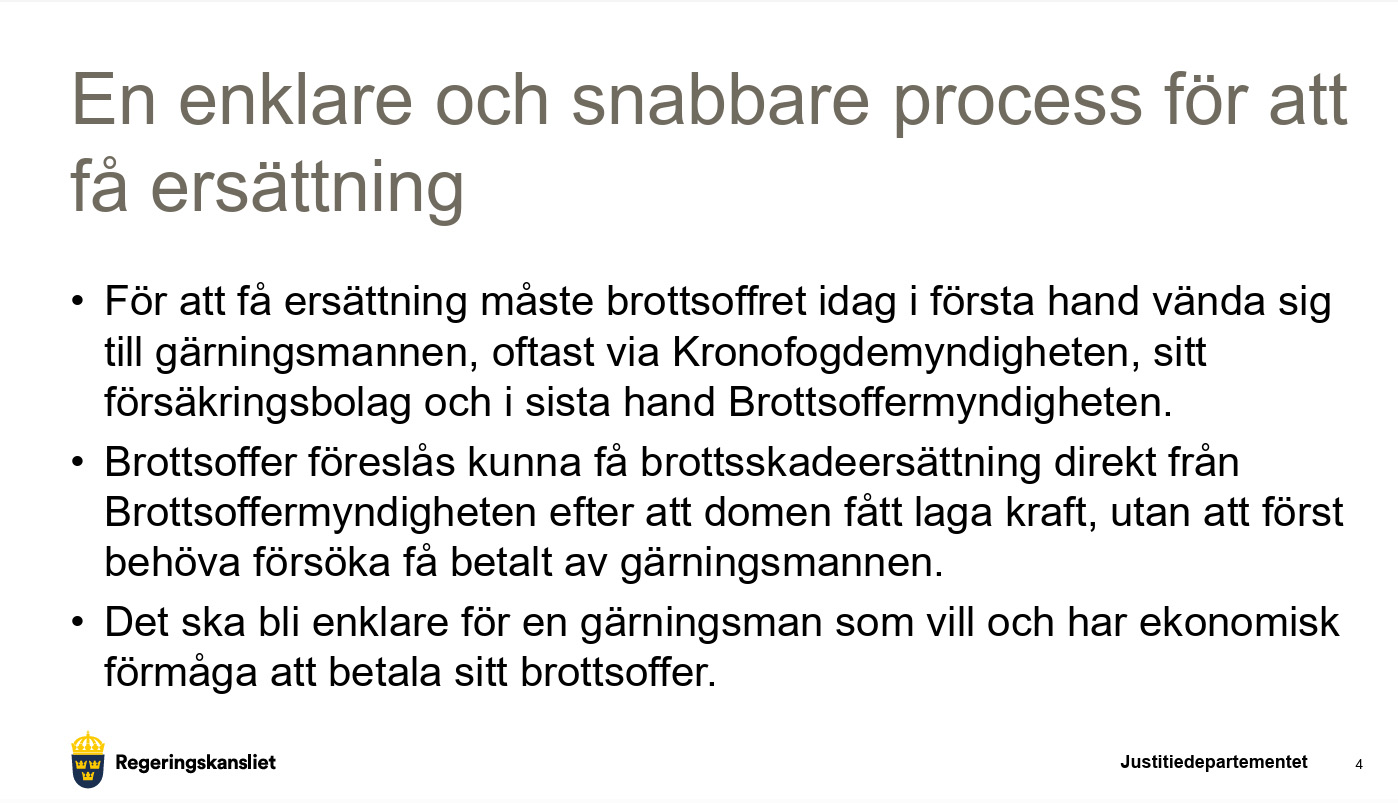
A central change in the proposal is that crime victims will be able to receive crime victim compensation directly from the Crime Victim Authority, supported by a damages judgment. Today, crime victims often have to first try to collect the money from the perpetrator, usually through the Swedish Enforcement Authority, something that is often seen as unpleasant and usually ends in failure.
The government also wants to introduce a system where perpetrators who wish to pay their damages voluntarily can deposit money with the Swedish Enforcement Authority. In such cases, the money can be paid out to the crime victim even before the verdict becomes legally binding, if the convicted person requests it.
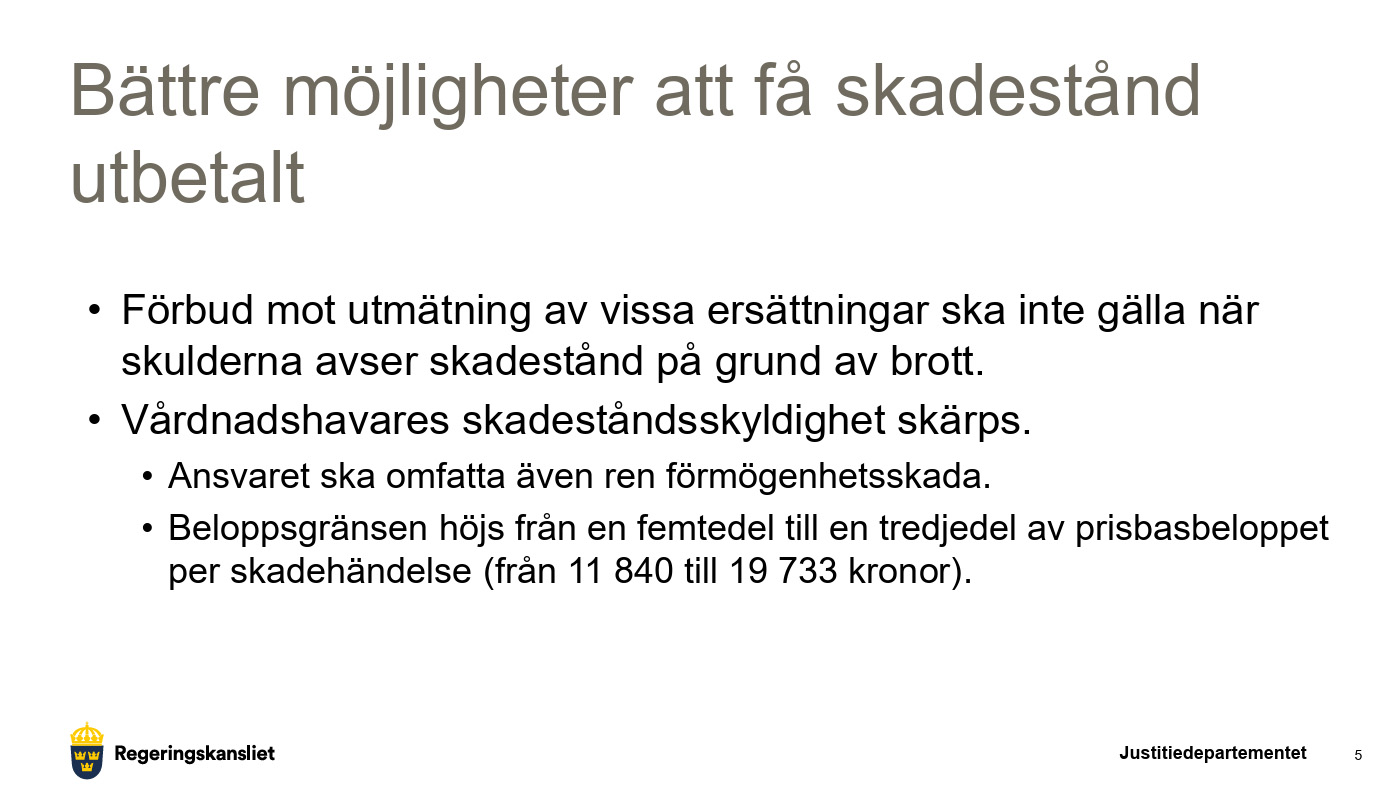
Additionally, it is proposed that certain compensations that are currently protected from seizure – for example damages for personal injury – can be used to pay crime damages. It happens that those liable for damages circumvent the law in that way.
Stricter Responsibility for Guardians
The government also wants to tighten guardians’ liability for damages when children commit crimes. Parents may become liable for damages up to one third of the price base amount, and liability will also cover so-called pure financial losses.
In order to protect children’s money, it is also proposed that funds arriving to minors via enforcement be placed in an account blocked by a chief guardian. These funds should not be accessible by anyone else at all.
New Rules for Compensation for Deprivation of Liberty
The legislative proposal also contains suggestions for changed rules regarding compensation to people who have been deprived of liberty. The possibilities to deny or reduce such compensation will be increased.
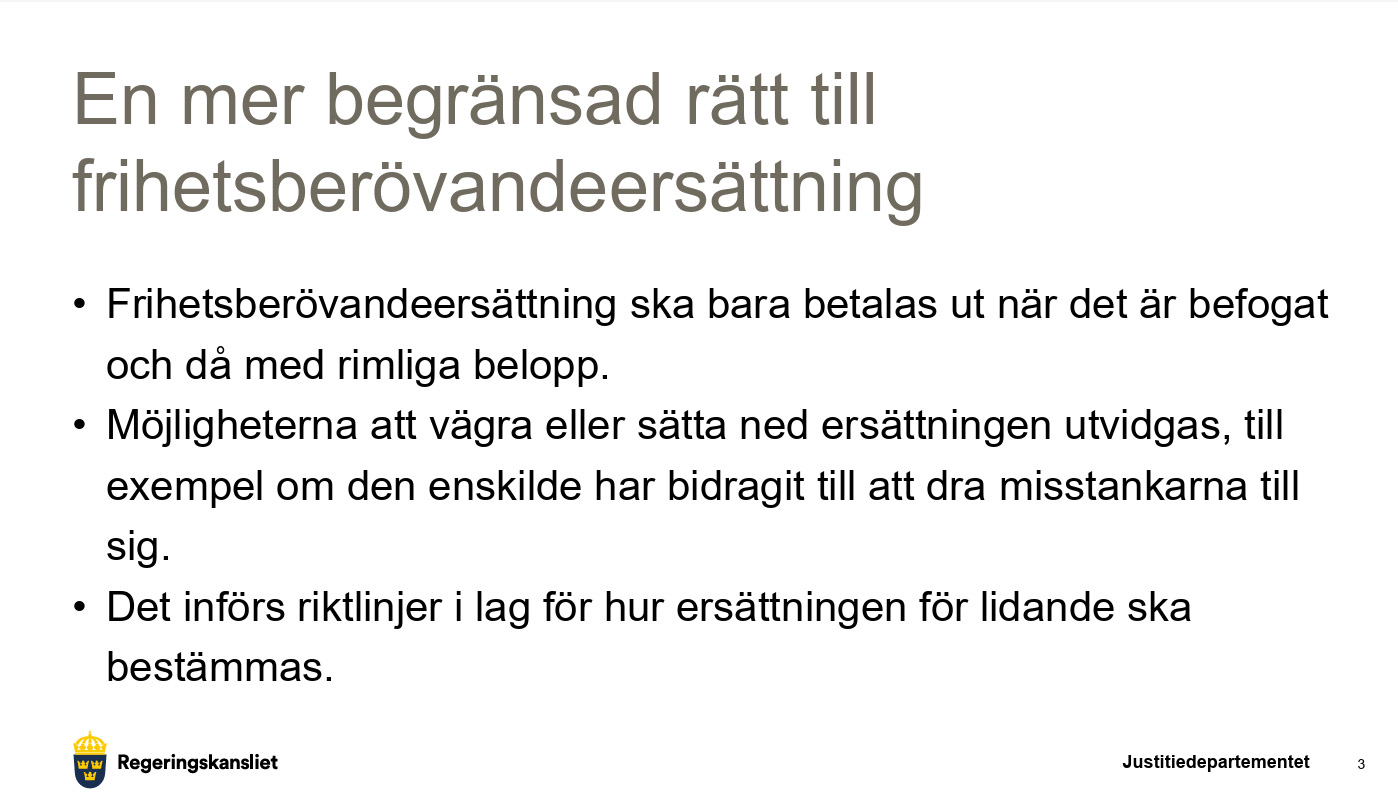
According to the government, compensation can be reduced if it is not deemed reasonable to pay in full, and clearer guidelines will be introduced for how compensation for suffering is determined.
Sweden Democrats: “The Victim Should Not Have to Chase the Perpetrator”
Henrik Vinge, Deputy Party Leader of the Sweden Democrats, welcomes the proposal in a Facebook post.
He writes that “the victim should not have to chase the perpetrator for justice” and believes the state is now taking greater responsibility for ensuring that compensation is paid out.
Vinge emphasizes the changes regarding direct payment of compensation after a final conviction, that parents are held responsible for damages caused by their children’s crimes, and that the opportunities for actually receiving damages are improved.
He also highlights the proposed changes concerning compensation for deprivation of liberty and argues that compensation should only be paid when justified. Individuals who themselves contributed to the suspicions against them should see their compensation reduced or denied entirely.
In the post, Vinge also refers to a previously noted case where a convicted rapist was later awarded almost one million kronor in damages after his sentence was reduced. According to Vinge, such situations should no longer be possible under the new rules.
May Enter Into Force As Early As This Autumn
The legislative proposals are suggested to take effect on September 1, 2026, if the Riksdag decides in accordance with the government’s proposal.
Watch the entire press briefing below.