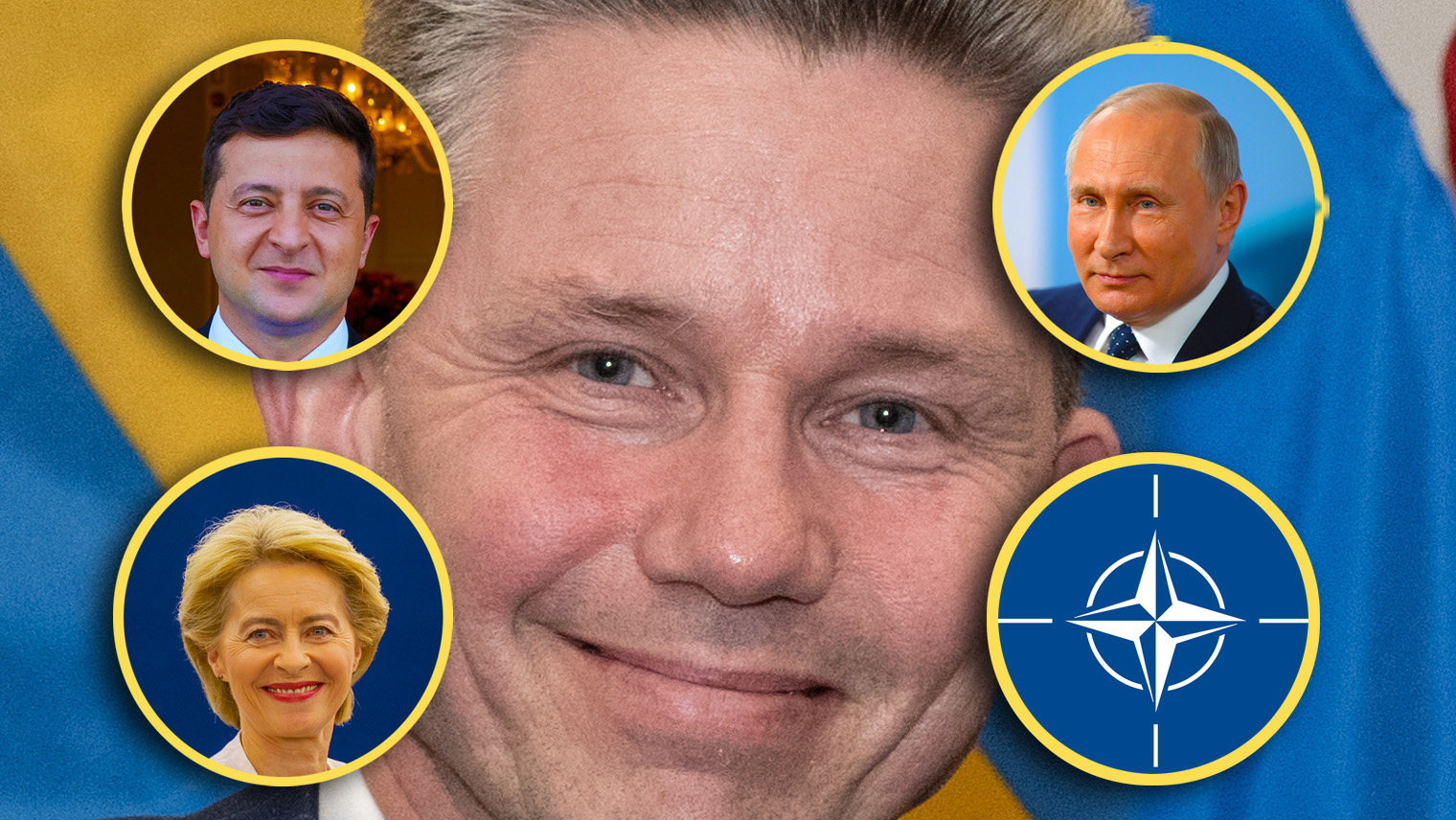
Peace in Ukraine risks deteriorating the security situation in Sweden’s immediate vicinity. That is the message from Defense Minister Pål Jonson, who openly admits that his focus is not primarily on humanitarian concern for the Ukrainian people but rather that Russia’s military commitment in the war today limits the threat to the Baltic Sea region — continued war benefits Swedish and European security, while peace in Ukraine threatens it.
When Defense Minister Pål Jonson was recently interviewed by SVT, he warned that a peace agreement in Ukraine, from his perspective, should be viewed not in terms of what it would positively mean for the Ukrainian people, but what it could negatively mean for Sweden’s security. Jonson emphasized that Russia, after a ceasefire or peace agreement, could free up military resources and move troops closer to Sweden’s neighborhood.
Today, the defense minister notes, Russia lacks the military freedom of action required to pose an immediate threat to Sweden and other parts of Europe. The reason is the war in Ukraine, where large amounts of personnel and materiel are tied up and being consumed.
Jonson argues that the security situation in the Baltic Sea area could worsen if the war ends, since Russia could then redeploy its forces. Continued war can therefore be the better alternative from a Swedish and European perspective.
“Peace on Ukraine’s Terms” — but with European Priorities
Officially, Jonson emphasizes that a peace agreement should happen “on Ukraine’s terms.” At the same time, it becomes clear that it is not primarily the opinions of Ukrainians being referenced, but rather the security interests of European allies.
READ ALSO: Kristersson on Trump-Putin Meeting: Many Swedes Are Worried About Peace
The defense minister describes a widespread concern among the countries around the Baltic Sea about what will happen after the end of the war. Finnish and Baltic perspectives are considered, as well as the assessment that Russia’s long-term intentions towards the West remain, even if peace is achieved, and with more resources freed to redirect against us.
Critics argue that the term “Ukraine’s terms” thus risks becoming a euphemism for what EU and NATO consider strategically most beneficial — rather than what could quickly bring peace to the Ukrainian people. Studies show that the EU’s and NATO’s interests do not necessarily coincide with those of the Ukrainian people.
Russia Remains a Threat — Even After the War
Jonson shares NATO’s assessment that Russia will remain a security threat for a long time to come. Even if a peace agreement is signed in Ukraine, he sees no reason to “relax.” According to the defense minister, tensions between Russia and the West are structural and likely to persist regardless of the outcome of the war.
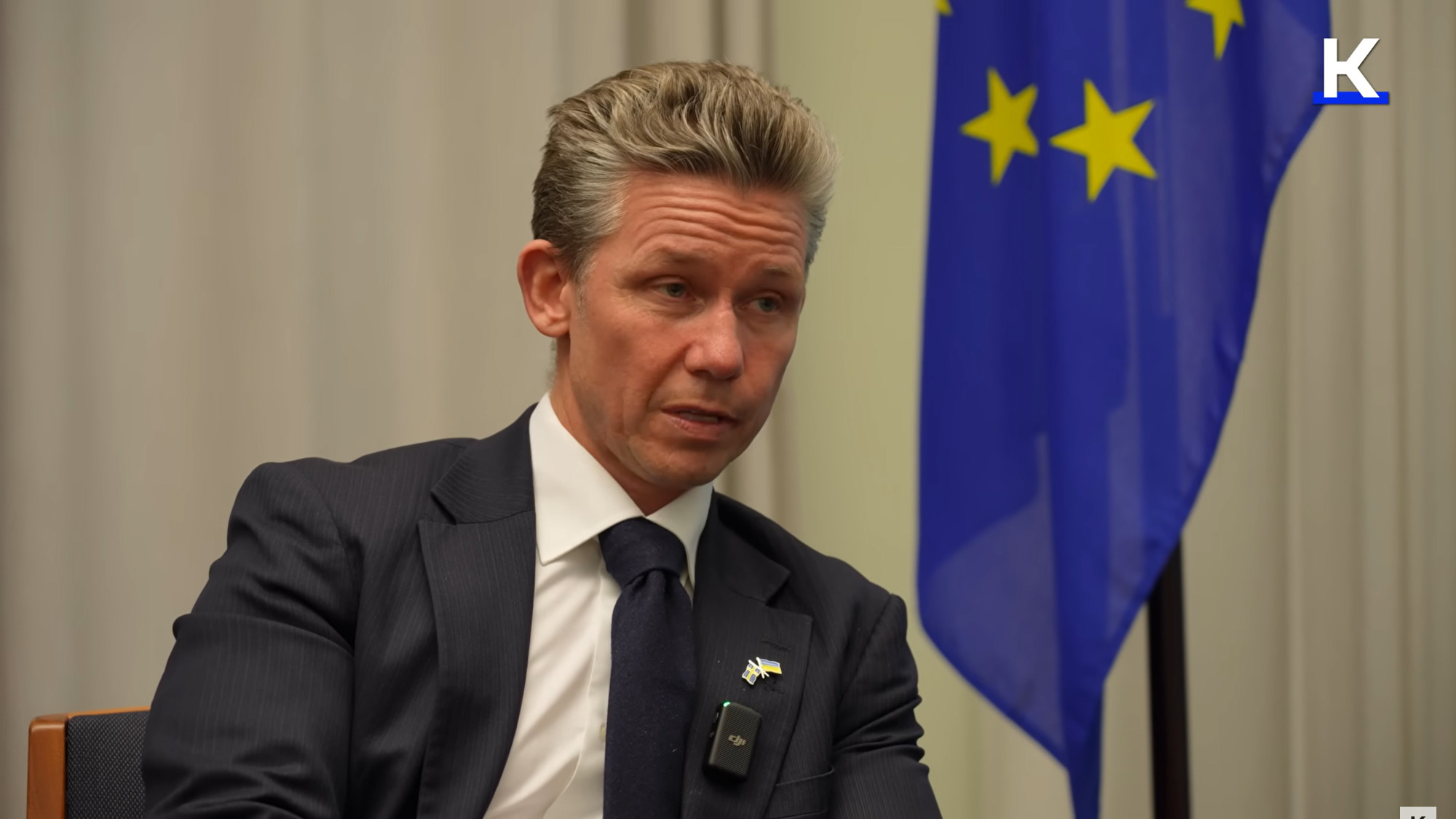
In the interview, he also points to signs that Russia is already preparing military infrastructure for more troops in areas near the Baltic Sea, particularly around St. Petersburg. At the same time, NATO and the EU have long aspired to move their positions closer to Russia, including by incorporating Ukraine into both.
Security Before Humanitarian Considerations
This is not the first time Jonson clearly links the war in Ukraine to Swedish security interests above the welfare of the Ukrainian people. On previous occasions, he has described Sweden’s extensive military and economic support to Ukraine as an “investment” in Swedish security, rather than primarily a humanitarian commitment.
READ ALSO: Pål Jonson invited Ukraine’s Defense Minister: “Your Security is Our Security”
Prime Minister Ulf Kristersson has also described the Ukraine issue in similar terms as “existentially important” for Sweden rather than talking about the humanitarian situation for the Ukrainian people. The government’s stance aligns with the approach in Brussels, where the focus has been to avoid a peace that could strengthen Russia’s military freedom of action in Europe.
At the same time, opinion polls show that a majority of Ukrainians are prepared to support peace negotiations, even if it would mean tough compromises regarding territory in the eastern part of the country, where the Russian-speaking population is large and where something like a civil war was going on long before the Russian invasion.
READ ALSO: Gallup: Majority of Ukrainians Want to Negotiate with Russia
Attitude Towards Trump a Complicating Factor
One circumstance that makes it more difficult for Sweden and the EU to support peace in Ukraine is also that the peace negotiations are led by Donald Trump. The American president and his administration are generally poorly regarded in Western Europe.
According to analysts, political prestige has crept into the issue, relating more to antipathies toward Trump than the issue itself. If the initiative for peace negotiations had been taken by the previous Biden administration, it would have been easier and less controversial for Brussels and Western European governments to support them, according to observers.
Criticism: Continued War as a Strategic Advantage
Against this background, critics argue that the Swedish and European rhetoric risks appearing cynical. When the defense minister openly states that Russia’s commitment in Ukraine today reduces the threat to Sweden, some interpret this as seeing continued war as strategically advantageous in practice.
This raises the question of whether the path to peace in Ukraine is primarily shaped by the Ukrainians’ desire to end the war — or by Europe’s interest in keeping the Russian military occupied for as long as possible.