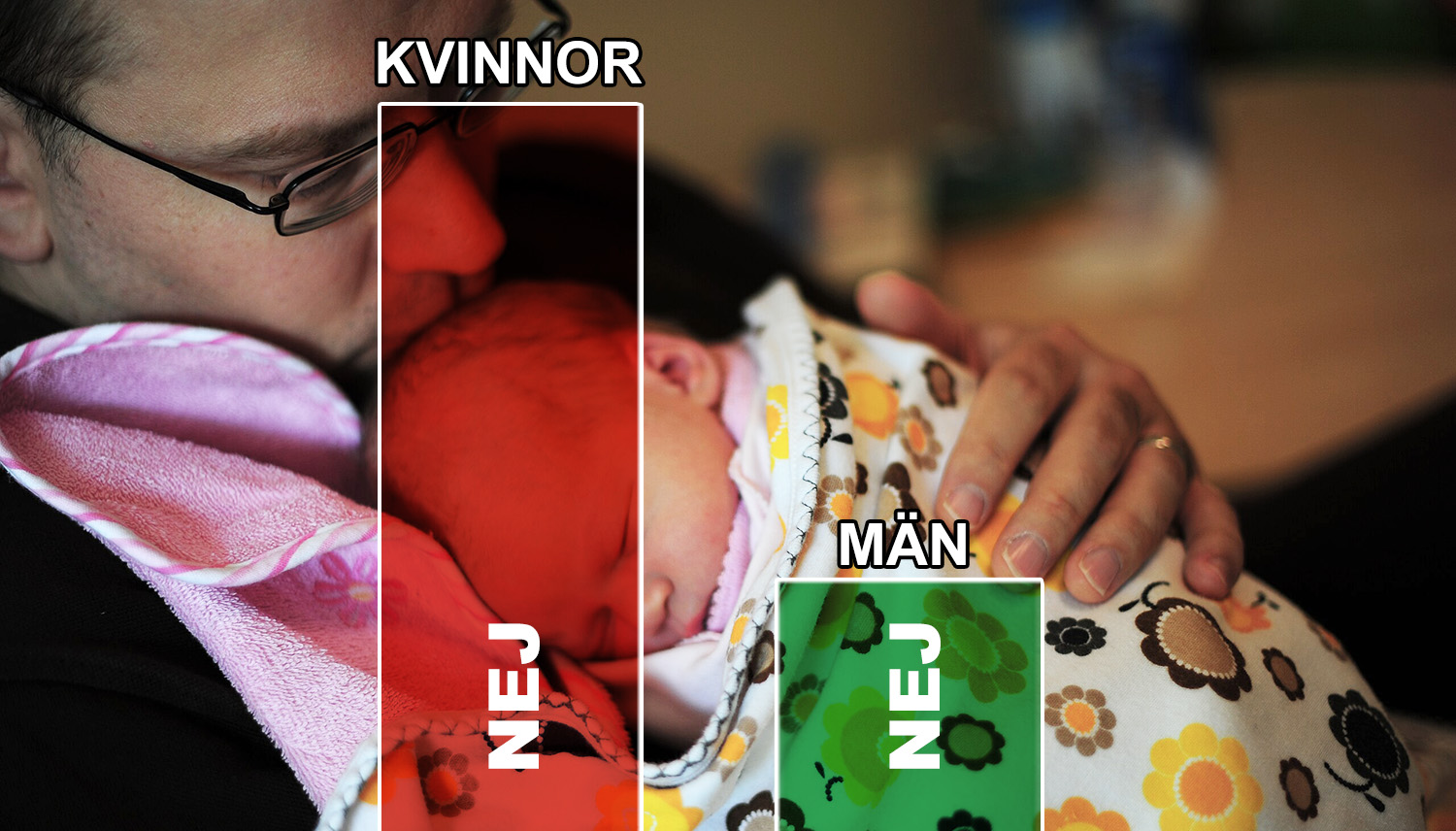
An increasing number of young women in Sweden say they do not want to have children, while men express a much stronger desire to become parents. A new survey reveals a clear gender gap that runs counter to traditional beliefs—and raises questions about values, optimism for the future, and society’s view on family and parenthood.
Sweden is currently at historically low levels when it comes to childbirth. Last year, the average was 1.43 children per woman—the lowest figure ever recorded in the country. This trend has prompted the government to sound the alarm and launch an investigation into why fewer and fewer are choosing to have children.
Minister for Social Affairs Jakob Forssmed has pointed to factors such as the economy, housing, gender equality, and work-life balance as possible obstacles to starting a family, stressing the state’s responsibility to create better conditions for parenthood. His comments and hypothesis that dating apps are the main culprit also drew attention, though not all of it positive.
Clear Gender Gap in the Desire to Have Children
But when the question is put directly to young adults, a more complex picture emerges. In a survey from Aftonbladet in cooperation with Demoskop, 22 percent of women aged 20 to 45 say they do not want children at all. Among men in the same age group, the corresponding figure is only 8 percent.
The difference is striking and breaks with earlier patterns, where Swedish men and women have historically been relatively close in their attitudes toward children and family. It also goes against traditional views of gender roles.
Younger Generations Are Breaking the Pattern
According to demography researcher Martin Kolk at Stockholm University, it is primarily the younger generations driving this development. He notes that women born from the mid-1990s onward have, so far, had significantly fewer children than previous generations at the same age.
READ ALSO: Dagerlind: It’s Not the Dating Apps’ Fault That Too Few Children Are Born in Sweden
The central question, Kolk argues, is whether this is simply delayed childbearing—or if a larger share will actually remain childless even later in life. The outcome has great significance for the country’s long-term demographic development.
Values Rather Than Practical Obstacles
Kolk stresses the need to be cautious when interpreting self-reported answers as definite life decisions. An opinion held when young may change later in life. At the same time, he notes that the results are in line with international research from countries where birth rates have sharply declined.
He believes there are many indications that shifting values and life priorities play a bigger role than concrete obstacles like the economy or the state of the world. Young adults increasingly prioritize self-fulfillment, social relationships, leisure pursuits, and career, while having a family is no longer seen as a given life goal in early adulthood.
READ ALSO: Fewer and Fewer Women Want Children – Climate Anxiety an Increasing Reason
If this is mainly a cultural cycle—meaning children simply come later—the consequences may not be dramatic. But if a new norm is being established, where large groups actively opt out of having children, the effects could be far-reaching.
Men More Positive About Parenthood
Perhaps the most surprising finding in the study is that men are much more likely than women to say they want children. Similar patterns have been seen in countries like Japan and South Korea, but in Sweden this is relatively new.
Kolk notes that gender differences have historically been small in Sweden, making this development stand out. What is behind women opting out of children more than men remains unclear, but research points to a combination of norms, expectations, and the way parenthood is seen in relation to freedom and responsibility.
Optimism About the Future, Norms and Public Debate
Beyond strictly demographic research, a broader social debate is also underway about possible explanations. The discussion points out, among other things, that young women are more likely than men to express concern for the future—regarding climate, :censored:6:cdd6bbaa89: instability, and social development—which can affect the desire to have children.
Others highlight how decades of political and cultural messaging have shaped views on gender roles and family life, with traditional parenthood sometimes presented as an obstacle to independence and equality. Critics, meanwhile, argue that the image of the future is often dominated by overly dystopian scenarios, which risks undermining young people’s optimism for the future.
READ ALSO: Professor’s Dark Prognosis: Swedes a Minority Within a Few Decades
Another aspect sometimes raised is that childbearing is not evenly distributed among different groups in society—something rarely discussed openly but which affects long-term demographics. In popular speech and social conservative political circles, there is increasing talk of an ongoing “population exchange.”
An Open Question for the Future
Whether this trend is temporary or marks a more permanent shift remains to be seen. What is clear is that the difference between men’s and women’s desire to have children raises new questions—not just for researchers but also for politics and public debate more broadly.
How Sweden chooses to understand and deal with these changes may be crucial for the country’s future demographic development, welfare, and social cohesion.
READ ALSO: Childbirth at Record Low in Sweden – Climate and War Fears Make Many Refrain