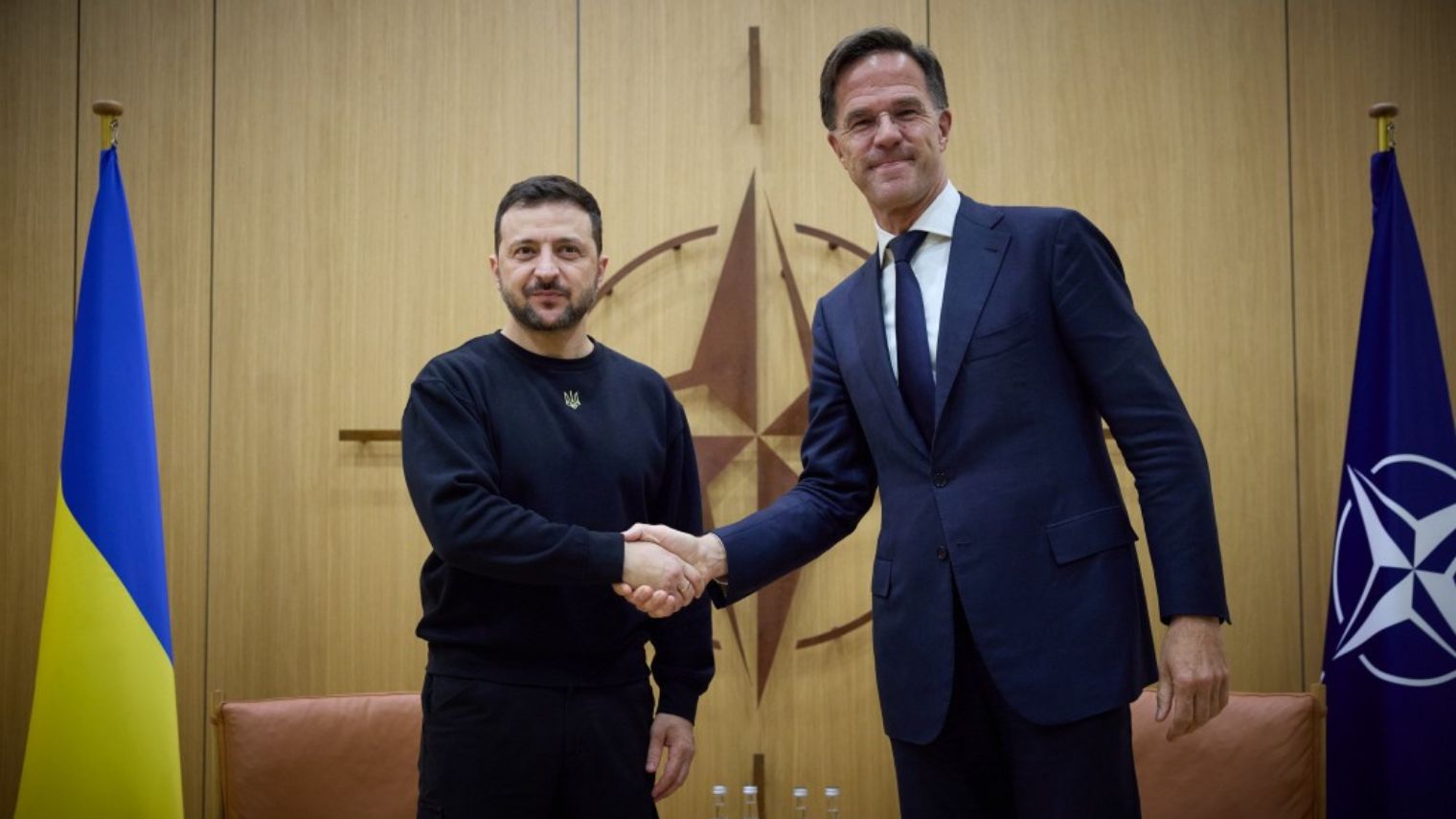
Alongside the already planned support from individual countries and the EU to Ukraine, NATO Secretary General Mark Rutte expects the alliance’s member countries, through their taxpayers, to contribute the equivalent of eleven billion kronor per month to keep Ukraine’s war machinery running in the coming years. This comes at a time when several corruption scandals have surfaced within President Volodymyr Zelensky’s inner circle. Despite these question marks, the EU – with Sweden at the forefront – promises to continue covering all of Ukraine’s economic needs, without any upper limit on the costs.
At NATO’s ministerial meeting in Brussels on Wednesday, Mark Rutte emphasized that the allies are now on course to purchase American weapons for Ukraine worth over 40 billion kronor just this year. This is through the PURL initiative, where European countries use taxpayers’ money to buy American equipment when Washington itself reduces its deliveries.
READ ALSO: NATO chief’s call to Europeans: Time to mentally prepare for war
NATO chief Mark Rutte emphasized that the pace of the billion-dollar aid to Ukraine must not decrease.
“We are talking about at least one billion dollars per month next year, maybe more. In total, around 15 billion dollars for the whole year,” he stated.
In other words, around eleven billion kronor every month. According to NATO, the same funding level is expected to continue until at least 2026. Several countries express irritation that the costs in practice fall on the same circle of mainly North and East European states, while others contribute significantly less.
Ukraine too corrupt for NATO – but not for NATO funding
In contrast to the massive investments in Ukraine’s war effort, NATO is clear that the country cannot become a member of the military alliance at present. American officials have recently stated that corruption in the country is still “extensive“, and that Ukraine has not implemented the reforms required to qualify.
READ ALSO: Message to Zelensky: Ukraine too corrupt for NATO
Meanwhile, confidence in the Ukrainian government is declining. Opinion polls show that support for President Zelensky has dropped sharply compared to the peak at the start of the war. Criticism has also been directed at his banning of competing political parties and refusal to hold general elections until the war is over.
Corruption scandals follow one another in Kiev
While the West continues to send record sums to the country, Ukraine’s internal crises are growing. Ukraine’s chief of staff Andriy Yermak recently resigned after a raid and extensive corruption investigation. The country’s justice minister was forced to step down after becoming the subject of an investigation himself.
READ ALSO: Zelensky’s closest man resigns after anti-corruption raid
Several of Zelensky’s closest business contacts – including oligarch Timur Mindich – are suspected of embezzling significant amounts from state projects.
Ukraine’s anti-corruption authorities (NABU and SAPO) have tried to investigate the president’s circle, which in turn has led to the government’s attempt to take control of the authorities, triggering mass protests in several cities.
READ ALSO: Mark Rutte: ”NATO is more powerful than the Roman Empire”
Ukraine’s own security service has even cracked down on anti-corruption investigators and accused them of having “Russian connections”, something that critics describe as a method to conceal abuse of power.
Several Ukrainian newspapers and editorial pages argue that Zelensky’s actions risk undermining both the rule of law and the country’s future relations with the EU and NATO.
READ ALSO: Ukrainian editor-in-chief: Zelensky tries to silence all criticism
Sweden and the EU promise to cover Ukraine’s needs – without an upper limit
While corruption investigations continue to spread, European Commission President Ursula von der Leyen emphasizes that the EU – together with Sweden and other Nordic countries – is ready to cover all of Ukraine’s economic needs, both military and civilian, “as long as it is needed”.
READ ALSO: Sweden and the EU in agreement: Promise to cover Ukraine’s economic needs
The plan includes continued billion-dollar loans and grants – where EU taxpayers ultimately foot the bill if no Russian war reparations are paid and long-term financing covers Ukraine’s budget deficit and reconstruction.
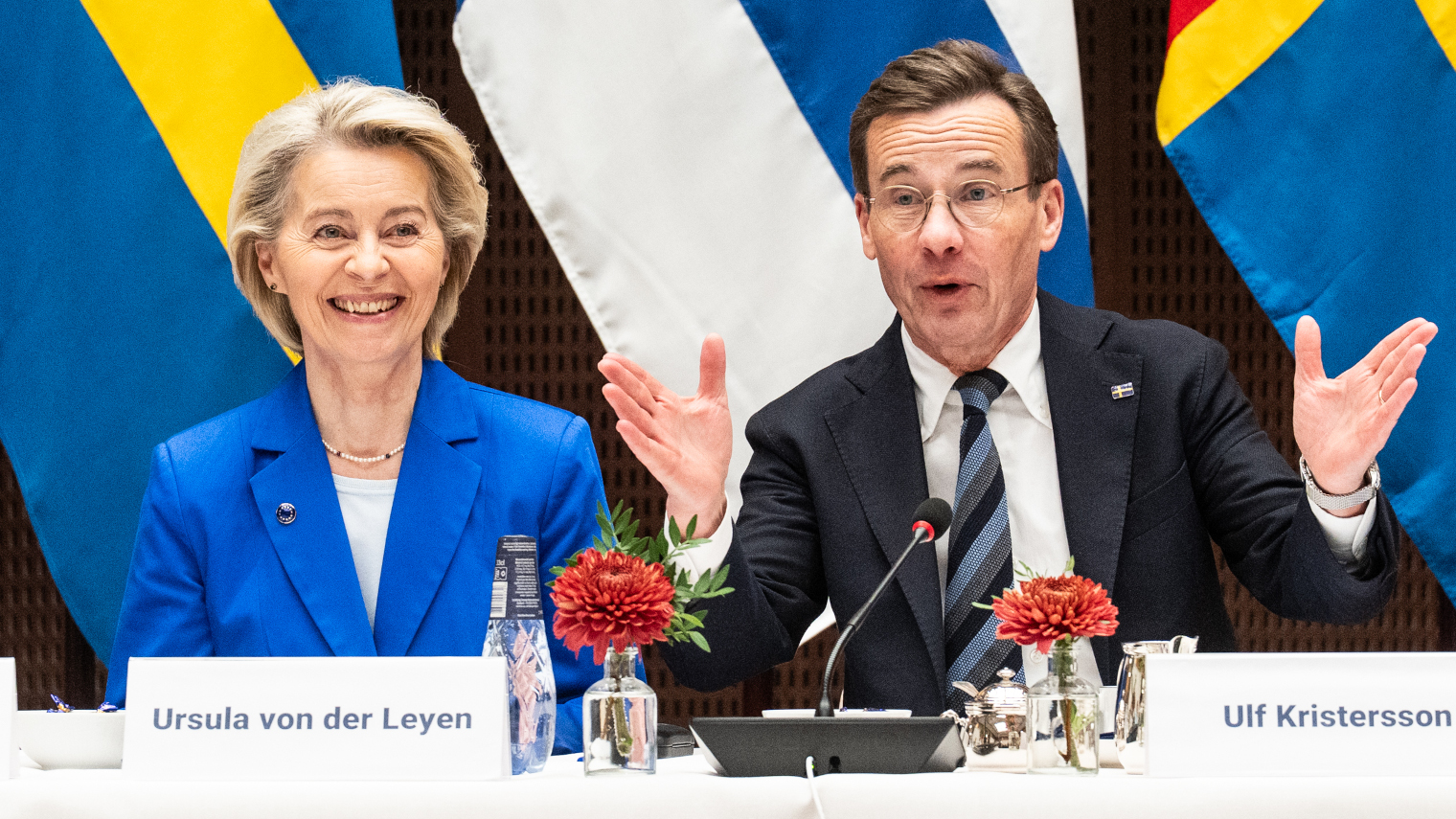
The Swedish support sent and promised amounts to 170 billion kronor since 2022, and was increased this week with an additional billion package.
READ ALSO: NATO chief: More money to NATO – or learn Russian
The government emphasizes that the support is necessary for Ukraine to “defend all of Europe”, but critics argue that the controls are inadequate when the recipient country is described as the most corruption-ridden state in the EU.
Growing bill – growing doubts
Overall, Western countries face a paradox. American officials assess that Ukraine is too corrupt for NATO membership, while committing to finance the country’s military, budget, and reconstruction indefinitely – despite corruption scandals now reaching Ukraine’s highest political levels.
NATO Secretary General Mark Rutte expresses that the billion-dollar aid will need to continue for “at least two more years”. The question is how long Western taxpayers will accept funding where the leakage in the system becomes increasingly apparent.
According to an American economics professor who previously advised Ronald Reagan, as much as 30 percent of all economic aid sent to Ukraine disappears in corruption.
READ MORE: Professor: 30 percent of aid to Ukraine disappears in corruption
Watch the entire press conference here: