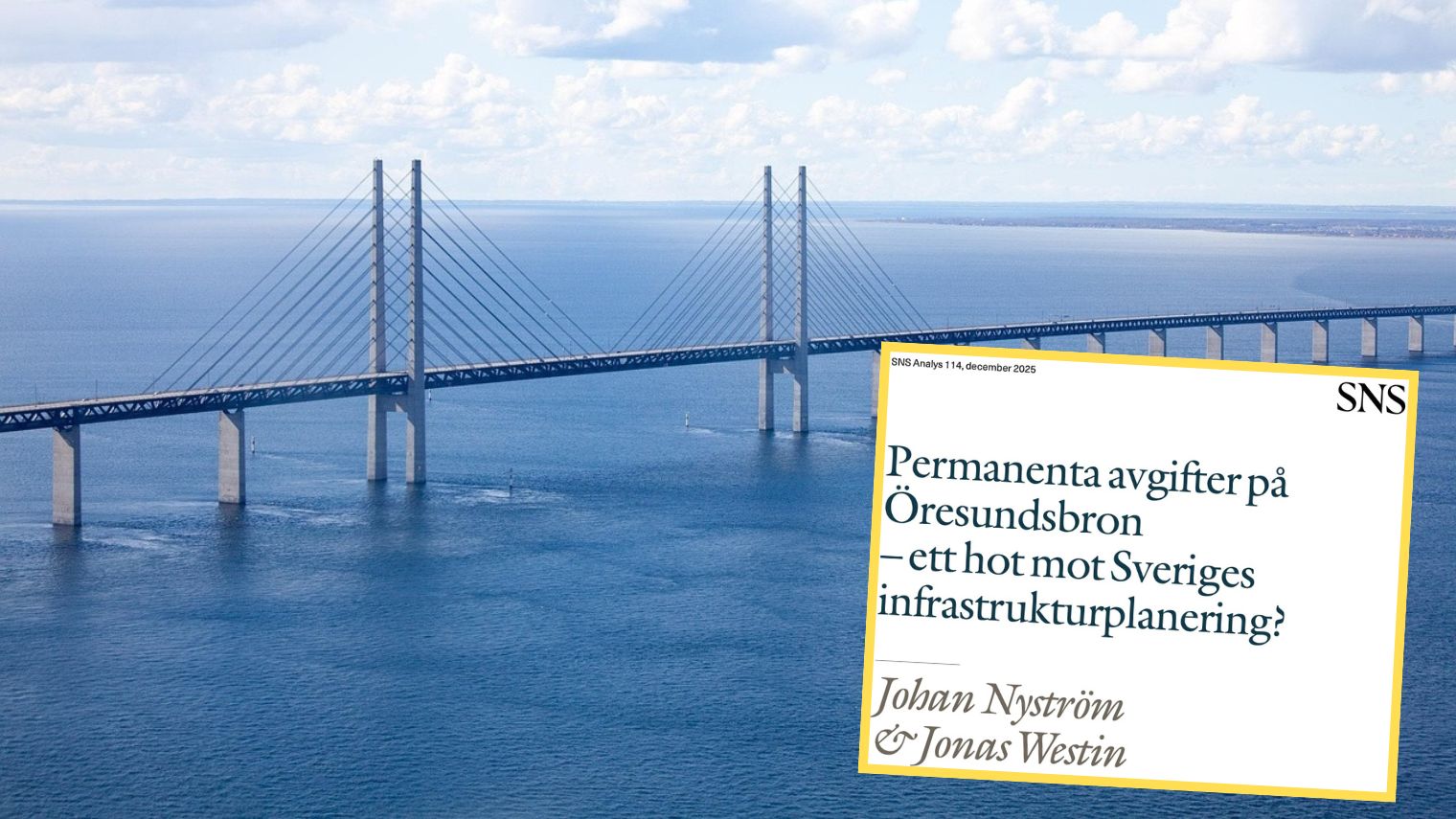
The Swedish government’s proposal to maintain the high tolls on the Öresund Bridge even after the bridge is completely paid off lacks clear socio-economic support and deviates from the normal order for Swedish infrastructure, according to a new report.
In the report ‘Permanent Fees on the Öresund Bridge’, researchers Johan Nyström and Jonas Westin point out that historically, fees in Sweden have been used as a temporary tool to finance investments until the facility is paid off. Thereafter, the infrastructure has been financed through taxes.
The researchers emphasize that the government’s approach marks a clear shift in the system, where fees risk becoming a more permanent feature of Swedish transport policy.
A central objection in the report is that the government has not presented any socio-economic analysis demonstrating why a continued fee would be justified.
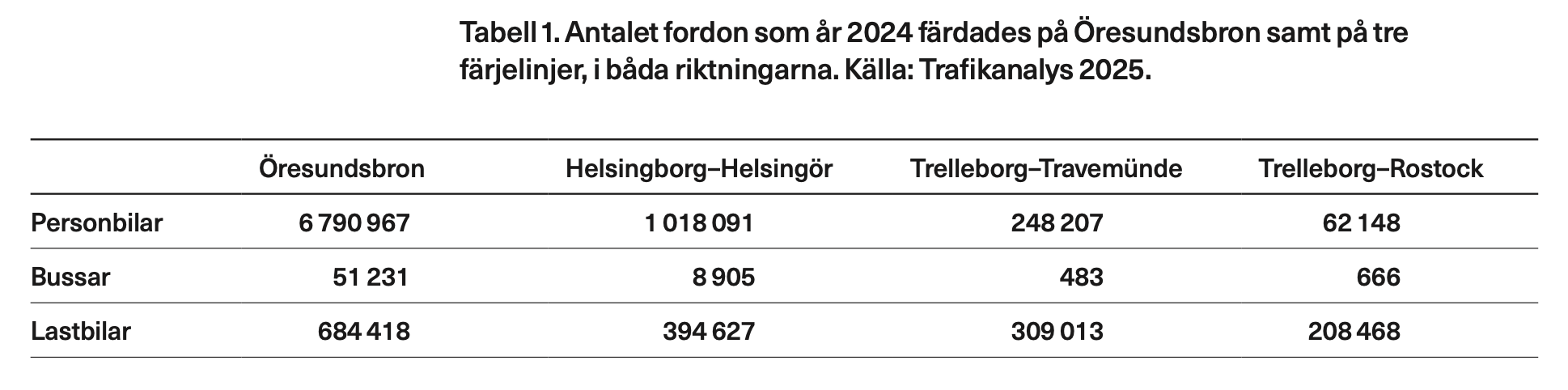
The authors note that the cost of the traffic that chooses to avoid the bridge due to the fee roughly corresponds to the cost that would have arisen if the state had instead financed equivalent revenue through taxes. Therefore, the fee does not serve any clear efficiency purpose according to the assessments made in the report.
Distortions
The researchers also warn that permanent fees can create distortions when planning future investments. If the state becomes dependent on fee revenues, this could lead to projects with fee potential being favored over other projects that are more socio-economically viable. Motorists also risk effectively paying twice – first through taxes, then through a bridge toll used for entirely different infrastructure projects than the current bridge.
Nyström and Westin therefore urge the government to conduct a comprehensive socio-economic analysis before making a decision. According to the report, it is important to assess whether a continued fee is truly the most effective and fair way to finance new infrastructure in Skåne, or if it rather risks undermining the legitimacy of future financing models.
The conclusion of the report is that the proposal represents a clear departure from previous practices and that the consequences could be extensive if fees are established as a general and permanent form of financing for national infrastructure.
READ ALSO: Stopped at the Öresund Bridge with six pistols in the underwear and bra