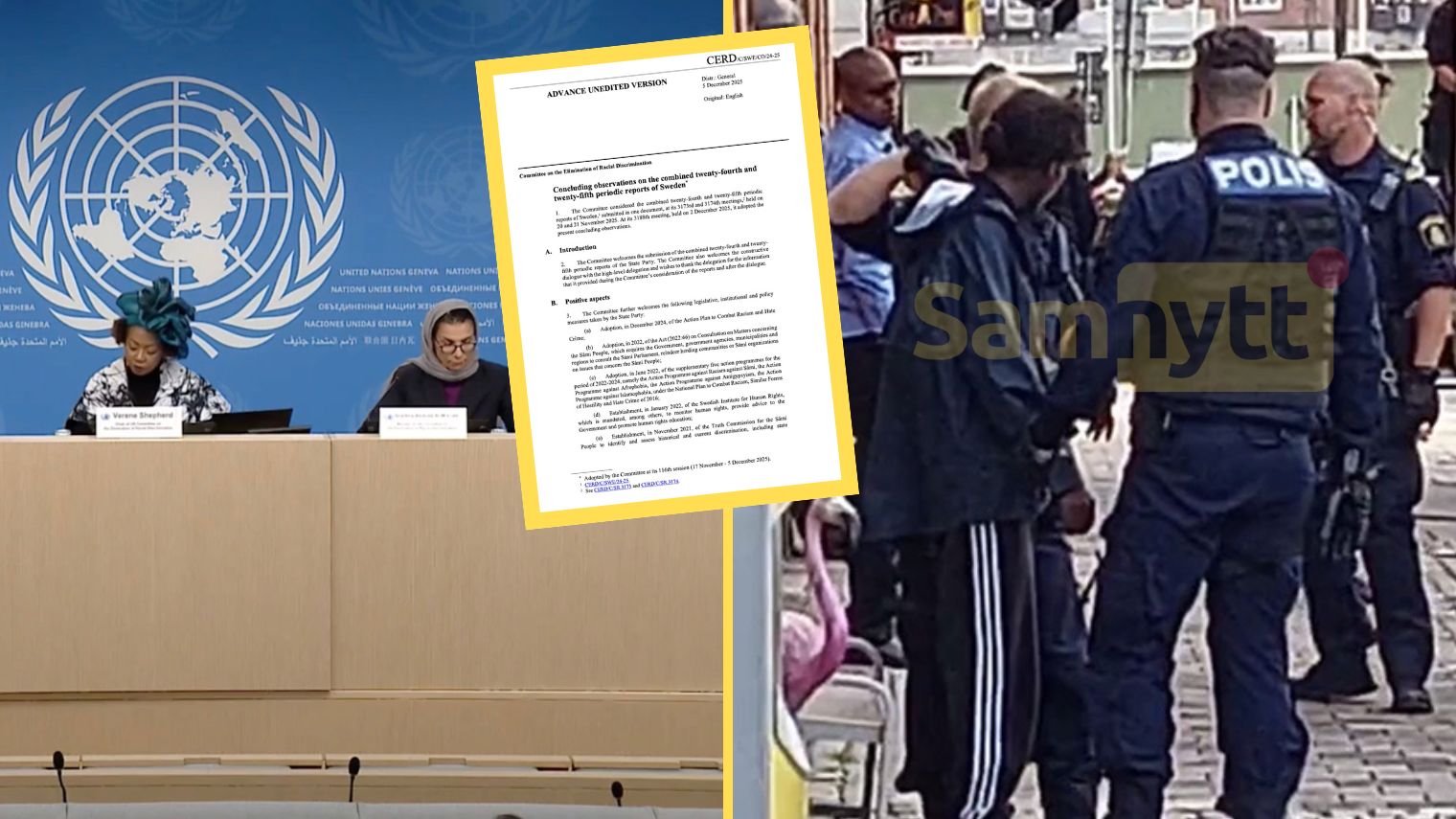
Sweden is once again in focus in Geneva, where the UN’s ‘Committee on the Elimination of Racial Discrimination’ on Friday published a comprehensive report on the country’s efforts against racism. The committee has received input from left-wing and asylum activist organizations in Sweden and criticizes several of the Tidö government’s powerful measures against the growing gang crime, such as shootings and bombings on the country’s streets. The UN specifically criticizes the security zones introduced last spring, which give the police the right to conduct body searches and vehicle inspections without concrete suspicion. According to the committee, this constitutes ‘racial discrimination’.
According to the 18 independent experts on the committee, Sweden’s new legislation raises significant concerns. The security zones are described as racially profiling and in violation of international law. Vice Chair Gay McDougall has expressed her concern in an interview with Swedish establishment media.
– Sweden’s security zones are repugnant and illegal. You cannot pick people up on the street just because of how they look. The security zones violate the convention against racial discrimination to which Sweden is a party, she told SvD.
Not living in the new gang-Sweden but trying to control
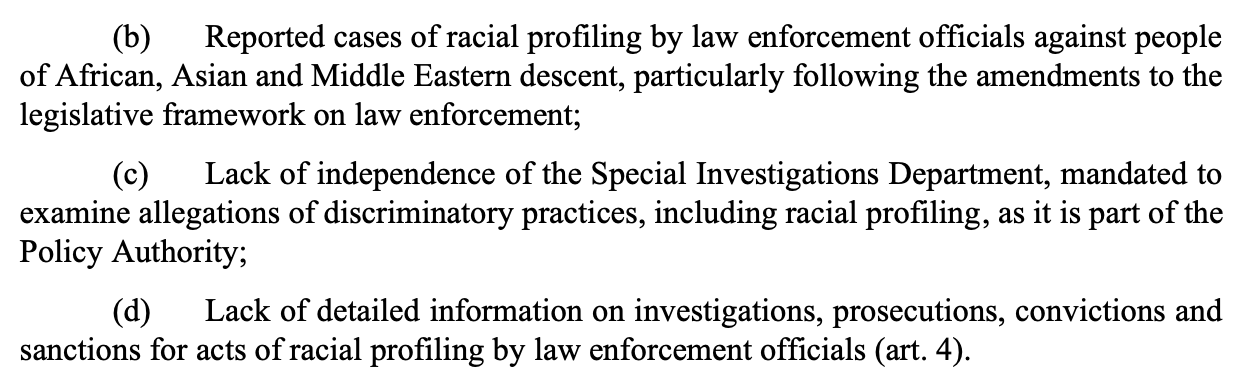
The committee argues that individuals of African descent, migrants, and refugees are at particular risk of discrimination by the Police Authority, and incoming reports confirm this.
When asked if the security zones could be a reasonable tool to address Sweden’s gang crime, UN top official Gay McDougall, who does not live in Sweden and thus is not affected by the problems, responded that they do not solve gang crime.
– It is clear that Sweden must do something about the crime. But rather than solving the problem, security zones create problems by broadly suggesting that people are criminals even though they have done nothing wrong, the UN official stated to SvD.

The government disagrees
The Swedish government does not share the conclusions of the UN’s Committee on the Elimination of Racial Discrimination. Justice Minister Gunnar Strömmers’ (M) press secretary, Ebba Koril, stated in an email response to Svenska Dagbladet that the government conducted a thorough analysis before the legislation was introduced and believes it is consistent with fundamental freedoms and rights and does not violate international conventions.
READ ALSO: UN on Sweden: ‘A country with systematic racism’
Migration Minister Johan Forssell also strongly reacts to the committee’s criticism. He emphasizes that the government’s focus is to increase returns and restore confidence in the asylum system.
Forssell also defends the planned tightening of the rules for obtaining Swedish citizenship. He argues that it has been far too easy to obtain Swedish citizenship and that it must mean something to become a Swedish citizen. This only happens when the migrant makes an effort to become one. Furthermore, stricter requirements create more incentives for successful integration.
“It is entirely reasonable for Sweden to introduce such requirements,” Forssell emphasized in a response to SvD.
READ ALSO: UN official: Sweden harasses climate extremists
Furthermore, the UN committee has objections to tightened rules for permanent residence permits and citizenship, including language and civic knowledge tests, as well as income levels.
The so-called UN experts criticize the possibility of denying or revoking residence permits due to ‘lack of good conduct’. They argue that the possibility to deny or revoke residence permits based on criteria such as ‘lack of good behavior’ is considered to be contrary to ‘fundamental Swedish democratic values’.
The minister dismisses the argument, stating that he does not share the assessment that such requirements are discriminatory. The government’s view is that it is entirely reasonable to set requirements and have high expectations for those who come to Sweden and settle permanently.

UN does not want to see illegal immigrants reported
In addition to the security zones, the UN committee raises several objections to the government’s migration and integration policy. The report highlights the requirements for public employees to report illegal immigrants to the Police Authority, or as establishment media prefer to phrase it: ‘undocumented’ and ‘whistleblower law’.
READ ALSO: SVT investigates the Tidö government – asylum activist called ‘expert’ and criticizes deportations
Forssell argues that the duty to provide information, which the Tidö government has pushed through, is well balanced.
UN: Affects Muslims and Africans
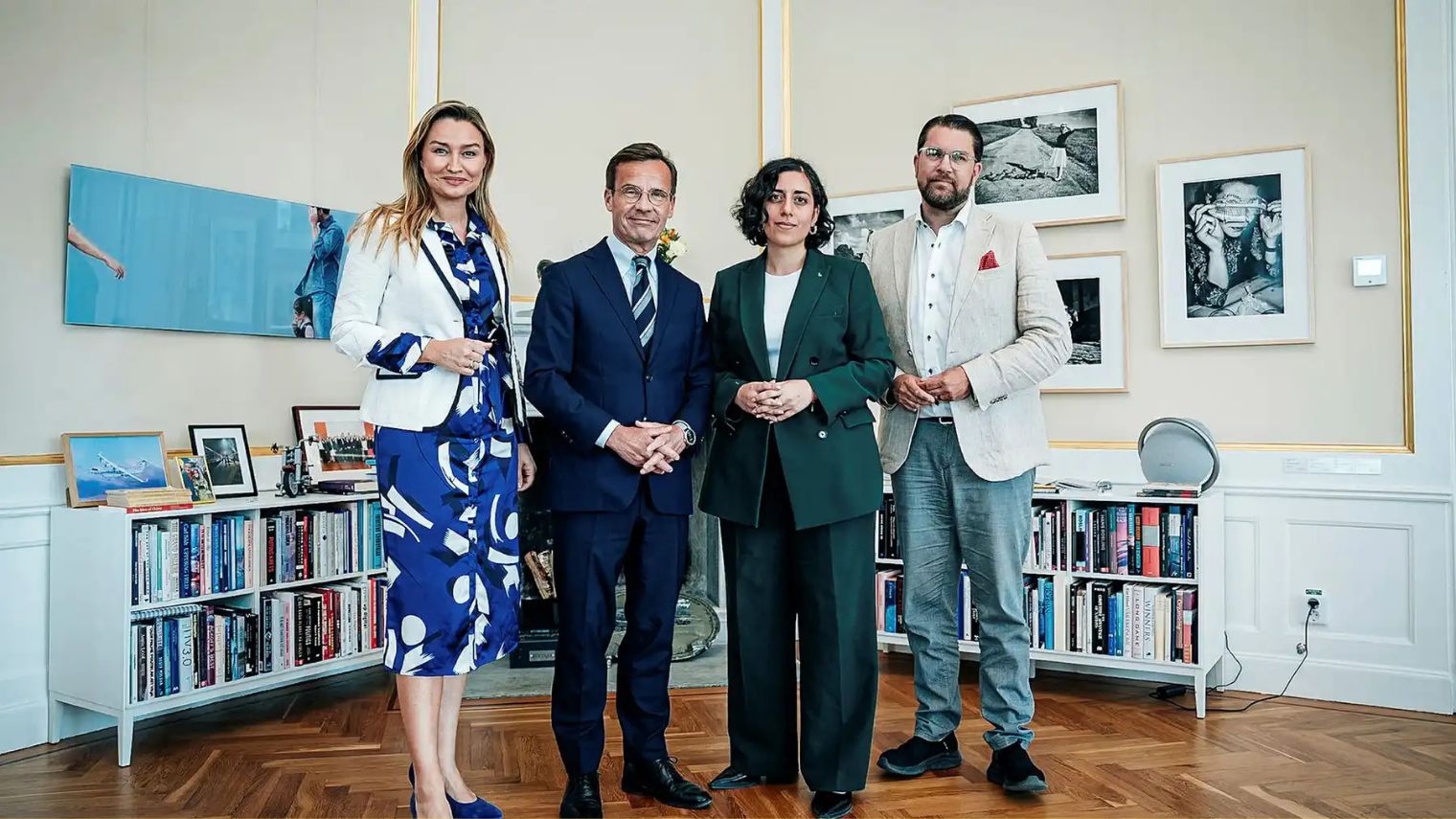
The committee believes that several of the Tidö government’s measures during the mandate period particularly affect Muslims, individuals of African and Asian descent, asylum seekers, and illegal immigrants.
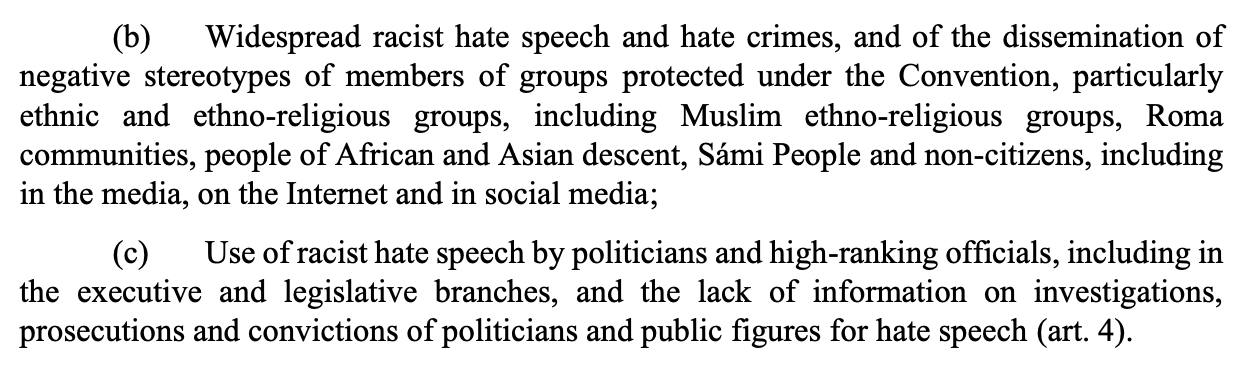
The report also expresses concern about the development of what is considered to be racist expressions in Sweden. The so-called experts describe an extensive spread of hate propaganda in the media, online, and on social media. Attention is also drawn to racist statements from politicians and individuals in positions of power.
Therefore, the UN committee urges Sweden to review both recently implemented and planned legislation within the framework of the Tidö agreement to ensure that it does not violate international human rights standards. The committee also wants Sweden to take action against what it describes as ‘structural discrimination’.
Facts: UN’s Committee on the Elimination of Racial Discrimination
- The committee was established when the Convention on the Elimination of All Forms of Racial Discrimination was adopted in 1965. Sweden acceded to the convention in 1971.
- The group consists of 18 international experts, including lawyers, diplomats, and human rights specialists.
- The experts review how countries comply with the convention and analyze materials from both governments and civil society organizations.
- Prior to the review of Sweden, the committee received information from organizations such as Save the Children, Civil Rights Defenders, the Sami Council, the Sami Parliament, and the Network of Swedish Muslims in collaboration.
- A previous report from 2018 was controversial in Sweden because the organization Swedish Young Muslims was included among the sources despite withdrawn state grants. The group was dissolved two years later.
Those who want to read the full report from the UN can download the file HERE.