
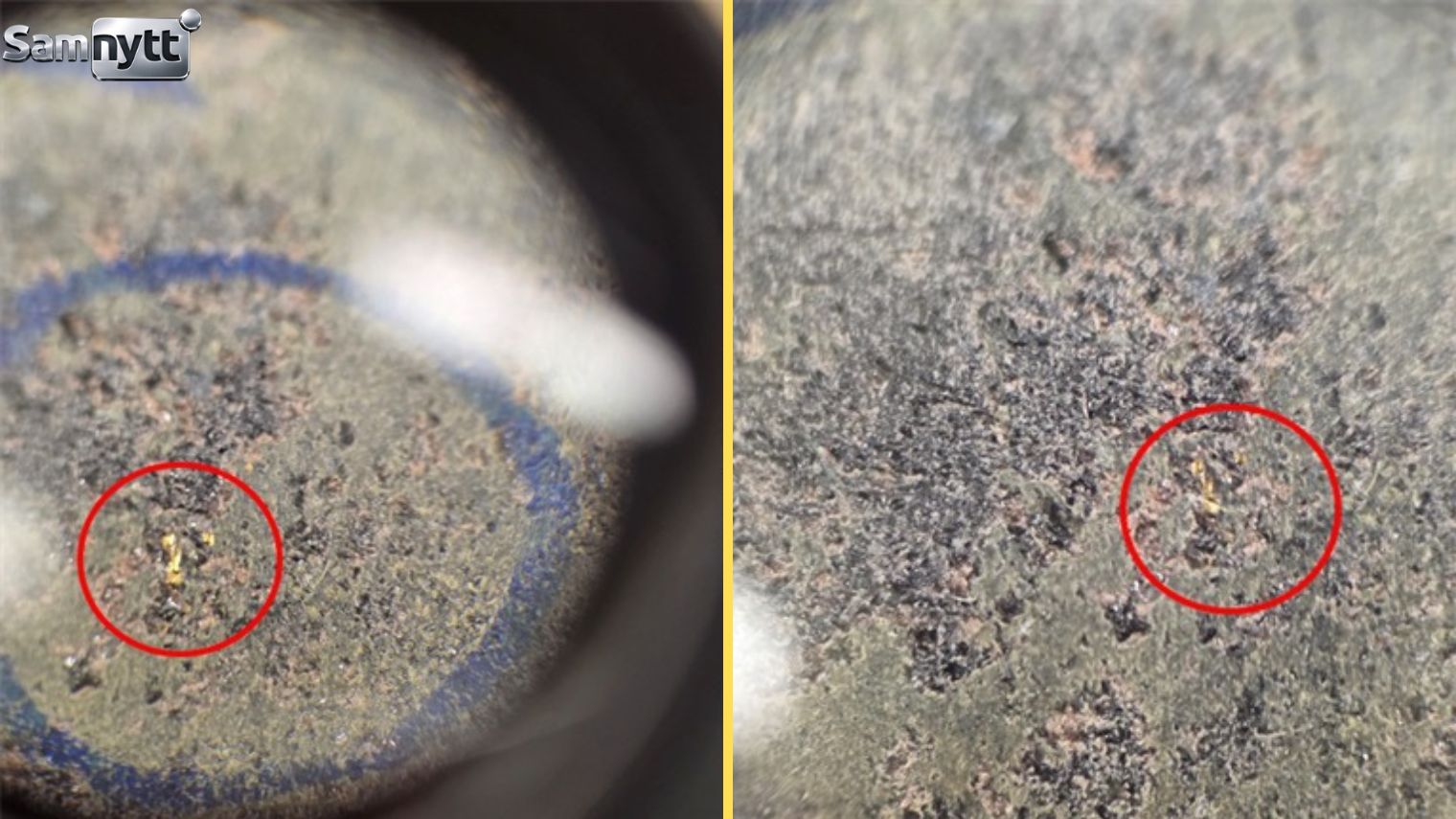
A mining company has discovered visible gold during ongoing drilling operations in Ljusdal Municipality. The find was made in a borehole at a depth of 217.8 meters during mapping work in the current drilling program.
It is Lappland Guldprospektering AB that reports that the company’s ongoing drilling in the Nya Gilleberget area has yielded results in the form of an observation of visible gold.
No laboratory analyses have yet been carried out, but the company expects to be able to present comprehensive analytical results from the entire drilling program by mid-summer 2026.
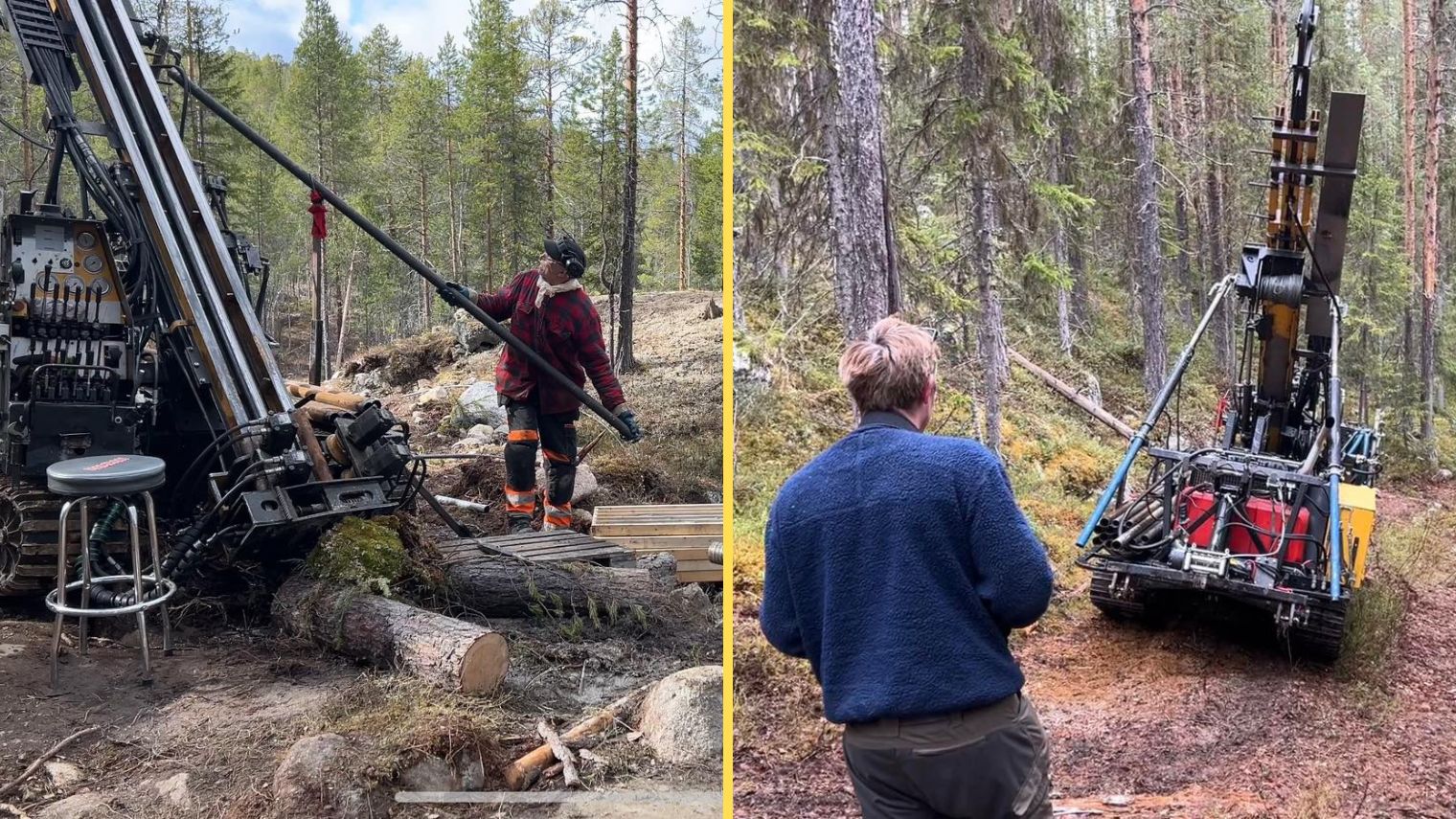
The drilling at Nya Gilleberget is the company’s first core drilling campaign in the area. The program is now in its final phase and comprises a total of four boreholes. Originally, three holes were planned, but the program was expanded during the course of work after new geological observations in the field.
READ ALSO: Major gold find in Sweden may become the country’s largest gold mine
The area has previously been explored by other operators, with over 1,500 meters of historic drilling since 2007. The current program aims to better understand the geological structure and potential of the area, which is separate from the company’s main project, Stortjärnhobben, in southern Lapland.
According to the company, geologists have identified several so-called altered zones in the borehole. These occur at various depths and may indicate mineralization in the bedrock.
The clearest observation of visible gold was made in one of these zones at a depth of 217.8 meters. The company emphasizes at the same time that no chemical analyses have yet confirmed concentrations or economic potential.
“Visible gold”
CEO Fredrik Johansson describes the observation as interesting from a geological perspective, but stresses that it is still too early to draw conclusions.
– It is a geologically notable observation. Visible gold in a drill core is a visual indication, but it is the analyses that determine the continued assessment. The results at the same time motivate continued work at Nya Gilleberget, says Johansson.
In light of the observations, the company has also submitted an application to expand the exploration permit in the area around the identified zones. The purpose is to be able to continue the investigations and better delineate the geological structure.
Previous drilling in the area has shown occurrences of gold in smaller intervals. A historic borehole from 2011, for example, reported gold concentrations of up to 2.64 grams per ton over shorter sections, including a single top interval of 10.15 grams per ton over one meter.
According to the company, the current borehole has hit an altered zone at a greater depth than where the historical borehole ended, which is assessed as geologically interesting.
The bedrock in the area consists of altered zones with elements of, among other things, sulfides and silicate minerals, which in some cases can be linked to gold-bearing systems.
The remaining boreholes in the program have been placed to further map the structure and extent of the identified zones. One of the holes is located near previous hits, while another is being tested farther away to investigate possible connections to geophysical anomalies.
The company is now awaiting laboratory analyses from the entire drilling program, which are expected to be completed during the summer of 2026.
READ ALSO: Tidö government: Green light for new mine