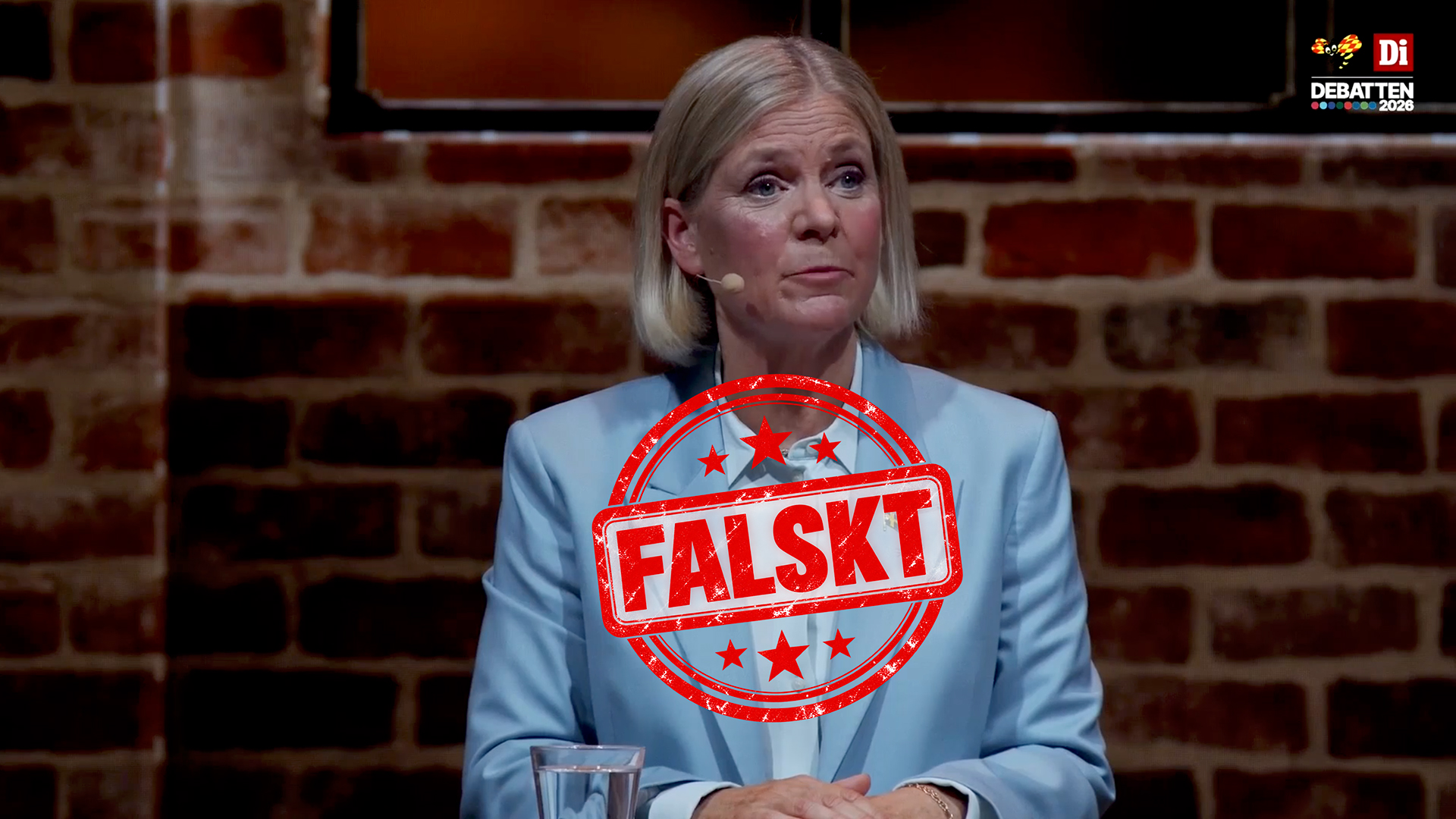
Yesterday, Expressen held a party leader debate. In one segment, Magdalena Andersson claimed that Sweden is falling in the innovation index while she argued for more wind power in Sweden. However, her assertion goes directly against what measurements of Swedish innovation capacity actually show.
About 35 minutes into the debate, Magdalena Andersson took the floor and claimed that the Tidö parties “have not taken care of the Swedish economy.”
She then started talking about how the Sweden Democrats “are waging a culture war against new technology,” referring to wind power, and continued by claiming that “foreign investment is falling in Sweden” and that Sweden is “falling in the innovation index.”
But her statement does not hold up under scrutiny.
Sweden rises in the innovation index
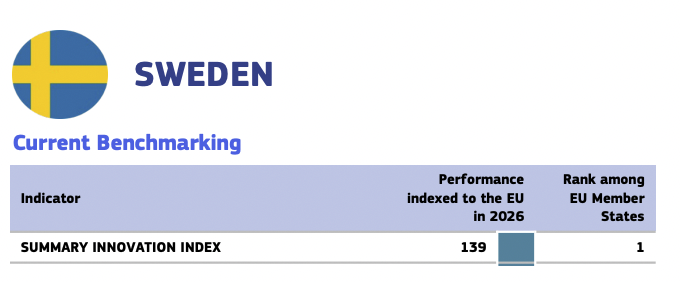
During the debate, Andersson did not specify what measurement she was referring to when she said “the innovation index is falling,” but if you look at the “European Innovation Scoreboard 2026” from the European Commission regarding Sweden, a completely different picture emerges.
First of all, Sweden ranks number 1 on the list of the most innovative countries in the entire EU:
However, to be precise, Andersson claimed that Sweden is “falling” regardless of our placement. But that is not correct either. The same report states the following:
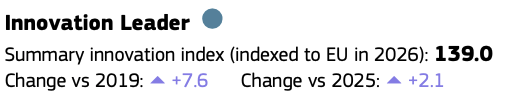
The ranking in 2026 is thus 2.1 points higher than the year before and a full 7.6 points higher than in 2019.
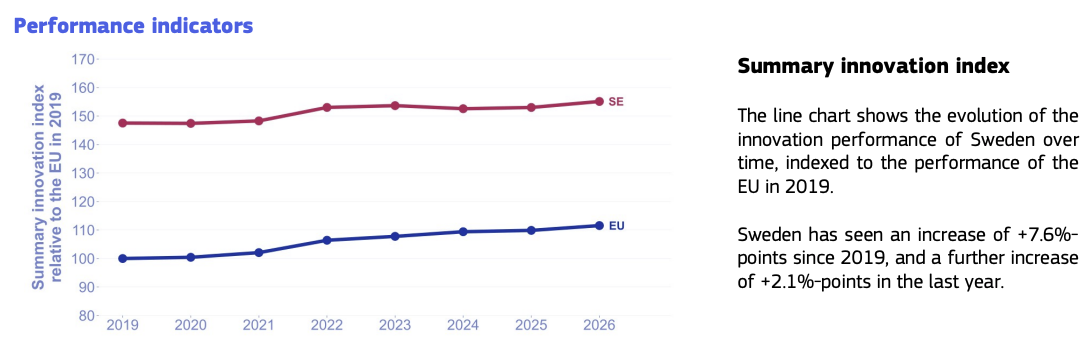
Magdalena Andersson’s claim that we are “falling in the innovation index” is, in other words, false.
Foreign investments?
Andersson also claimed that “foreign investments are falling,” again without specifying. This was the same message she wrote on her Facebook account in May this year, again without clarifying what she means.
There are various measures of foreign investments, but according to Statistics Sweden (SCB), foreign direct investments in Sweden increased by 56.3 billion SEK in the first quarter of 2026. Also looking at 2024 and 2025, there was a clear rise: from around 205 billion SEK to 287 billion SEK—a growth of roughly 40 percent.
A third and very important metric is FDI stock, that is, the value of all foreign direct investment assets already present in Sweden. Here, SCB reports that foreign direct investment assets in Sweden increased by 222 billion SEK during 2024 and reached 4,701 billion SEK. That was a 5 percent increase in one year. Equity capital also rose by 8 percent to 4,187 billion.
So measured as total foreign invested capital in Sweden, the trend was up, not down.
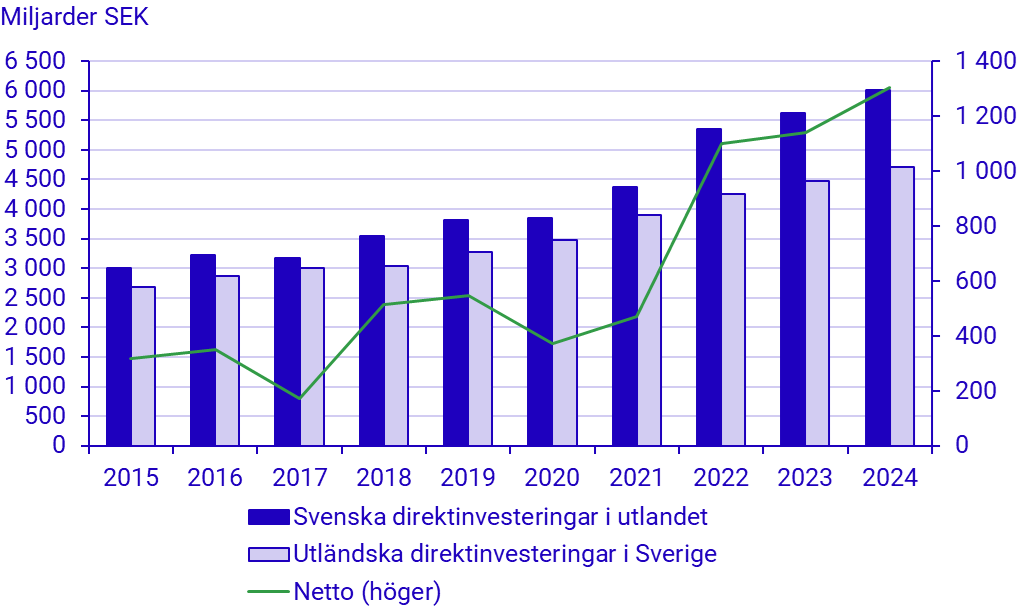
The graph above also shows that foreign direct investments in Sweden have been increasing every year under Tidö governance and higher than during the former Social Democratic governments.
Magdalena Andersson’s statements in this respect can therefore also be considered false.