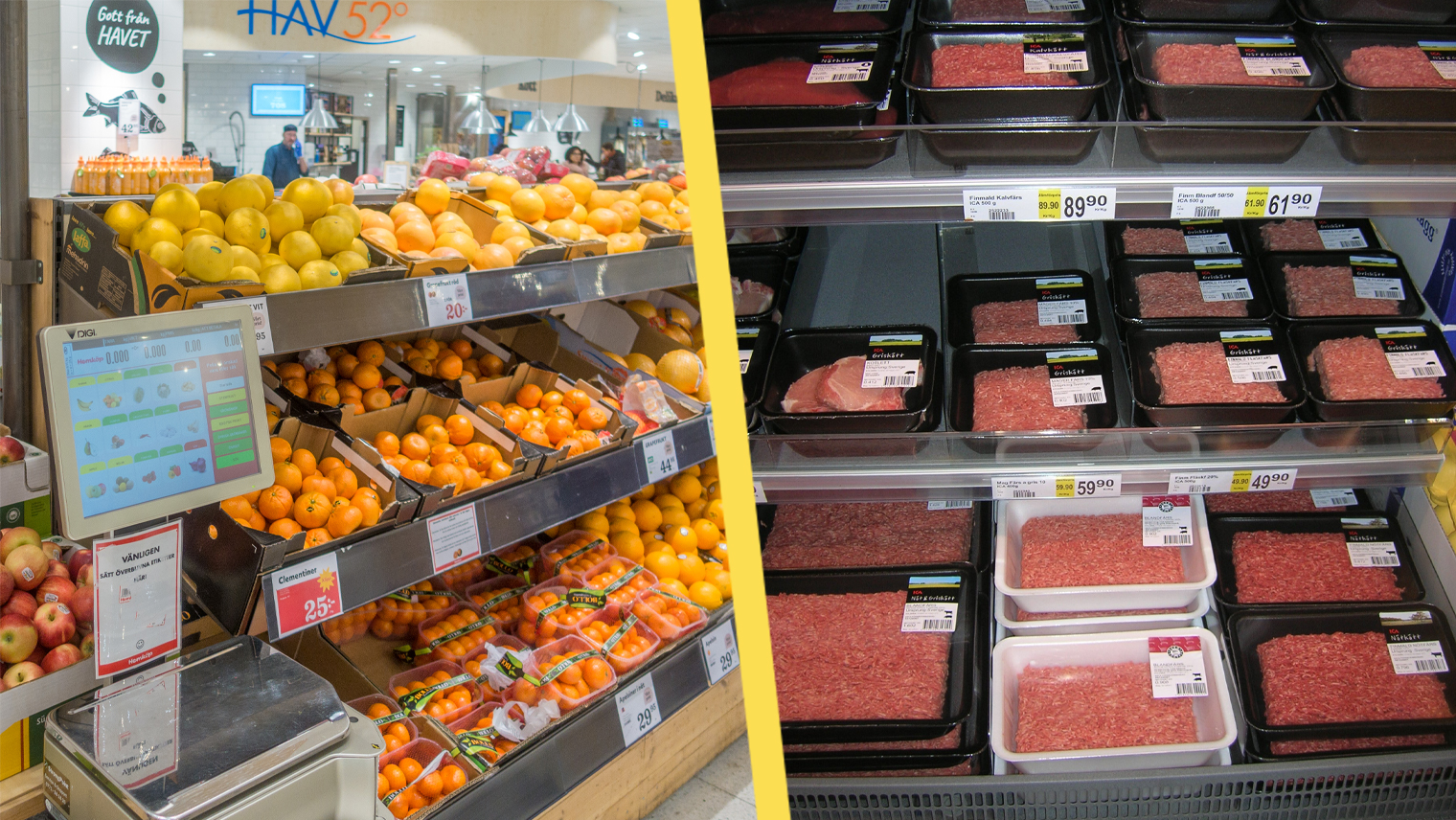
The Tidö parties’ reduction of the food VAT from 12 to 6 percent appears to have been almost entirely passed on to customers in the country’s grocery stores. This is shown by a new analysis from the National Institute of Economic Research (Konjunkturinstitutet). However, for takeaway food from restaurant chains, the result looks completely different—the price reduction after the VAT cut was significantly more limited there.
On April 1, the Tidö parties temporarily reduced VAT on food from 12 to 6 percent. A key question ahead of the reform was whether businesses would actually lower prices or if part of the tax cut would remain with the companies. Konjunkturinstitutet’s new special study now provides a clear answer regarding the grocery sector.
According to KI, a full pass-through of the VAT reduction would correspond to a price decrease of just under 5.4 percent. The authority used three different analysis methods and estimates the price drop to be between 4.7 and 5.4 percent.
KI’s overall conclusion is therefore that the VAT reduction was “fully” passed on to consumer prices.
Different Outcome at Restaurant Chains
But the same pattern is not seen when Konjunkturinstitutet analyzes takeaway food. Food purchased at a restaurant for takeaway counts as groceries and was therefore also included in the VAT reduction.
In a separate study, KI investigated what happened to prices during the first month after the reform.
The result indicates that the effect in chain restaurants was “limited in the short term.” This means that consumers there did not receive the same immediate price decrease as customers in grocery stores. For independent restaurants, however, the data is not sufficient to draw any conclusions.
The difference is potentially significant since takeaway food accounts for a large part of the restaurant market. KI refers to data from Visita, which shows that about half of the lunches and dinners purchased from restaurants are taken away or delivered.
Total Swedish restaurant sales in 2023 amounted to SEK 172 billion including VAT.
Too Early for Final Conclusions on Takeaway Food
At the same time, KI emphasizes that the restaurant study only measures the first month after the VAT cut. The result therefore does not say how much of the tax reduction restaurant chains will pass on to customers in the longer term.
For grocery stores, the conclusion is considerably stronger. There, several analyses with different datasets all point in the same direction—the reduced VAT appears in practice to have been transferred to consumers through lower prices.