
Proposals for a special tax on billionaire fortunes have become an election issue for the Left Party and the Green Party. But investor Klas Tikkanen warns that even just the discussion is making wealthy Swedes consider relocating—fearing that a new wealth tax could impact investments, entrepreneurship, and, ultimately, the state’s tax revenues.
In the run-up to the election, the topic of reintroducing some form of wealth tax has gained new political momentum. The Left Party wants to introduce a so-called billionaire tax, and the Green Party has also highlighted such taxation as a way to finance, among other things, welfare, climate initiatives, and shorter working hours.
The proposals are facing harsh criticism from parts of the business community. Entrepreneur and investor Klas Tikkanen tells Tidningen Näringslivet that the negative consequences risk being considerably greater than the tax revenues the state hopes to collect.
According to him, Sweden has over the past decades developed a well-functioning market for financing start-ups and growth companies. A new wealth tax could make Sweden less attractive for both Swedish and foreign investors, thereby reducing the flow of capital to new companies.
“I think it would be incredibly dangerous and damaging for Sweden,” says Tikkanen.
Green Party Projects Tens of Billions
Exactly how a billionaire tax would be structured is still unclear, with different levels and thresholds under discussion. The Green Party’s spokesperson Daniel Helldén has cited calculations from the Parliamentary Research Service and told Aftonbladet that, roughly estimated, the tax could bring in about 50 billion SEK a year.
ALSO READ: The Green Party’s Election Promises: No Nuclear Power, More Immigration, and Higher Taxes
At the same time, he has pointed out that this calculation is uncertain, partly because Sweden lacks a register of individuals’ total wealth. Tikkanen strongly doubts that revenues would be so large. He points among other things to experiences from Sweden’s previous wealth tax.
Sweden had such a tax until 2007. When it was abolished, the rate stood at 1.5 percent for wealth exceeding 1.5 million SEK for singles and 3 million SEK for married couples. In the last ten years of the tax, according to Ekonomifakta, it brought in between 3.8 and 8.4 billion SEK a year, corresponding to 0.3–0.5 percent of total tax revenues.
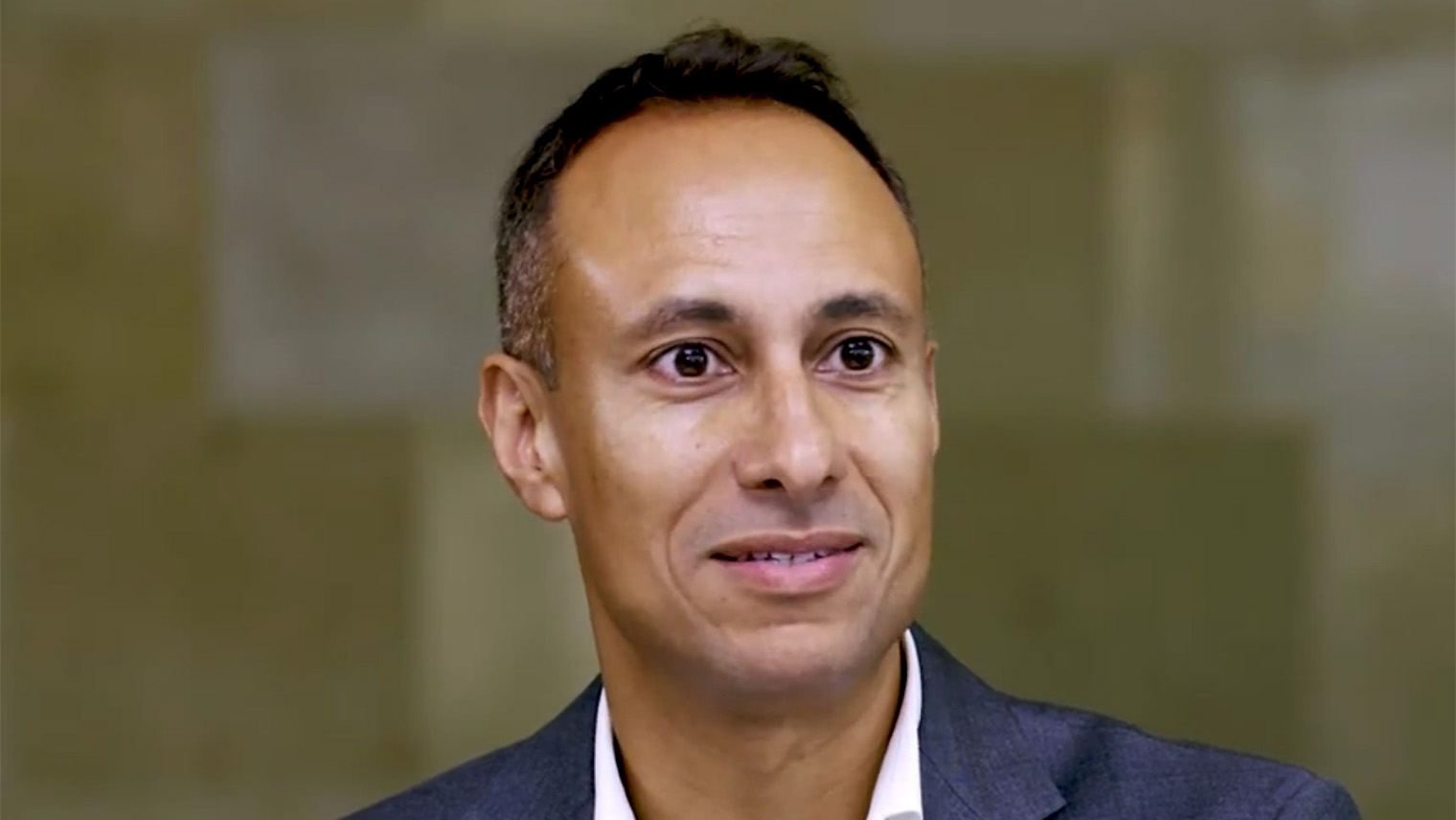
Tikkanen therefore does not believe in the 50-billion SEK projection. In his view, there is also a risk that the tax base could shrink as people with significant assets choose to leave Sweden.
Reports of Relocation Preparations
It’s not only a future risk, claims Tikkanen. He says he already sees signs that election uncertainty is affecting how wealthy Swedes behave.
He recounts having recently spoken with one of the country’s leading tax lawyers, who, according to Tikkanen, now spends a large part of their work helping people prepare for potentially relocating from Sweden.
“I know that many people are preparing to leave the country to preempt such a tax,” says Tikkanen.
He also believes that investors may choose to postpone larger and riskier investments in Swedish start-ups while waiting for clarity on future tax policy after the election.
As a cautionary example, he points to Norway, which still has a wealth tax. There, the tax was increased in 2022. Afterwards, 30 wealthy Norwegians moved to Switzerland, according to Norwegian paper Dagens Næringsliv.
Tikkanen fears Sweden could experience similar developments. According to him, the effect wouldn’t necessarily be immediate, but would gradually become apparent as investments and company formations choose other locations.
Warns of a ‘Financial Berlin Wall’
Another issue is what happens if a wealth tax is combined with rules making it harder to avoid the tax by moving abroad.
Tikkanen describes the risk of such rules as a “financial Berlin Wall.” His argument is that Sweden risks not only making it harder for capital to leave, but also scaring off foreign entrepreneurs and investors from ever moving here or investing in Swedish companies in the first place.
ALSO READ: How Much More Will You Pay in Taxes With a Power Shift?
A successful foreign entrepreneur who, after selling a business, wants to settle in Sweden and invest in Swedish companies may, by this reasoning, choose not to do so if they fear substantial tax consequences in the event of future relocation. The result could be less capital both into and out of Sweden, he claims.
Left Party: ‘Money a Billionaire Barely Notices’
The Left Party has made taxing very large fortunes a part of its economic platform ahead of the election. The party has previously identified what it calls “Sweden’s super-rich” as a political opponent and argues that a billionaire tax would both strengthen welfare funding and make the tax system fairer.
“It’s money a billionaire would barely notice,” said Left Party leader Nooshi Dadgostar to TT in June.
Tikkanen objects to that portrayal and emphasizes that billionaire fortunes rarely consist of equivalent amounts in a bank account. A large portion consists instead of ownership stakes in companies and other invested capital.

He also refers to SCB statistics compiled by the Confederation of Swedish Enterprise, which show that the fifth of households with the highest economic standards were responsible for about half of the final taxes paid.
According to Tikkanen, the problem with a wealth tax is not just how much the wealthy have to pay, but that the tax may have to be paid even when assets have not generated any money the owner can use for payment.
Could Force Entrepreneurs to Sell Shares
This, according to Tikkanen, could be particularly burdensome for owners of unlisted companies. An entrepreneur could, on paper, be a billionaire thanks to their company’s value without having corresponding private liquid assets. If the company doesn’t distribute dividends, the owner may have to free up money to pay the wealth tax.
In some cases, this could mean that shares must be sold year after year. Tikkanen warns that over time this could reduce the founder’s stake, impact control of the company, or make a total sale more attractive.
How significant that effect becomes will depend on the final design of the tax. Tikkanen notes that tax rates of both two and three percent have been discussed, even as it’s not yet determined at what wealth level taxation would begin.
Points to Tax Reforms Behind Startup Boom
Tikkanen connects Sweden’s success as a startup and entrepreneurship hub to several tax reforms in the early 2000s. He particularly highlights changes to rules on business-related shares in 2001, the abolition of inheritance and gift taxes in 2004, and the elimination of the wealth tax in 2007.
Before these reforms, Swedish entrepreneurs’ holding companies, according to him, were often placed in countries like the Netherlands, Belgium, and Cyprus. The changes helped keep more ownership and venture capital in Sweden.
ALSO READ: New Red-Green Tax Will Lead to Higher Mortgage Rates
He believes that since then, Sweden has managed to combine favorable conditions for business and investment with extensive social safety nets. For this reason, he thinks tax policy must be designed so that welfare financing doesn’t simultaneously weaken the business sector that generates jobs and tax revenues.
Tikkanen’s main concern is therefore not that a billionaire tax would immediately cripple the Swedish economy. The risk, he says, is longer-term: that entrepreneurs, investors, and capital will gradually migrate away from Sweden, with fewer major companies founded here in the future.
“My concern now stems from not wanting us to destroy the economic miracle that pays for welfare for all of us,” he says.