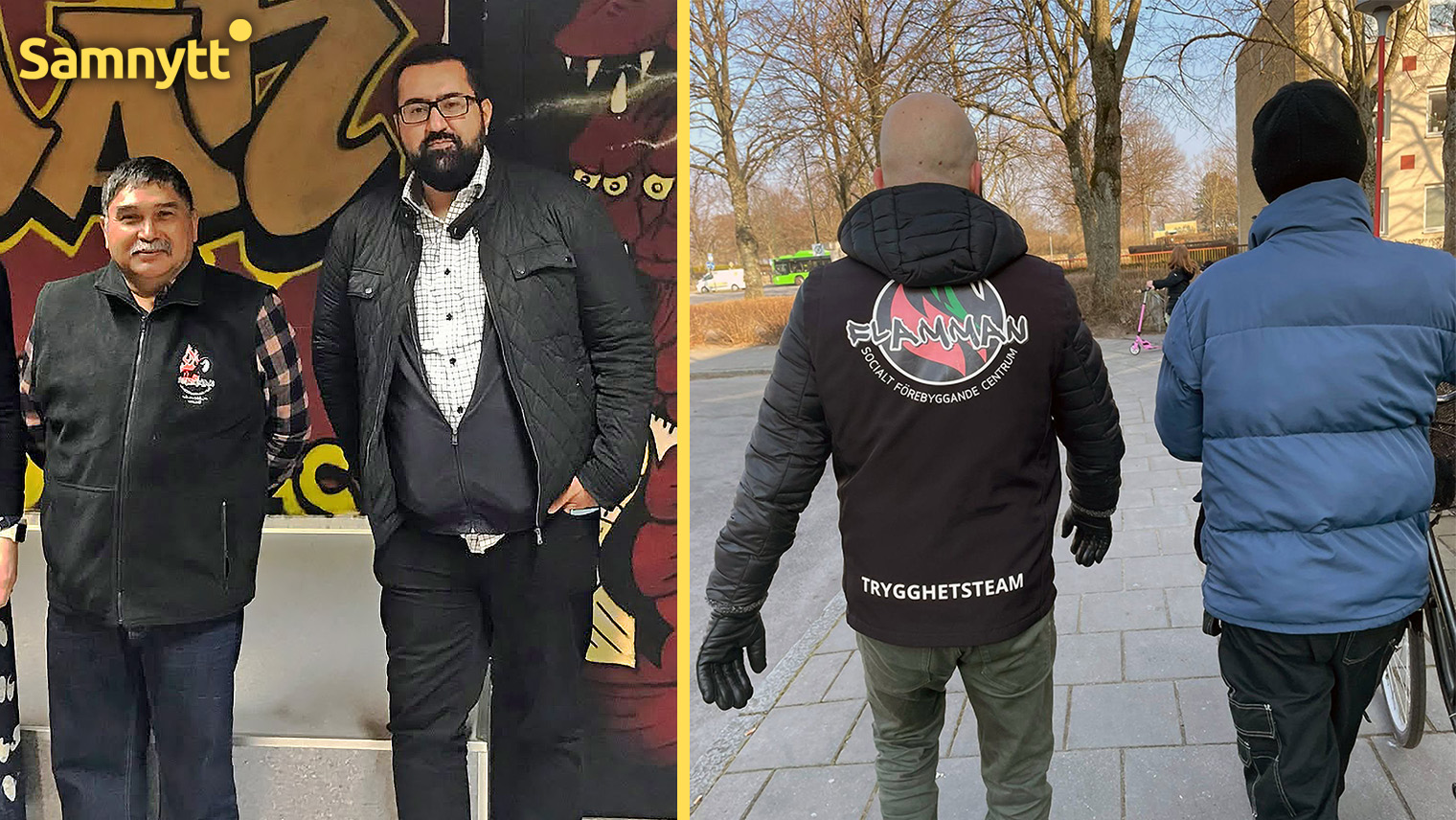
For decades, Flamman in Malmö was praised for keeping children and young people with immigrant backgrounds away from gang crime. The organization received awards, was visited by future and sitting prime ministers, and received over 130 million SEK in public grants. Now, two of the men behind the organization themselves are suspected of extensive organized financial crime—including 193 instances of gross embezzlement.
At around seven o’clock on Tuesday morning, authorities struck. In a coordinated operation described as a “dawn raid,” Flamman’s founder Juan Paez and operations manager Rafi Farouq were arrested. On Friday, both are expected to be remanded in custody.
This is a near total reversal of the image that surrounded Flamman for decades. The organization has presented itself as a safe haven for children and youth in Malmö’s vulnerable immigrant-heavy neighborhoods and has claimed, among other things, to work against gang recruitment, crime, and violent extremism.
Now, the prosecutor instead suspects that the two managers, over five years, have committed a series of comprehensive financial crimes—using a structure that, behind the facade, was part of the organized crime they claimed to be a counterforce to.
According to the remand requests, there are 193 cases of gross embezzlement, five cases of serious accounting fraud, and five cases of aggravated tax evasion. The suspected crimes cover the period 2020–2025, according to Sydsvenskan.

From Model Example to Crime Suspicions
Flamman was founded in Kroksbäck in 1997 and over the years built up an extensive network of activities and projects for children and youth. The organization profiled itself as one working with immigrant youths at risk of entering crime, exit programs, violent extremism, and gambling addiction.
The City of Malmö also entered into formal collaborations with Flamman around preventive work for youth at risk. Nearly all of the money came from public funds, from taxpayers.
According to Sydsvenskan’s survey, Flamman has over the years received over 130 million SEK in taxpayer money from municipalities and governmental agencies. 99.9 percent of the organization’s finances were funded by grants.
READ ALSO: Runs youth center with taxpayers’ money – earns millions
Among the major financiers are the City of Malmö and Allmänna arvsfonden (The Inheritance Fund). In 2019 alone, over 14.7 million SEK was reported from Arvsfonden to Flamman Ungdomarnas Hus and its projects, and the government later described Flamman’s Safe Space initiative as a project to counteract Muslim radicalization and strengthen democracy.
The success story was also rewarded with prizes. In 2007, Flamman received Malmö City’s diversity and integration award. The association also claims to have been awarded by the Foundation for Respect and with the “Enthusiast of the Year” award. Later, Flamman was recognized for “Association Initiative of the Year” and named “Association of the Year” for efforts in 2022.
Malmö City justified the latest award by stating the association made a difference for children and youth with immigrant backgrounds and worked for “security, openness, and cooperation.”
Praised by Politicians and Media
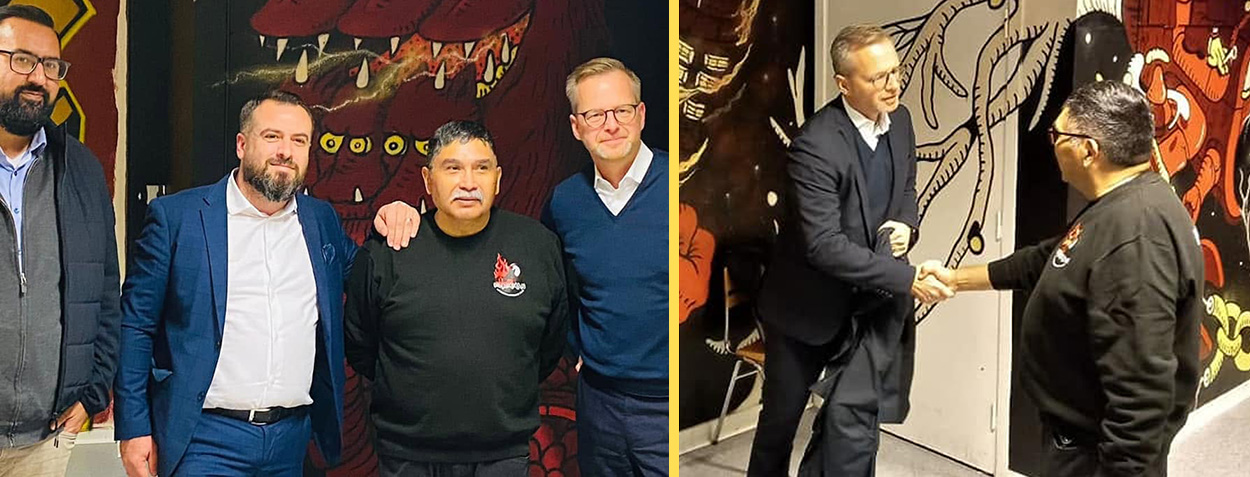
Over the years, Flamman was visited by a long list of politicians and power holders. Among them were Stefan Löfven (S) and Ulf Kristersson (M), with the former visiting as Prime Minister, and the latter while still Opposition Leader and Prime Ministerial candidate.
When Kristersson visited during the 2018 election campaign, Aftonbladet described Flamman as a “famous youth center” that had managed to keep gangs away and become a sanctuary in a vulnerable immigrant area. Kristersson played ping-pong with the youth and discussed, among other things, gang crime with Rafi Farouq.

Public service also regularly featured Flamman. SVT interviewed Farouq about youth crime as early as 2013 and later reported on the association’s exit program. Sveriges Radio used him as an expert on children and young people in criminal networks.
In other words, Flamman maintained the position as an established collaboration partner and expert for a long time—even as millions in taxpayer funding continued to pour in.
As recently as spring 2024, SVT reported on how Flamman helped families exposed to violence, and in November that year P4 Malmöhus stated the organization would help the Garaget library reopen after threats and problems with drug dealing.
Sydsvenskan Started Investigating
The facade began to crack in December 2024. Sydsvenskan then revealed that Farouq and Paez personally had very high incomes from the almost entirely publicly funded operation.
Behind the incomes was, among other things, a variable compensation model. Those who managed to bring new projects and taxpayer grants to Flamman could receive a considerably higher compensation themselves.
Between 2017–2024, Farouq reported annual incomes between 1.2 and 2.2 million SEK. In 2024, Paez reported an annual income of about 1.3 million, and the year before around 1.2 million. All skimmed from the public grants they received.
Farouq has since described the compensation model as poor and stated that it had already been phased out before Sydsvenskan’s publication. But the scrutiny didn’t stop at the salaries.
An audit commissioned by Malmö city reportedly found, according to Sydsvenskan, serious deficiencies in traceability of funds and warned of high risk of irregularities. It was also revealed that people in leadership positions within Flamman simultaneously sold goods and services to the grant-funded association.
In one case, services worth half a million SEK were purchased from a sole proprietorship belonging to a manager within the organization. In another, Flamman bought, among other things, sofas, armchairs, gaming computers, and gaming tables for 200,000 SEK from the same manager.
Grants Cut Off—Then the Finances Collapsed
The consequences were swift. The City of Malmö stopped payments, initiated investigations, and filed police reports. The leisure board later decided to fully end support and evict Flamman from the premises at Kroksbäck.
The city’s own documentation describes how the review began after reports of million-krona salaries, and several forms of support and cooperation were subsequently scrutinized. Other financiers also pulled the brakes.
When the grant system supporting the organization ended, Flamman’s financial foundation basically disappeared as well. On January 7, 2026, Flamman Socialt Förebyggande Centrum was declared bankrupt.
Farouq himself explained the situation by stating that Malmö city, government funds, and other financiers had stopped or paused grants. The organization, according to him, was left without income but with costs remaining.
Refused to Leave the Free Premises
The conflict with the city continued after bankruptcy. Flamman refused to leave its approximately 1,000 square meter premises at Kroksbäcksskolan, which the organization had been allowed to use rent-free for many years. According to Sydsvenskan, the premises cost taxpayers approximately 63,000 SEK per month.
When the city wanted the premises back, Flamman demanded at least three million SEK to vacate. The city refused and went to court.
Meanwhile, reimbursement claims began to roll in. The city of Malmö has demanded millions back and denied new grant applications. In February, the leisure administration concluded that the deficiencies were so significant that payments had, in its assessment, been wrongly made for a long time.
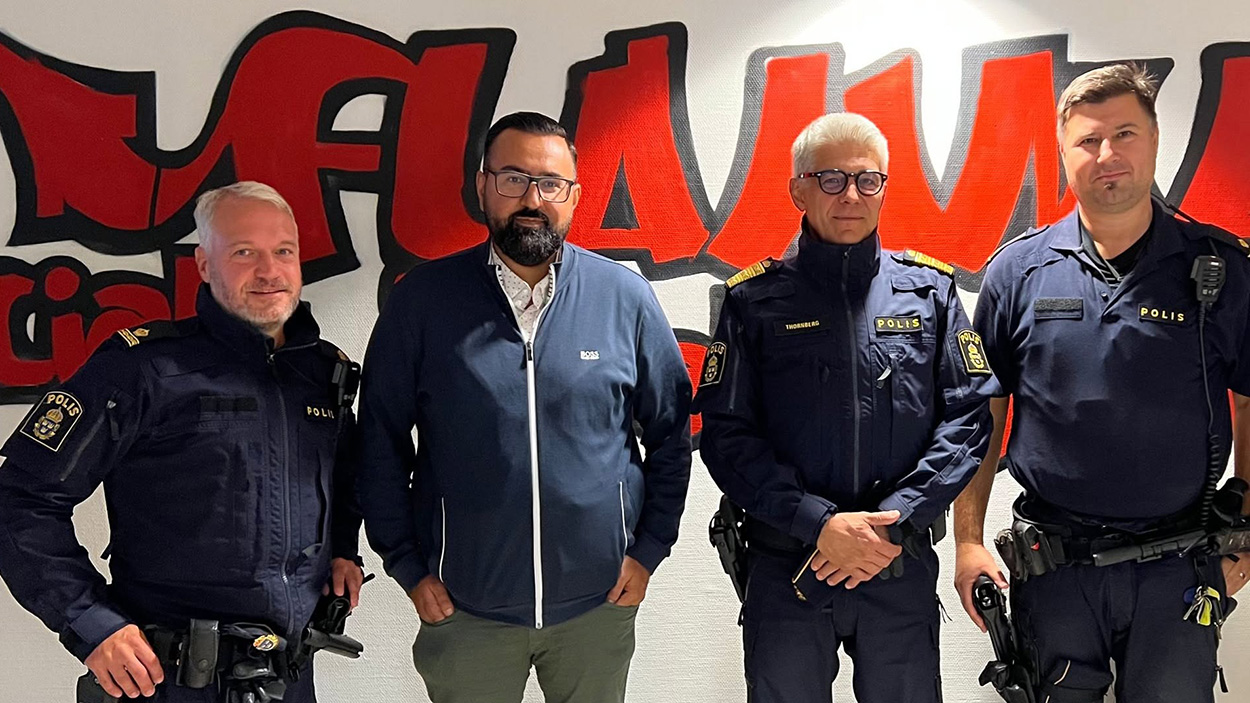
Municipal board chair Katrin Stjernfeldt Jammeh (S) has tried to save face by emphasizing that Flamman, for many years, also performed work appreciated by the city and police. But after the investigations, the message was nevertheless:
– Trust has been lost, she told Sydsvenskan in June.
193 Suspected Cases of Gross Embezzlement
The story has now moved into a much more serious phase. The Economic Crime Authority has been involved since autumn 2025 and prosecutor Björn Rosenlöf suspects, according to Sydsvenskan, that Farouq and Paez committed financial crimes over several years.
On Tuesday morning, both men were arrested. The prosecutor now wants them remanded in custody, believing there’s a risk they might otherwise destroy or remove evidence. He has also requested the seizure of a property Farouq bought during the period when the alleged crimes are said to have occurred.
The evidence is said to include, among other things, compilations of the managers’ incomes and salary statements. According to the prosecutor, the suspected crimes could result in long prison sentences and significant repayment demands.
Both Deny the Charges
Rafi Farouq and Juan Paez deny all charges. Farouq’s defense attorney, Kristoffer Ståhl, says that his client rejects all suspicions and the remand request.
– Rafi denies all allegations. He will contest the prosecutor’s remand request at the upcoming hearing. I do not wish to explain now the grounds for his denial beyond stating that everything has been done by the book.
Paez’s attorney, Sofie Herrström, gives the same response:
– My client denies the charges. That’s all I can say.
The remand hearings will be held on Friday afternoon.
Thus, an operation that for decades was held up as a role model in the fight against youth crime has made a remarkable journey—from municipal awards, prime ministerial visits, and more than 130 million SEK in public funding, to bankruptcy, repayment claims, police investigations, and two arrested executives.
Whether the prosecutor’s suspicions are justified remains to be seen. But what has already emerged raises questions about how an organization that was almost entirely dependent on taxpayers’ money for so many years could be allowed to grow, be rewarded, and be entrusted with new millions without earlier detection of financial warning signs.