
French public service radio was partially paralyzed for two days after employees went on strike to protest a conservative journalist being given a recurring political commentary on the country’s largest radio channel. The unions believe his employer, the magazine Valeurs Actuelles, represents values not suited for public service. Management, on the other hand, defends the hire by arguing that people with differing opinions must also be allowed to be heard on taxpayer-funded radio.
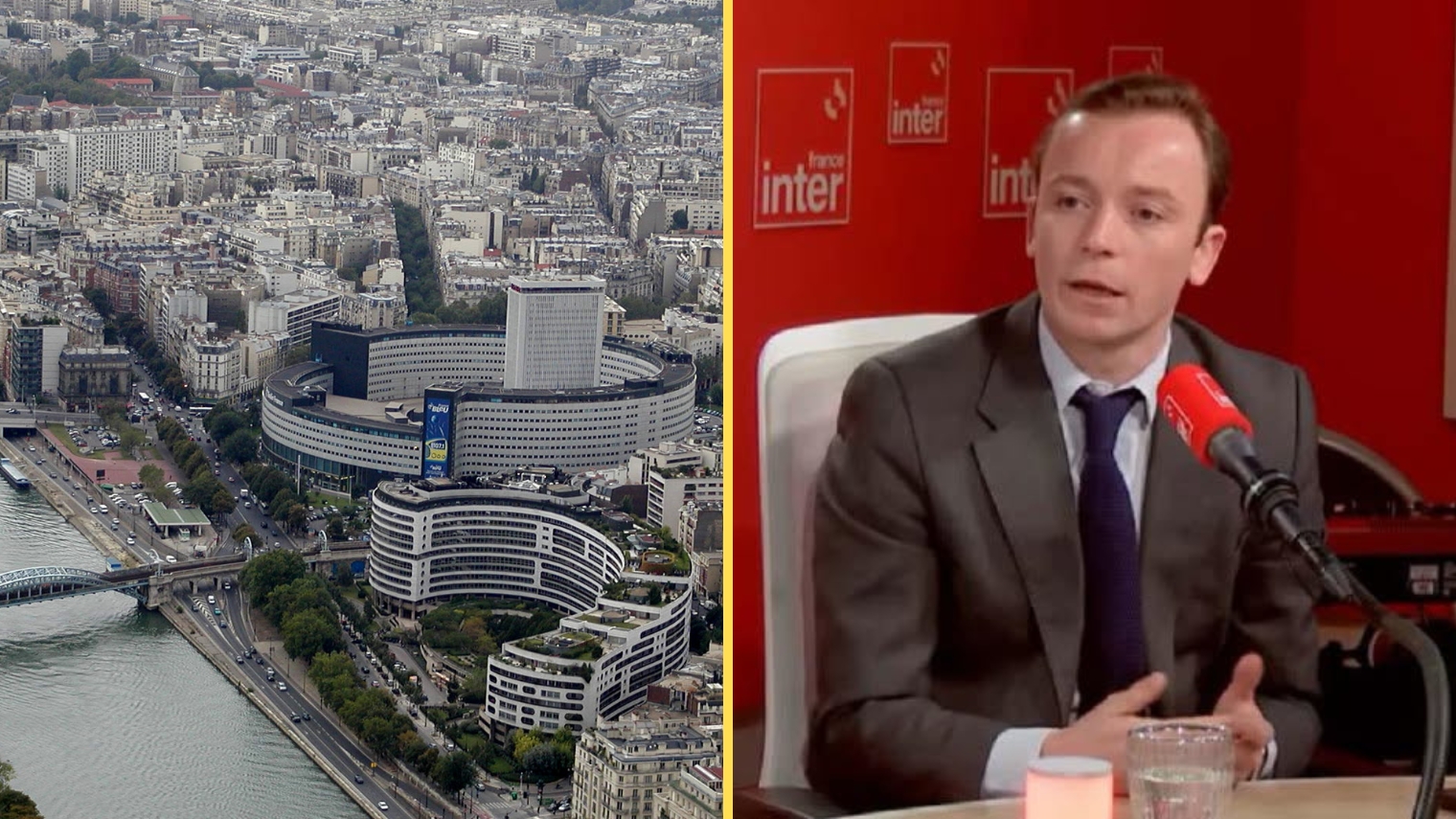
The conflict at Radio France broke out after Charles Sapin, deputy editor of the conservative weekly Valeurs Actuelles, began participating in France Inter at the end of August.
His role is limited to a political commentary of about two and a half minutes on Sunday mornings. However, the recruitment has triggered widespread protest among left-leaning staff members.
On September 13 and 14, employees went on strike after a formal notice from all six representative unions – CFDT, CGT, FO, SNJ, SUD, and Unsa. The work stoppage is therefore legal, but questions have been raised about whether this should be considered an abuse of the right to strike.
Music Replaced Public Service Programming
The strike had noticeable consequences for listeners. On France Inter, the regular programs were replaced by music and announcements about the labor dispute. France Culture, and to a lesser extent franceinfo, were also affected on the second day of the strike.
The commentary by Sapin that was meant to air on Sunday morning was never broadcast. The strike thus at least temporarily achieved its main objective – to prevent the newly hired voice from being heard.
On Monday, management reported that only 12 percent of staff took part in the strike. Despite the low turnout, the impact on several channels was significantly greater than the number suggests.
READ ALSO: Former SVT reporter: “SVT is a megaphone for multiculturalism and mass immigration”
The unions justify the protest by arguing that Valeurs Actuelles is not in line with the “humanistic, democratic, and republican values” that public service should uphold, in their view. They accuse the magazine of racism and hate speech and claim that pluralism must not be used to legitimize what they term messages of hate.
Valeurs Actuelles describes its direction as conservative. The magazine has also been involved in several legal cases and was notably convicted after a much-discussed 2020 article in which left-wing black politician Danièle Obono was satirically depicted as a slave.
The Right to Strike Used Against Editorial Decision
This strike differs from a traditional labor dispute concerning, for example, wages, working hours, or staffing. The concrete demand from the six unions is instead that Radio France withdraw Charles Sapin’s assignment to deliver political commentary.
For a work stoppage to be covered by strike rights in France, it must be linked to profession-related demands. The unions have therefore tried to tie the protest to the employees’ work and Radio France’s public service mission.
READ ALSO: SVT boss Hanna Stjärne: No problem that 70% of our journalists vote V or MP
In the strike notice, they argue, among other things, that the decision damages the reputation of all of Radio France and entails editorial responsibility for the company. The conflict is also described as a matter of employees’ trust in management.
The protest is thus formally directed against an editorial decision by their own employer and not solely against the political stance of Sapin or Valeurs Actuelles. However, there does not appear to have been any legal ruling specifically determining whether this use of the right to strike is permissible.
“Fascist Takeover”
The protests have also gained support from parts of the French cultural and left-leaning public opinion. About 300 authors, actors, lawyers, and other public figures signed a petition ahead of the strike, demanding that Sapin be removed from his spot at France Inter.
Among the signatories were Nobel laureate Annie Ernaux and actress Julie Gayet, who is married to former Socialist president François Hollande.
READ ALSO: SVT reporter erupts in hate on the job: “Bla bla go home you bloody idiot”
The petition maintained that pluralism must remain within the framework of republican values and must not mean accepting ideas that the signatories deem to threaten democracy and fundamental rights.
Left-wing leader Jean-Luc Mélenchon went even further, describing Sapin’s recruitment as a “fascist takeover”.
Management: Different Opinions Must Be Heard
Radio France’s management has so far resisted the demands. France Inter’s chief Céline Pigalle has emphasized pluralism as a fundamental principle for a publicly funded radio channel. She has also said she trusts that Sapin can carry out his assignment without causing problems for France Inter.
Radio France’s highest leader, Sibyle Veil, has argued in the same vein and defended the recruitment by stating that public service must be able to give a platform to “people who do not think the same”.
The background makes the argument for pluralism more concrete. France Inter had already let Camille Vigogne Le Coat from the left-leaning magazine Le Nouvel Obs deliver Saturday’s political commentary. Sapin’s regular Sunday slot thus became the equivalent voice from the right.
READ ALSO: Dagerlind: SVT engages in Greta-washing
At the same time, management has stressed that even such broadening should occur within democratic and republican frameworks and that Radio France has special obligations regarding political pluralism. The conflict is therefore not just about a single journalist.
On one side are unions who believe Sapin’s link to Valeurs Actuelles makes him unsuitable for the role and who are using the strike weapon to have him removed. On the other is the responsible public service management, justifying his participation by saying taxpayer-funded radio must give space to different political perspectives.
Taxpayer-Funded Radio with Millions of Listeners
Radio France is the French equivalent of a major national public service radio and operates, among others, France Inter, franceinfo, France Culture, France Musique, FIP, and the regional network ICI.
The group had 4,682 employees at the end of 2025 and a turnover of 762 million euros. The operation is predominantly publicly funded, with 645.1 million euros for day-to-day operations in 2025 coming from public funds—about 85 percent. Since the old radio and tv fee was abolished, funding is provided through public appropriations linked to VAT revenue.
It is also a media house with vast reach. Radio France’s channels account for about 30 percent of all radio listening in France. France Inter, where the dispute over Sapin is happening, is the country’s largest radio channel with nearly seven million daily listeners during the 2025–2026 season.
New Strike Already Underway
Management’s refusal to remove Sapin has not ended the conflict. On Tuesday, staff gathered again and decided on a new strike notice for Monday, September 21.
Union representatives still demand that Sapin’s political commentary be dropped before they are willing to discuss how pluralism will be shaped at France Inter. Instead, management has proposed talks specifically about the forms of political diversity on the channel.
Thus, the tug of war continues over who, in practice, will determine the boundaries of the diversity of views on France’s largest radio channel—the responsible public service management, or the employees using strikes to try to block one of management’s political hires.
READ ALSO: SVT’s language: Right-wing extremist mentioned 79 times more often than left-wing extremistmes 79 times more often than left-wing extremist