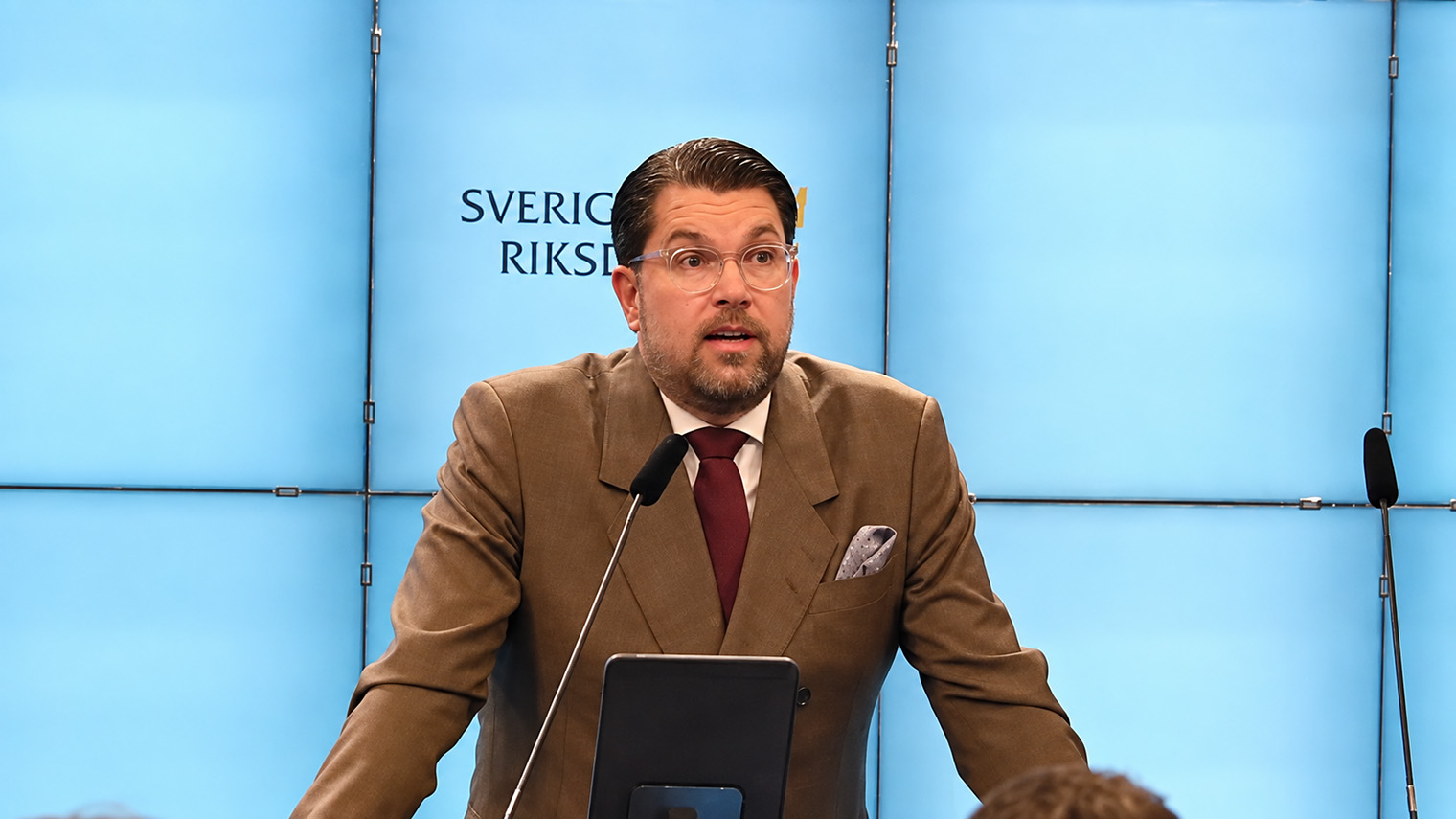
The Sweden Democrats lost ground in the parliamentary election, leaving the Tidö parties without enough mandates to retain power. Commenting on the results, Jimmie Åkesson downplayed the drama around the loss of votes, but simultaneously opened the door for a broad reconsideration of the party’s future direction. “Sacred cows may need to be slaughtered,” said the SD leader—without specifying which ones.
Jimmie Åkesson began his first in-depth review after the election by putting the result in a broader perspective. The Sweden Democrats have grown substantially over the past two decades and, according to the party leader, have significantly changed Swedish politics, especially in the areas of migration, integration, and criminal policy.
But success has also created a new problem. As other parties have moved closer to SD on issues that previously distinctly set the party apart, it has become harder to find a unique role.
Åkesson acknowledged that the party had hoped for a better election result but highlighted a record number of members, increased acceptance, and greater opportunities for local and regional influence as signs that the organization remains strong despite the electoral setback.
– We’re running a marathon, and we’re barely halfway, he said.
He rejected the image of SD as a party that would fall apart when it gained real political influence and had to take responsibility and compromise. After four years as a support party for the government, SD is still a major parliamentary party, he emphasized.
Points to government cooperation
Åkesson did not want to draw definitive conclusions before the party’s commissioned election analysis is complete. It will be conducted by the think tank Oikos. Still, he has already pointed to several possible explanations for the party’s decline. One central issue is the government cooperation itself.
– At times, the Sweden Democrats have been drowned out in the collaboration, said Åkesson.
According to the SD leader, voters may have found it difficult to see the differences between the parties in government cooperation. Meanwhile, more loyal SD voters may have been dissatisfied with compromises where the party didn’t achieve its entire agenda.
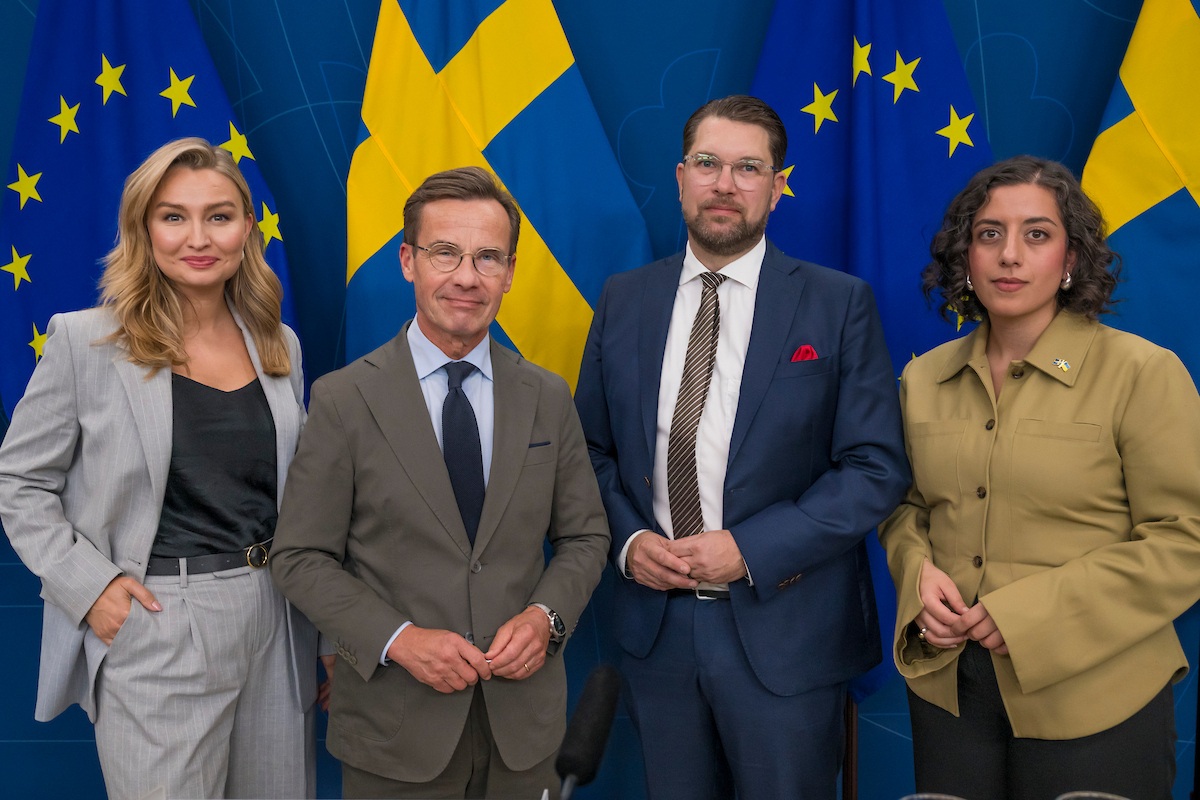
Åkesson said the risk of losing voters was part of the calculation already when the cooperation began. Gaining political influence requires, he says, realpolitik and compromises in a parliamentary system with eight parties in parliament.
READ ALSO: The Speaker meets the parties
He also brought up the agreement on the prime minister question as a possible factor. By quickly eliminating uncertainty about who would be the Tidö government’s candidate for prime minister, SD may also have reduced mobilization among its own voters or contributed to voter movement.
The party’s political successes may paradoxically also have played a part, Åkesson argued. When migration and crime are perceived as less urgent, other issues may become more important for voters.
The deportation debate may have cost votes
One issue Åkesson particularly highlighted was the debate on deportations. He claimed SD has had to bear much of the responsibility for a policy that critics have called unjust, even though several legislative changes have had broader parliamentary support. According to him, the opposition had successfully established an image of SD as a “heartless party” wanting to expel people not born in Sweden.
Åkesson also said that negative press and various high-profile incidents may have influenced more fickle voters, although he didn’t believe any single scandal explains the election result. His main thesis was instead that the loss must be understood structurally: four years of cooperation, compromises, changed policy priorities, and a situation where the SD profile has become less distinct.
“Sacred cows may need to be slaughtered”
The furthest-reaching statement came when Åkesson looked ahead. According to him, SD should not be satisfied with its current position. The long-term goal is still to challenge the Social Democrats as the country’s largest party. To achieve that, he opened up to the idea that even things previously taken for granted within the party may need to be discussed.
– Sacred cows may need to be slaughtered, of course. Stones need to be turned over.
At the same time, Åkesson pointed out what he described as SD’s particular ability to attract both LO voters and business owners. However, he did not want to preempt how this position would be translated into actual policy before the election analysis is complete.
READ ALSO: Kristersson resigns as prime minister
The mention of “sacred cows” also raised questions from journalists. When pressed on what parts of SD policy he actually referred to, Åkesson gave no specific example.
– The sacred cows are, for obvious reasons, not ones I have identified today. There is not even a certainty that they exist.
He instead explained the reasoning by saying that SD must be prepared to look at itself in light of a changing political landscape where other parties have moved closer to SD in areas where the party previously held a more distinctive position.
The question thus remained open as to whether the statement concerned concrete core issues, strategic choices, or rather the party’s way of profiling itself. Åkesson did not specify which political positions, if any, might be reconsidered.
Plans neither to resign nor take a break
The Q&A session also touched on Åkesson’s personal future. When asked, he immediately replied:
– I will not resign.
He later received a direct follow-up question regarding rumors about plans to take a break from politics. He dismissed those rumors as well.
Åkesson stated that the media reports were based on sources who, according to him, did not seem particularly knowledgeable. He also dismissed the idea that the election result would push SD to a more radical political line.
– I see no need for us to become more radical in any way.
Instead, he returned to the point that the party has chosen a realpolitik path and wants to be able to negotiate to achieve its policy goals.
Not letting go of demands
Another central theme of the Q&A was government formation and speculation about whether SD would drop previous demands to ease the formation of a new right-of-center government. Åkesson dismissed that idea.
– We will not give up any demands at this point.
READ ALSO: The Authority: Ballot papers could be scrapped
At the same time, he repeatedly emphasized that SD has no “red lines” against other parties. When asked about, for example, the Centre Party, he answered that, in his view, the problem is that other parties refuse to cooperate with SD.
However, he did not want to speculate further about exactly what parliamentary combinations might arise if the attempts to form another government fail.
Citizenship issues may have affected the result
Another question raised in the Q&A concerned a hot topic within the Tidö cooperation—the decision not to introduce a moratorium on granting new Swedish citizenships during the term.
Åkesson was asked about this in light of speculation that demographic developments may have influenced the outcome of the very close election. He pointed to increased voter turnout in vulnerable areas and said that just over 200,000 people became Swedish citizens during the parliamentary term.
READ ALSO: Ekeroth’s warning on demographics receives unexpected support from former leftist researcher
Åkesson said he did not have a clear picture of who these people are. However, he assumed many belong to groups where support for the Social Democrats, the Left Party, and the Green Party is high. The SD leader did not state that the new citizens decided the election.
– Of course, it could also have been decisive, but I think it is too early to draw such a conclusion.
He then extended his reasoning, warning of future electoral consequences if the trend continues.
– If we continue granting citizenship to a very large number of people from this part of the world, and they continue tending to vote eighty or ninety percent to the left, then it will obviously become very difficult to win elections in the future.
Received questions about “Islamist votes”
Åkesson’s previous assertion that mainly the Left Party, but possibly also the Social Democrats, had succeeded in mobilizing what he called “Islamist votes” led to follow-up questions. A journalist asked what he based the claim on and how many votes it could mean.
Åkesson said he could not give a number, but pointed to the Nyans Party. His reasoning was that voters who previously cast votes for a party outside parliament may this time have turned mainly to the Left Party or Social Democrats.
When asked if he thus equated Islamists with Muslims, he said no. Åkesson also admitted he could not substantiate how big the group might be. Instead, he referred to the Left Party’s results and previous reports about people within that party with connections to Islamism as support for his reasoning.
Wants to clarify SD’s distinctiveness
One lesson Åkesson said he has already drawn is that SD needs to be clearer about what differentiates the party from its cooperation partners. During the campaign, the four parties, according to him, placed great emphasis on showing unity. Åkesson said that in the final weeks he tried to highlight the differences more clearly but did so late.
– I don’t think that has benefited the Sweden Democrats.
However, he did not want to point to any single political compromise that has cost the party especially much support. The problem, he said, lies rather in the overall picture. Åkesson also tied this reasoning to the “sacred cows” that may need to be slaughtered.
SD will continue to be a realpolitik party seeking influence but must also find a way to become clearer again in a political landscape where many of the issues that once set the party apart have now become part of the mainstream. Exactly what this means for SD policy remains unanswered.
– We’ll just have to await this election analysis and evaluation before coming back with any decisions.
See the full speech and Q&A session HERE.