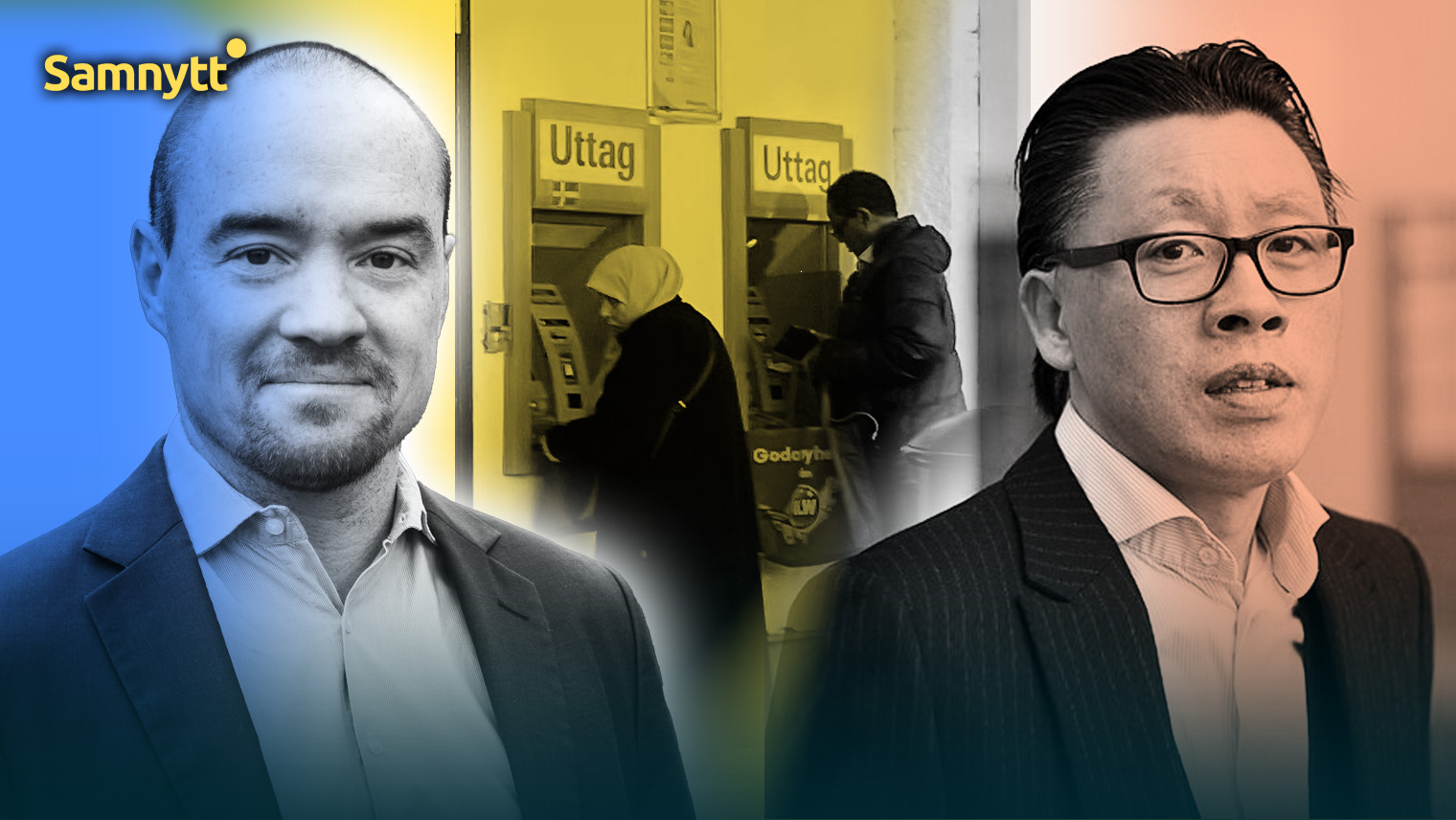
Have decades of immigration now altered the prerequisites for which political majorities can be formed in Sweden? Samnytt spoke with SD politician Kent Ekeroth, researcher Tobias Hübinette, and political scientist Zeth Isaksson – and despite very different political starting points, there are unexpected overlaps. However, there are major disagreements about where this development is leading.
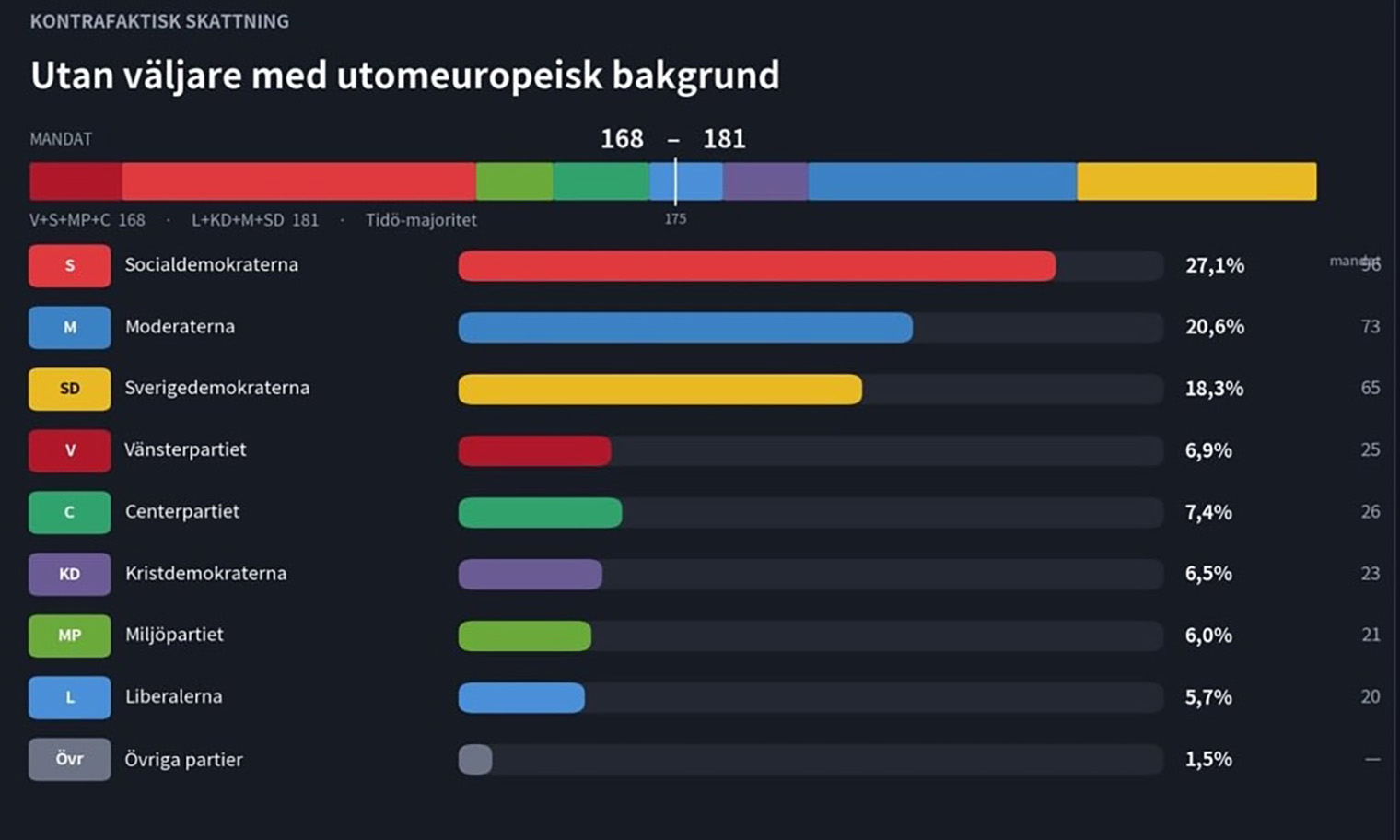
After the Swedish election, demographics have emerged as one of the explanations for the outcome. The discussion isn’t just about how voters with a foreign background vote, but also about voter turnout, political mobilization, and how a changing electorate might affect power dynamics in the long run.
One of those who has pushed the issue the hardest is Kent Ekeroth. His basic argument is that immigration has not only changed Sweden’s population but also the composition of the electorate—and thus the conditions for politics.
When Samnytt interviews Tobias Hübinette, associate professor in intercultural education, with a political standpoint completely different from Ekeroth—formerly a researcher in critical race and whiteness studies at Karlstad University, and politically far from Ekeroth—it turns out they at least partially make the same observation.
Hübinette left the university in May 2026 through an agreement with his employer. Before that, he was stopped from student contact after being indicted for unlawful threats and harassment. He was later convicted of unlawful threat and two counts of harassment.
Is it a fair description that demographics have acquired decisive political significance?
– Yes, demographics, that is, increased diversity, concretely speaking. Swedish politics has certainly seen that, Hübinette replies.
ALSO READ: Expo researcher on Ekeroth’s claims that immigrant votes decided the election: “Conspiracy”
When the question is specified to Ekeroth’s claim that several decades of immigration have changed the prerequisites for which political majorities can be formed, Hübinette responds that this particular group has become “a voter group alongside other voter groups that all parties now have to relate to.”
At the same time, he cautions that the final analyses still don’t allow us to say with full certainty exactly which voters decided the election.
Hübinette: Parties must relate to the new Sweden
Hübinette describes voters with a foreign background as a very large but also heterogeneous group. In his view, both the right and the left will be forced to talk much more about this group after this year’s election.
ALSO READ: End of the election: Red-Green bloc heading for victory
He also points out how the Left Party has turned to voters in immigrant-dense areas and says that in this way, the party has entered what he calls “the new Sweden”. At the same time, he counters the criticism—other major Swedish parties could also have worked more actively toward these voters.
Hübinette also notes that certain groups tend to vote relatively similarly. That in itself is nothing historically new, he emphasizes, drawing comparisons to how class and religious affiliation were previously strongly linked to party choice in Sweden.
There is above all one point on which Hübinette clearly differs from Ekeroth—the question of the intention behind the development. He does not believe in the idea that the Social Democrats originally pursued immigration policy according to a plan to create future voters.
– I don’t believe that. But that seems to be what Ekeroth and others think. That’s where we differ, he says.
Nor does Hübinette believe that an upcoming left-wing government would open up for more immigration with the explicit intention of creating more voters of their own in the long run. He describes such a government agenda as “very strange.”
ALSO READ: The Election: Sweden a Deeply Polarized Country
Isaksson warns against drawing too far-reaching conclusions
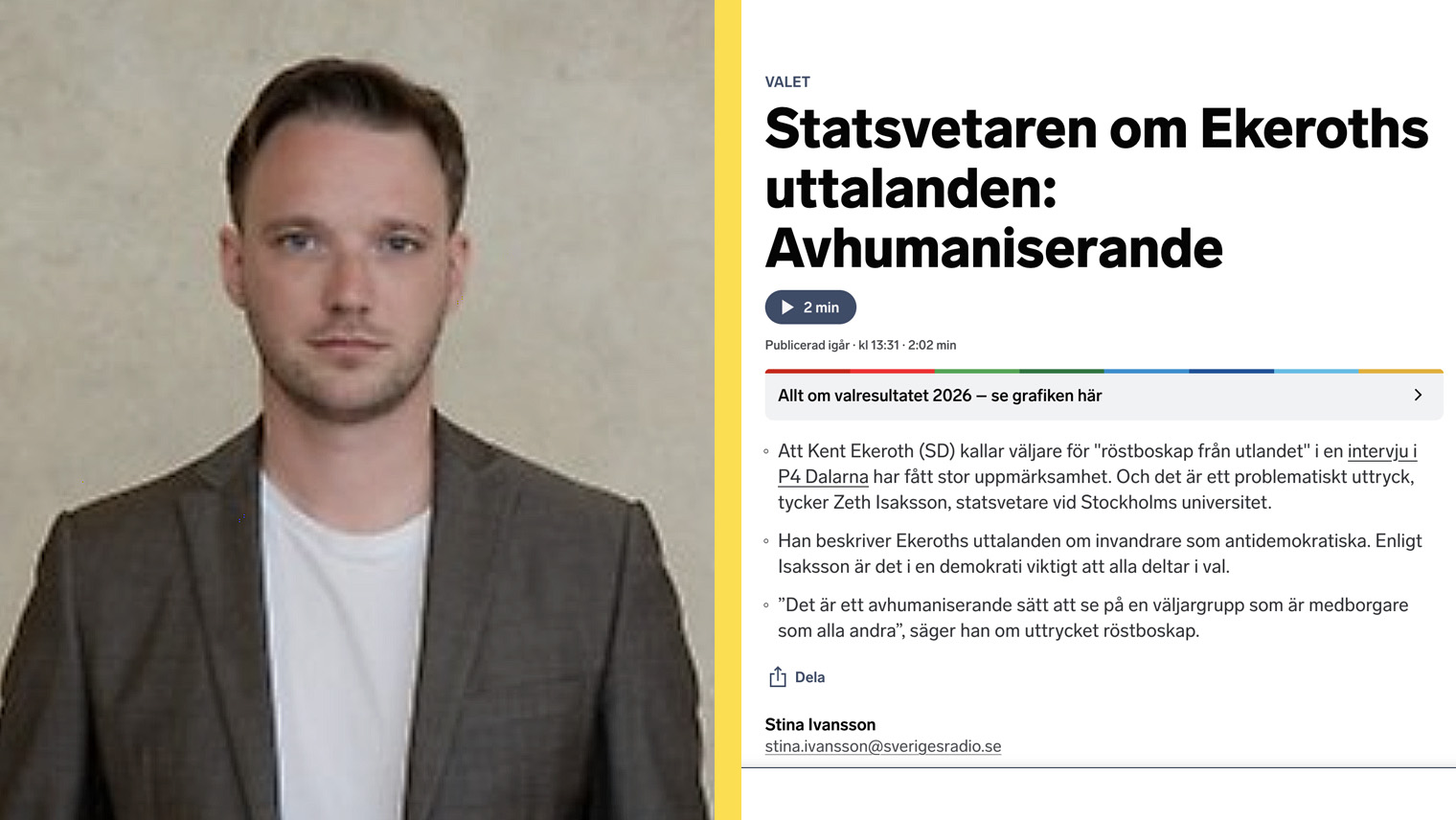
Political scientist Zeth Isaksson is significantly more critical of Ekeroth’s reasoning. He points out that demographics include much more than immigration. Age, education, gender, urbanization, and migration flows between city and countryside can also change the political composition of the electorate.
For example, the Social Democrats are overrepresented among older voters, he notes. At the same time, political divisions are affected as people move to cities, get educated, and change their political preferences.
Isaksson especially warns against what researchers call an “ecological fallacy” – drawing conclusions about how individual people behave based on aggregated results.
– You should not draw conclusions about how individual people or groups have voted by looking at aggregated election results, he says.
At the same time, Isaksson acknowledges that the left did conduct intensive campaigning in many of the areas being discussed.
– That could absolutely have led to more voting, and to more of them voting for the left.
He also highlights that voter turnout is usually low among people who have only recently become Swedish citizens, and therefore says one needs to be cautious when calculating the group’s importance for the election outcome.
ALSO READ: The Social Democrats’ Disaster Election—Losing in Traditionally Red Municipalities
Two researchers – two visions of the future
The perhaps clearest difference between Hübinette and Isaksson concerns what happens moving forward. Hübinette believes the growing voter group with foreign background will increasingly impact Swedish politics. He describes this year’s election as special because the political significance of the group has, for the first time, been so clearly at the center of national debate.
He talks about a “groggy majority society” that has only now seriously started to understand how large the voter group has become.
It’s more that I’ve been harping on this for years. I get the feeling that SD has moved in my direction during these last four years.
Kent Ekeroth (SD)
Isaksson, on the other hand, rejects the conclusion that Sweden is heading toward a political system where people increasingly vote according to ethnicity or origin.
Hübinette says that we could soon see clearer demographic dividing lines, where ethnicity and origin become more important for how people vote. What do you think about that?
– That’s not correct. There is no evidence that would be the case, Isaksson replies.
ALSO READ: Ekeroth: M, KD and L are sleeping while foreign votes decide the 2026 election
He points, among other things, to the great political differences already existing within the native-born Swedish population and warns against treating voters with an immigrant background as if they were a homogeneous political group.
Ekeroth: “If only Swedes had voted”
When Samnytt subsequently presents the researchers’ objections to Kent Ekeroth, he sticks to his core analysis. He accepts that many other factors affected the election and that SD’s own losses must be analyzed separately. But according to Ekeroth, that does not alter his conclusion about the significance of immigrant votes.
– If only Swedes had voted and not immigrants, then we wouldn’t have gotten a left-wing government.

Ekeroth says the reasons why different groups vote as they do are secondary in relation to the political outcome. For him, it is the consequences of the changed electorate that are central.
How do you feel this resonates with your party colleagues in SD? Do you get the impression that some think you have gone too far?
– Rather, it’s that I’ve been bringing this up for many years, says Ekeroth, adding that the party has gradually moved closer to his position.
– I have a feeling that SD has moved in my direction over the last four years.
ALSO READ: Ekeroth: “Swedes must mobilize as MENA immigrants do”
Isaksson’s criticism was based on reports about revoking voting rights
After Sveriges Radio’s interview with Isaksson, his critique of Ekeroth’s statements was presented as if the reasoning was antidemocratic.
But when Samnytt asks Isaksson exactly what he meant, an important detail emerges.
Isaksson says the question had been presented to him as if it was about “taking away voting rights from certain citizens.” If that is what is being proposed, he considers it to be an antidemocratic process.
When Samnytt asks Ekeroth if he has suggested taking away voting rights from these people, the answer is:
– No. I have not.
Instead, Ekeroth distinguishes between voting rights and citizenship. Anyone who is a Swedish citizen has the same rights, he says, but adds that he believes many should never have been granted citizenship.
At the same time, he goes further than just advocating revoked citizenships in cases such as fraud. Ekeroth also argues that citizenships granted under what he sees as overly generous policies should be able to be reconsidered.
Isaksson, for his part, stands by his criticism of Ekeroth’s word “voting livestock”.
– That is a word that still sounds dehumanizing to me. People are not livestock.
ALSO READ: Alert: Hundreds of “incidents” at polling stations
Disagreement over whether there was a plan
Ekeroth and Hübinette also differ on the question of the left’s intentions, though the difference turns out in the interview to be less categorical than it might first seem.
Hübinette maintains that there has been no deliberate plan by the left to create new voters through immigration. But when you use the term “voting livestock,” it sounds as if you mean this has been planned?
Ekeroth answers that he believes left-wing parties today are very aware of how different immigrant groups vote.
– I don’t know if they do it to win elections, but I believe they are very aware of it.
On the other hand, he describes the original immigration policy as more characterized by naivety. His thesis is that the left has now realized the political potential and therefore is actively trying to mobilize these voters.
There is in fact some overlap with Hübinette. He too rejects the idea of an original plan, but at the same time notes that the Left Party has now understood and started to relate to demographically changed Sweden.
Ekeroth warns of “balkanization”
When the conversation turns to the future, Ekeroth more clearly aligns with Hübinette’s assessment that demographic divides could have greater political significance.
This is going to lead to a total split of Swedish society.
Kent Ekeroth (SD)
Ekeroth believes that even voters with Swedish backgrounds in the long run will start voting more according to group identity. He also claims this is already stronger among certain immigrant groups, a generalization Isaksson explicitly objects to. Ekeroth’s vision of the future is bleak.
ALSO READ: This may be the election that changes Sweden forever
He warns of what he calls “balkanization” of Sweden, with greater political conflicts between groups, more special demands, and diminished social cohesion.
– This will lead to a total split of Swedish society, he says.
As an example, he points to the big cities.
Is Malmö an example of what Sweden might look like in a while?
– Malmö shows where we’re heading. Stockholm and Gothenburg are probably lost forever, says Ekeroth.
Here the perspectives of the three interviewees are most clearly contrasted.
Hübinette sees a new and very large voter group that all parties must learn to relate to.
Isaksson warns against reducing a complicated election outcome to immigration and against making predictions about individual voting based on aggregated groups.
ALSO READ: After the 2026 election: Sweden at the breaking point and The Point of No Return
Ekeroth, on the other hand, regards the change in the composition of the electorate as a long-term power shift, the consequences of which, according to him, Swedish politics has yet to fully comprehend.