
Deep underground, far below Europe’s mountain ranges, there may be an energy source that until now has received surprisingly little attention. New research points to the possibility that natural hydrogen—sometimes called ‘white hydrogen’—could occur in significantly greater quantities than previously believed. These discoveries are now raising hopes for a future energy source that is fossil-free and more geographically accessible than oil and gas.
In recent years, researchers have found traces of natural hydrogen in several places around the world. Drilling in the Lorraine region of northeastern France has revealed unexpectedly high concentrations of the gas at depth. Similar findings have also been reported in Canada, Africa, and Australia.
Together, these discoveries have changed the view of hydrogen from being mainly an industrial product to perhaps also being a natural resource. Hydrogen is already used in industry and is often discussed as an important fuel in the transition away from fossil fuels.
READ ALSO: US Vice President on Greenland: “Incredible Natural Resources”
Today, hydrogen is produced primarily from natural gas or by using electricity—processes that either cause emissions or require large amounts of energy. That is why interest is now growing for natural hydrogen that already exists in the Earth’s crust.
Mountain Ranges as Enormous Hydrogen Factories
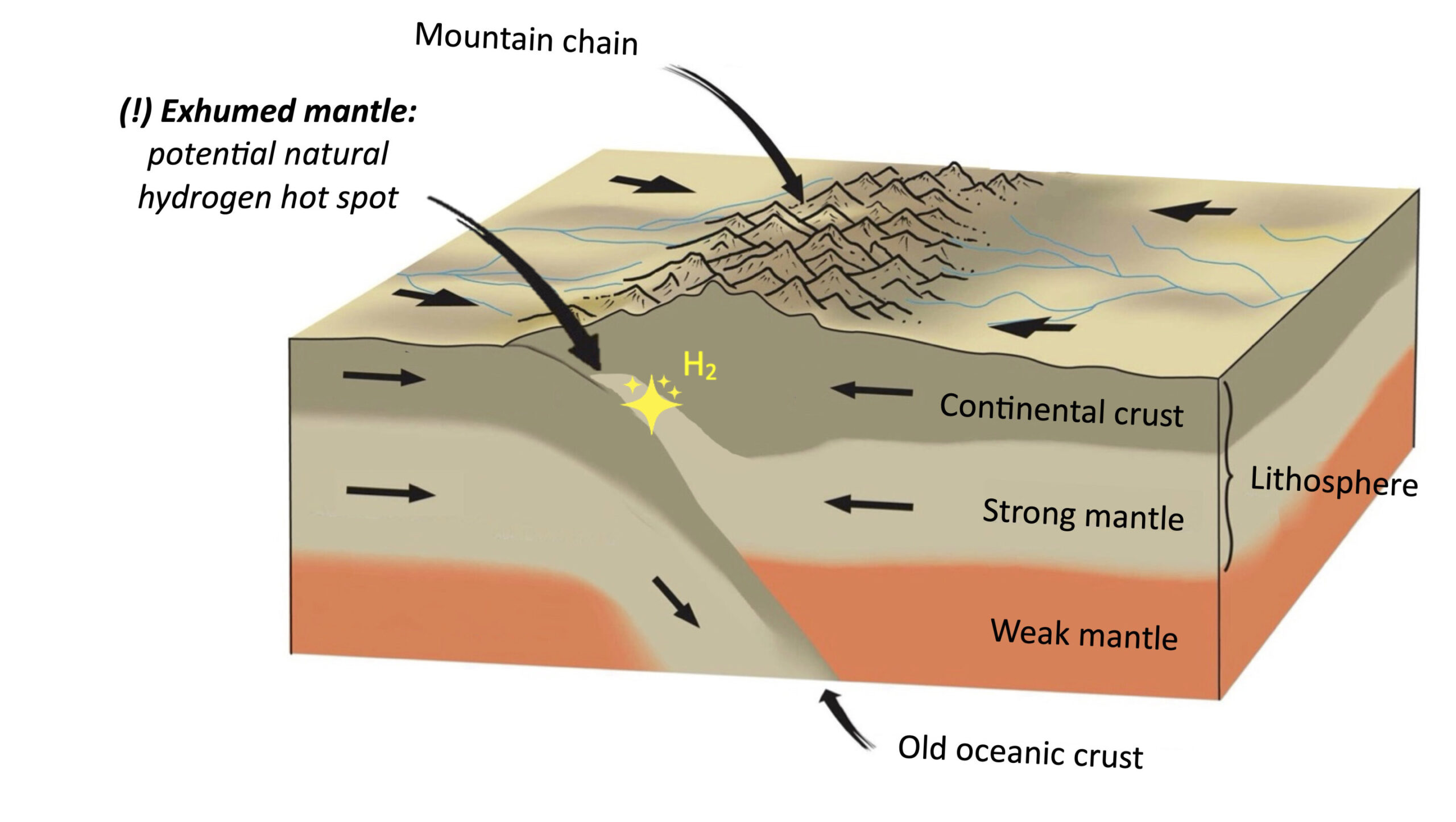
Natural hydrogen can form when certain iron-rich rocks deep in the earth come into contact with water. This releases hydrogen, which can collect underground.
Researchers now believe areas such as the Alps and the Pyrenees could be particularly promising. There, rocks from the earth’s interior have, over millions of years, been pushed up towards the surface by movements in the crust.
New research, highlighted by the magazine Futura, also shows that erosion may play an important role. As mountains are slowly worn down, rocks from deeper parts of the crust rise to the surface, where they can react with water and continue to produce hydrogen over a long period. This means that some mountain areas can continue to generate new hydrogen even today.
Measurements in Canada
Natural hydrogen can also form in very old mountainous areas. In Canada, researchers are studying regions with ancient bedrock containing naturally radioactive elements such as uranium and thorium.
When these elements decay, radiation can split water molecules and release hydrogen in a process called radiolysis. This happens extremely slowly but can go on for hundreds of millions or even billions of years.
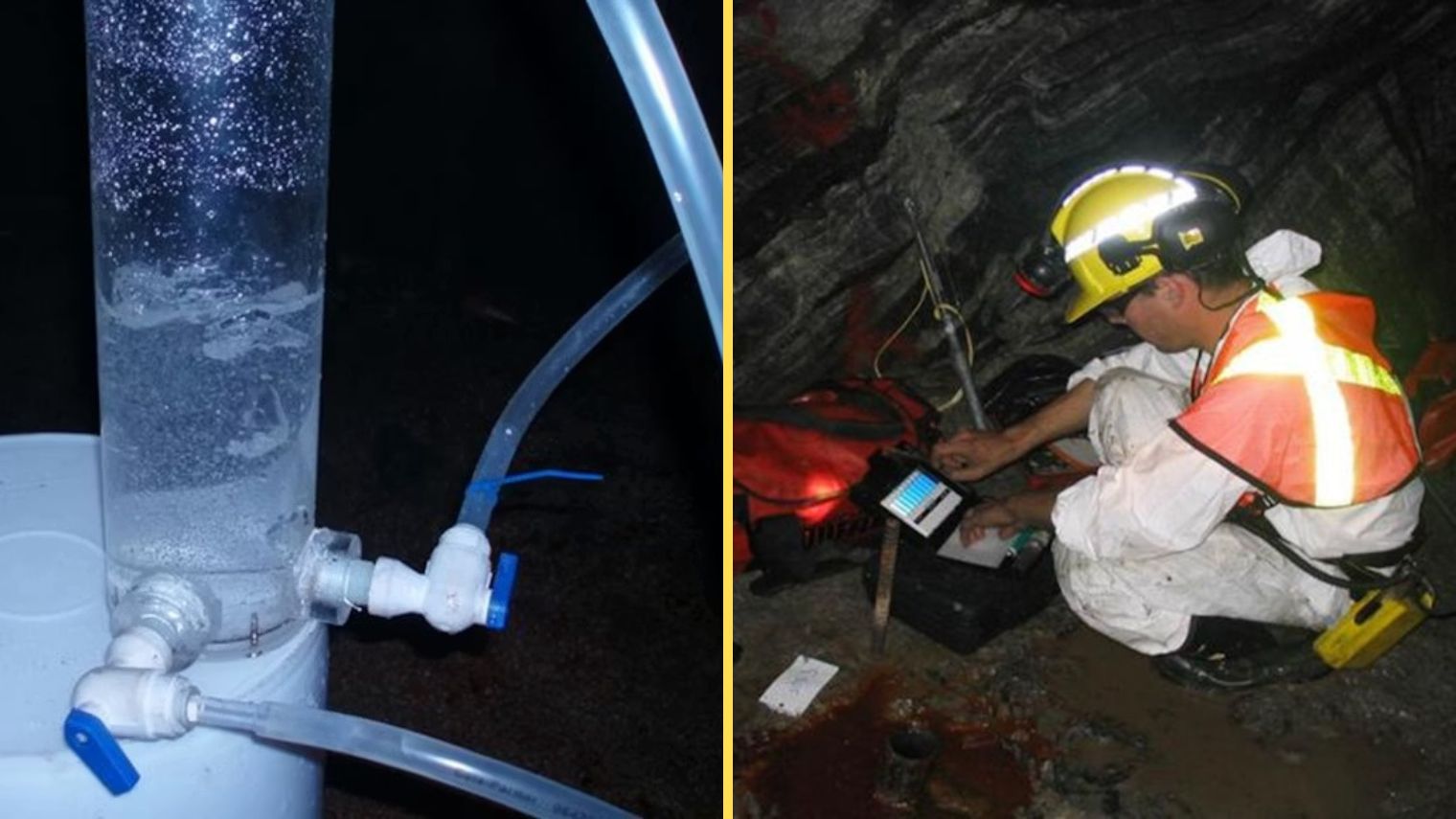
Measurements in mines in Ontario have already shown significant emissions of natural hydrogen. Researchers suggest that the energy potential could be sufficient to supply hundreds of households from just a single area.
There are about 15,000 boreholes at the mine, which are estimated to emit over 140 tons of hydrogen each year. According to the researchers, this corresponds to about 4.7 million kilowatt-hours of energy—enough to supply more than 400 households with electricity for a year. This is stated in a press release.
— The data from the study suggest that there are large untapped opportunities to extract cheap energy directly from the mountains beneath our feet, explains geochemist Barbara Sherwood Lollar at the University of Toronto.
In addition, many of these deposits are in regions where mining for metals such as nickel, copper, and cobalt is already taking place. This could reduce the costs of future extraction since some infrastructure is already in place.
The Quest for Lower Climate Impact
Despite the optimism, research is still at an early stage. No one yet knows how much hydrogen can actually be extracted economically or how stable production will be over time.
Researchers are now trying to map where the largest reserves are and how the gas moves through the bedrock. At the same time, interest is rapidly increasing among both energy companies and governments, who are almost desperate in the search for solutions to reduce dependence on fossil fuels.
If the new results are confirmed, natural hydrogen is seen as an important part of the future energy system. But not as a replacement for all other energy sources, rather as a possible complement with significantly lower climate impact than today’s fossil alternatives.
READ ALSO: Hydrogen-powered preschool cost 85 million – does not work