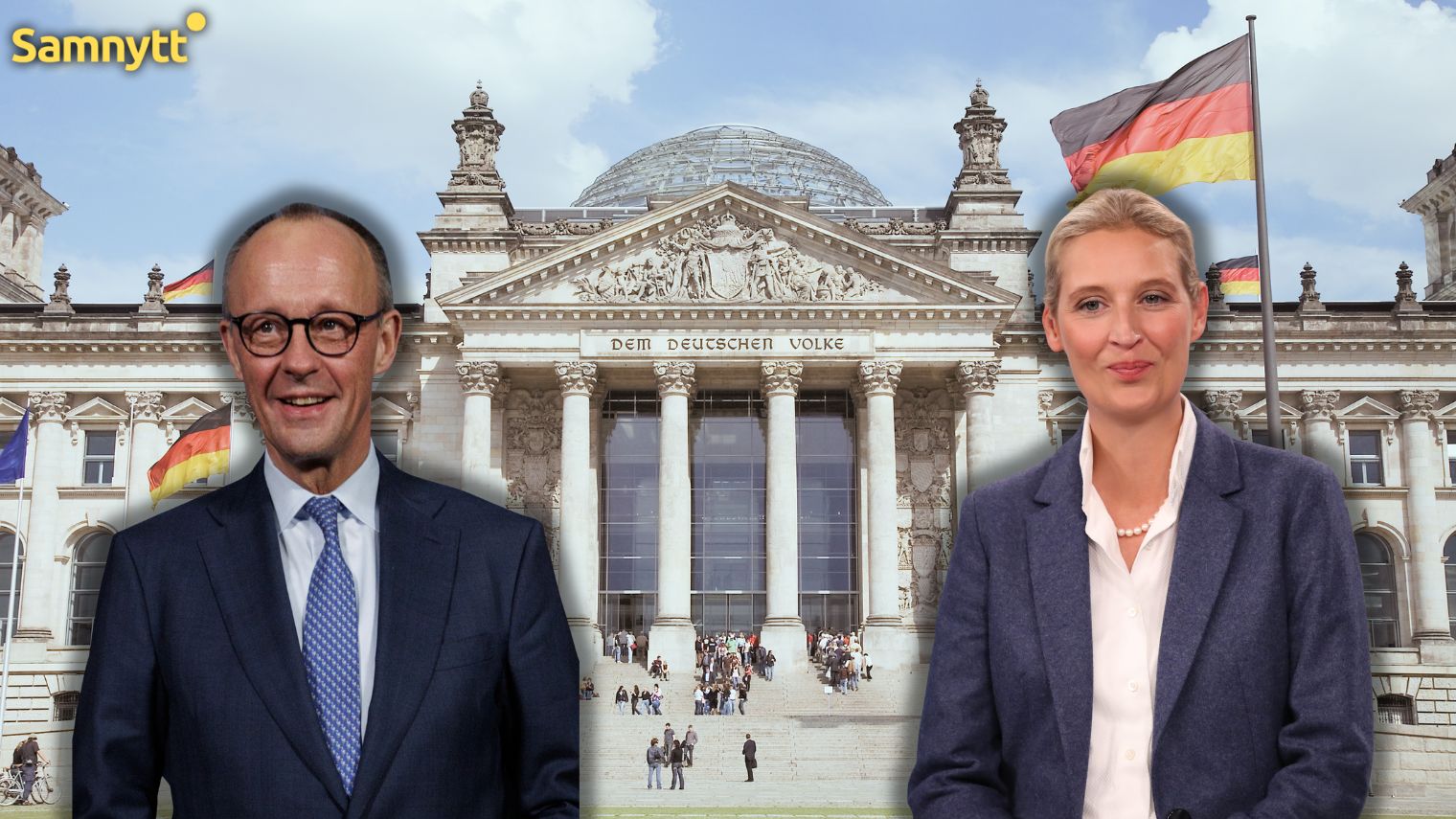
The CDU is now opening up to closer cooperation with the left-wing party Die Linke in several eastern German states. The reason is the continued success of the national-conservative Alternative für Deutschland, AfD, which leads by a wide margin in several polls ahead of regional elections later this year.
Several prominent CDU politicians have signaled in recent days that the party is ready to reconsider its previous position of not cooperating with either AfD or Die Linke. Daniel Günther, CDU leader in the state of Schleswig-Holstein, said on German television that AfD poses a significantly greater threat than the left-wing party and stressed that future government formations must take place without AfD.
The discussion has attracted much attention as the CDU has long maintained an official policy of not cooperating with either the far-left or AfD. But ahead of this autumn’s state elections in Saxony-Anhalt and Mecklenburg-Vorpommern, several polls indicate that AfD could become so large that other parties may be forced to cooperate across bloc lines to keep the party from power.
READ ALSO: AfD is the largest party
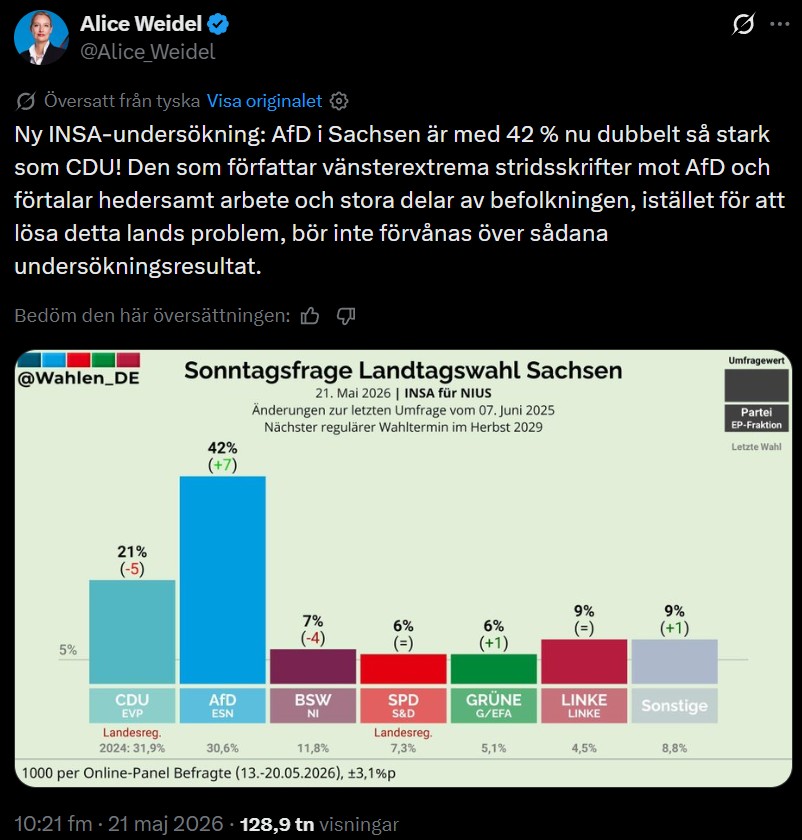
In Saxony-Anhalt, AfD holds the support of over 40 percent of voters according to some polls, far ahead of the CDU. At the same time, Die Linke is at around twelve percent. Similar figures can be seen in several other eastern German states where AfD has grown significantly in recent years, primarily through issues relating to migration, energy policy, and criticism of EU centralization.
The debate also concerns the so-called “firewall,” which has traditionally meant that established German parties have refused to cooperate with AfD. At the same time, in recent years there have been internal discussions within the CDU about whether this strategy really works, as AfD continues to grow in the polls.
Moving Left
Critics argue that by moving closer to Die Linke, the CDU is essentially shifting further to the left in order to isolate AfD. Supporters of the strategy, however, claim that it is necessary to protect political centrist governance and to prevent AfD from gaining influence over regional governments.
The issue is expected to become central in German politics throughout the rest of the year. Opinion polls show that many voters still oppose cooperation with AfD, but support for the strict policy of isolation nevertheless seems to be decreasing compared to previous years.
Facts about Die Linke
Die Linke is a German left-wing party founded in 2007 through a merger of the East German successor party PDS and the West German left group WASG. The party has long had its strongest support in eastern Germany, where many voters experienced economic and social problems after reunification. Ideologically, the party positions itself to the left of the Social Democrats and advocates for a larger public sector, higher taxes for the wealthy, and expanded welfare systems.
The party is driven by issues such as a higher minimum wage, stronger workers’ protections, more affordable housing, and opposition to privatization. Die Linke has also positioned itself through criticism of NATO and German military rearmament, as well as a more skeptical stance toward international military interventions. In terms of migration and climate policy, the party generally stands for a relatively open and progressive line.
In recent years, Die Linke has been marked by internal conflicts between different factions. One of the most prominent figures, Sahra Wagenknecht, left the party in 2023 and founded her own party after long-running disputes over migration, the economy, and identity politics. The split has weakened Die Linke in several elections, but the party is still represented in the German Bundestag and continues to hold support among voters seeking a more socialist and system-critical policy.
READ ALSO: VIDEO: Here the AFD leader crushes a journalist on the “climate crisis”