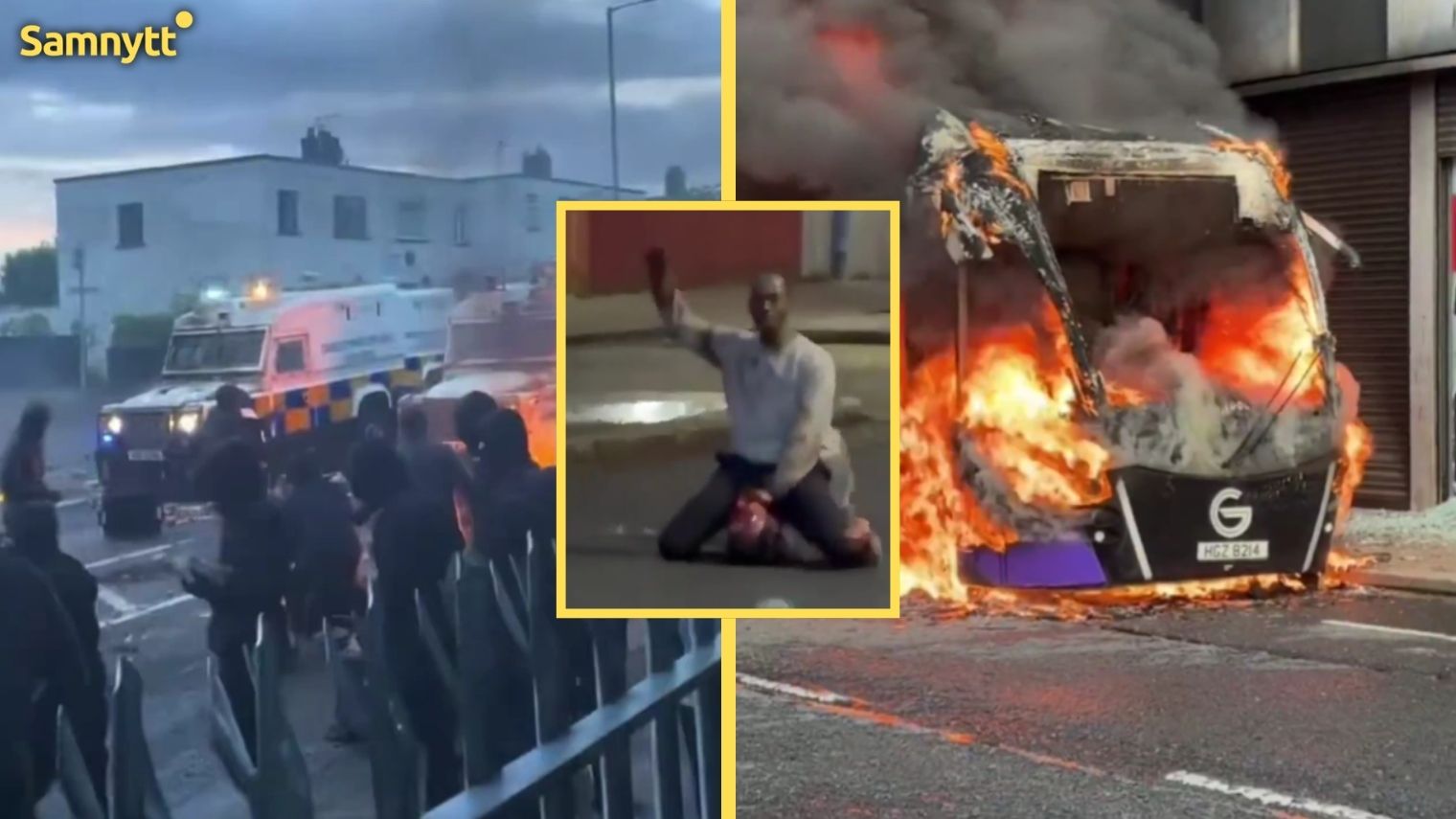
Violent riots have shaken Belfast and other parts of Northern Ireland after a brutal stabbing that left a man seriously injured. Meanwhile, police continue their investigation into the alleged perpetrator, 30-year-old Sudanese Hadi Alodid, who is now in custody on suspicion of attempted murder.
The attack occurred late in the evening on June 8 on Kinnaird Avenue in North Belfast. The victim, Stephen Ogilvie, a man in his 40s, suffered extensive injuries to his face, back, and head. According to court reports, he lost sight in his left eye as a result of the attack.
Police arrived within minutes and arrested the suspect at the scene. Several passersby intervened beforehand to stop the assault and assist the injured man.
Hadi Alodid has been charged with attempted murder, possession of a knife in a public place, and making death threats against a healthcare worker following his arrest. At his first court appearance, he participated via video link with an Arabic interpreter and was denied bail. The case is expected to be heard again in July.
READ ALSO: After the ‘Refugee’s’ Attempted Beheading – Now Belfast Is Burning
Video clips from the attack quickly spread on social media and led to widespread protests. Over two nights, the demonstrations escalated into violent riots. Several homes were set on fire, vehicles were destroyed, and police faced stone-throwing, fireworks, and firebombs. At least a dozen police officers were injured and multiple people have been arrested.
Police deployed water cannons and special public order weapons to restore calm. According to Northern Ireland’s Chief Constable Jon Boutcher, families had to be evacuated from burning homes while authorities described the attacks against minorities as racially motivated.
Family Distances Themselves
Media reports that the situation has caused great concern among Belfast’s immigrant communities. Several organizations state that people are avoiding leaving their homes out of fear of harassment. According to Reuters, some groups have even set up informal roadblocks targeting people perceived as foreigners.
At the same time, Stephen Ogilvie’s family has distanced themselves from the riots. In a statement, the family calls for calm and emphasizes that many immigrants contribute positively to society. The family says the tragedy must not be used to create division or incite against people because of their origins.
Anti-migration riots in Northern Ireland pic.twitter.com/MQKy8Hwmfv
— Visegrád 24 (@visegrad24) June 10, 2026
The event has also triggered a political debate about the open border between the Republic of Ireland and Northern Ireland. Several politicians are now calling for a review of the current system, while others warn that changes could threaten the free movement that is a central part of the Good Friday Agreement and the peace process on the island.
The police state that at present there is nothing to indicate that the stabbing itself was terror-related. The investigation continues as authorities prepare for the risk of further unrest in the coming days.
Used Fast-Track
According to reports from British media, Alodid is a Sudanese citizen. He traveled to Ireland via Paris and then entered Northern Ireland in February 2023. He was granted asylum in the UK via a fast-track process introduced in 2023 to reduce long processing queues and received a five-year residence permit.
Because he came from Sudan, a country whose citizens were granted protection at a very high rate, his application was decided through a special questionnaire instead of the full personal asylum interview that normally forms part of the process.
The system was criticized when introduced, including by Migration Watch UK, who warned that faster processing could entail risks, and after the attack it has again come under focus in the UK debate on migration and asylum procedures.
READ ALSO: VIDEO: ‘He cuts off his head!’ – Watch the Sudanese man’s bloody attack in the middle of the street