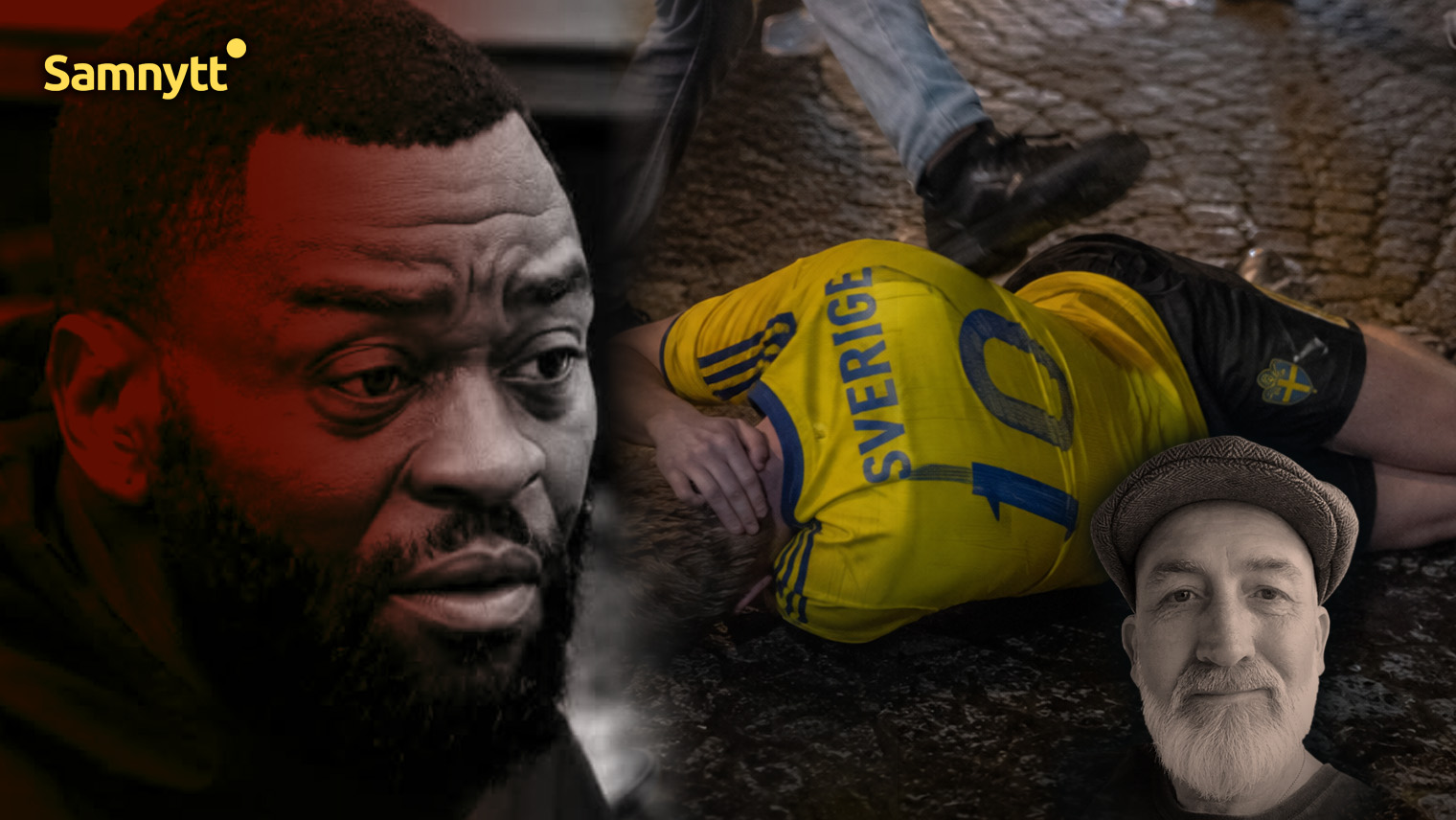
COLUMN • In just a few weeks, several much-publicized acts of violence have shaken Europe. The victims have names, families, and dreams for the future that will never come true. Yet these events quickly disappear from public discourse – or are described in ways that leave central questions unanswered. The murder of Swedish police officer Christian Zedig has become yet another example in this debate.
So, a Swedish father of young children has been killed by an African in Copenhagen. His name was Christian.
So, a 17-year-old French boy was beaten to death by an immigrant gang in Narbonne, France. His name was Louis.
So, an Irishman was about to have his throat cut right on the street by a Sudanese man. His name was Stephen.
So, an 18-year-old Brit was stabbed to death by a Sikh in Southampton. His name was Henry.
SEE ALSO: Why the Silence from the EU and ‘Public Service’ about the Murder of Henry Nowak?
A few weeks have passed and there are a lot of “so what.” There are quickly so many that most can’t bear to take it in.
This evil, violent death that strikes more and more innocent Europeans and Swedes – simply because they happen to be European, because they happen to be white, because they happen to belong to the indigenous population of their own countries.
The fact that the corrupt, anti-Western legacy media also does its best to conceal, obfuscate, distort, or simply ignore what’s happening – means that many don’t even understand the times they live in.
It is only thanks to alternative media (like Samnytt), social media – and above all Elon Musk’s X – that it is at least reported – that the low-intensity war against Europe’s indigenous people has intensified.
At the same time, it’s striking to note which threats our politicians would rather talk about. Almost every week we hear about external security threats, geopolitical risks, and the need to prepare for future conflicts.
But we all know what that means. It’s always the same. Police and authorities protect the perpetrators and hide all information of public interest. As long as it risks reinforcing a “wrong narrative.”
Jonas Andersson
All of these are, of course, important issues. But for the person who no longer dares let their children walk home alone from practice, who sees shootings, stabbings, and serious violence become a recurring part of everyday life, or who feels their own neighborhood has been fundamentally changed in just a couple of decades, the threats often seem much more present than those discussed at press conferences and international summits.
For many, the most important security policy issue doesn’t begin at the nation’s border, but right outside their own doorstep.
Eight Young African Men
But let’s stay with Christian – a name with double meaning in more and more contexts. His name was Christian Zedig, he was 32 years old and worked as a police officer in Eksjö. He had two young daughters.
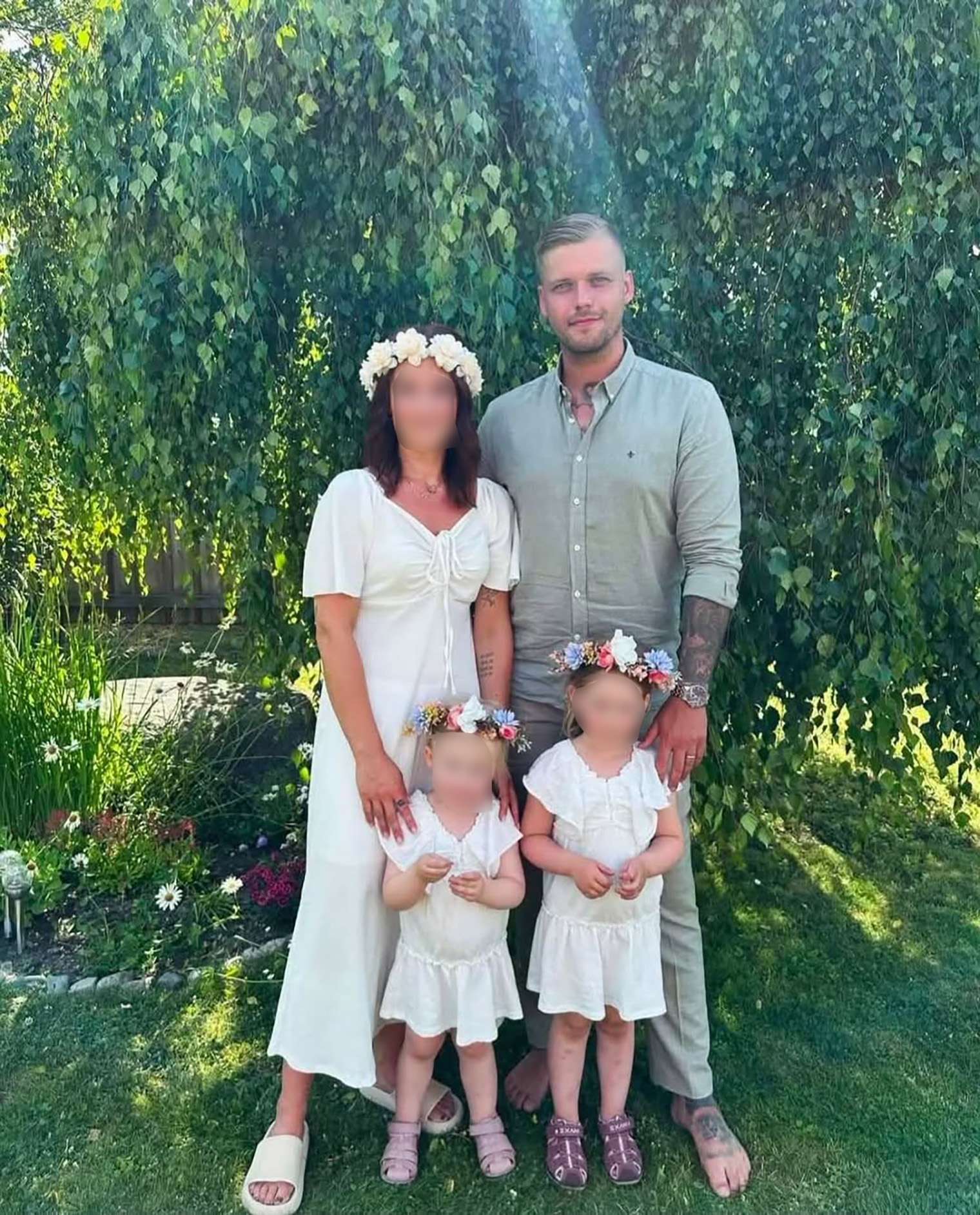
He had traveled to Copenhagen in his private capacity to watch football on a giant screen in the Islands Brygge area, first watching Norway’s match and later Sweden’s match in the World Cup.
A fight broke out near where Christian was and he went over to try to break it up.
According to several witness accounts, a group of seven to eight young African men arrived in the area at the time of Norway’s winning goal, after which the situation quickly escalated.
The notion that it is white men who attack people of color is dearest to the heart – and to reinforce this image – this delusion today – they are ready to go almost any distance.
Jonas Andersson
Witnesses describe how Christian was knocked to the ground and then kicked and stomped while he lay defenseless.
The 31-year-old man who was later detained on suspicion of manslaughter is now covered by a Danish name ban. Listen to that: ‘Name ban.’
Some media, citing court sources, have stated that he is of Congolese background and was previously sentenced to a long prison term for attempted murder. However, these claims have not been confirmed by Danish police in official statements.
But we know what that means. It’s always the same. Police and officials protect the perpetrators and conceal all information of public interest. As long as it risks reinforcing a “wrong narrative.”
SEE ALSO: African Suspected of Killing Police Officer Christian
The “wrong narrative” that in Swedish is called “the truth.”
The truth that the left and leftist media – that is, all established media in Sweden – actually want to spread looks the complete opposite.
The notion that it’s white men attacking people of color is most beloved – and to reinforce that image, this delusion, people are willing to go to almost any length.
It also never takes long until the same objection is raised: “Don’t politicize the murder.” As if some crimes would suddenly lack a social context.
At the same time, it is hard not to notice that this principle seems to be applied differently depending on who the victim is and the circumstances around the crime. When an event fits the worldview dominating public discourse, structures, social problems, and political responsibility are quickly discussed.
Then the murder is not just an individual tragedy, but an expression of something greater. When the same reasoning is applied to other cases, the call instead becomes not to “exploit” the tragedy politically.
And the brutal fate that Christian met in Copenhagen has been covered up and hidden as much as possible by Swedish “journalists.” A Swedish police officer, a father of young children, is murdered. And no one cares. On the contrary, in Malmö, just across the strait, only a few days after Christian’s murder, one could hear leftists shouting “All of Malmö hates the police.” In the Pride parade, of course.
Jonas Andersson
This double standard is hard to look past. Either we should be cautious about drawing political conclusions from individual crimes – or we must accept that much-publicized acts of violence sometimes raise bigger questions about how society works.
But that principle must reasonably apply regardless of who the victim is and which narrative the incident happens to support.
“I can’t breathe”
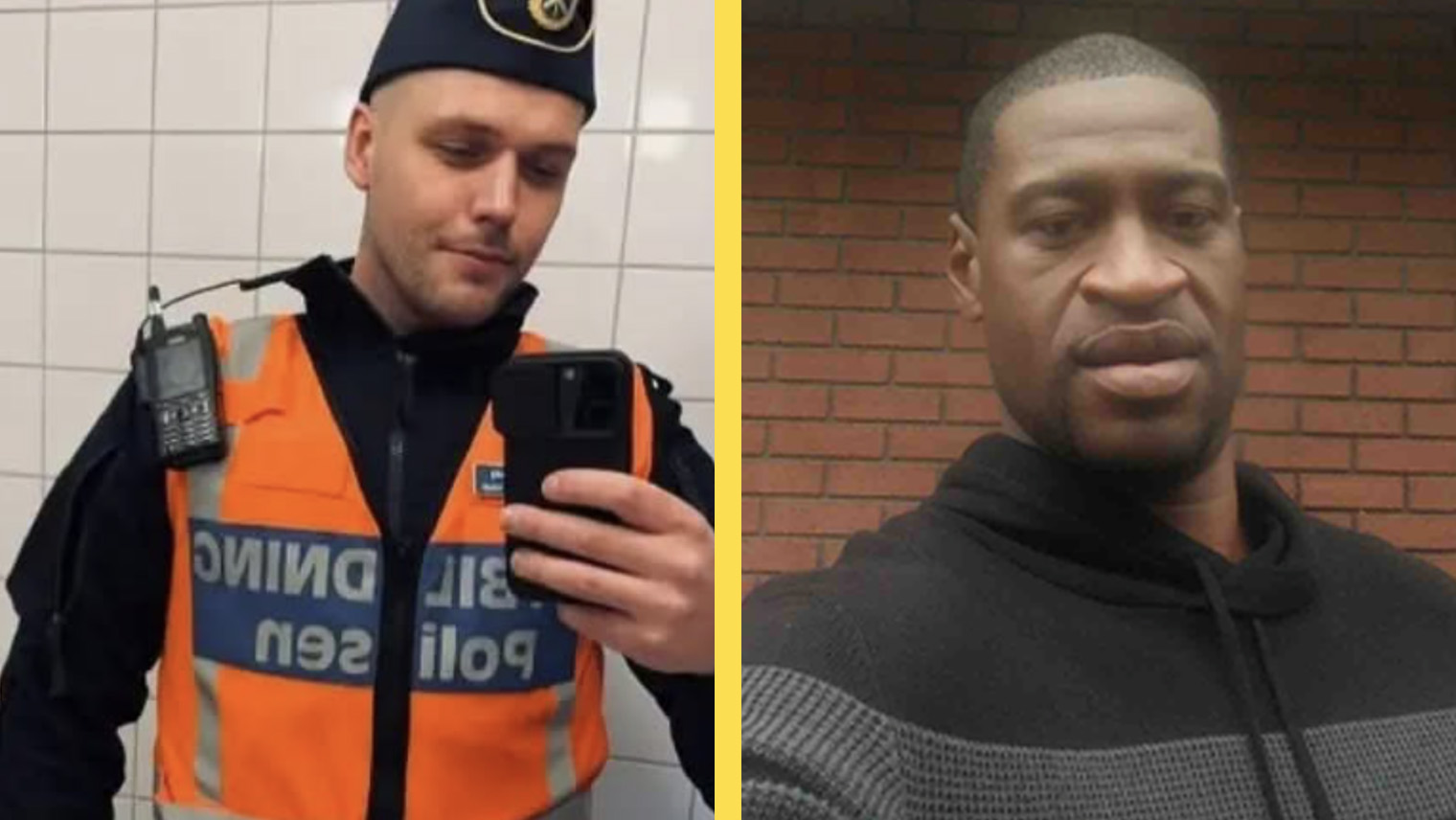
Who doesn’t remember the BLM demonstrations with Swedish female police officers kneeling for the roaring crowds – to honor the criminal and drug-influenced George Floyd when he uttered the words “I can’t breathe,” in connection with a police intervention.
It was less interesting when the 18-year-old white man Henry Nowak said the same words: “I can’t breathe,” after being stabbed and then directly mocked and pressed to the ground by the British police, right before he died.
SEE ALSO: Henry Nowak died handcuffed – a civilizational breakdown broadcast live
And the brutal fate that Christian met in Copenhagen has thus been covered up and hidden as much as possible by Swedish “journalists.”
A Swedish police officer, a father of young children, is murdered. And no one cares.
On the contrary, in Malmö, just across the strait, only a few days after the murder of police officer Christian, leftists could be heard shouting “All of Malmö hates the police.” In the Pride parade, of course.
SEE ALSO: The Left Party’s Pride celebration: ‘All of Malmö hates the police’
Christian Zedig walked toward the fight when others walked away. That was exactly what society had trained him to do, what people expect a police officer to do, and what his own sense of duty told him to do. But he never made it home again.
His two daughters will grow up without their father. His wife without her husband. His colleagues without a friend.
And if even his name, his fate, and the questions his death raises soon disappear from public awareness, it’s not just Christian we are failing.
Then we are also failing our willingness to see reality as it actually is.