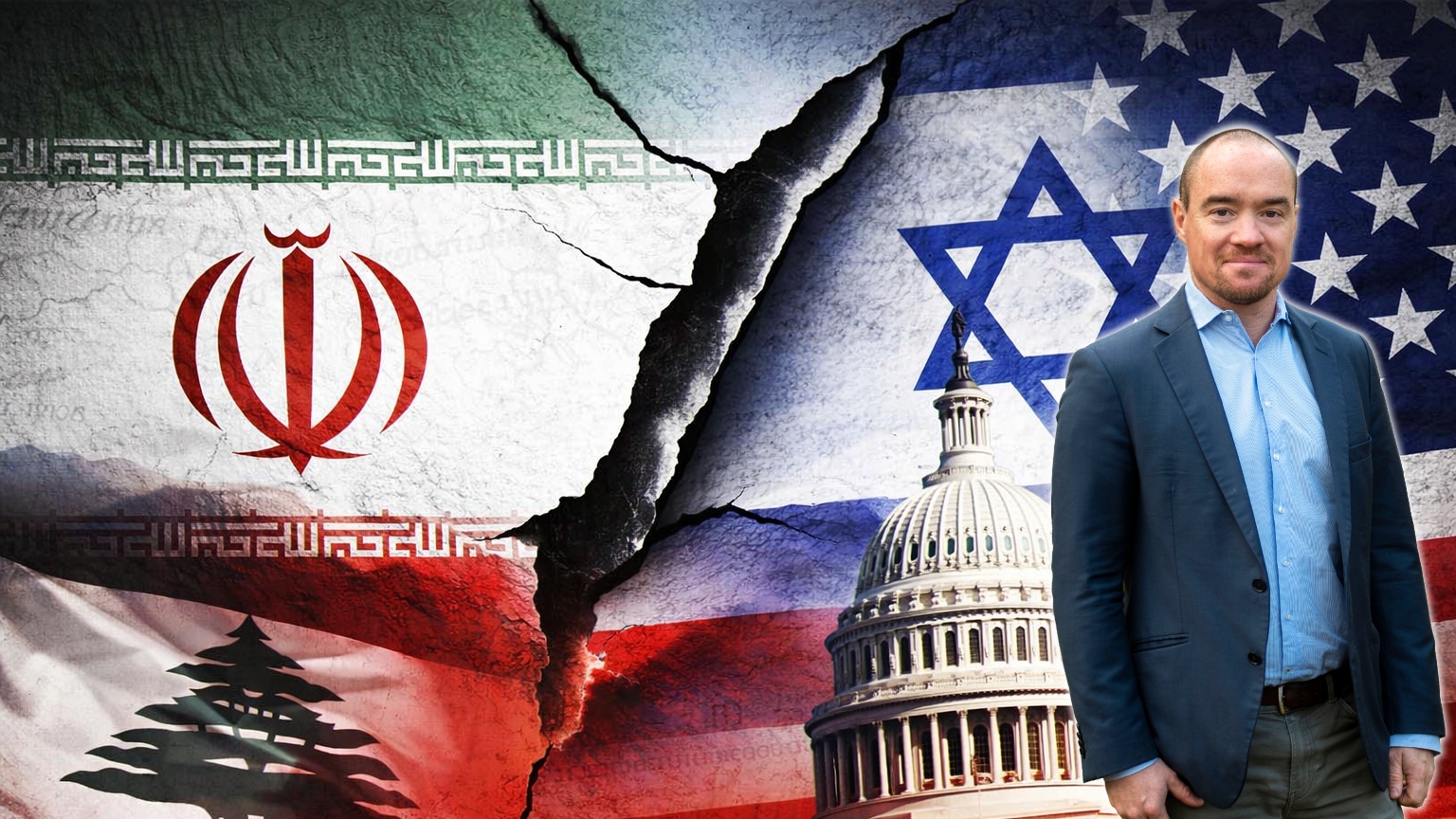
EDITORIAL • It took less than a week. Not a month. Not even two weeks. Just a few days before the same old chorus began: calls for a ceasefire, worries over oil prices, analyses that “victory isn’t possible,” and a constant droning on about why we should stop—rather than why we must continue. It’s hard not to be astonished by how quickly the West falls into this defeatist pattern.
We are talking about a conflict with Iran—a regime that for decades has destabilized the region, financed terror, and openly threatened its opponents. Not to mention that, since the 1979 coup, it has ruthlessly oppressed its own population. Yet only a few days of military pressure are enough before Western voices begin to waver. Suddenly, avoiding short-term disruptions becomes more important than actually solving the problem.
At the same time, left-liberal media try to rationalize this weakness. There is a flood of analyses about why it’s “not realistic,” why “the risk is too high,” why “it might affect the markets,” or that it’s “impossible” to bring down the regime. Everything is packaged as wise caution—but at its core, it’s something else entirely: an inability to endure adversity.
Compare this to how things sound in the war that Russia is waging against Ukraine: there, it’s “as long as it takes” and “without ceiling.” But when it comes to Muslims or the Middle East, it’s less than a week.
Even World War II can serve as a comparison. Six years of total mobilization. Massive losses. Cities in ruins. Yet there was endurance, an understanding that some conflicts just can’t be stopped halfway. That the price of giving up is higher than the price of carrying on. That insight seems to be gone today.
Mental Weakness
Instead, we have societies where public opinion shifts in days, where political leaders react to every news cycle, and where the will to win is replaced by an instinct to avoid discomfort. It’s not a military weakness first and foremost, but rather mental weakness that is decisive.
Because in war, motivation isn’t a detail—it’s a basic prerequisite. Those who are prepared to hold out, pay the price, and stand firm by their goals always have an edge over those who start to hesitate as soon as things get tough. This is perhaps where the West today shows its greatest flaw. Not in technology, not in resources, but in the will to actually use them to the fullest extent.
The signal being sent is clear: just withstand the pressure for a few days, and the calls for the opponent to withdraw begin. This is a strategy that any adversary quickly learns to exploit.
And history is clear on one point: civilizations that lose the will to fight—not just physically, but mentally—sooner or later perish.
Compare With North Korea
In the case of North Korea, the country promised it didn’t have a nuclear weapons program. In the 1990s, an agreement was even reached with the country, specifically in 1994, where North Korea was to dismantle its graphite reactors, let in IAEA inspectors, and remain under the non-proliferation treaty (NPT) in exchange for fuel oil and future reactors.
But in 2002, the country announced it had developed a secret nuclear weapons program, and its first nuclear test took place in 2006. So much for that agreement.
Iran is worse than North Korea because Iran’s leaders are driven by a religious, specifically Islamic, mindset. That makes it several times worse. I understand that people are scarred by the Iraq War in the early 2000s and the claims about Saddam Hussein’s weapons of mass destruction. But the Iran conflict is different in its essence, and Iran’s ambitions—not least its open promises to destroy other states—are enough in themselves.
The claim that Israel and the USA started this war is also naive and ahistorical. Just to take a few examples: Iran bombed US Marines in Lebanon and the Jewish center in Buenos Aires.
Suppose, for comparison, that Russia financed and organized a military force in the Baltics that attacked Sweden—wouldn’t Russia then have declared war on Sweden, especially if Russia at the same time openly spoke about destroying Sweden? Should the world really be so naive as to overlook attacks via proxies?
The Rubicon Has Been Crossed
The demands, and unfortunately also indications from Trump as recently as last Monday, are thus worrying. A too-early ceasefire isn’t just shortsighted, it can be directly dangerous.
They risk cementing the problem, giving aggressive regimes breathing room, and signaling that the West lacks endurance. This is capitulation in slow motion. What’s needed is the opposite, especially now that the die has been cast. This is reinforced, of course, by the fact that the Persians, different from the Muslim Arabs in so many respects, welcome the attempt to bring down Iran’s theocratic rulers.
But unfortunately, there seems to be a lack of clear understanding that some conflicts must be carried through to their conclusion. That it takes time. That it’s costly. And that the alternative—abandoning too early—is often far worse.
To give up now, not even a month into the conflict, would be the most shortsighted and wasteful thing I’ve seen in a long time. I don’t know how “close” the regime is to falling. Some believe it’s a long way off. Others say that Iran’s regular army, Artesh—which is separate from the Islamic Revolutionary Guard Corps (IRGC)—could be the solution.
As one person said:
From what I’ve heard and seen, the vast majority within the country’s army are ready to side with the people as soon as the opportunity arises.
I can only hope they’re right. Millions of Iranians/Persians risk being betrayed if this momentum isn’t followed through.
For if the Western world can’t handle a war for more than three weeks, then it’s not just this war at risk of being lost, but something much greater.