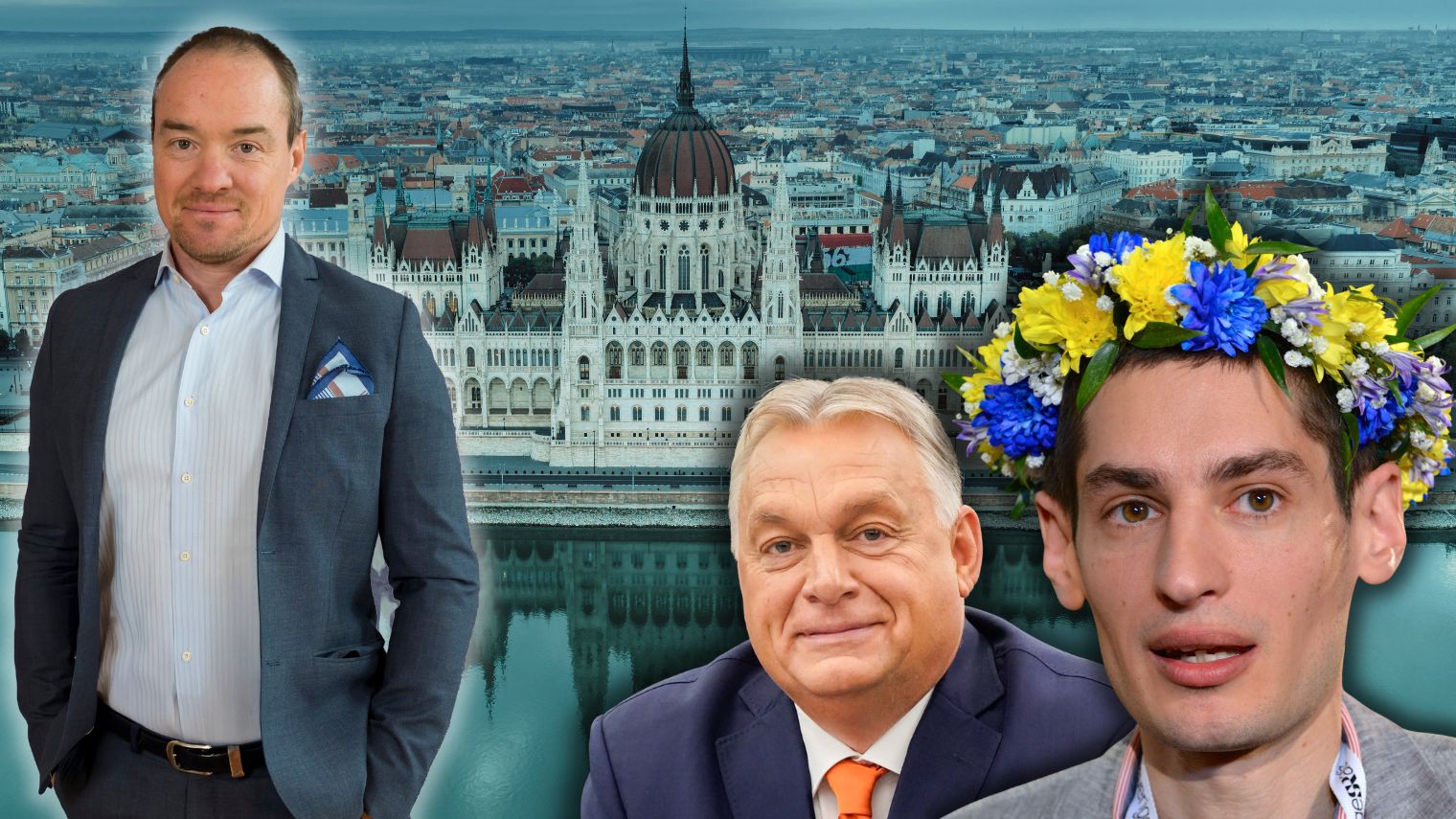
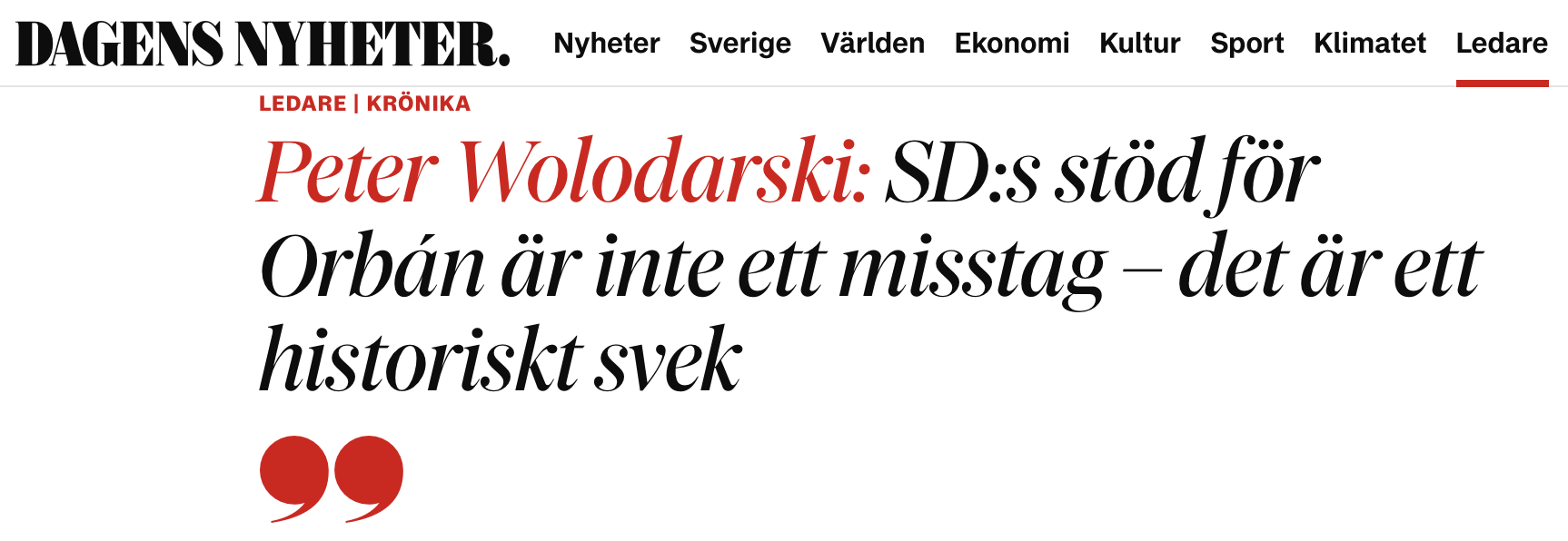
EDITORIAL • Dagens Nyheter’s editor-in-chief Peter Wolodarski is trying to do what the left-liberal establishment always does when a nationalist leader finally loses an election – rewrite history. Now suddenly everything is supposed to look proven. Viktor Orbán was a tyrant, Hungary was heading towards dictatorship, and everyone who defended him was wrong. DN’s old campaign journalism is, in hindsight, supposed to appear insightful.
But the reality is the exact opposite.
What in fact has happened is that Hungarians have once again shown that it is they themselves who decide their country’s future. Viktor Orbán won election after election for many years because a large part of the Hungarian people wanted him. And now that he has finally lost, the transfer of power happened through the ballot box. Not by coup. Not by violence. Not by the regime refusing to give up power. It’s a strange ending for the so-called dictatorship that Wolodarski and his associates have tried to sell for years.
What DN has never understood is why so many Hungarians actually supported Orbán. For Wolodarski, it is unthinkable that a people can consciously choose a leader who puts the nation first, defends the borders, cherishes cultural continuity, and refuses to let his country become a subordinate province of Brussels. In DN’s world, such things can only be explained by manipulation, darkness, and democratic malaise. Never with the idea that people might actually prefer self-determination over supranationalism.
Pathetic Attempt to Delegitimize
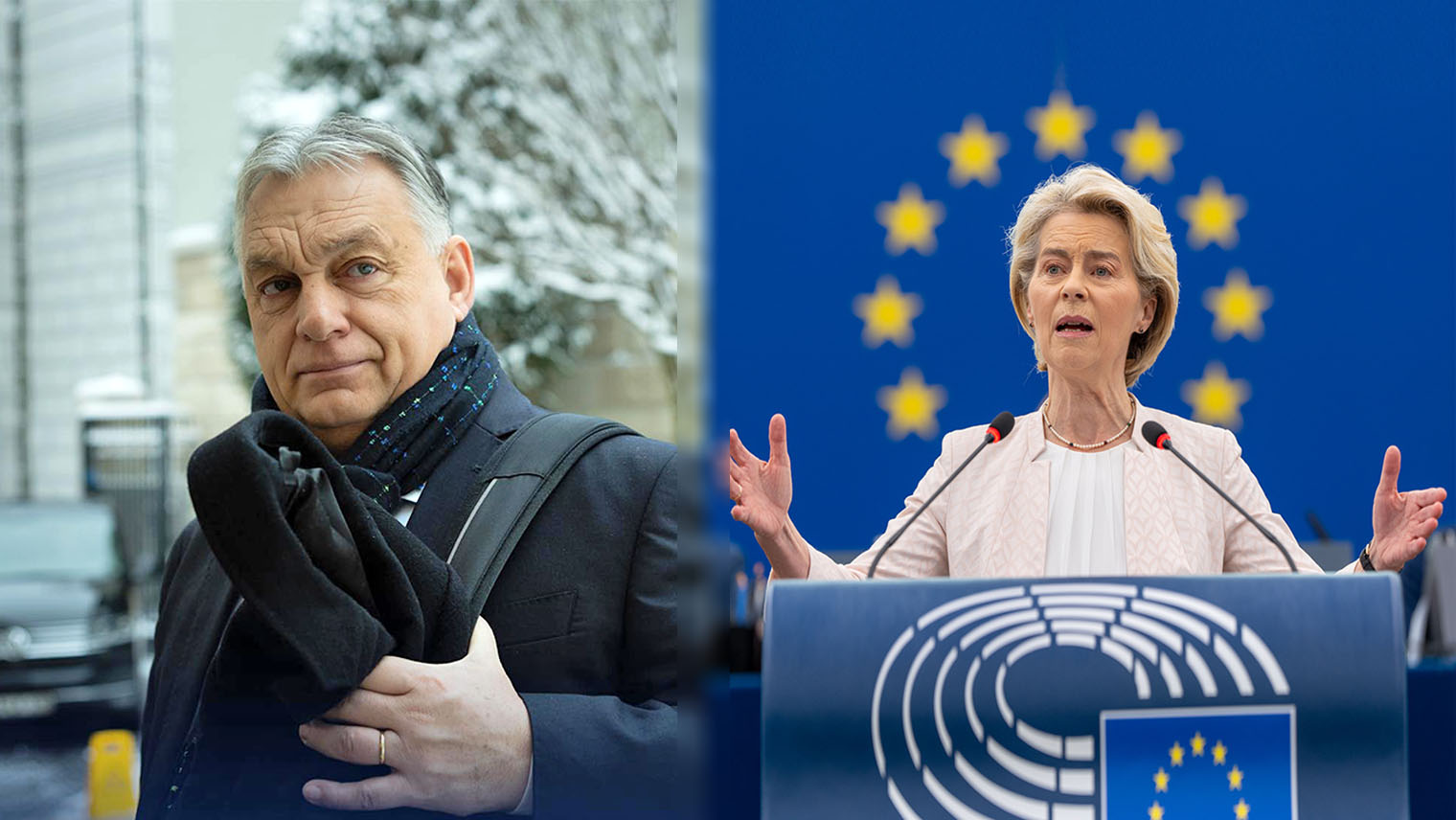
That’s exactly where the dividing line is. Orbán wasn’t hated by the European left-liberal establishment because he was unique in some abstract question about “democracy”. He was hated because he said no where others bowed. No to mass immigration. No to step by step transferring power from the nation-state to Brussels’ bureaucracies. No to submitting to the liberal worldview where every national instinct should be viewed with suspicion but every supranational claim should be described as enlightened and responsible.
This is what Wolodarski has never forgiven him for.
When DN today tries to portray Orbán’s years in power as one long democratic darkness, it’s not serious analysis. It’s just another attempt to delegitimize all opposition to the project that Wolodarski himself has for years been a vocal part of: the left-liberal attempt to dismantle Europe’s national self-determination and replace it with an ideologically uniform order where Brussels, the media elites and various “expert bodies” always have the final word.
Highly Political Interventions
This doesn’t mean that Hungary has been free from conflict or that Orbán’s government has been devoid of strife. But the constantly repeated accusations from the EU, the Council of Europe, and their media cheerleaders shouldn’t be confused with objective rulings. These are overtly political arguments from a left-liberal establishment that for years has tried to break any European government that puts its own people ahead of Brussels. Terms like “rule of law,” “press freedom,” and “democracy” have served as blunt weapons, not as neutral principles.
And it is enough to see how the same circles have acted in other countries to understand the game. When the election in Georgia didn’t produce the result the EU wanted, demands came for the election to be redone. When the wrong candidate won in Romania, the round was invalidated, and then the candidate was prevented from running again. In Poland, Brussels withheld funding for a long time under the national conservative government citing “rule of law problems,” only to become noticeably less concerned when a more EU-friendly administration took over and began purging public service and surrounded itself with its own scandals.
READ ALSO: The Silence about the Polish Left-Wing Government’s Abuses against the Media Is Telling
The pattern is crystal clear. Democracy is great as long as the right side wins. When the wrong side wins, suddenly there’s talk of the rule of law, values, and European principles. The same elite that has labeled Hungary as Europe’s great sinner has time and again shown that their principles only apply when it suits their own power. Obviously, this isn’t credible criticism but pure political warfare always disguised as principled consistency.
The Usual Clichés
Wolodarski also lists the usual clichés about press freedom and judicial independence, as if Sweden were some perfect model and Hungary a deviation from civilization. It’s laughable.
In Sweden, we have public service funded by force via the tax system and in practice operates as a left-liberal megaphone for the same social strata DN represents. We have a media climate where the spectrum of permissible opinion has long been so narrow that any criticism of immigration or nationalism is automatically demonized.
And when it comes to the courts, Sweden does not hold any pure and exalted special position. Even here, the state and the political system are deeply involved in appointments and institutional structures. But when Sweden does something, DN calls it “democracy”. When Hungary does something similar, it’s “authoritarianism”. “It’s okay when we do it”, as the left-liberals always think. The accusations themselves can also be discussed in detail, but I’ll save that for next time.
Those Who Are Always Wrong…
The truly comical aspect of Wolodarski’s article is that it comes from a newspaper that itself bears a significant part of the blame for Sweden’s development. Dagens Nyheter and the rest of the left-liberal media establishment have for decades lied, embellished, concealed, and distorted the issues around immigration. They have fed the Swedish people fairy tales about the blessings of integration, downplayed the costs, relativized the crime, and treated every critic as suspect, ignorant, or morally flawed. Now we live with the results. Shootings. Bombings. Segregation. Ethnic enclaves. Eroded trust. A harder, colder, more dangerous country than the Sweden that once existed.
And yet there stands Wolodarski, with the same smug tone as always, trying to lecture others about democracy and decency.
It requires an almost monumental lack of self-awareness.
Orban as Role Model
What made Orbán a role model for many, even outside Hungary, was precisely that he showed it was possible to resist. That it was possible to say no to liberal self-effacement. That it was possible to insist that the nation, culture, and the people’s democratically expressed will actually mean something. For people like Wolodarski, that is almost a provocation in itself. They are happy to accept democracy in theory, but in practice only as long as it produces the right politics and the right worldview.
That’s why their outrage against Hungary has never really been about lofty principles. It’s been about the fact that Orbán refused to toe the line. He refused to be the kind of European leader who bows to Brussels, opens the borders, accepts each new supranational power shift, and then is praised by papers like DN for his “responsibility”.
That’s what made him intolerable to them.
The Real Betrayal
The fact that he has now lost does not change that. And it does not prove that Wolodarski was right. It only proves that power in Hungary could be won and lost through elections – which in itself punctures large parts of the hysterical narrative DN has tried to hammer in for years.
The real betrayal is therefore not to be found among those who saw value in a European leader defying Brussels and defending his country. The real betrayal is found with the Swedish opinion makers who first helped to wreck their own society with open borders, escapism, and moralistic propaganda – and who now try to compensate for their own failures by pointing fingers at other nations that at least tried to defend themselves.
Peter Wolodarski does not mourn democracy. He mourns that Viktor Orbán showed that a country can, in fact, say no.