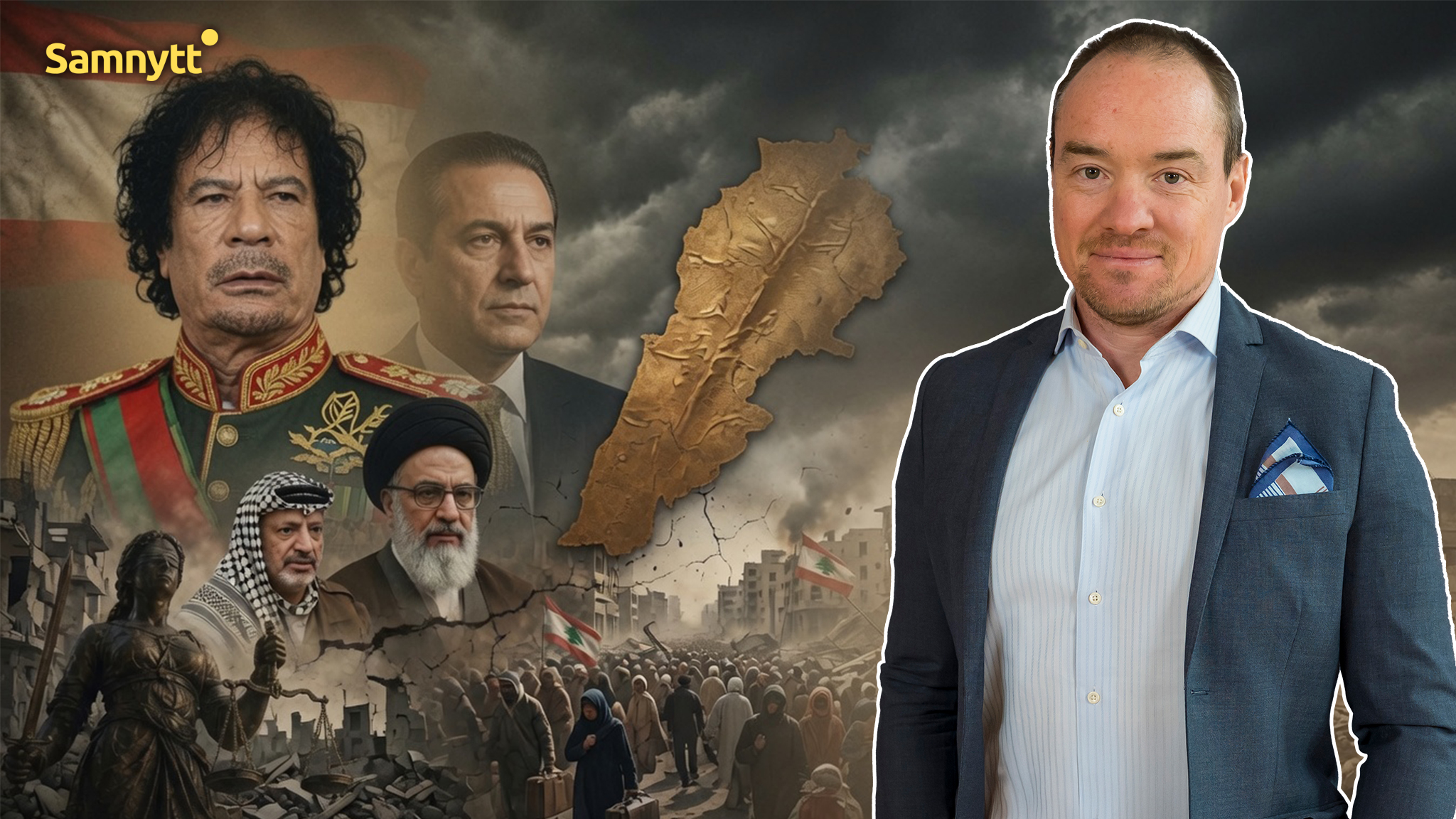
EDITORIAL • Lebanon was once the Christian exception of the Middle East—a relatively prosperous, Western-oriented, and pluralistic country where Christians could live with political influence and security. Then the population changed, the balance of power was disturbed, and armed Palestinian Arab organizations began using the country as a base for their war against Israel. The result was not liberation. It was civil war, massacres, emigration, and a shattered country. Still, the European left, including autumn-shoe conservatives infatuated with the Palestinian cause, refuses to learn anything.
There are countries that function as historical cautionary examples. Lebanon is one of the clearest. According to most sources, the population was about 60 percent Christian as late as the 1970s. The country’s political system was therefore constructed around a power-sharing model where the president had to be a Maronite Christian, the prime minister a Sunni Muslim, and the speaker of parliament a Shia Muslim. It was not a perfect arrangement, but it gave the Christians of the Middle East something that has become increasingly rare in the region: a country where they did not have to live entirely at the mercy of the majority.
Beirut was called the Paris of the Middle East. Lebanon was culturally open, commercially successful, and considerably freer than many of its neighboring countries. Then came the development that is so often described with beautiful words while its consequences are denied.
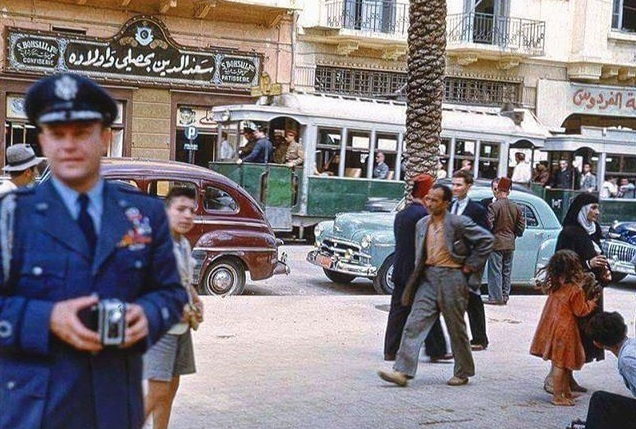
After the Arab wars of aggression against Israel in 1948 and 1967, Lebanon received large groups of Palestinian Arabs. Over time, armed Palestinian organizations also established themselves in the country.
After the PLO was driven out of Jordan in the early 1970s, much of the organization’s military operations moved to Lebanon. From there, it built a state within a state and launched attacks against Israel. The Lebanese state gradually lost control over parts of its own territory.
When fighting broke out in 1975, Christian militias were pitted, among others, against an alliance of Palestinian forces, Muslim groups, and leftist movements. The war soon became much more complicated, with shifting alliances and involvement from Syria, Israel, Iran, and other foreign powers. It is impossible to understand the catastrophe that befell Lebanon without considering the armed Palestinian presence and the changed demographic and political balance.
Fifteen years later, some 150,000 people were dead, hundreds of thousands had been driven from their homes, and large parts of the country were in ruins. According to war statistics, about 670,000 Christians were internally displaced, while a substantial Christian emigration changed Lebanon forever.
The same pattern in country after country
What happened in Lebanon was not an isolated accident. The history of Palestinian Arabs in the Arab world is also a story of how they were welcomed as guests, built up parallel power structures, and then turned their weapons against or destabilized the states that had received them.
The clearest example before Lebanon is Jordan. After the Six-Day War in 1967, the PLO and a large number of Palestinian guerrilla groups moved their operations there. They established roadblocks, carried weapons openly, conducted attacks against Israel from Jordanian territory, and began, in effect, to act as a state within the state. King Hussein was the target of assassination attempts, and Palestinian groups hijacked several passenger planes in September 1970, flew them to Jordan, and blew them up in front of the world’s TV cameras.
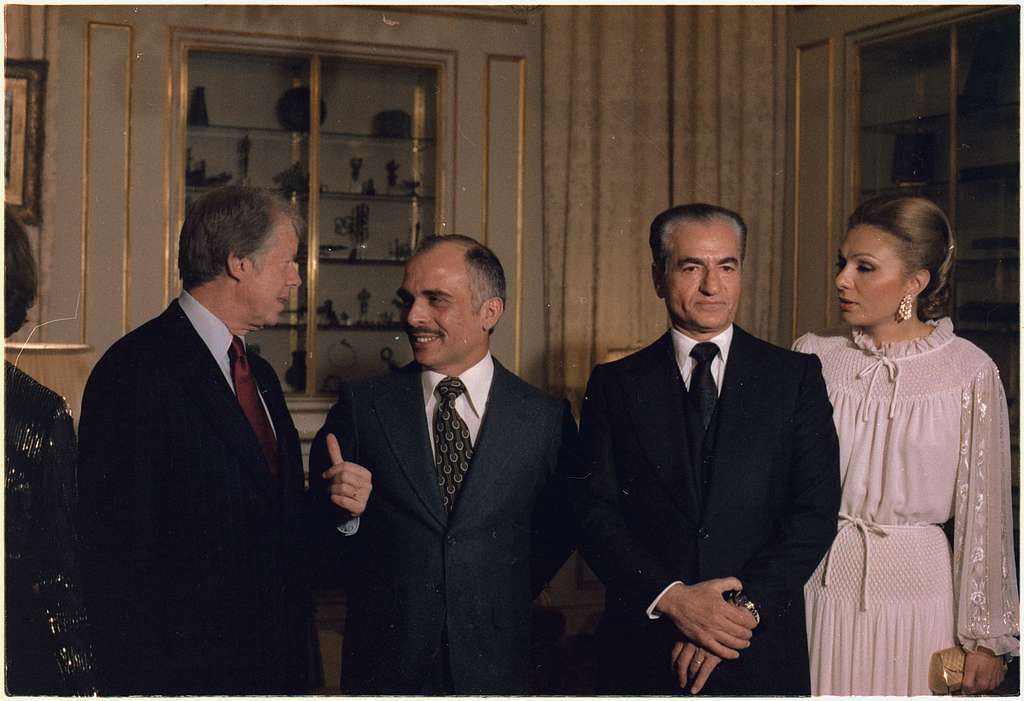
Eventually, the Jordanian state responded militarily. In what became known as Black September, a full-scale war broke out between Jordan’s army and the Palestinian organizations. Thousands of people were killed, and the PLO was finally driven out of the country. The organization then moved its center to Lebanon—with consequences the Lebanese still live with.
The pattern reemerged later in Kuwait. Before Iraq’s invasion in 1990, about 400,000 Palestinian Arabs lived in the country. When Saddam Hussein occupied Kuwait, Yasser Arafat and the PLO leadership chose to side with the dictator. This was a catastrophic political betrayal of a country that for decades had welcomed a large “Palestinian” population and supported their cause financially (I put Palestinian in quotation marks because it is an invented term for an Arab population).
After Kuwait’s liberation, there followed mass expulsions and intense pressure on Palestinian Arabs to leave the country. Around 360,000 left Kuwait during and after the crisis, many heading to Jordan. It says something about a political leadership that time and again has sacrificed its own people by abusing other countries’ hospitality, allying with dictators, and building armed parallel societies.
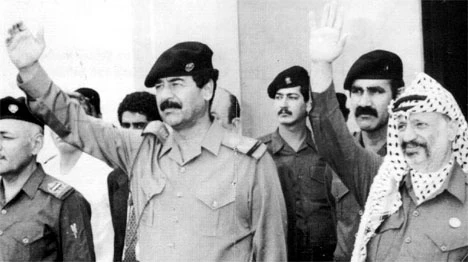
Jordan took them in—and got an attempted uprising. Lebanon took them in—and got a state within the state, terror attacks, and a civil war. Kuwait took them in—and saw the PLO support the country that invaded and occupied them.
Yet it is Israel, not the PLO, that in Western propaganda is expected to bear the entire blame for the Arab world’s refusal to trust the Palestinian Arab movement.
It is telling that the Arab states which publicly profess their love for the Palestinian cause are at the same time extremely careful that Palestinian Arabs do not gain control over their territory. Egypt keeps the border with Gaza tightly guarded. Jordan does not tolerate Hamas or other organizations rebuilding a military parallel power. The Gulf states offer money and ceremonial statements, but hardly ever permanent citizenship or free political organization.
They know their history. But the Swedish pro-Palestinian left does not—or they do, but have decided that the story is not to be told.
From Christian stronghold to collapsing state
Back to Lebanon. The transformation there did not stop when the civil war ended.
Christians continued to leave the country because of political instability, economic collapse, religious tensions, and a lack of trust in the future. Lebanon has not conducted an official census since 1932, which makes exact comparisons difficult. But the trend is unquestionable.
According to Pew Research Center, the share of Christians in Lebanon’s population declined by five percentage points to around 28 percent just between 2010 and 2020. This decrease was due both to a large influx of predominantly Muslim refugees from Syria and to the absolute number of Christians in the country declining. During the same period, the Muslim share grew to about 68 percent.
But the change becomes even more striking if you look a little further back. As mentioned, most estimates say the country was as much as 60 percent Christian as late as the 1970s. Today, it has completely shifted and is now almost 70 percent Muslim. And this in only about 50 years. This is what demography means in practice.
Christian share of Lebanon’s population, 1913–2023
No official census has been conducted since 1932—figures after 1932 are estimates from various sources. Hover (or tap) on the points for source and comment.
Sources: Ottoman census 1913, Lebanese census 1932, Cline Center for Democracy, CIA World Factbook, Pew Research Center, US State Dept./Statistics Lebanon
Not as an abstract curve in a statistical booklet or as a ceremonial lecture about “diversity” but as a shift in power, changed institutions, lost security, and people who eventually leave the land where their families have lived for centuries.
Lebanon did not become richer, freer, or more stable as the Christian population’s position weakened. The country became poorer, more violent, and more dependent on foreign powers.
Today, the Iranian-backed Shia Muslim organization Hezbollah has long been able to maintain a military capability rivaling that of the Lebanese state. The organization has dragged Lebanon into conflicts that large parts of the population, including many Christians, did not choose. The Lebanese state has thereby once again experienced what happens when armed ideological movements are allowed to become stronger than the nation itself.
This should also be relevant for Sweden.
Without parallel
A country’s population is not interchangeable. A society’s culture and institutions do not float free above the people who inhabit it. When the population changes rapidly and sufficiently, the country changes as well.
This does not mean that every immigrant is an enemy or that the process must end in civil war. It does mean that demography, loyalty, and cultural cohesion matter—no matter how forbidden it has become to say so in Swedish public discourse.
Sweden has, in just a few decades, carried out a population change unmatched in the country’s modern history. At the same time, our rulers keep assuring themselves that Sweden will remain Sweden automatically, regardless of who lives here, what values dominate, and what loyalty people feel toward the nation.
Lebanon shows how dangerous that illusion is.

The keffiyeh covers many blind spots
Particularly repugnant is the hypocrisy of the Western Palestinian movement.
The same activists who see Palestinian Arabs as the eternal victims of history show almost no interest in what armed “Palestinian” organizations did to Lebanon. They seldom speak about how the PLO built up an armed parallel society, challenged the sovereignty of the Lebanese state, and helped plunge the country into a war that destroyed the lives of both Christians and Muslims.
The Christians simply don’t fit the narrative.
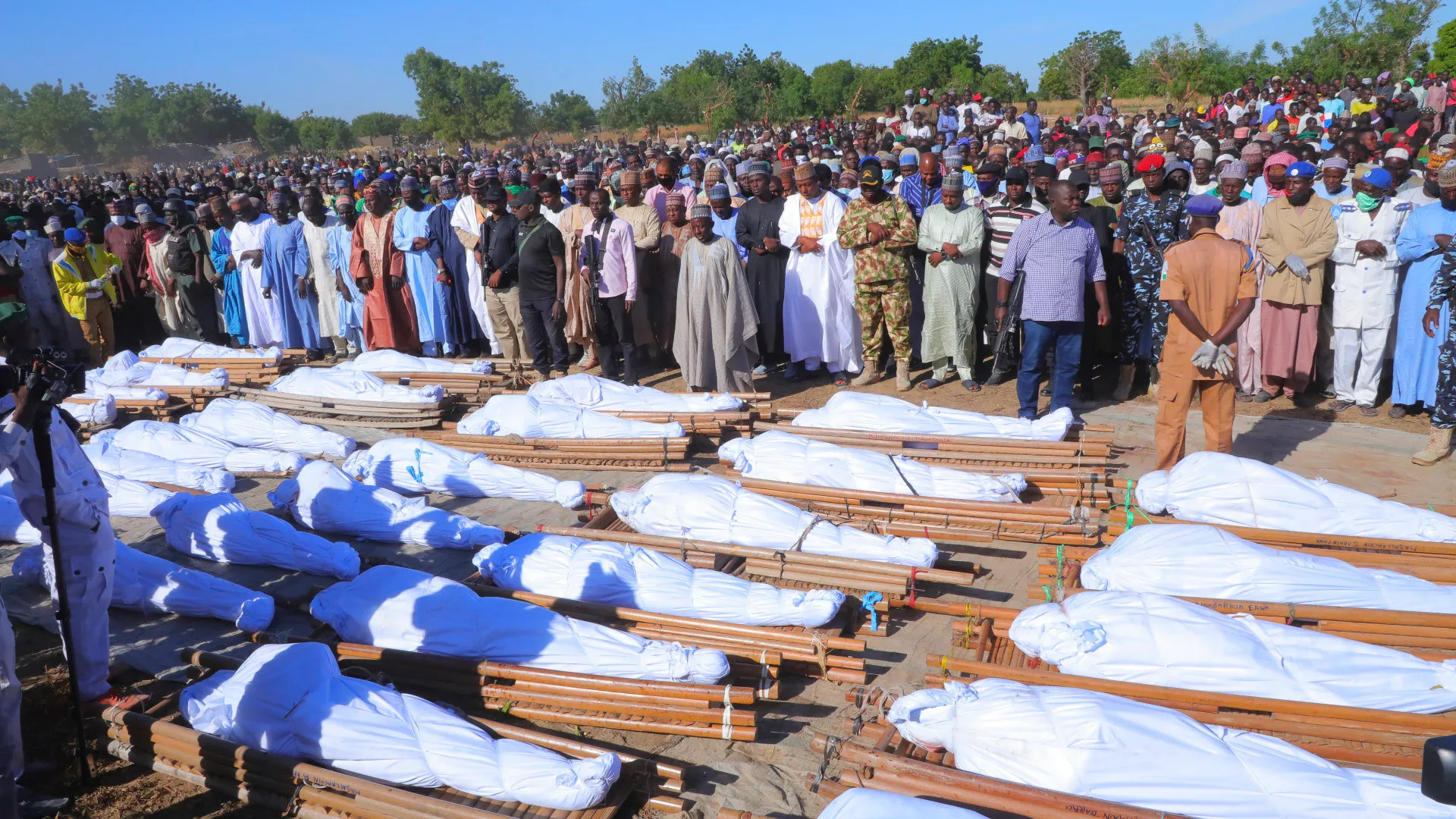
When Christians are driven out, marginalized, or slowly disappear from Muslim-dominated countries, strangely enough there is no moral panic at Swedish universities. No tent camps are set up. No libraries are occupied. No red triangles are painted on house walls. Today’s developments in Africa are another such example of hypocrisy.
But when Israel defends itself against Hamas or Hezbollah, the same people suddenly awaken to a burning concern for Middle Eastern minorities. Then Israel is even accused of betraying Christians—by people who have never spared a thought for the shrinking Christian populations of Lebanon, Syria, Iraq, or the Palestinian territories. The contrast is striking.
At Christmas 2025, some 184,200 Christians lived in Israel. Nearly four out of five were Arab Christians. The Christian population increased by 0.7 percent in 2024, and Christian students at the same time had a very high proportion of higher education eligibility.
Israel is not a perfect country, but while Christian communities have shrunk or been destroyed in large parts of the Middle East, not least in Palestinian-controlled areas, a growing Arab Christian population lives as citizens in the Jewish state. That is a reality the pro-Palestinian left desperately tries to talk away.
For it reveals that the conflict is not about a peaceful and tolerant region destroyed by Israel. Jews and Christians are two original minorities in a region where Islamist and Arab nationalist colonial movements have repeatedly tried to force religious and political conformity.
SEE ALSO: Ekeroth: “When the left closes its eyes to history’s greatest colonial powers”
Israel is not the threat to the Middle East’s religious diversity. In practice, Israel is the only state in the region where a non-Muslim population group has been strong enough to defend its sovereignty and where Christians as citizens can still grow in number. This is also why Israel is so intensely hated.
The Jews did what the Christians of Lebanon ultimately could not: they retained the ability to defend their country.
The warning applies to us as well
Lebanon’s history is not a prophecy for Sweden’s future. Countries, peoples, and historical circumstances differ, but the mechanisms are not unfamiliar.
A state that does not control its territory is no longer fully a state. A society that accepts parallel loyalties will sooner or later be torn apart. An indigenous population that voluntarily relinquishes its demographic, cultural, and political position should not expect anyone else to give it back out of gratitude.
And a people who refuse to defend their country will eventually discover that others are only too happy to take over the task—for their own purposes.
Awareness of the power of demography is meanwhile very high among Muslim groups in Sweden, Europe, and across the world. Their leaders have spoken about it for decades, as exemplified by former Libyan dictator Muammar al-Gaddafi and Yasser Arafat.
Al-Gaddafi openly warned about it: Islam would take over Europe without war and without weapons, but through immigration and birth rates. Yasser Arafat spoke of “the womb of the Arab woman” as his strongest weapon—a demographic bomb.
The same message is heard at lower levels, from the street, so to speak: “We will take over,” “We will soon be the majority,” “Europe belongs to us.” They are aware of their strength in numbers and use our openness and democracy against us. There are countless examples on X and in real life confirming this—from Sweden and the rest of Europe. From gangsters on the street to religious leaders.

Unfortunately, the demographic trend at the same time is exactly in line with what they themselves say. They are growing in number, deciding more and more elections. Taking over more and more areas. Then we dance the dance of death to our own demise.
SEE ALSO: Ekeroth: “Democracy’s death spiral—when incompetence becomes a merit”

No slogans will help
Swedes have been told it is wrong to want to remain a strong majority in their own country. That it’s suspicious. That nations are merely administrative surfaces and people are interchangeable production units. The Christians of Lebanon have already learned where such illusions can lead.
They did not lose everything in a day. It happened step by step: through demographic change, weakened institutions, armed parallel structures, foreign influence, concessions, and emigration. At each individual step, it could surely be said that the warnings of catastrophe were exaggerated. Then the catastrophe came.
This is the real lesson from Lebanon. A country can be open, wealthy, and culturally flourishing—until one day it no longer is. And when the process has gone far enough, no slogans about tolerance, coexistence, or the equal value of all people can help.
Then, only one question remains: who has the ability, and who is motivated enough, to win.