OPINION • When Sweden goes to the polls this year, it is about more than just who becomes prime minister. It is at least as much about which parties will have influence over Sweden’s economy, energy supply, migration policy, and security.
And here voters need to ask themselves an honest question: what really happens if the red-green parties win the election?
The Centre Party has now opened to an increase in food VAT and higher tax on diesel. In practice, that means food risks becoming more expensive and it gets costlier to fill up the car. For families with children, pensioners, rural residents, entrepreneurs, and everyone dependent on their car in daily life, it is a direct threat to household finances.
When fuel prices rise, it doesn’t just get more expensive at the pump. Transport becomes more expensive. Goods become more expensive. The pressure on costs throughout the economy risks increasing. This is exactly the type of policy Sweden does not need after several years where ordinary households have already been under pressure.
At the same time, the Green Party wants to halt new nuclear power. Daniel Helldén has been clear that the Green Party does not want to sit in a government that builds new nuclear power. This means that the stable, reliable electricity production Sweden is finally about to secure once again risks being stalled by red-green symbolic politics.
Sweden has already seen the consequences of that path. After several Social Democratic years of shutdowns and energy policy confusion, Swedish households and businesses have paid the price. We do not need more of the same politics. We need more reliable electricity, more nuclear power, and a power system that works even when it is not windy.
On top of this comes migration and crime policy. The Left Party and the Green Party want a looser migration policy. More immigration, weaker control, and less focus on requirements and responsibility is not what Sweden needs at a time when insecurity still characterizes many neighborhoods.
A looser migration policy combined with weaker crime policy risks making Sweden less safe. This is not harsh rhetoric. It’s a conclusion drawn from the development Sweden has already witnessed over many years.
That is why voters must also consider who Magdalena Andersson will actually need to rely on to seize power.
Does Sweden want Nooshi Dadgostar as Minister for Finance?
Does Sweden want Daniel Helldén or Amanda Lind with influence over Sweden’s energy supply?
Does Sweden want a government base where the Centre Party pushes for higher food VAT and fuel taxes, the Green Party stops nuclear power, and the Left Party pushes for a more left-leaning economic policy?
We have already seen what the red-green team accomplished after two terms in power. When Sweden entered the 2022 election, the country was characterized by growing gang crime, more shootings, serious violent crimes, insecurity, soaring electricity prices, high inflation, decommissioned nuclear reactors, and a migration policy that for a long time was far too lax. That is the reality voters must remember.
This election is about choices. Either Sweden continues on the blue and yellow path with lower fuel taxes, new nuclear power, tighter migration policy, and tougher stance against crime. Or the country is handed back to red-green chaos, a more expensive everyday life, and weaker security.
Sweden does not need an experiment with the Green Party, the Left Party, and the Centre Party as the power base.
Sweden needs four more years of the blue and yellow team.
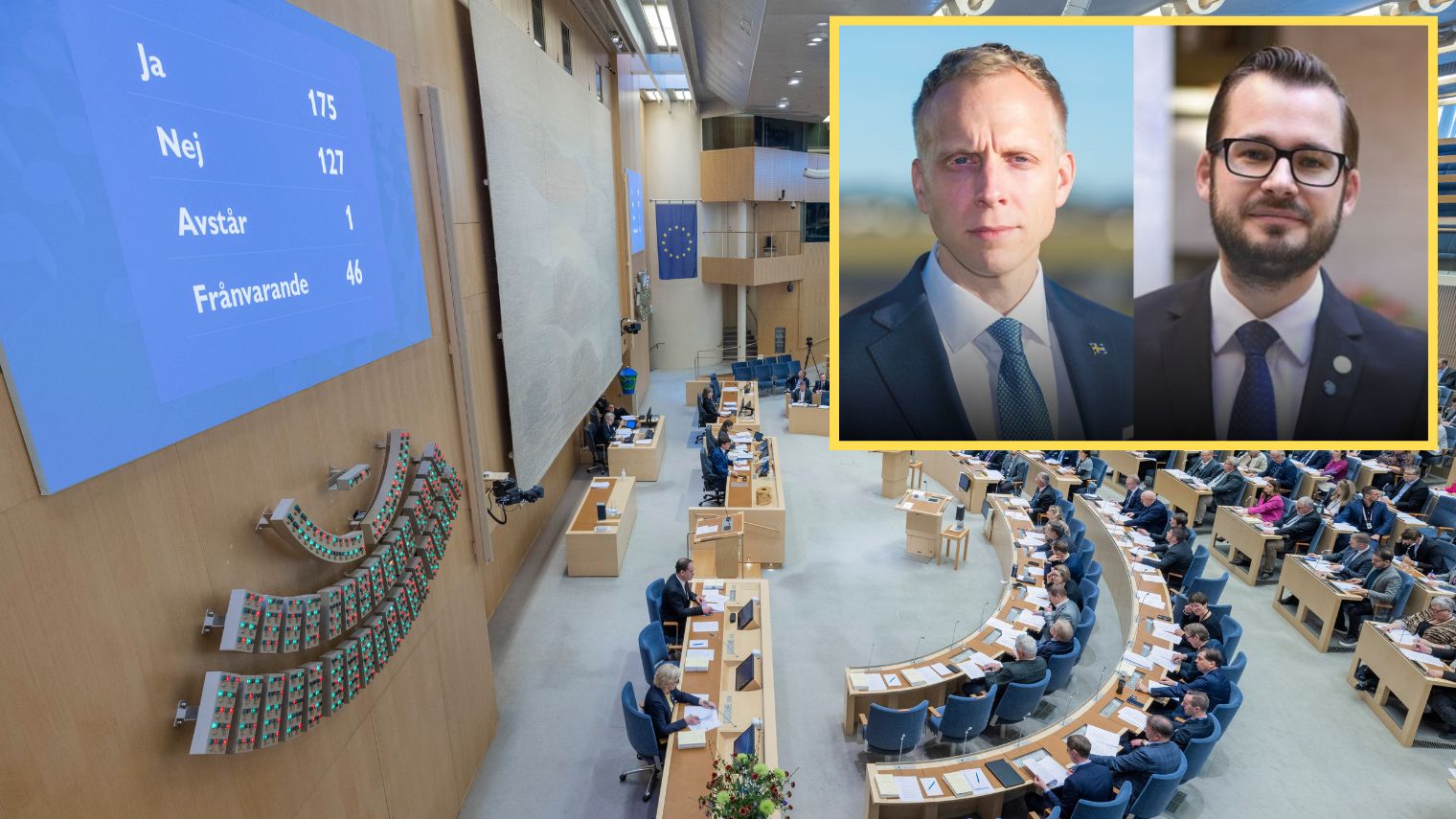
Ted Nyberg (SD)
Parliamentary candidate
Mattias Bäckström Johansson (SD)
Member of Parliament
Party Secretary, Sweden Democrats