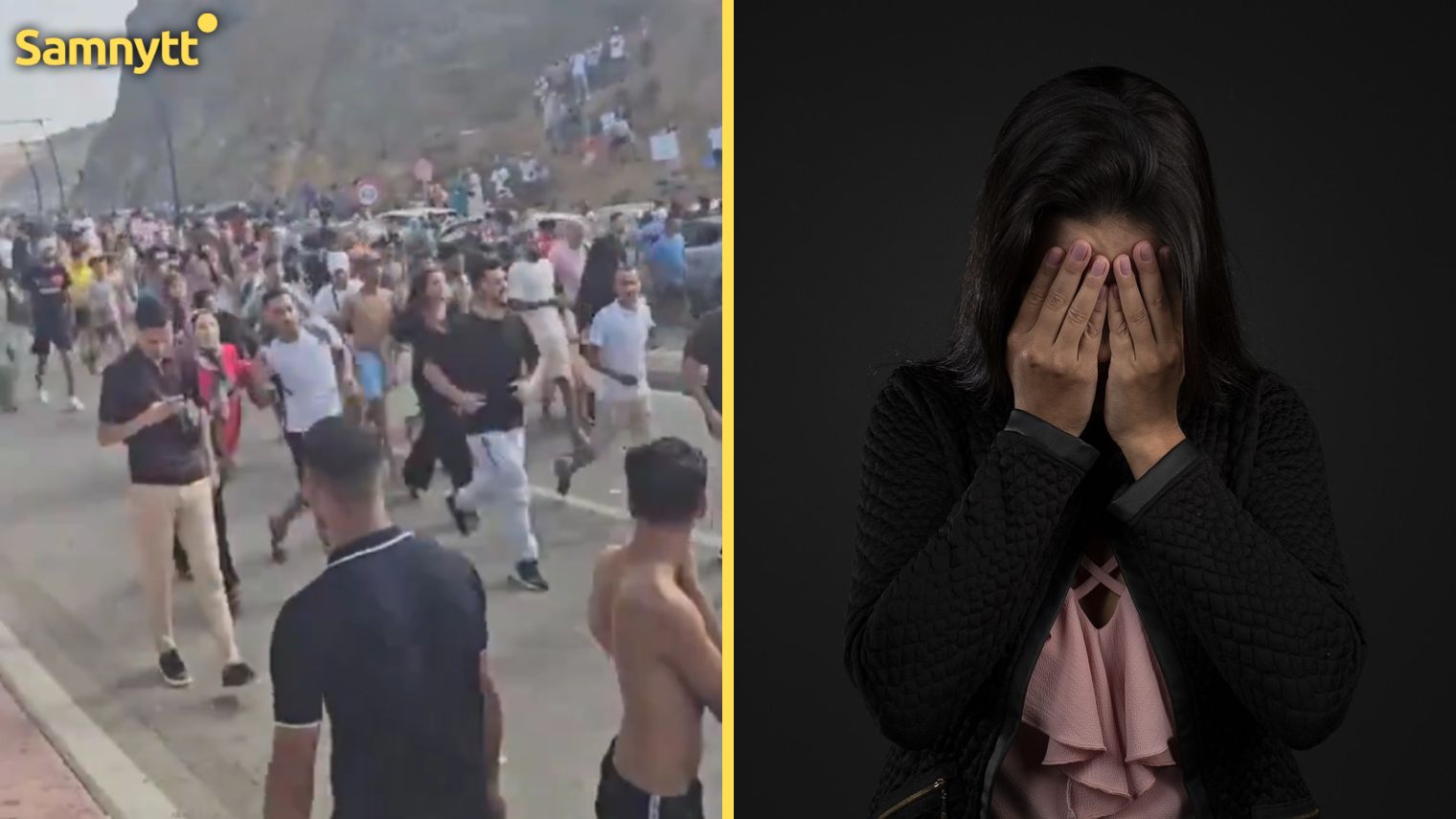
At least five underage girls have been treated for suspected rapes following the massive wave of migrants to the Spanish enclave of Ceuta. Meanwhile, doctors report a healthcare system under extreme pressure and girls under 14 being forced to sleep on the streets.
Ceuta is still reeling from the aftermath of the historic wave of migrants from Morocco. At least five girls, none older than 14, have in the past week been treated at Ceuta University Hospital for suspected sexual assaults, according to medical sources interviewed by Euronews.
A boy has also reportedly been subjected to a suspected sexual assault. The hospital has additionally treated more than a dozen cases assessed as consistent with sexual abuse.
The Spanish national police are investigating one of the cases, in which an underage girl was taken to hospital with injuries consistent with a sexual assault. No arrests have been reported, and it remains unclear exactly under what circumstances the assaults occurred. Several attempted assaults are said to have been prevented by interventions from local residents.
Girls Sleeping on the Streets
Susana Ascaso, an emergency physician at Ceuta hospital, says several of the girls are under 14 years old and are on the streets because the reception system for minors lacks sufficient capacity.
The doctor describes the situation as a health catastrophe. According to her, the hospital is receiving around 300–400 migrants a day, while staffing and resources remain virtually unchanged from before the dramatic surge in migration at the end of July.
She also warns that the healthcare system lacks sufficient capacity to detect, for example, tuberculosis and hepatitis, or to treat people with chronic diseases who have been left without their regular medications.
Warnings have also come from aid organizations. Save the Children has pointed out the risk of human trafficking and sexual exploitation of underage girls who are outside the regular child protection system.
Tens of Thousands Entered Ceuta
The backdrop is the dramatic events of July 30, when tens of thousands of people entered Ceuta, the Spanish enclave on the North African coast, from Morocco.
Spanish authorities estimated that around 72,000 individuals crossed the border during the massive influx. Many tried to cross by land, while others swam or came by sea. More than 80 people have died in connection with attempts to reach Ceuta.
After the initial shock, Spain reinforced the border with military and security forces. A large proportion of those who entered have since returned to Morocco, but hundreds of minors have remained in Ceuta. Over 1,300 minors have been registered, and reception facilities built for about 90 children have been severely overcrowded.
According to reports from AP and other media, social media played an important role. Rumors spread that the border had been opened, or that Spain would allow people to stay. Posts on platforms including TikTok, Instagram, and Facebook reportedly shared information about possible routes over the border and changes in Spanish migration policy.
Spanish authorities have also pointed to economic desperation and high youth unemployment in Morocco as important underlying factors.
???? BREAKING FROM CEUTA ????????
Morocco removes the concertina wire from the Ceuta border fence just days before a major call to enter Ceuta illegally.
Illegal migrants are jumping out of military convoys as they are being taken back to the Moroccan border.
60,000 crossed in just… pic.twitter.com/aOEKim8Gx2
— Khan Fatima (@Khan_Fatimaa1) August 8, 2026
Amnesty
The crisis has also become politically explosive, as it coincides with Spain’s extensive amnesty for illegal migrants.
The socialist government under Prime Minister Pedro Sánchez decided earlier this year to “regularize” people already residing in Spain without valid residence permits. The requirements included being in the country before January 1, 2026 and being able to prove at least five consecutive months of residence. Applicants also had to meet criteria regarding criminal records.
The application period ended on June 30. By the deadline, a total of 1,174,978 applications had been submitted, according to Spain’s migration department.
The people who entered Ceuta during the mass crossing on July 30 are not automatically included in the regularization program, since a basic requirement is to have already been in Spain before January 1.
Nevertheless, the Spanish government’s migration policy has become a central issue of debate in Europe after the crisis. Right-wing politicians in several EU countries have argued that a more generous migration policy risks creating false hopes that those who make it to Spain will be allowed to stay.
Italy and Spain in Diplomatic Conflict
The Ceuta crisis has also triggered an unusually sharp conflict between Spain and Italy. Italy’s Foreign Minister Antonio Tajani has criticized Spanish migration policy and described the large amnesty as a dangerous signal.
Italy also introduced temporary border controls for travelers from Spain following the migrant influx. Spain responded with its own controls against travelers from Italy.
Italy’s Prime Minister Giorgia Meloni has simultaneously issued strong criticism of the Sánchez government and argued for stricter control of Europe’s external borders. The conflict has thus evolved from a Spanish migration crisis into a broader European political dispute over how the EU should handle migration.
On Sunday, thousands of people also gathered in Ceuta demanding firmer action from the Spanish government. The demonstration was organized by the city’s four religious communities – Christians, Muslims, Jews, and Hindus – and focused on both security and preserving cohesion in the city.
Meanwhile, the situation for minors remains critical. The Spanish government plans to move unaccompanied children from Ceuta to the mainland, but the process is complicated by legal and administrative issues. Girls and the youngest children have been prioritized in the effort to identify and place the minors.
For Ceuta’s healthcare system, the crisis means a continued exceptional burden. And according to doctors and aid organizations, it is above all unprotected minors who risk being left behind – with girls now reported to have been subjected to sexual assault and forced to live on the streets.