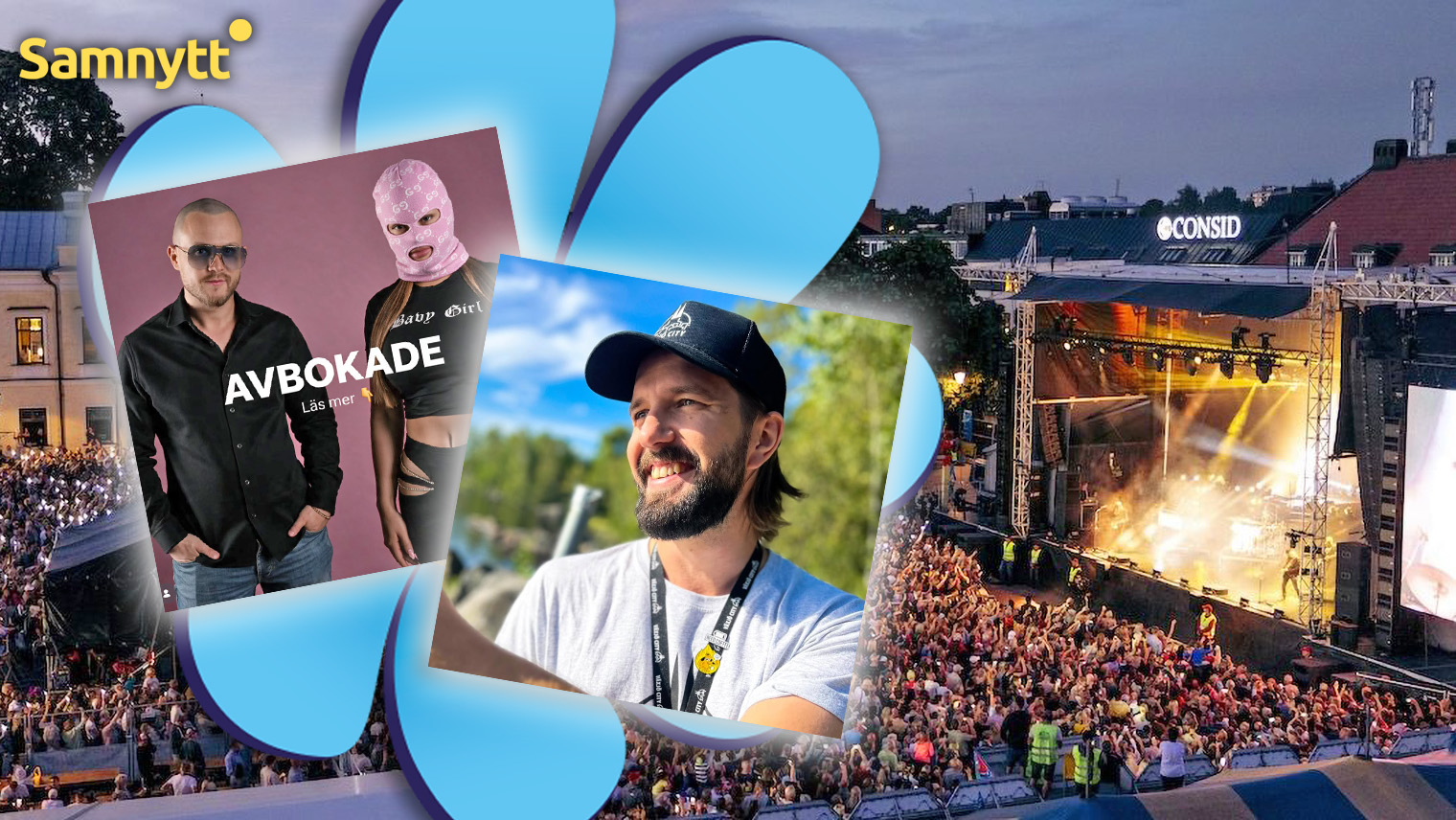
The decision to prevent the artist Fröken Snusk from performing at the Karl-Oskar Days festival has developed into a national political debate. The organizer refers to the festival’s political independence, but is met with harsh criticism from both artists and prominent politicians, who argue that it is in fact the decision itself that constitutes a political stance and that artists are being treated differently depending on which political party they may be associated with.
Fröken Snusk was scheduled to perform at the Karl-Oskar Days in Växjö on August 15, but the concert was canceled after it became known that just a few days earlier, the artist would be appearing together with Jimmie Åkesson’s dance band Åkezzonz at the Sweden Democrats’ rally in Gothenburg.
Karl-Oskar Days’ project manager Jonatan Blom Ekenberg justified the decision by stating that the festival is intended as a politically independent meeting place. According to him, an artist who participates in an ongoing election campaign, close to the time of the festival, becomes a part of the political campaign in a way that is not compatible with the event’s core principles. At the same time, he claimed in statements to Smålandsposten that the organizer is not taking any political position on substance, but only wants to safeguard the festival’s independence.
The Producer: “Why Make Distinctions Between Artists?”
However, the decision has triggered widespread criticism. Rasmus Gozzi, the producer behind Fröken Snusk, told Smålandsposten that he considers the cancellation a very disappointing move. He emphasizes that Fröken Snusk has never made any political statements and that the performance at the Sweden Democrats’ rally is just a regular artistic engagement. He adds that they would have accepted the booking had any other party made a similar request.
Gozzi also questions the consistency of the festival management’s reasoning. He points out that other artists at this year’s festival have previously made political statements without any consequences, and that the replacement act, Raggarligan, has previously performed at an event where the Sweden Democrats were the organizer.
“Why do they make distinctions between artists?” he asks Smålandsposten.
The organizer replies that the decision is not about which organizers have historically hired certain artists, but about their assessment that Fröken Snusk has become an integrated part of an ongoing election campaign through music production, posters, and participation in public election events immediately before the festival weekend.
Politicians From All Sides Voice Their Criticism
The criticism has since grown far beyond the music industry. Sweden Democrats leader Jimmie Åkesson wrote on X that, paradoxically, the festival organizers, by their actions, have made a festival that claims to be politically independent into a political issue.
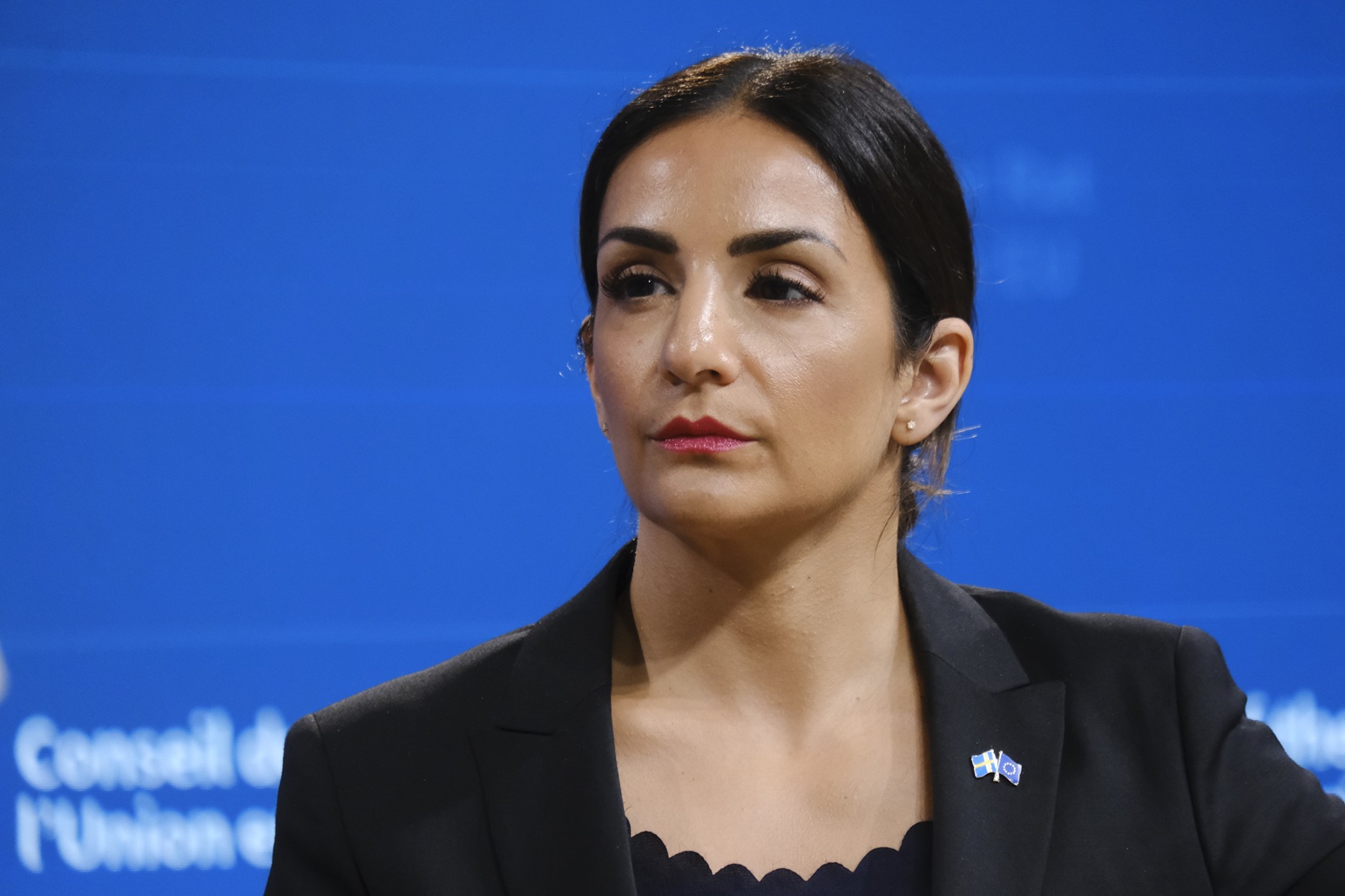
Culture Minister Parisa Liljestrand (M) has also questioned the decision. She believes it is problematic if artists are judged based on political affiliation or which party-political events they participate in, and warns of a climate where cultural workers avoid certain assignments for fear of being canceled. On Facebook, she writes that such a climate is not sustainable for democracy and does not benefit culture.
From Växjö, opposition councilor Pernilla Tornéus (M) sharply criticizes the festival management. She contends that rather than keeping politics at arm’s length, Karl-Oskar Days is acting as a political thought police and conducting party-political suitability assessments of artists. She finds it particularly concerning if the same principles are not uniformly applied to all.
Member of Parliament Oliver Rosengren (M) also believes the cancellation risks creating a disconnect between decision-makers and those who simply want to attend a concert, while Christian Democrat municipal council candidate Jon Malmqvist warns that the decision opens up for difficult boundary decisions and turns a city festival into an arena for political conflict.
Festival Accused of Double Standards
On social media, several critics have claimed that the festival management applies different rules depending on which party an artist is associated with.
Sweden Democrats profile Mattias Karlsson writes on X that other artists with clear political affiliations or previous participation in left-wing political events are still booked for the festival, while Fröken Snusk is banned. He describes this as an example of “grotesque and monumental” hypocrisy.
Artisten Silvana Imam har medverkat på en valskiva som givits ut av Feministiskt initiativ. Hon har även framförts sånger med uppmaningar till politiskt våld. I låten ”Tystas ned” som hon framfört vid politiska spelningar hetsas publiken till misshandel av alla som delar SD:s…
— Mattias Karlsson (@sdkarlsson) August 9, 2026
Similar objections are raised by Carl Eos from the think tank Oikos, who argues that Fröken Snusk was canceled solely because she is performing at a Sweden Democrats event, while artists who have participated in other parties’ events are unaffected.
Jag utgår ifrån att det inte finns någon person som ärligt kan säga något annat än att Fröken Snusk avbokats pga att hon spelar på SD-event. För alla artister som uppträder på andra partiers event är kvar.
Grattis, Sverige. Ännu en gång har skenheliga knäppskallar lyckats… https://t.co/C9yra46ce4
— Carl Eos (@TeodorMG) August 8, 2026
Karl-Oskar Days, however, stands by its decision, maintaining that their assessment concerns only Fröken Snusk’s current and direct involvement in an ongoing election campaign immediately adjacent to the festival, not the artist’s political views or previous assignments.