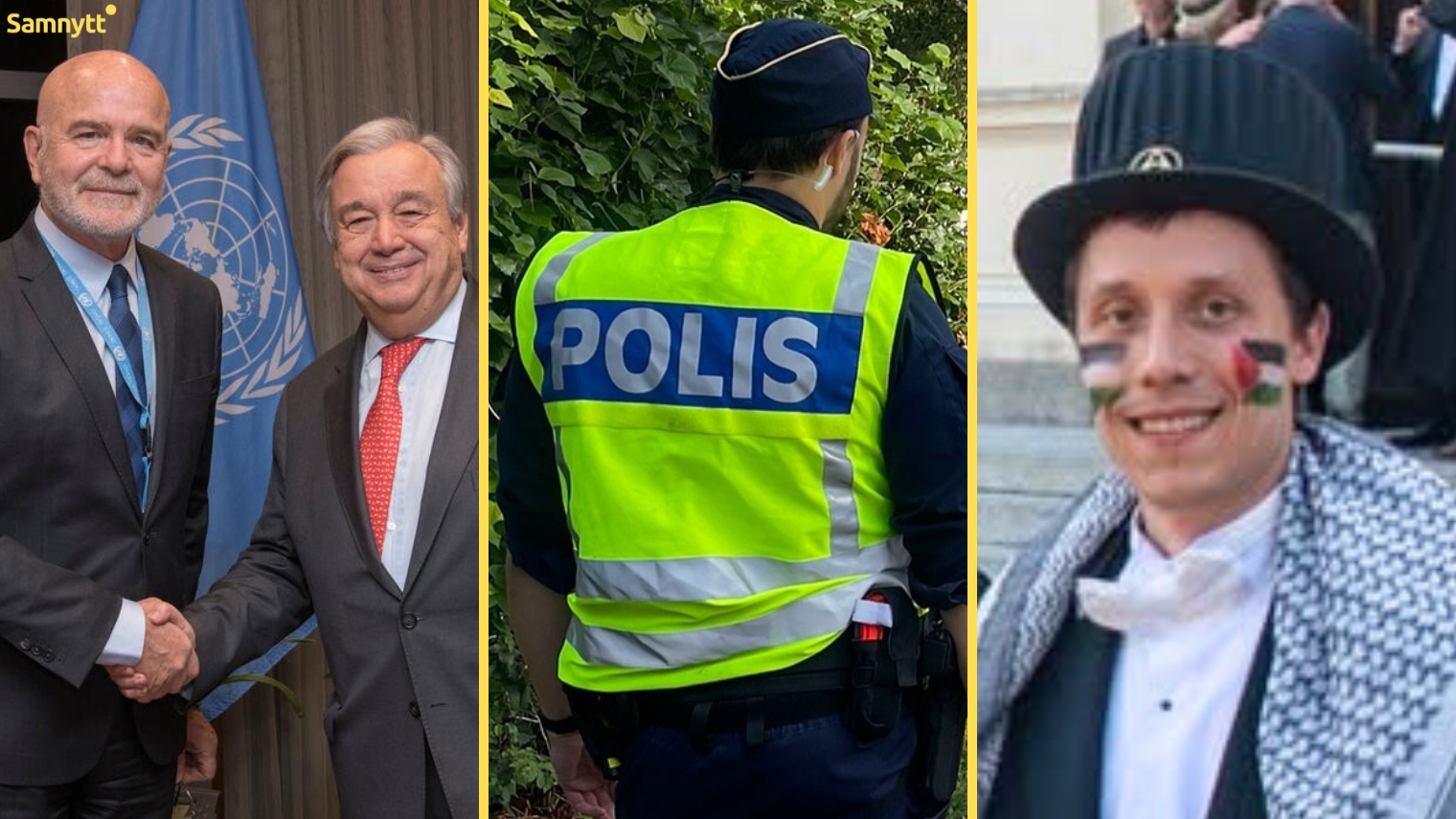
The UN Special Rapporteur for “environmental defenders” has issued strong criticism against Swedish authorities after the treatment of David Alcer, researcher at Lund University, and climate and Gaza activist. In a ten-page letter to Foreign Minister Maria Malmer Stenergard, the UN official writes that he is “deeply concerned” about how the activist has been treated by the police, and among other things, demands that the Swedish Police Authority’s actions be investigated.
David Alcer, who is a German-Hungarian EU citizen and has lived in Lund for seven years, is also facing deportation. The Migration Agency is investigating whether he has the right to remain in Sweden.
According to the UN Rapporteur, this process must be seen in light of Alcer’s environmental engagement, and Forst questions whether there is any legitimate basis at all for pursuing the case. It is an unusually sharp UN intervention in an ongoing case in a Swedish court.
In the letter, highlighted by Aftonbladet, the UN Rapporteur describes accounts of Alcer being detained by border police on two occasions, despite reportedly not being suspected of any illegal acts at the time of his detention.
On those occasions, plainclothes police are said to have taken him to an unmarked car. He reportedly was not told why he was being taken in and was also denied contact with his lawyer.
“No Legitimate Basis”
For several years, Alcer has been engaged in climate issues and participated in various forms of so-called civil disobedience. Among other actions, he protested against peat extraction and in 2023 went on stage during Loreen’s performance at Melodifestivalen with a banner reading “Restore wetlands.”
READ ALSO: Charges against German climate extremist who disrupted Loreen performance
According to information received by the UN Rapporteur, border police have described participation in environmental protests involving civil disobedience as a “threat to the democratic order” and a “serious threat to public order and safety.”

This has provoked a sharp response from UN official Michel Forst. He argues that the authorities’ position risks being in direct conflict with the international protections that apply for what he refers to as peaceful protests.
Peaceful protests are a cornerstone of democratic society, even when they involve civil disobedience. It is therefore very concerning that the Swedish border police seem to lack awareness of the international protection afforded to peaceful protests and their fundamental importance in a democracy”
Excerpt from the UN letter to the Foreign Minister
The wording is even stronger when the UN Rapporteur comments on the basis for Alcer’s detention.
There is no legitimate basis for claiming that Mr. Alcer poses a threat to public order or safety – the basis in the Aliens Act that the authorities appear to have invoked in their decision to detain him on September 5, 2025.
Excerpt from the UN letter to the Foreign Minister
Deportation Threat Raises UN Concern
It is the investigation into Alcer’s right to remain in Sweden that has caused the strongest reaction from Forst. He writes that it is highly concerning that Swedish authorities have questioned Alcer’s permanent right of residence as a result of his participation in peaceful environmental protests.
[…] a decision to deport him because he exercised his rights under the Aarhus Convention would constitute a particularly severe further punishment for him as an environmental defender and could amount to a violation of Sweden’s obligations under article 3.8 of the convention.
“Significant Psychological Distress”
The Aarhus Convention, which Sweden ratified in 2005, includes protections for people engaged in environmental issues. According to article 3.8, individuals exercising their rights under the convention must not “in any way” be penalized, persecuted, or harassed for doing so.
Forst therefore considers the investigation into Alcer’s future to be problematic in itself.
To be clear: there is no legitimate public interest justifying the initiation of an investigation into whether an environmental defender should be deported because of their participation in peaceful environmental protests, even if the protests included civil disobedience.
He also points out that Alcer has established his life in Sweden, has a permanent research position, and is rooted in his local community. The uncertainty about his future, according to the Rapporteur, has already subjected him to “significant psychological distress.”
UN Demands Police Investigation
The UN’s criticism does not stop at the question of deportation. In the letter, Forst asks what measures Sweden has taken to investigate “possible misconduct or other improper handling” by the police and migration authorities.
He specifically queries the reports that Alcer was denied the presence of a lawyer during interrogation and wants to know whether the detention on September 3, 2025 was in accordance with Sweden’s obligations under the Aarhus Convention.
READ ALSO: Criminally charged climate extremist may be deported – then Aftonbladet steps in
The Rapporteur also asks for information on what actions can be taken against officials who may have committed violations. The letter explicitly mentions the possibility of “disciplinary or criminal proceedings against the concerned law enforcement officials.”
Forst also wants Alcer to be compensated for any harm he may have suffered.
c. compensate Mr. Alcer for the material and non-material damage he has suffered as a result of the detention and interrogations, as well as for the material and non-material damage arising from the investigation into deportation. Such damage includes, but is not limited to, the psychological distress he has endured and the legal costs he has incurred.
Government: The Case Is Ongoing
The government responded to the UN Rapporteur at the end of June, stating that it takes his concerns seriously. At the same time, the government refers to the fact that the case is still ongoing and therefore cannot comment on all aspects.
The reply outlines, among other things, the Swedish administrative model and the government’s limited ability to intervene in individual agency cases.
The government decides how the authorities are to be organized and what tasks they should perform. However, the Instrument of Government prohibits the government from interfering in an agency’s decision in an individual case”
Government’s reply to the UN
The government concludes by saying it remains open to continued dialogue with the UN Rapporteur. David Alcer himself is highly critical of the government’s reply, describing it as an “absolute non-answer.”
– It shows that the government is not interested in trying to protect human rights, he told Aftonbladet.
No decision regarding deportation has yet been made. But in his letter to the government, Michel Forst makes it clear that he wants to see the issue handled quickly and that Alcer should not be subjected to further measures if the information on persecution, punishment, and harassment proves correct.
If your investigations confirm or support that the allegations are true, I urge you to ensure that the alleged persecution, punishment, and harassment of Mr. Alcer cease immediately and that he is promptly provided with redress.
Wants to Take Media to Court
David Alcer’s case is not the first time the UN Special Rapporteur for “environmental defenders” has sharply criticized Swedish authorities. In April, it was reported that Michel Forst had also taken an interest in an ongoing legal case concerning a climate activist who was deemed a security risk due to their work at the Swedish Energy Agency, the so-called “Rebellmamman” case.
Before the trial, Forst submitted a statement in which he criticized how the Swedish media and political statements had described climate activists. He claimed that the media coverage could contribute to “negative narratives” about the so-called environmental defenders, and again invoked protection against reprisals in the Aarhus Convention.
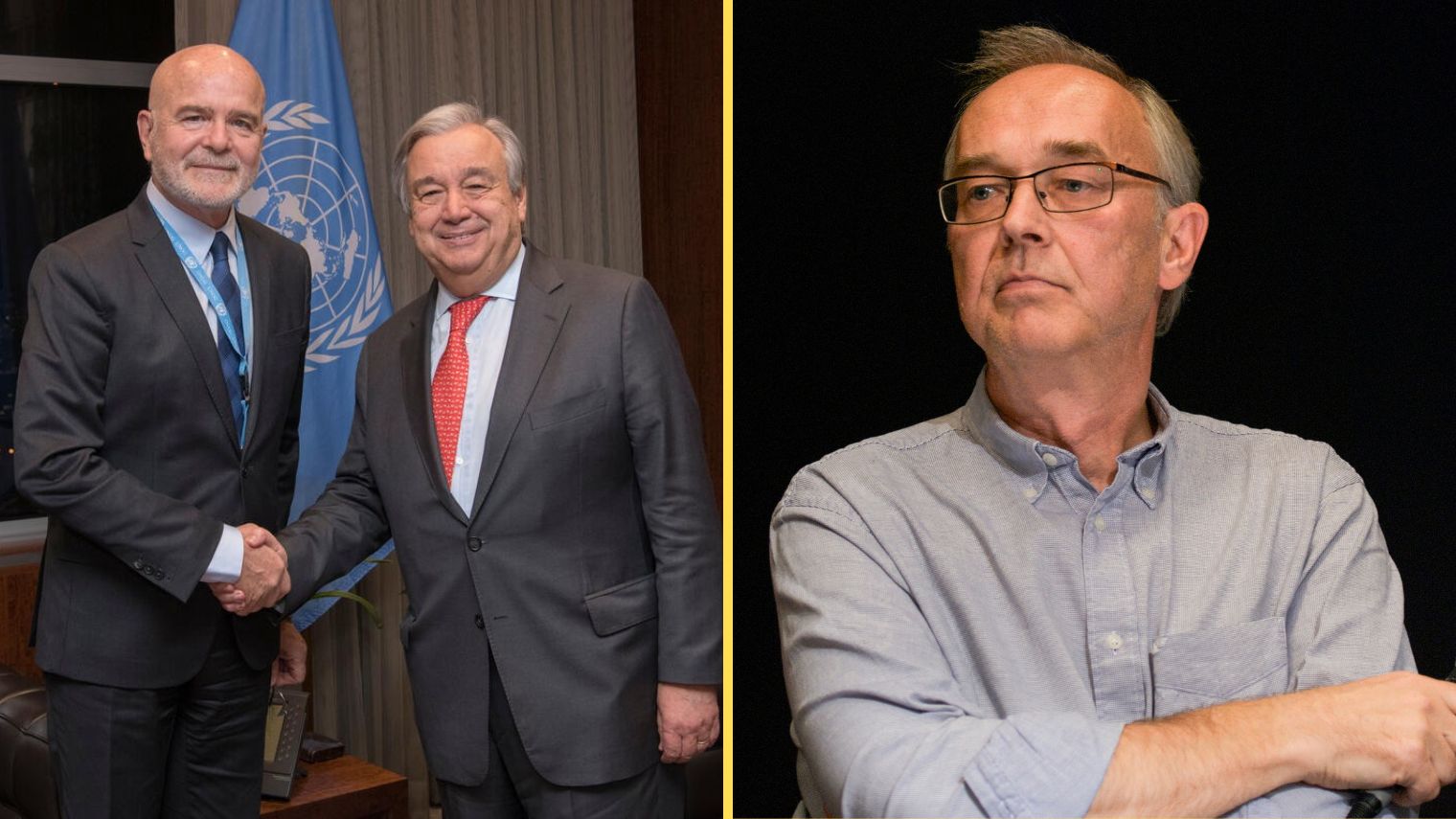
The statements were met with criticism in Sweden. Freedom of speech expert Nils Funcke called the reasoning “almost bizarre” and argued that the UN Rapporteur risked confusing a climate activist’s freedom of expression with the media’s constitutionally protected right to scrutinize and report.
Utgivarna’s CEO Thomas Mattsson also questioned the UN official’s conclusions and emphasized that Swedish media must be able to report on potential security risks within government agencies.
READ MORE: UN demands for Sweden: Act against media critical of climate activists