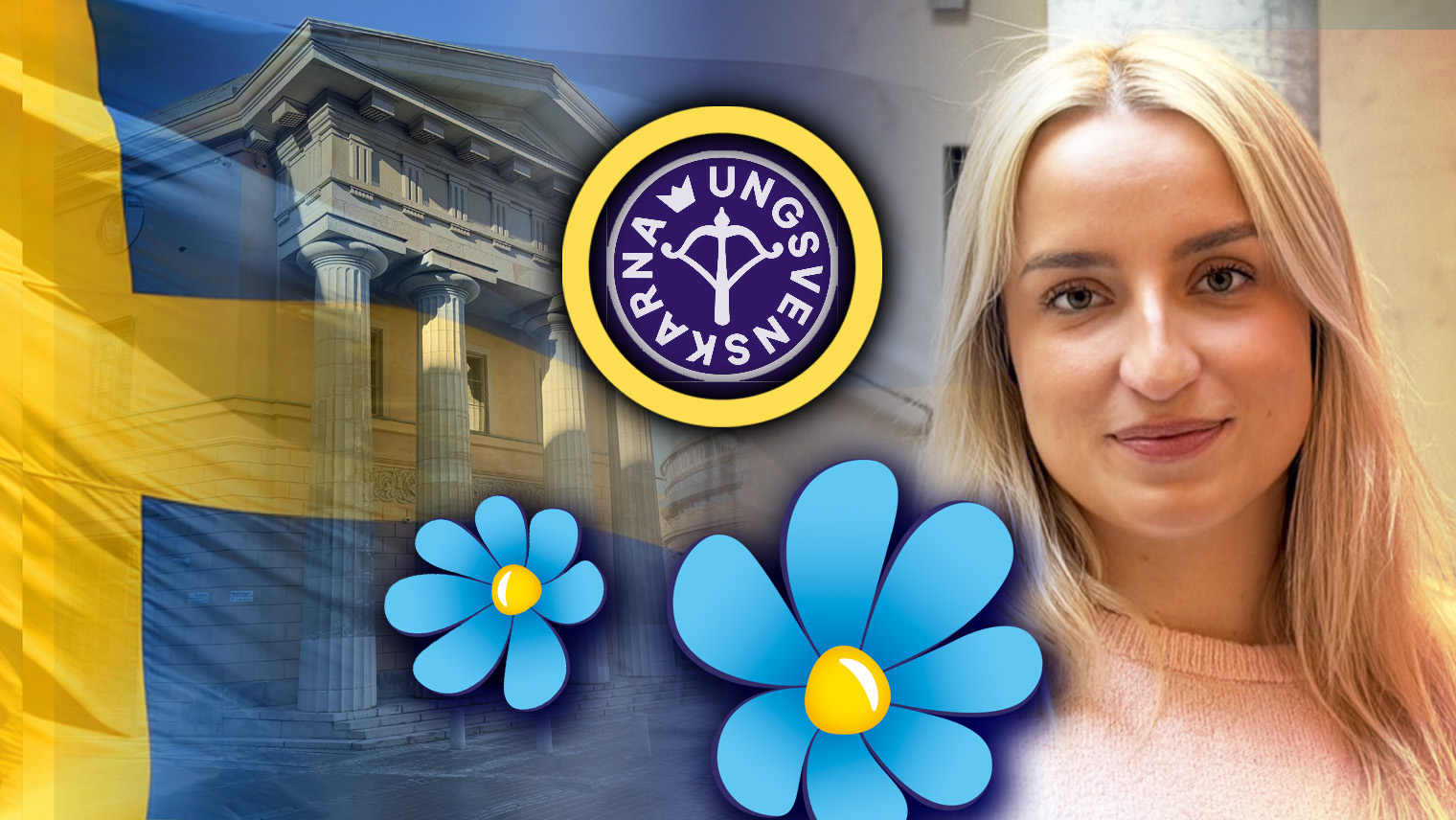
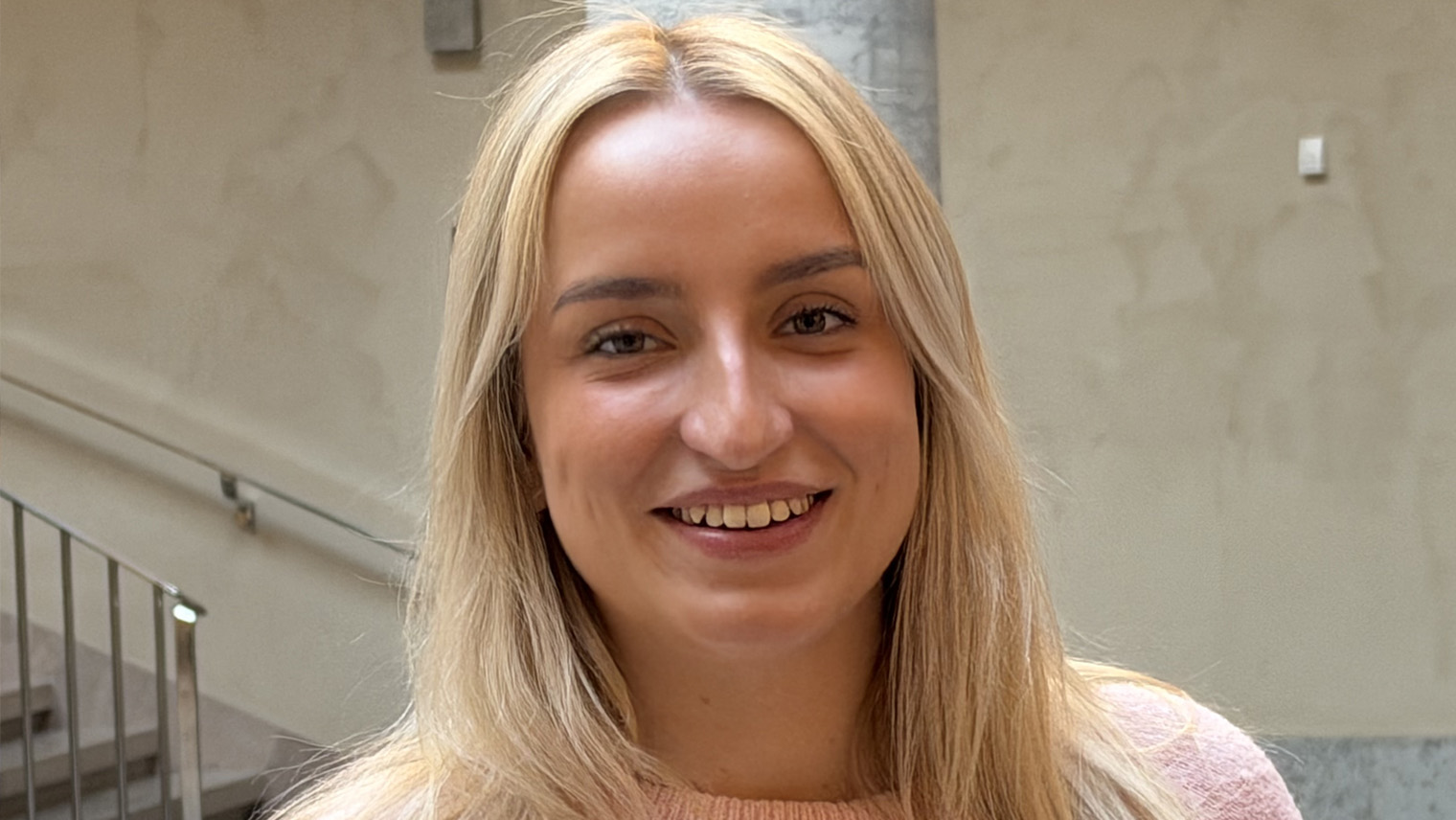
She wasn’t interested in politics as a young person. But a growing sense of insecurity and that Sweden was changing – in her residential area, in school, and in daily life – made Denice Westerberg get involved. Today, she is one of the Sweden Democrats’ younger profiles and the chair of Ungsvenskarna, and is running for parliament. In an exclusive interview with Samnytt, the 23-year-old politician points to immigration, crime, and demographic development as the issues that will determine Sweden’s future.
Denice Westerberg, 23, is the national chair of the Sweden Democrats’ youth wing Ungsvenskarna, and one of the party’s younger profiles. In recent years, she has established herself as a clear voice on issues of mass immigration, security, and societal development. Ahead of the 2026 election, she is standing as a candidate for the Riksdag, representing a generation of politicians who have grown up during a period marked by increased insecurity, migration debates, and sharper political divisions.
When Denice Westerberg describes her road into politics, it has less to do with ideology and more with a personal experience of how society was changing.
– I never thought, when I got involved, that I would work in politics. It was about not recognizing Sweden anymore. How could things turn out like this? How could those in power let things get this bad?
ALSO READ: Ungsvenskarna: Revoke citizenship for immigrants who do not adapt
She describes how she started to read up on different parties, quickly realizing that her views most closely matched SD’s – largely due to migration policy, but also due to crime policy and security issues.
– But also on cultural issues and feminism, she adds.
ALSO READ: Ungsvenskarna: No to the Gender Transition Law
She experienced the change both in her neighborhood and at school.
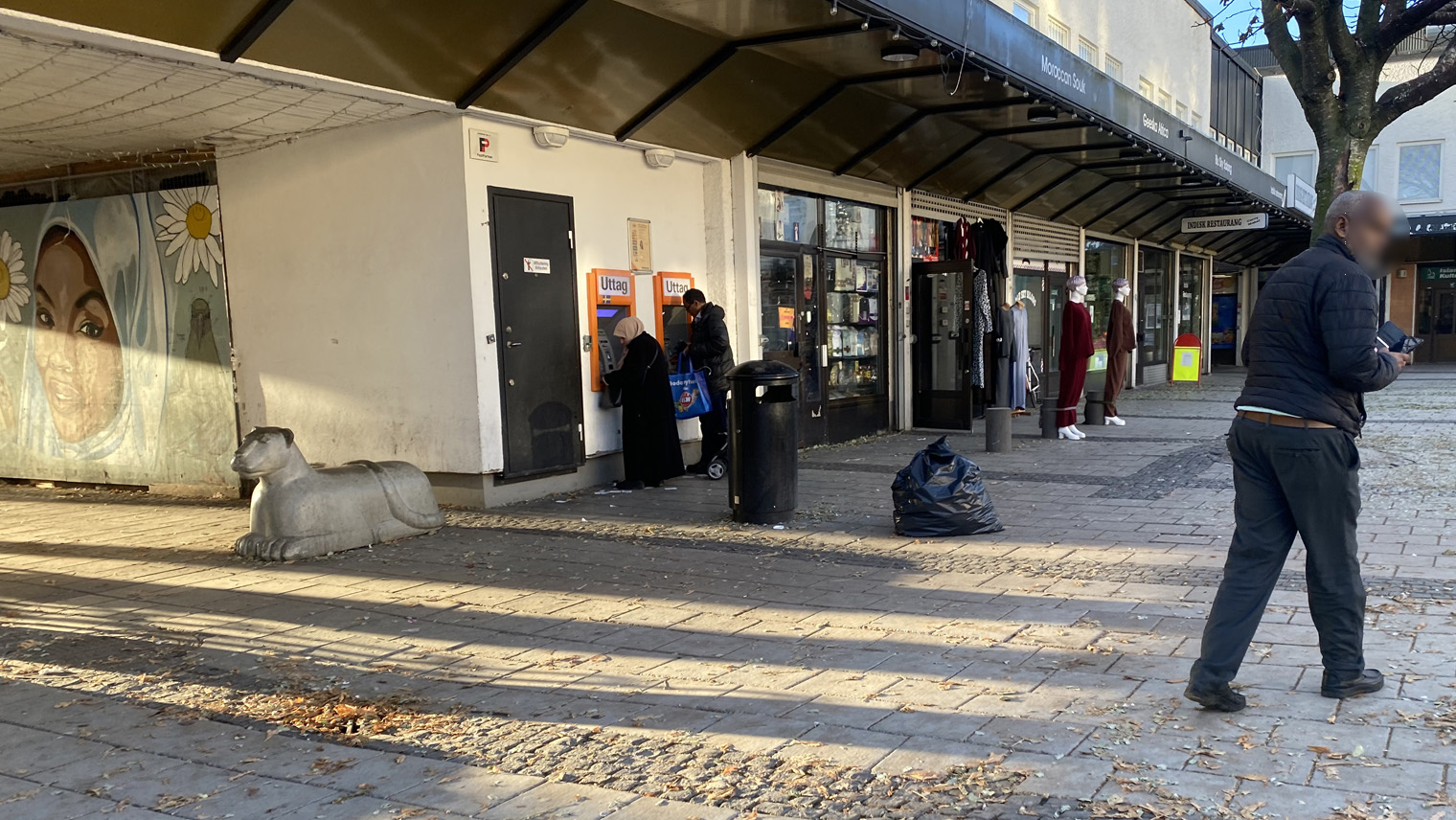
– I didn’t recognize my neighborhood in Solna anymore. I no longer felt safe.
Was there something specific that happened?
– It was a feeling that built up. I changed schools already in middle school, because things got too rowdy, more and more immigrant students started coming in, and the atmosphere quickly became quite threatening, towards teachers and other students. She continues:
– Also, I’ve had a dog since I was twelve and would walk her every evening. I started to clearly notice the difference after the migration crisis in 2015. It felt less safe, you could run into gangs hanging out. Westerberg continues:
– Just two years earlier, when we got “Madicken”, my dog, it wasn’t a problem to go out with her in the evenings, but that changed quickly. You started feeling like you needed to bring pepper spray every time you left the apartment. That feeling doesn’t just come from nowhere.
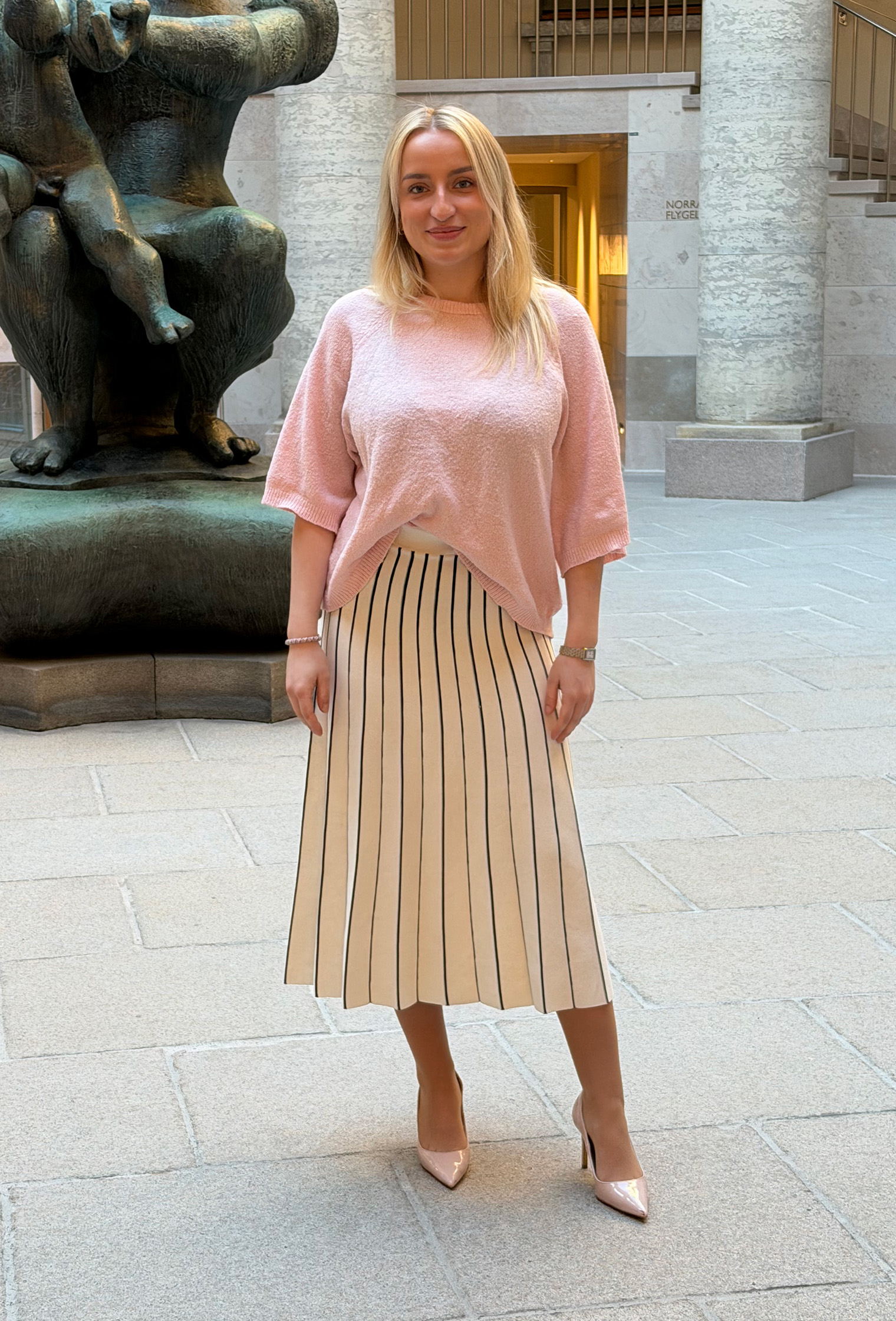
Regarding her first encounter with SD, she says it exceeded expectations.
– I belong to the generation that heard from teachers that SD is a terrible party. But when I went to my first meeting with Ungsvenskarna, everyone there was just friendly people.
ALSO READ: In Denice Westerberg’s Dream Sweden, There Are No Veils
Three Decisive Issues for the Future
When Westerberg herself points out what she believes will shape Sweden’s development over the coming decade, three areas repeat.
First, migration and integration policy.
– The integration issue, and more specifically Islamism, is absolutely decisive. I don’t think Sweden has a future if we don’t address it.
ALSO READ: Social Shift No One Voted For – The Concrete Signs of Islamization in Sweden
We have 400 criminals in Sweden with deportation orders, but who are still here. Just that makes you lose faith in the justice system.
Denice Westerberg (SD)
The second issue is demographic.
– Low birth rates are crucial for Sweden’s future.
The third concerns crime.
– We must get rid of criminal gangs from the streets and restore safety, she says.
Westerberg also argues that trust in the rule of law has been affected by developments in recent years.
– Trust is undermined every time you read about serious crimes with low sentences or about people with deportation orders who still remain in Sweden.
ALSO READ: SD Politician: “Islam Has No Place in Sweden”
At the same time, she emphasizes that change takes time.
– Problems that have built up over decades can’t be solved in just a few years. Every time you read about some gang criminal who got two years in prison for a fatal shooting.
She highlights a current situation:
– The latest headline that came today is that we have 400 criminals in Sweden with deportation orders, but who are still here. Just that makes you lose faith in the justice system.
ALSO READ: SD demand: Deport more illegals with a Swedish ICE
Do you think the changes are happening too slowly?
– Yes, I absolutely think it’s too slow. I can personally get really frustrated—why doesn’t it move faster, how can we still have these seriously criminal people in Sweden, how is that possible? But then you have to take a step back and think. She elaborates:
– If you’re going to tackle the huge migration issues Sweden has had in recent decades, you can’t do it in three years. And if they’d made more “loophole” solutions—simple fixes—then they would have been easier to abolish if the Social Democrats win the election this autumn.
The interview also turned to sexual crime legislation. Westerberg describes the consent law as basically necessary.
– I think it’s a good law basically. These types of crimes are very difficult to investigate because it’s often just two people in a room, and no witnesses.
Many times they misreport and it’s all extremely left-leaning. Plus, it’s a huge waste of taxpayers’ money.
Denice Westerberg (SD), on Public service
She believes it’s important that more crimes can lead to convictions.
– I don’t see it as a problem that more people are convicted now than before.
At the same time, she notes that false reports occur, but sees them as rare.
– Very few people would go through such an exposing judicial process if nothing happened. Those who file false reports undermine every other woman.
The Media, Public Service, and Alternative Media
Westerberg is clear in her criticism of state media and wants to significantly limit its activities.
What are your thoughts on Public Service and traditional media?
– I’ve said many times: tear it all down. Shut down all Public Service. She continues:
– But now that I’ve gotten a bit older, I think maybe we should keep a small part of it, for news and quick crisis information. But that’s enough, we shouldn’t have more Public Service than that. Westerberg continues:
– Many times they misreport and everything is extremely left-leaning. Plus, it’s a huge waste of taxpayers’ money. She elaborates:
– Just look at P3, they have an entire radio channel just for gangster rap. You could cut 99 percent of Public Service.
ALSO READ: SR Profile Helene Bergman: “It’s not me who left democracy – it’s Public Service who did”
Could you ensure that those employed by Public Service have both left- and right-wing inclinations?
– I think that would be hard, because you’d have to map out people’s political opinions before they get the job. She laughs and adds:
– But if anyone’s doing that today, it’s probably Swedish Radio…
She also describes that the large gap that’s developed due to the traditional media’s and Public Service’s left-leaning and the rise of alternative media is understandable.
– I noticed that when I worked at Riks, in the early years as it was being built up. It grew at such an extreme pace and it felt like people really missed having an alternative that wasn’t left-wing biased.
Feminism, Islamism, and Political Contradictions
In the interview, she also raises what she describes as an ideological contradiction within parts of the left.
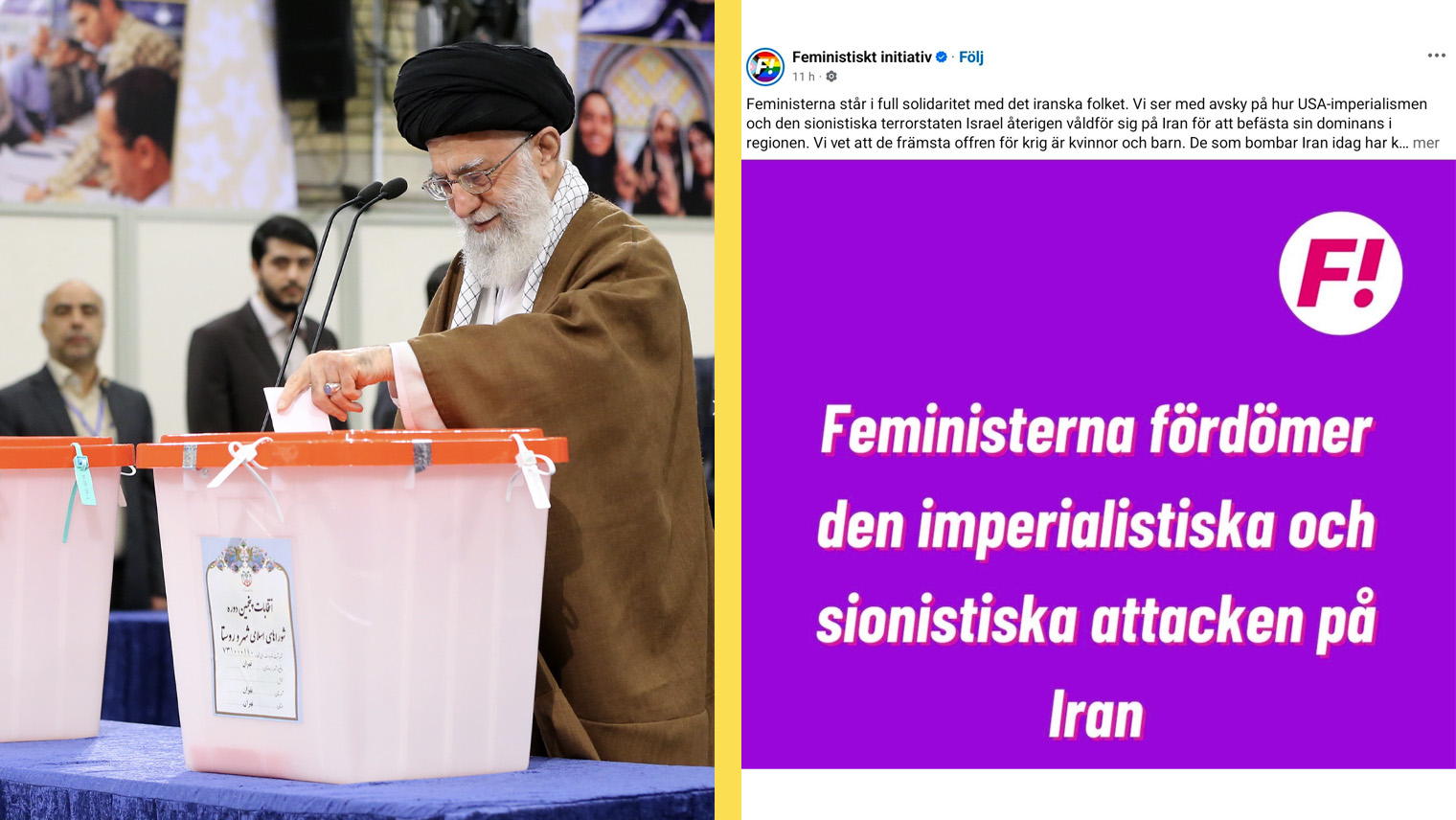
Feminist Initiative recently posted about distancing themselves from the USA’s and Israel’s Zionist attack on Iran’s regime, how would you comment on that?
– Do they even still exist? Denice Westerberg laughs and continues:
– I don’t even know what that means. What’s strange is that Swedish left-wing feminists often want to collaborate with or support Islamists, both in Sweden and in other countries. Women have very limited rights under Islam—and if these Islamists got to decide, where sharia law prevails, then these women would be stoned. It’s hard to make that logic work.
ALSO READ: Feminist Initiative Condemns Attacks on Iran
Migration in Europe and Swedish Politics
According to Denice Westerberg, developments in Europe are also a warning signal for Sweden. She particularly highlights Spain’s decision to grant amnesty to large groups of migrants, which she believes risks consequences far beyond the country’s borders.
ALSO READ: Spanish Politician: “We’re Already Succeeding with Population Replacement”
– It’s terrible. When you look at the pictures, it’s once again large groups of younger men gathering. They’ll be able to move freely throughout Europe.
She argues that the migration policy of one country quickly affects others through free movement, and therefore sees the issue as a common European security and stability concern. At the same time, she criticizes the Social Democrats’ changing rhetoric before the election. According to her, talk of a tougher migration policy is more about election strategy than a real political shift.
– They talk about a strict policy now, but it’s about winning power. They’ll say anything before an election.
The conversation also moves to living conditions and hope for the future in Sweden, where Westerberg sees a clear connection between the economy, regional development, and demographic development. For more people to be able to live and work outside the big cities, she believes better basic conditions are needed.
How does your party want to make it more attractive to live in the countryside, for example in northern Sweden?
– Lower fuel prices are key. We also need lower electricity prices and more nuclear power.
ALSO READ: Green Party on Red-Green Takeover: Then We’ll Raise Fuel Prices
But the economy is only part of the picture. She emphasizes the importance of functioning public services and basic safety throughout the country. She cites SD’s efforts to keep Skellefteå Hospital open as an example.
– There must be schools, preschools, healthcare, and infrastructure. You should be able to live a functional life even outside the big cities.
According to her, the issue is closely connected to Sweden’s low birth rates, which she returns to as one of the big challenges for the future.
How do you get the birth rate going in Sweden?
– That’s a really tough question, because I think it depends on many factors. Partly it’s economic, that life is expensive in Sweden today, but I also think insecurity and optimism about the future have had an impact. Kids have found hand grenades in sandboxes, and there are explosions in residential areas. She continues:
– Then I think the cultural aspect has played a part. Women have been told their whole lives that you shouldn’t have children, you should work, you should be independent, and not get married or depend on anyone else.
I’m most proud of my work as chair of Ungsvenskarna. Seeing people join their first meeting and then grow politically is really fun.
Denice Westerberg (SD)
We discuss Hungary’s policy of encouraging childbirth via tax rates adjusted to how many children a mother has.
– I think it sounds great.
As further possible measures, she mentions cancelling student loans, but also stresses that long-term change requires a societal environment in which family formation is seen as both possible and desirable.
– We need to get better at encouraging families and seeing family life as something positive.
How do you view your own future regarding having children?
– That’s a question I’ll keep in my private life, Westerberg replies and smiles.
The Youth Wing and the Political Journey
Despite her position in parliament, it’s her work with the youth organization that Westerberg herself highlights as her greatest accomplishment.
– I’m most proud of my work as chair of Ungsvenskarna. Seeing people join their first meeting and then grow politically is really fun.
Leading up to the 2026 election, Denice Westerberg sees a clear dividing line in Swedish politics. According to her, it’s not just about individual reforms but about the direction of the country—whether migration will continue at the levels of recent decades, whether the rule of law will be restored, and whether safety can be regained in daily life.
At the same time, she says the changes must be made with a long-term perspective to avoid being easily reversed if there is a shift in power. For her, the election is bigger than an ordinary parliamentary period—it’s about changing systems and structures at a deep level.
ALSO READ: Brå: Sweden the Deadliest Country in Europe Because of Gang Crime
But the drive is also personal. Westerberg belongs to the generation that has grown up at a time of growing insecurity, shootings, and political conflict—and who are now increasingly seeking politics as an answer.
What she once experienced as a growing concern for societal development, she now encounters among many young voters. Ahead of the coming election campaign, she feels a clear sense: more and more people believe Sweden is at a crossroads—and that the 2026 election may decide which path the country will take.
Less than 1% of our readers support us
Hundreds of thousands read Samnytt, but only 1 in 100 contributes. Help us grow and keep delivering in-depth reports and investigations.
Without your support, Samnytt wouldn’t exist.
No advertisers. No state support. Only our readers. Thanks to you, Samnytt has published over 33,000 articles challenging the official narrative in Sweden.
123 083 33 50
Swish any amount
Thank you for reading and supporting Samnytt