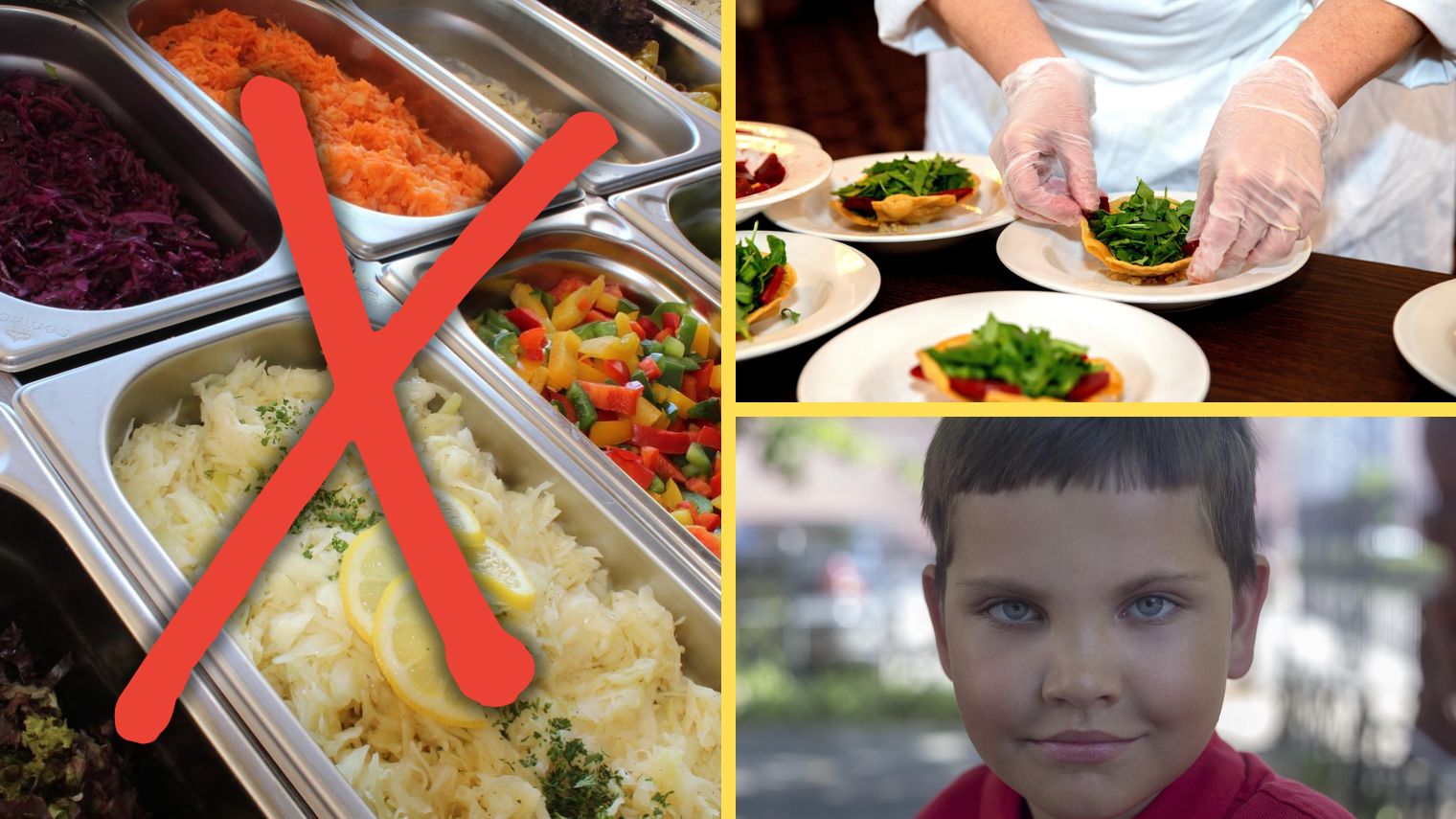
In Jönköping municipality’s primary schools, there are 15,672 students. Of these, 2,861 or 18 percent, receive some form of adapted diet. The increased demands for individual special solutions are putting further strain on the municipality’s already tight budget.
Special diets in the municipality’s primary schools are divided into two areas. For medical reasons, a certificate from a doctor or dietitian is required for allergies or intolerances. Non-medical reasons cover vegetarian, vegan, or pork-free diets.
Then there’s a third variant – adapted diet. This concerns children who can tolerate the standard food, but are considered to need certain adjustments. It is within this group that needs are growing fastest, something food service manager Lina Ekeroth Sandqvist links to a rise in NPF (neuropsychiatric disorders) diagnoses. These students may have what is called selective eating.
SEE ALSO: SD responds on pork in schools: Traditional Swedish food is not discriminatory
“It can be about needing the food presented in a certain way so you know what to expect. The food may always need to be the same so that you feel calm and secure with it,” she told Jönköpings-Posten.
Due to the sharp increase in requests for adapted diets, the municipality decided in 2023 to scrap the previous model of individual adaptations and replace it with a fixed adapted menu intended for all students. Despite this, there are still several students who receive individually tailored meals.
Only necessary adjustments
According to the National Food Agency, individual adjustments to menus may be necessary for students who are very selective eaters. However, in Jönköping, the demands have spiraled and the goal is now to reduce the number of individually adapted diets.
SEE ALSO: Student refused to eat school food – school now forced to pay student 50,000
Lina Ekeroth Sandqvist says there is a great will and ambition to do the very best for students, but at the same time, only necessary adjustments should be made – otherwise, it can go too far and become limiting instead.

Easy to get certificates
One of the schools in the municipality working with all the different diet demands is Rosenlundsskolan. They have a total of 883 students, of whom 186 – about 21 percent – eat special or adapted diets.
Kitchen manager Warren Rodgers thinks it seems too easy to get a certificate.
“You talk to the mentor, who then passes it on to the student health team, and then a note ends up in my mailbox. It’s not up to us to question it, but it should be harder to get such an assessment,” he told the newspaper.
The same every day
Unit manager Samir Jusicic is in charge of the school’s food and says there are students who need further adjustments, for example those who need to eat the same dish every day.
“There are children who, for instance, only eat pancakes every day, or chicken nuggets.”
He also describes situations where some students would rather have different food and manage to get adapted meals, even though they don’t actually need it.
Heated emotions
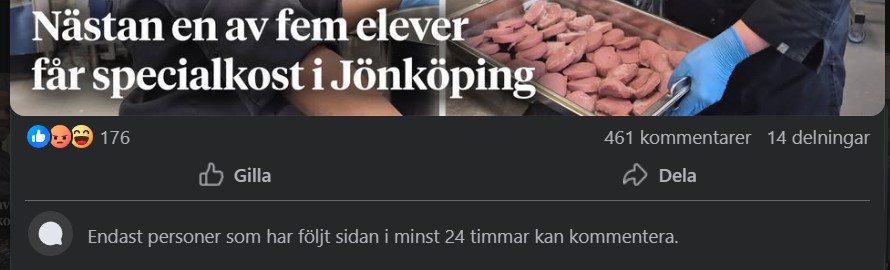
On Jönköpings-Posten’s Facebook page, there was a lively discussion about the articles on school food, prompting the newspaper to restrict who could comment:
Some of the most liked comments:
“For allergies or illnesses… Totally fine.
But for religion or made-up reasons… unacceptable.”
“Let them eat what is served. There is no effort put into those who built this country. It’s a shame to be a politician in Jönköping municipality today.”
“How is it possible that as many as 20% can’t eat the regular school food? What has happened in the 40 years since I went to school – are children suddenly much more allergic, or are we coddling them?”