EDITORIAL • As party leaders now gear up for yet another election campaign, the debate will center on crime, electricity prices, NATO, the climate, healthcare, and the economy. But one of the most shameful consequences of recent decades’ political choices risks once again being overshadowed. It concerns how mass immigration, failed integration, and politicians’ cowardice have transformed large parts of Swedish eldercare into an environment where abuse, neglect, theft, and humiliation have become recurring elements in the daily lives of some of society’s most vulnerable people.
According to the Sweden Democrats’ party leader Jimmie Åkesson, there is now not much left to do regarding migration. He gave this assessment recently during SVT’s party leader interview. Most of it is already in place, Åkesson argued. Now, only integration remains.
Personally, I do not share that view. Of the just over two million foreign-born individuals—most from distant countries and cultures—living in Sweden, probably not even half can be integrated. Maybe into the labor market, perhaps from committing serious crimes—but if you start scratching the surface to reveal their values, things emerge that are much harder to integrate away, things that are fundamentally more important to Sweden’s identity as Swedish.
On top of that, there is nearly an additional million of their descendants, who in many respects have inherited their parents’ values—and often reinforced them and adopted an even more anti-social, criminal, and anti-Swedish way of life. Good luck to Åkesson, I say, as he now repeats roughly what the other seven parties have been saying for decades but have failed catastrophically to achieve.
SEE ALSO: Sweden’s disgrace: The welfare state that abandoned its elderly
But even if one accepts Åkesson’s premise, there is one area where the consequences of migration policy are still very much alive and tangible. An area that furthermore affects hundreds of thousands of people and their relatives. That area is eldercare.
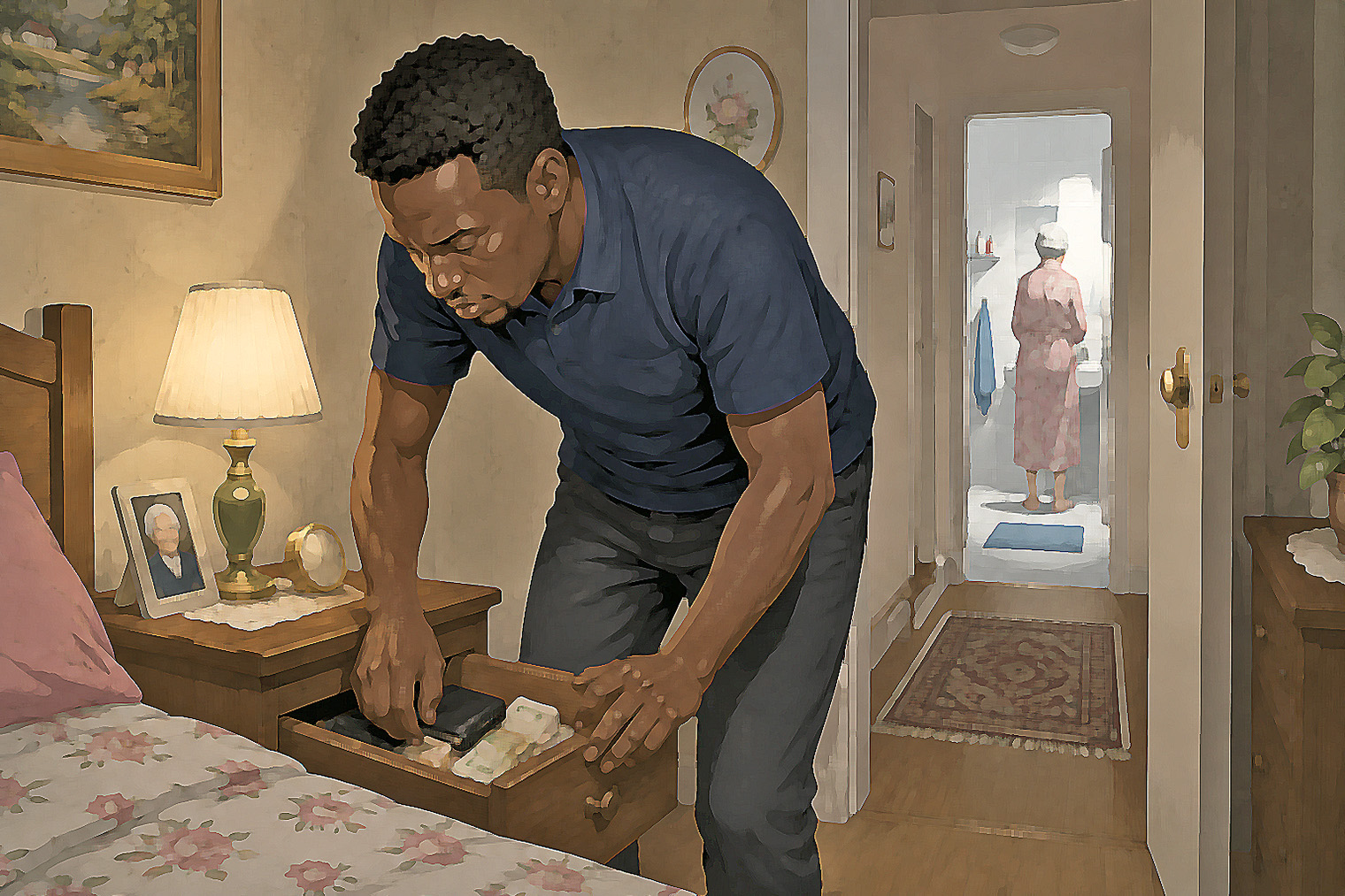
Every week, new cases are reported involving thefts, assaults, sexual abuse, humiliation, and gross neglect in home care and nursing homes. Behind the statistics are people who built the welfare state we live in today and who ought to expect safety, dignity, and respect in their final years. Instead, all too many encounter a system that all too often betrays them in the worst conceivable way.
A Pattern No One Wants to Talk About
When following court cases, preliminary investigations, and government reports, an ethnic, cultural, and value-based pattern emerges that few politicians are willing to discuss openly. This is not about all immigrants. Perhaps not even the majority. But it concerns far too many in the wrong place in Swedish society—even in the wrong country altogether.
An overwhelmingly large share of the most prominent cases of abuse, neglect, and crimes against the elderly are committed by individuals of non-European background, while the victims are almost always ethnic Swedes. In a country purporting to want to solve societal problems, this should be a given topic for discussion. Instead, the subject has long been virtually taboo.
The explanation is obvious. As soon as the issue is brought up, a reflexive fear of being accused of racism arises. The result is that the debate is never taken seriously. Not in party leader debates. Not during election campaigns. Not in public service. But problems that cannot be described can never be solved.
Ultimately, it is a question of values: views on elderly people, women, authorities, and caring professions. It’s about individuals who have not brought the best from their countries of origin, but the worst. And when these individuals also tend to be those with the weakest language skills, the lowest education, and the least suitability for care work, the consequences are devastating.
The Great Hypocrisy of the Election Campaign
Ironically, the same political parties that love to talk about inclusion, diversity, and anti-racism rarely show the same commitment for the elderly who suffer.
For decades, eldercare has functioned as a vent for failed integration policies. When people did not get into the labor market, care work became one of the sectors where competence requirements could be lowered in the name of creating employment.
This is a policy that would never have been accepted in aviation, nuclear power, or other sectors where competence is regarded as obvious and essential. But when it comes to the elderly, the requirements have been repeatedly relaxed—as though they do not matter, as though they do not count—they’ve done their part for society and will soon die anyway, so our politicians seem to cynically reason.
It’s hard to avoid the conclusion that many politicians have been more afraid of appearing exclusive, xenophobic, or racist and of questioning their diversity project than of seeing elderly people subjected to neglect.
SD Sees the Problem – But Does Too Little
At the same time, it would be dishonest to pretend all parties bear the same responsibility. The Sweden Democrats are practically the only parliamentary party in recent years to consistently highlight the problems and criticize the treatment of eldercare as an integration project.
The party also had no influence over the government until the present parliamentary term, and even then, only a limited one as a support party. That deserves acknowledgment. But it doesn’t quite suffice as an excuse.
Still, SD has had a full term to influence developments with ultimatums to Ulf Kristersson if he wanted to keep governing. Despite big words about how eldercare should not be an integration project, results have been limited.
Samnytt still reports, week after week, on new hair-raising cases of crime and neglect in eldercare. And these constitute only the tip of an iceberg of abuses and appallingly poor quality in the services.
The problem with Swedish eldercare today is not a lack of statements in press releases, opinion pieces, or other communications. The problem is a lack of implemented reforms.
Words do not help the demented woman who cannot communicate with her carers and in far too many instances suffers abuse. They do not help the older man who is robbed by his home care staff. They do not help the relatives who, year after year, see the same abuses repeated.
Language Requirements Hardly Worth the Name
A clear example is the new language requirements recently introduced. At first glance, the reform may look like a big step forward. But upon closer inspection, it is far less comprehensive than many think.
SEE ALSO: Subpar Swedish proficiency in eldercare in three out of four municipalities
Those hired still do not need to speak Swedish at the level the job requires. Instead, the employer is given the responsibility to gradually develop the employee’s language abilities. How long this can take remains unclear. This means that the fundamental problem will persist for the foreseeable future, perhaps forever.
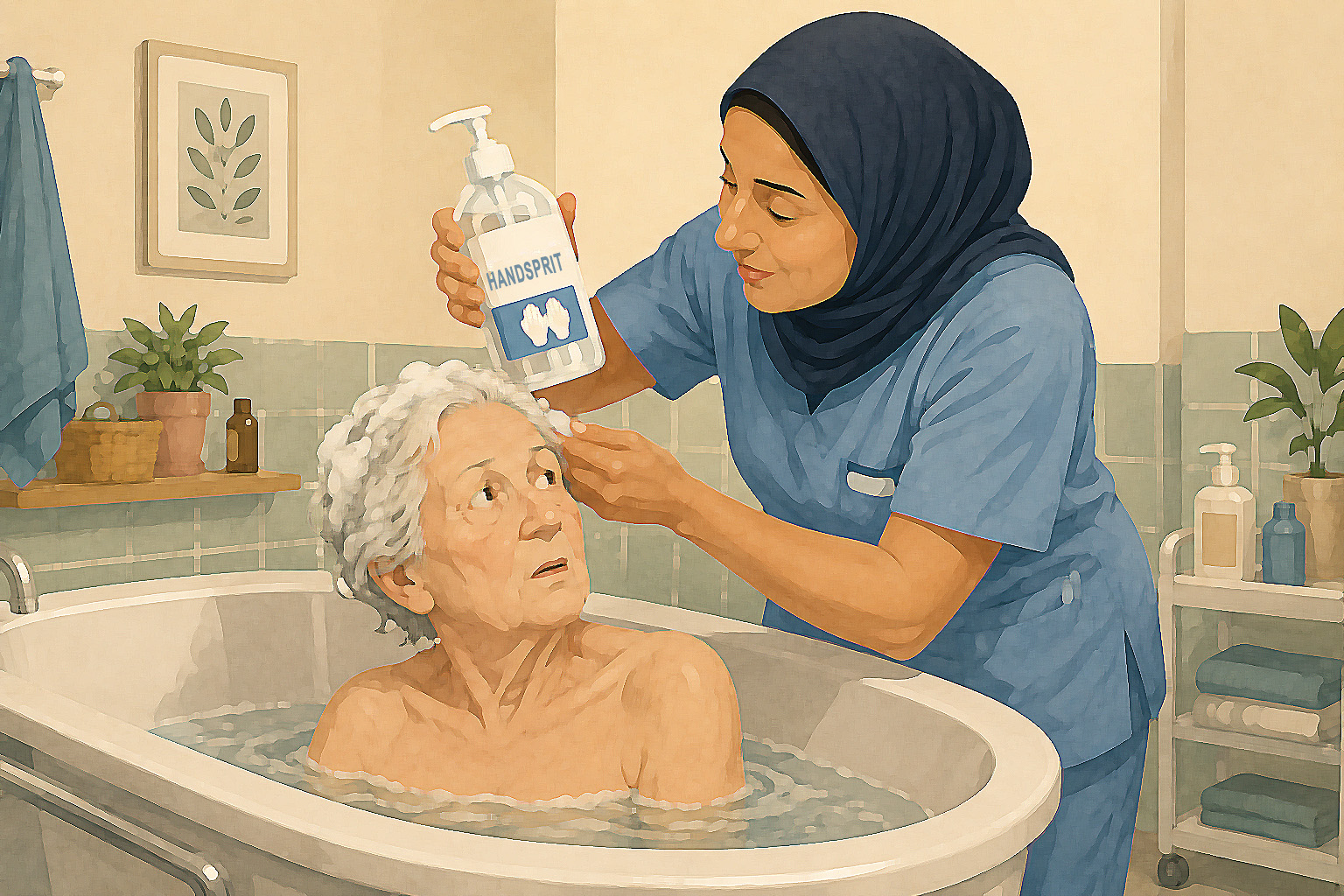
Care work requires not just good intentions. It requires the ability to understand instructions, document correctly, detect medical changes, and communicate with people who often suffer from dementia or other cognitive diseases.
SEE ALSO: Tighter language requirements welcomed in eldercare: “They confuse shampoo with hand sanitizer”
If staff confuse shampoo with hand sanitizer, breakfast cereal with cat food, juice with vinegar essence, or fail to understand what a care recipient is trying to say, it’s not an integration problem—it’s a patient safety problem.
The Competence Crisis Is the Real Collapse
But the language issue is really only the tip of the iceberg. The real crisis is one of competence. For a long time, eldercare has been allowed to become a low-status sector with low wages, high staff turnover, and insufficient demands.
When qualified labor leaves, the gap is filled by people who often lack both education and experience. People who are not there out of any calling to care and help, but simply because otherwise they would lose their social benefits.
SEE ALSO: 79-year-old Eva was served cat food by home care: “Language difficulties”
It should be the opposite. If a society truly values its elderly, eldercare should be one of the most attractive welfare sector workplaces. Salaries should be substantially higher. Education requirements should be much tougher. Selection processes should be considerably stricter. Background checks should be mandatory and recurring.
In practice, the competition for these positions should be so tough that employers can choose among the most qualified candidates, not among those who just happen to be available, where vacancies exceed what can be filled.
The Money Exists – The Question Is What We Prioritize
The objection always comes immediately: It’s expensive. Yes, it is. But politics is ultimately about priorities.
The state annually spends tens of billions of kronor on aid. More billions go to migration, integration, and various international commitments. Sweden has also taken on significant support for Ukraine.
SEE ALSO: Dagerlind: When foreign aid shrinks on paper but grows in reality
Each budget item can be debated individually, but the fundamental question remains: How can a country that considers itself able to afford all this at the same time claim that there aren’t enough resources to create the world’s best eldercare?
And to include the Sweden Democrats in the criticism—how can a party that constantly repeats that Sweden and the Swedes must come first go along with this? How is that justified to its voters?
SEE ALSO: Billions given away in aid and war – but pensioners’ meals get cut
On competence-boosting efforts in eldercare, the state has for years spent amounts that appear extremely modest compared to many other budget items, especially those going to countries other than Sweden, to people in entirely different parts of the world.
That reveals something about priorities. And priorities always reveal what those in power truly consider most important.
Why Aren’t These Crimes Treated as Hate Crimes?
There’s another dimension that is rarely discussed. When young people systematically target crimes against older Swedes, the issue of hate crime is never raised. This despite laws clearly stating that ethnic motives should be considered an aggravating circumstance.
Time and again, we see perpetrators of non-Western background expressing collective contempt for their victims, using derogatory terms based on anti-Swedish ideas, and actively choosing elderly Swedes as targets. Yet the issue of hate crime motives is almost never considered.
SEE ALSO: Why are crimes against the elderly never considered hate crimes?
If the rule of law is to be credible, the same principles must apply, regardless of who the victim or the perpetrator is. Hate crime cannot be a term used only when it fits the political narrative.
A Society’s Moral Balance Sheet
In next year’s election, parties will compete to appear the most responsible. But few issues say more about a society’s true morals than how it treats its elderly.
The generation that built Sweden should not have to end their lives in insecurity, loneliness, or fear. They should not have to worry about being robbed, humiliated, or misunderstood by the staff assigned to help them. And their relatives should not have to wonder if the next phone call will be about yet another abuse that could have been prevented.
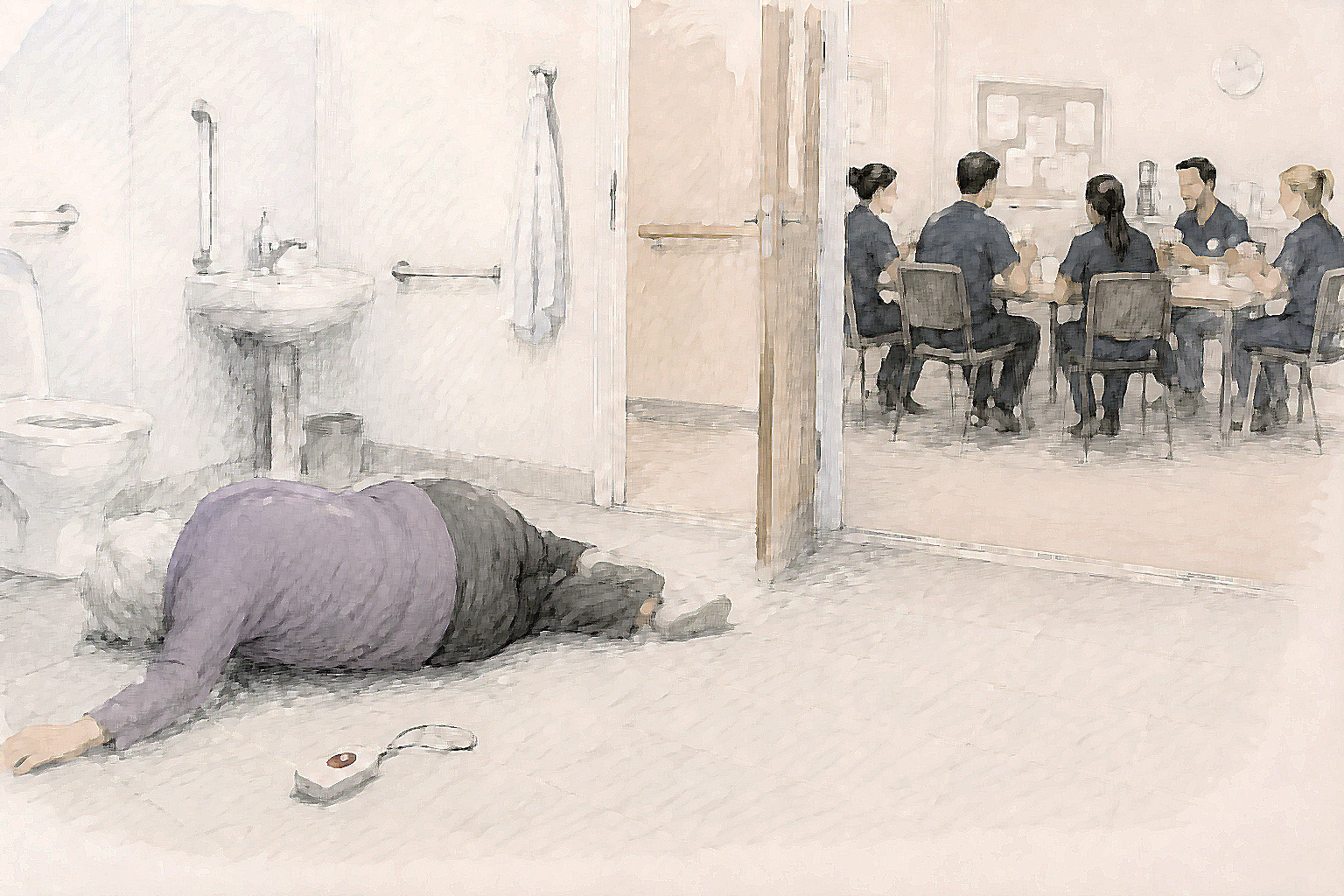
Eldercare should not be an integration measure. It should not be a labor market program. It should not be a municipal budget regulator. It should express national gratitude.
Now that the election campaign is gaining speed, every party leader should be put on the spot about this. Why aren’t you protecting the safety and dignity of the elderly? Why do you keep pretending that the problems don’t exist, despite the fact that not a single week passes without reports of abuse, neglect, theft, and assaults?
SEE ALSO: Porridge without milk for breakfast as the municipality cuts costs for elderly dementia patients
The immigrants who commit all of this obviously bear the primary responsibility in each individual case. But the larger and overarching responsibility lies with the politicians—nationally and in municipalities—and their senior officials. Those who have transformed eldercare, which only 50 years ago was the equivalent of an idyll, into a veritable ante-room to hell.
Personally, I know several people—Swedes—who worked in eldercare in the 1970s and later went on to become doctors, researchers, and psychiatric nurses. People who have testified that there used to be both time and resources to care for the elderly. Sweden is said to be a wealthy country, wealthier today than back then. It doesn’t show in these services.
A civilized society is ultimately not measured by how it treats the strong, but by how it treats those who can no longer defend themselves. Our politicians love to talk about “vulnerable groups” and “inclusion.” But the perhaps most vulnerable group of all is the one excluded.