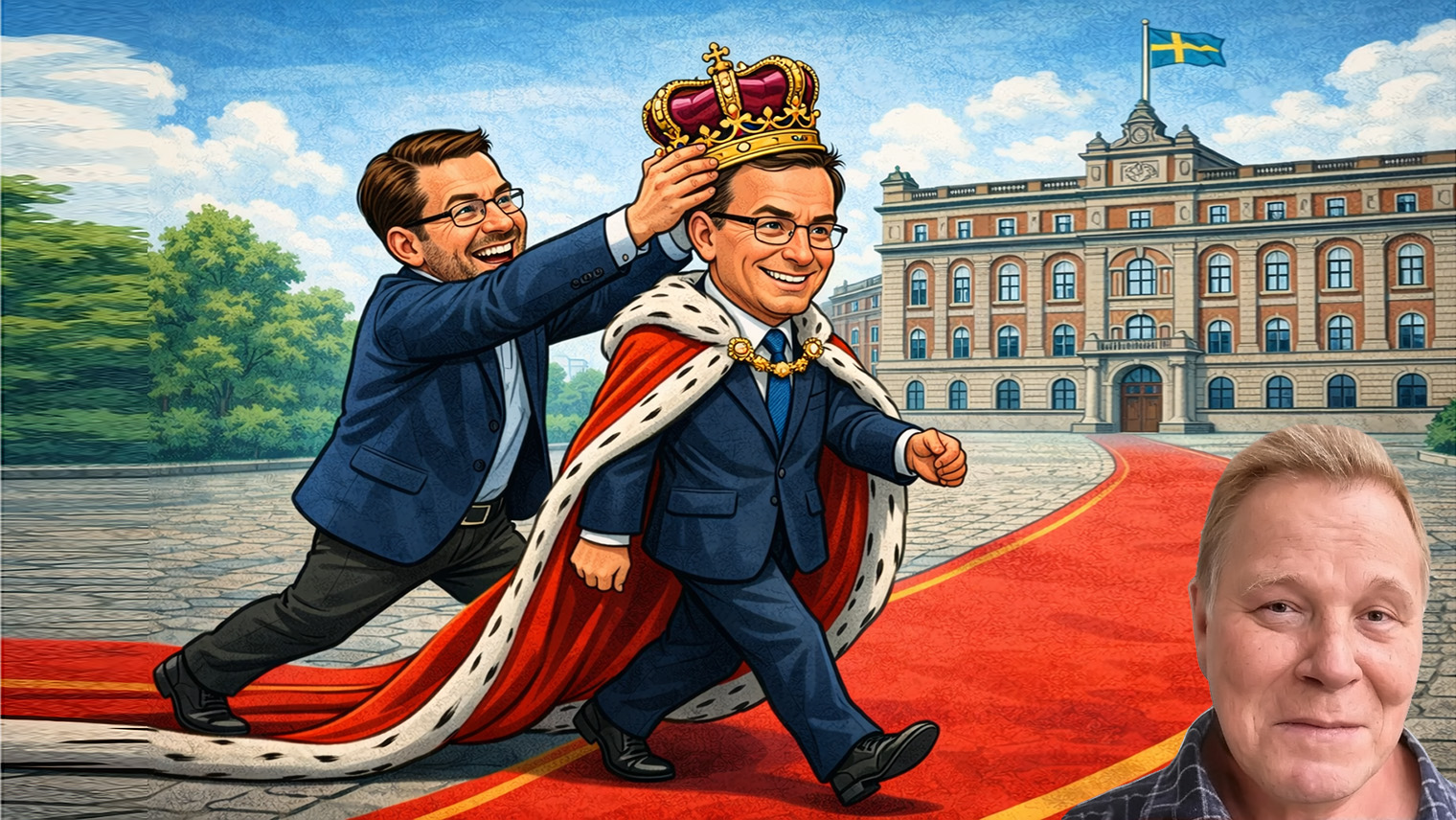
EDITORIAL • The Moderates’ announcement to open up for the Sweden Democrats as a full-fledged government party marks the end of a political era. After years of isolation, being the subject of unholy exclusionary agreements and tactical arrangements with the same purpose in violation of democratic practice, the Sweden Democrats are now truly on their way into the warmth of Rosenbad. But the road there has been long – and the price high, both for the party and for Swedish parliamentarism.
When Ulf Kristersson now announces that the Moderates want to form a government with all four Tidö parties, including the Sweden Democrats, it is a strategic choice but also a system change – or a system reset, if you will. What just a few years ago was described as unthinkable – to follow parliamentary democratic practice even with regards to the Sweden Democrats – is now not only thinkable but the main course for the election in September.
The Liberals have already dropped their principled opposition, albeit after significant internal turmoil. The party’s shift says a lot about the political pressure on the issue. By contrast, the Christian Democrats have long taken a more pragmatic stance – they have not opposed the Sweden Democrats in government as clearly as the Liberals once did, and in practice have opened the door for deeper cooperation, even if their wording has been more cautious than the Moderates’ now explicit announcement.
READ ALSO: CONFIRMED: SD to Sit in Government with Election Victory
This means that SD now has the blessing of all its Tidö partners as a government party. Only the small technicality of actually winning the election remains. The journey there, based on recent opinion polls, could be described as an uphill climb.
A Long History of Broken Practice
To understand the weight of Wednesday’s announcement, you have to go back to 2010, when the Sweden Democrats first entered parliament. Since then, Swedish politics has been characterized by various exceptions to keep the party out of influence – contortions that have trumped policy, parliamentary custom, and ordinary political integrity.
The December Agreement and later the January Agreement were both expressions of this ambition – to maintain a political order where the Sweden Democrats, despite considerable voter support, would have no influence. The parliamentary system, which normally is based on majority relationships, was in effect suspended.
Ironically, this culminated after the 2022 election. The Sweden Democrats then became the largest party within the Tidö constellation and the only one to increase its support, while the others regressed. Despite this, SD had to settle for the role of a supporting party.
Now the party is being offered participation in government – but with clear limitations. The office of prime minister remains reserved for the Moderates, and the mandate to form a government again falls to Ulf Kristersson, no matter if the Moderates keep receding and the Sweden Democrats continue to grow.
Hats, Positions, and Policy
“SD will have significant influence on policy and hold important ministerial posts,” said Kristersson.
“The central thing for SD is policy, not primarily hats and positions,” responded Åkesson.
He has taken this more pragmatic than principled stance before and at first glance it sounds reasonable. But to have their policy implemented may well require both hats and positions. The question is how far the influence now vaguely promised will stretch in practice.
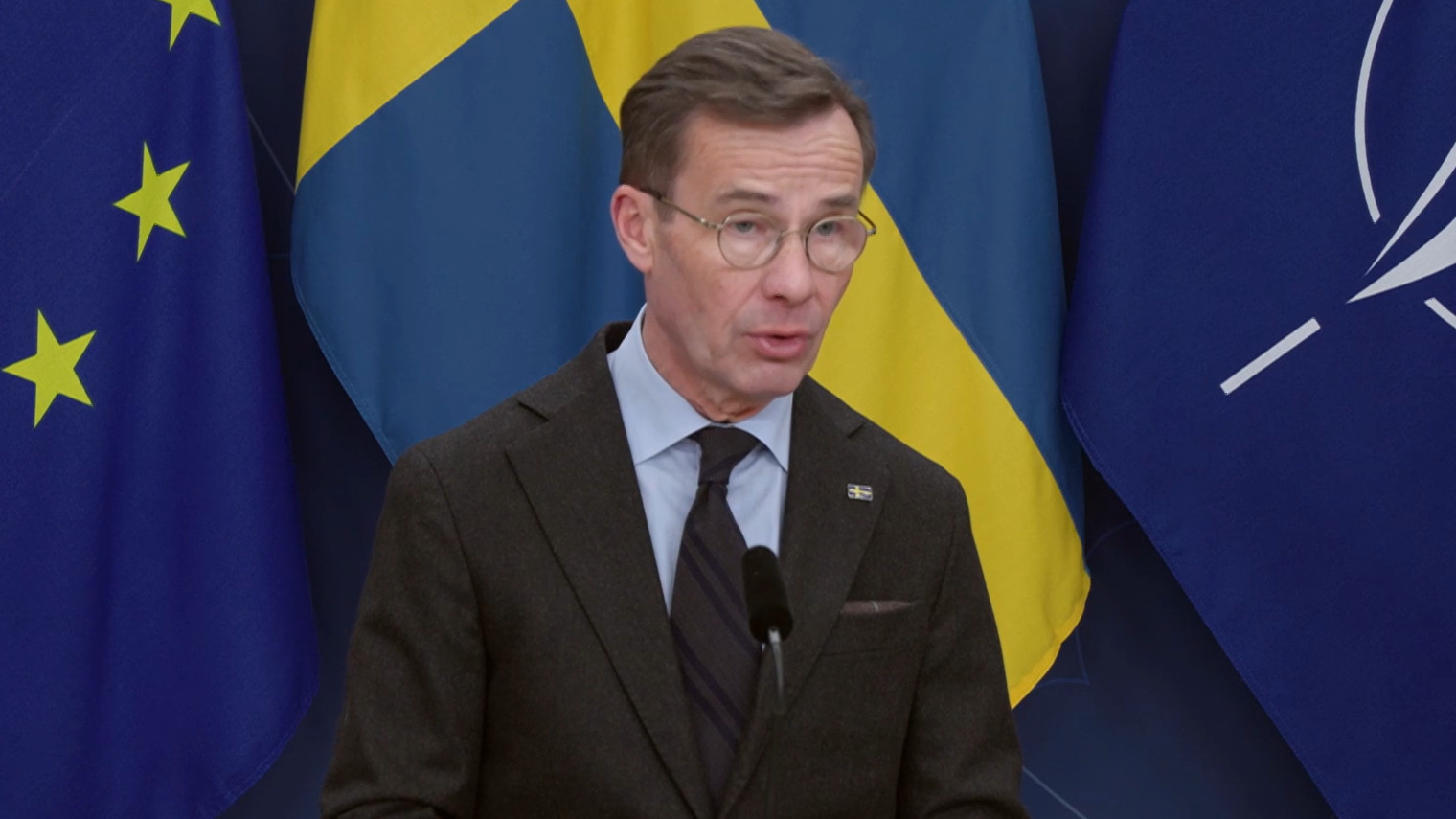
Despite talk of a “paradigm shift,” not everyone is satisfied with the results so far. Migration has changed in composition, but the overall level of influx remains high – nearly 90,000 residence permits issued last year. That is on par with 2022 when the government was taken over from the red-greens, excluding Ukrainian refugees under the mass displacement directive. Decisions that have been made, but not yet fully implemented, might bring the numbers down in the years to come.
READ ALSO: Large Popular Support for SD in a Future Government
When it comes to granted citizenships, the situation is mixed. The Tidö parties have tightened the rules somewhat, but from an extremely lenient level. For several years running during the mandate period, Sweden has given out by far the most citizenships per capita in the entire EU. Much is being done but impatience for more is also palpable.
Expulsions of serious criminals are not being carried out to the extent many had expected. Every week, Samnytt can report on serious criminals allowed to remain in Sweden, despite not being Swedish citizens. Gang crime remains deeply rooted, and new crime types associated with immigration – such as elderly scams and humiliation robberies against children – continue to rise. Without SD putting pressure on the government, the situation might have been even worse.
A great deal has, thanks to SD, happened that almost certainly would not have happened under a red-green or more conventional right-wing government without social conservative influence. But for a party like the Sweden Democrats, who have made these issues their hard core, the yield still seems – at least for those with high expectations – rather meager. Voters have not started punishing the party, but many still feel Sweden is in dire need of faster action.
Is SD Selling Itself Too Cheaply?
It is against this background that some ask whether the Sweden Democrats should now demand more. To be accepted as a full government party is certainly substantial, but it arguably should have happened as early as 2022, and by Åkesson’s own words, it means more hats and positions than policy, more prestige than substance.
To already now accept Ulf Kristersson as prime minister candidate – regardless of the election results – is a significant strategic concession. If the party also settles for a vague “naturally substantial influence” over migration and integration instead of clearly defined decisive power, it risks once again finding itself in a role where responsibility and expectations are not matched by real power.
Some have argued it’s good for Åkesson to renounce the prime minister’s post in good time before the election, partly because it’s unlikely parliament would accept him, and partly because it deprives the red-green opposition of the weapon of scaring voters with a SD-led government – an idea many Tidö voters are still probably not ready for. That is probably not an entirely incorrect analysis, and one that Åkesson himself certainly has made.
A new Tidö agreement should, however, as compensation be significantly more concrete. On migration, integration, and immigration-related crime – SD’s core areas – the party should have a clear carte blanche, not sweeping formulations open to interpretation.

Otherwise, friction is inevitable if decisions in these areas clash with legal principles, international conventions, the equality of all people, etc. It must be made clear that the Sweden Democrats dictate, and the others accept.
Even on certain welfare issues, the Sweden Democrats should negotiate veto rights so that, for example, they can say no to foreign aid – some 50 billion SEK annually during the mandate period – if there are holes in domestic welfare to be patched. “Sweden first” Åkesson has said. The next mandate period should be the test.
The Other Parties Made SD Possible and Necessary
Many are appalled by the Sweden Democrats’ parliamentary triumph at the ballot box, and now also their path into government. Those who are find it harder to admit why this development became possible and necessary.
For a long time, Swedish politics was marked by a broad ultra-liberal consensus on migration, where critical voices were marginalized. Many voters felt their concerns were not taken seriously – or were dismissed with derogatory labels rather than met with arguments.
Into that vacuum, the Sweden Democrats grew. The party’s journey from political margin to potential government partner under Åkesson’s leadership is impressive. But it is also partly a self-playing piano, the result of a political system that for a long time could not correct its own course and fell into serious mismanagement.
The Next Step – The Next Trial
SD now being elevated to a full government party marks the definitive end to an era where the party could blame others. Expectations to deliver will be higher, and accountability can no longer be avoided.
In opposition and as a supporting party, betrayal debates have not been absent – but opinion polls have still steadily climbed. With ministerial posts in Rosenbad comes a new trial before the voters. When a party shifts from being a system critic to becoming part of the system, the excuses end. All that’s left are the results.