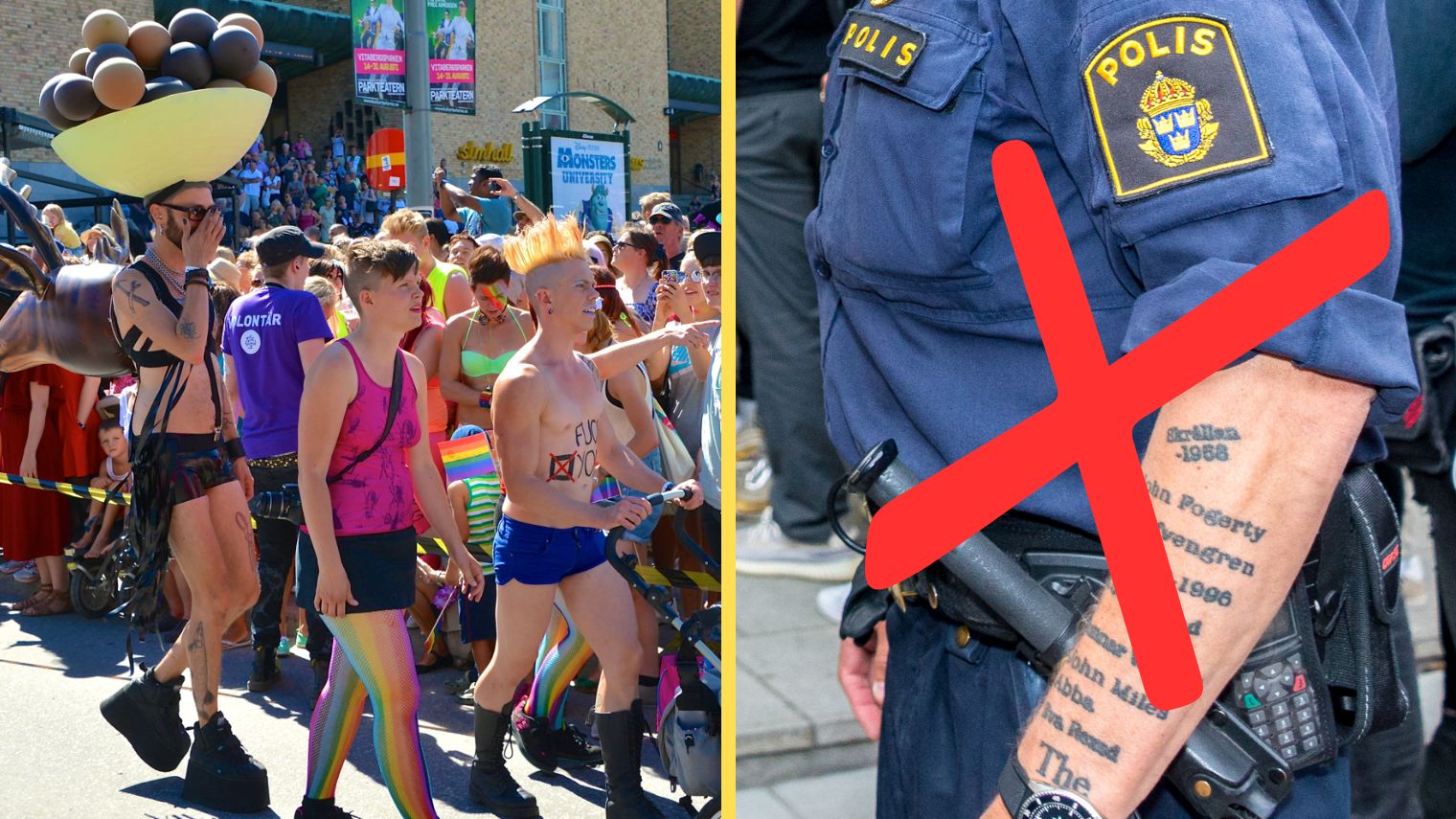
After a proposal, it is now clear that police officers participating in Pride are not allowed to wear uniforms. The reason for reviewing the regulations is that National Police Commissioner Petra Lundh has been critical of the uniform—a symbol of the authority’s neutrality—being used in inappropriate contexts such as political campaigns.
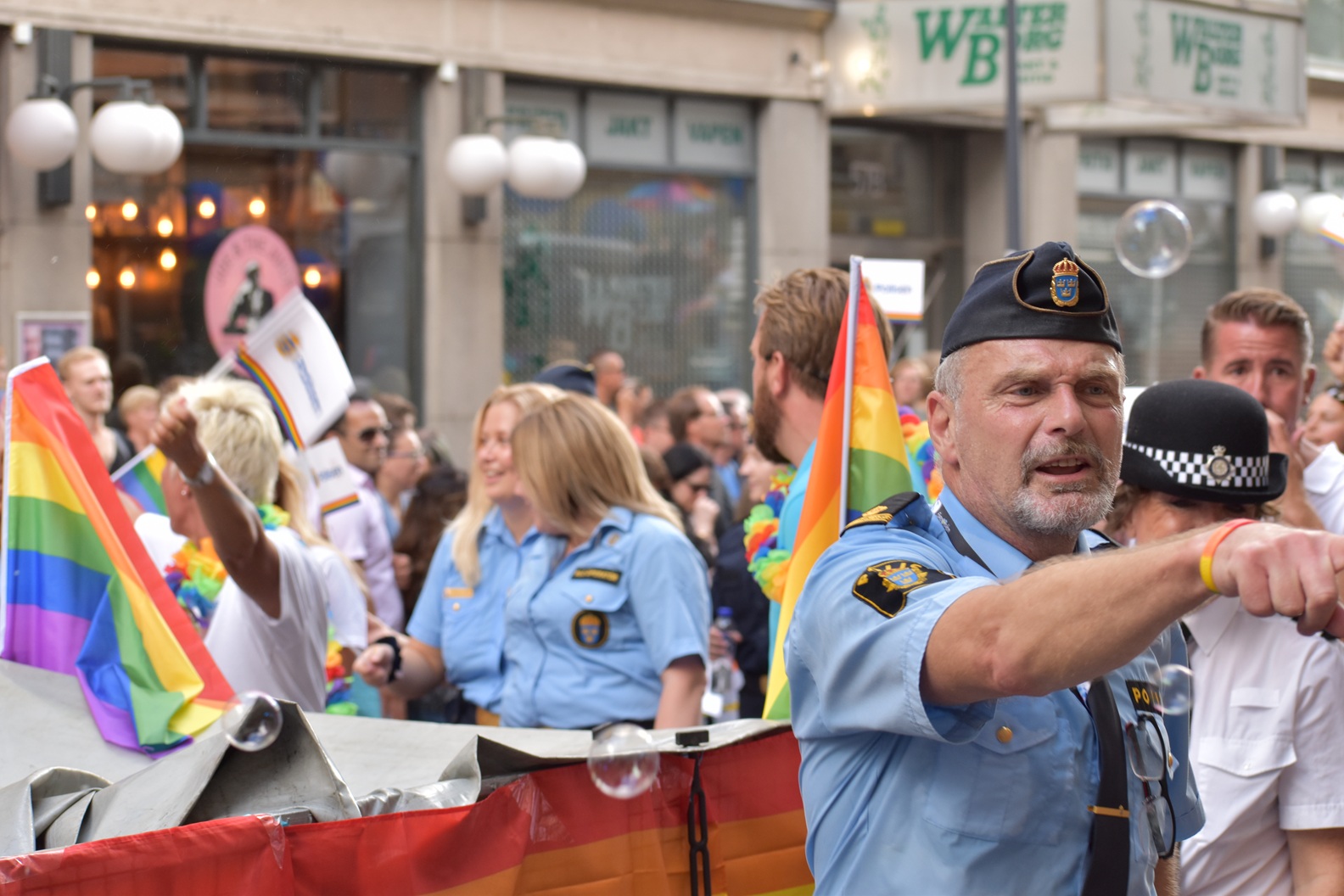
The first time uniformed police walked in Stockholm Pride was in 2002, following a decision by then-Deputy County Police Commissioner Carin Götblad. Since then, Pride has become an increasingly politicized, exclusionary, and divisive movement that opposes large segments of the population and their political views. The police’s participation has therefore become controversial.
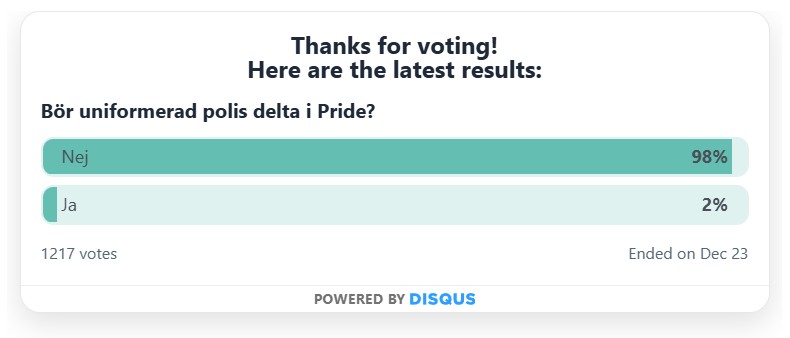
When Samnytt asked its readers in December what they thought, the result was clear:
The decision was made on March 31 and means that officers may not wear uniforms on election posters or in private posts on social media.
READ ALSO: Police Authority: No uniformed police at Pride
“The purpose is to create a clearer and more consistent set of rules for how and when the uniform should be used. The uniform is strongly associated with the police’s mission and should be used in a way that protects the authority’s neutrality, objectivity, and impartiality. It should also be clear that the uniform is used within the scope of official duties,” explains Deputy National Police Commissioner Stefan Hector in an internal message obtained by QX.
According to QX, the relationship between LGBTQ+ people and the police has long been tense, with perceptions of the authority as fundamentally homo- and transphobic.
Strong Emotions
In December, Gay Police Association founder Göran Stanton told QX that police participation in Pride has been questioned ever since 2002 and that he has “a feeling that the Sweden Democrats (SD) have gained more influence now” and that “our issues no longer carry the same weight.”
Felix König, Secretary General of RFSL, is also upset.
– RFSL knows that anti-LGBTQI sentiment is rising among young people and violent right-wing extremist environments are growing, while LGBTQI people’s trust in the police is lacking, he tells QX.
READ ALSO: Police Federation fights for uniforms at Pride
– The police must show that they take this seriously. To ban uniforms at Pride at this time without saying what they intend to do instead, sends completely the wrong signals, and risks undermining trust in the police among a vulnerable group—the opposite effect of what the other parts of the new uniform rules aim for. Participating in Pride is about equal value for all, freedom of expression and assembly, i.e., rights protected by the constitution. That shouldn’t be controversial.
At the same time, he thinks it is reasonable for the police to introduce rules that increase public confidence by limiting the use of uniforms in, for example, single party campaigns or in paid collaborations.
According to König, there are now expectations for concrete measures, such as prioritizing increased knowledge of LGBTQI concerns, strengthening efforts against hate crimes, and cooperating with RFSL associations targeted by hate crimes.
T-shirt
During negotiations, the Police Union demanded that officers should be able to participate in Pride in uniform during working hours, arguing that it is about standing up for human rights. However, the Police Authority maintains its position that participation in uniform at “opinion-based manifestations” should be prohibited. Citing security risks, they believe that paid working hours should be devoted to combating crime.
Police officers who wish to participate in Pride during their free time will instead be offered a special t-shirt indicating that the individual works for the police. The shirt is to have a “generic” design that fits into the context.
Unless something unforeseen happens, only the formal decision from Police Commissioner Petra Lundh remains before the new rules take effect.
Another question concerned religious head coverings in service, and it was proposed that those wishing to wear them should also cover the cost themselves. After criticism from the union Seko, Petra Lundh has reversed this, and headscarves, yarmulkes, and turbans will continue to be accessories paid for by the employer.
READ ALSO: Police face criticism for Pride post