
COLUMN • The Social Democrats used to be called the party that embodied the state. After the 2026 election, the party is down to 28.02 percent and 99 mandates – but Magdalena Andersson can nevertheless emerge as the victor when the government question is to be settled. Around her is a constellation where the Left Party has been revealed for Jew-hatred, terror supporters, and now – likely – election fraud on their candidate lists. The Centre Party is trying to reconcile its hatred of the Sweden Democrats (SD) with a red-green majority, and the Green Party wants to drag Sweden down into energy poverty and further migrant chaos. The question is not only how Andersson will bring all this together. Just as interesting is why the Tidö parties put themselves in this position in the first place – and whether Sweden can endure four years of clownish antics in Rosenbad.
The old Social Democrats would probably not recognize themselves. I know that my grandfather, the Social Democratic municipal politician Elof Andersson, born in 1898, would be rolling in his grave if he knew what had become of his party.
The party that for most of the 20th century could almost be equated with the Swedish state received 28.02 percent in this year’s election. That yielded 99 mandates and is the Social Democrats’ worst parliamentary election result since universal suffrage was introduced. Yet, Magdalena Andersson is very much a candidate to return to Rosenbad.
This says something about Swedish politics in 2026. For Andersson’s prospective governing coalition is a creation that would have been hard to imagine just a few electoral cycles ago.
The old working-class party that once embodied the state must now collaborate with the Left Party, the Greens, and a Centre Party whose clearest political identity these days is what it absolutely does NOT want to do—cooperate with the Sweden Democrats, or the Left Party, for that matter.
The result was 176 mandates for S, V, C, and MP together. The Tidö parties ended at 173. So it’s this motley crew that Magdalena Andersson must try to turn into something resembling a functioning governing bloc. It is as impossible as it sounds – and Sweden deserves better.
READ ALSO: The Election Fraud Scandal in Dalarna Grows: New Suspected Election Offense Investigated
From Communism to Islamism
Perhaps most remarkable is the development within the Left Party. The old communist party has, for decades, tried to wash off its historical baggage. But during this election campaign, another problem has become increasingly difficult to explain away as mere unfortunate incidents.
This is where the political development becomes almost surreal. The old far left and parts of the Islamist-tinged Palestine movement seem to have found each other in a joint project, where Israel and so-called Zionism serve as unifying enemy images.
Jonas Andersson
During the election campaign, the Left Party was forced to strike candidates after revelations about, among other things, antisemitic conspiracy theories, praise of Hamas, and other extremist statements.
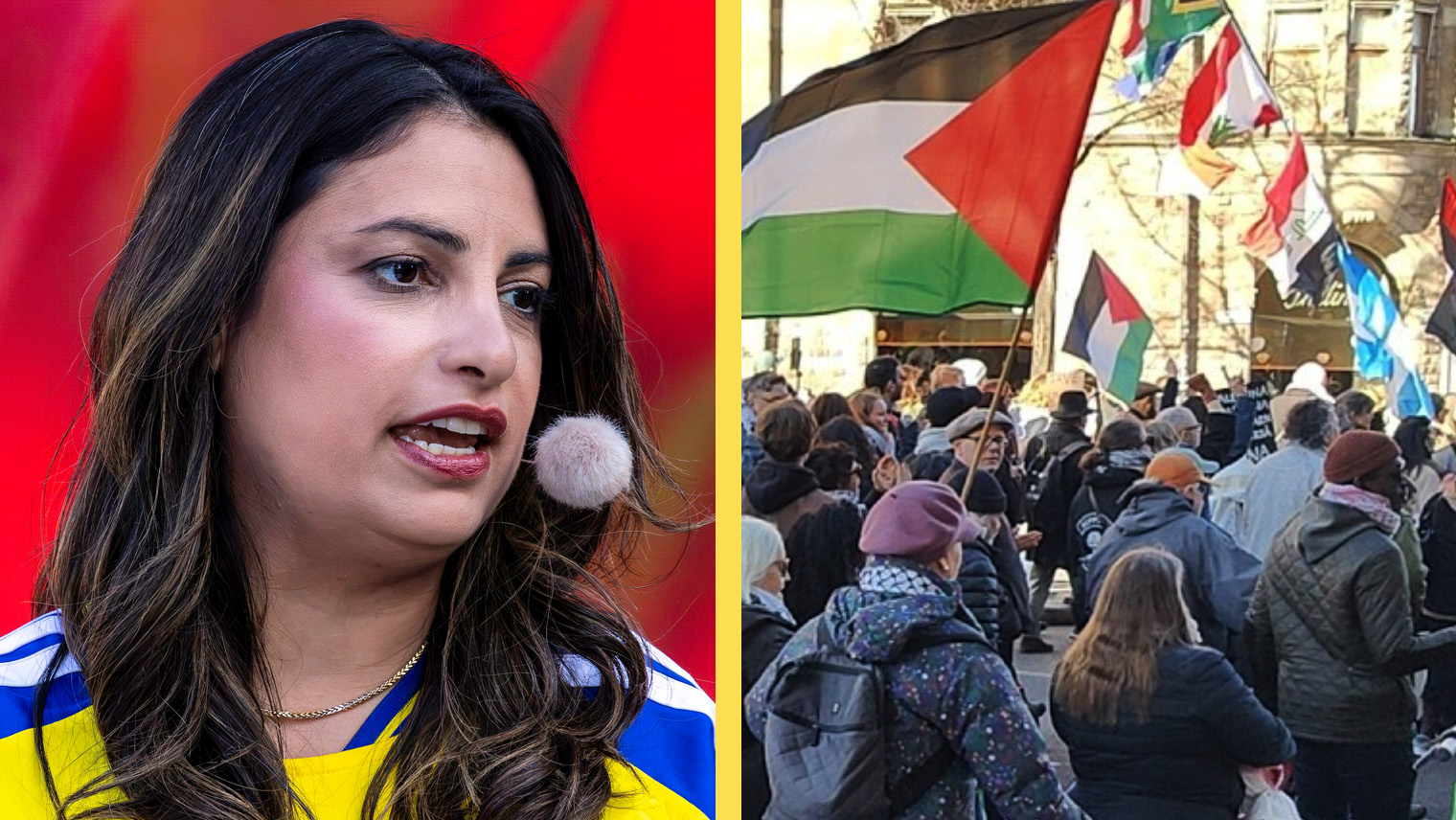
The party itself has distanced itself from antisemitism and has removed candidates – but the scale of the issue makes it politically relevant far beyond the individual cases.
The Swedish Committee Against Antisemitism has, among other things, highlighted beliefs about Jewish control of the media and economy, classic blood libels, and claims that Hitler was right about the Jews.
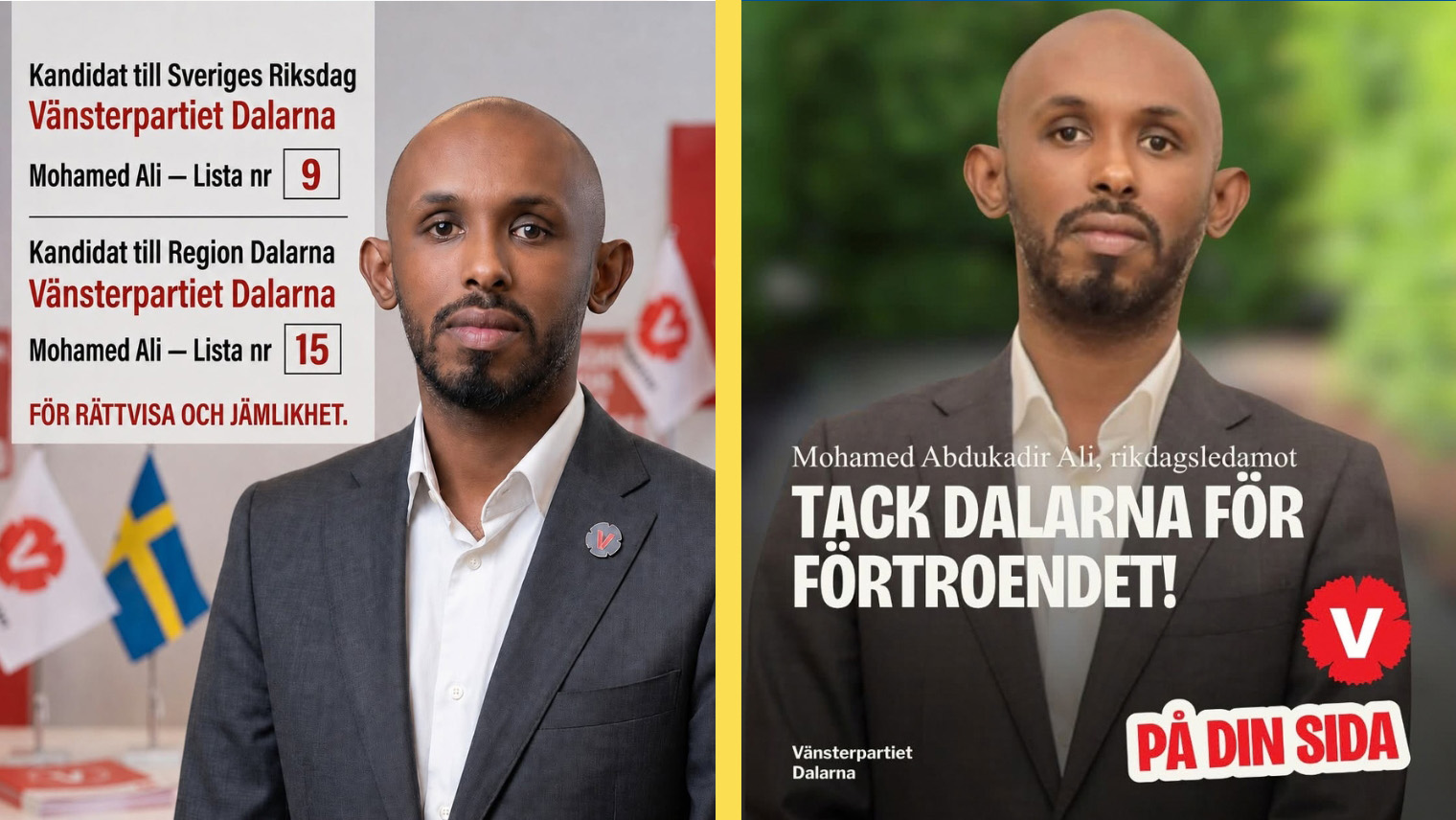
READ ALSO: Elected Left Party Somali Defrauded Municipality of Half a Million and Convicted of Four Crimes
This is where the political development becomes almost surreal. The old far left and parts of the Islamist-influenced Palestinian movement seem to have found each other in a common project where Israel and so-called Zionism serve as unifying enemy images.
The sheer number of revelations makes it increasingly difficult to dismiss the problem as just a few oddballs slipping through candidate vetting.
Even the Social Democrats’ party secretary Tobias Baudin observed before the election that the revelations led the Left Party yet another step away from a place in a Social Democratic-led government.
READ ALSO: In the Middle of the Suspected Fraud Scandal: Political Scientist Appeals Election
The election is now over. And the Left Party’s mandates are needed. Then the question becomes: what were such promises really worth?
The Centre’s Catch-22
Then there’s the Centre Party, the problem child of the Swedish center-right. With roots in the Nazi-friendly currents of the 1930s – and today once again steering toward the soil of antisemitism. In 1933, a new party program was adopted stipulating, among other things:
“It is a national task to preserve the Swedish race from being mixed with inferior foreign racial elements and to counteract immigration to Sweden of undesirable foreigners. The preservation and strengthening of the people’s material is a matter of life and death for our national development.”
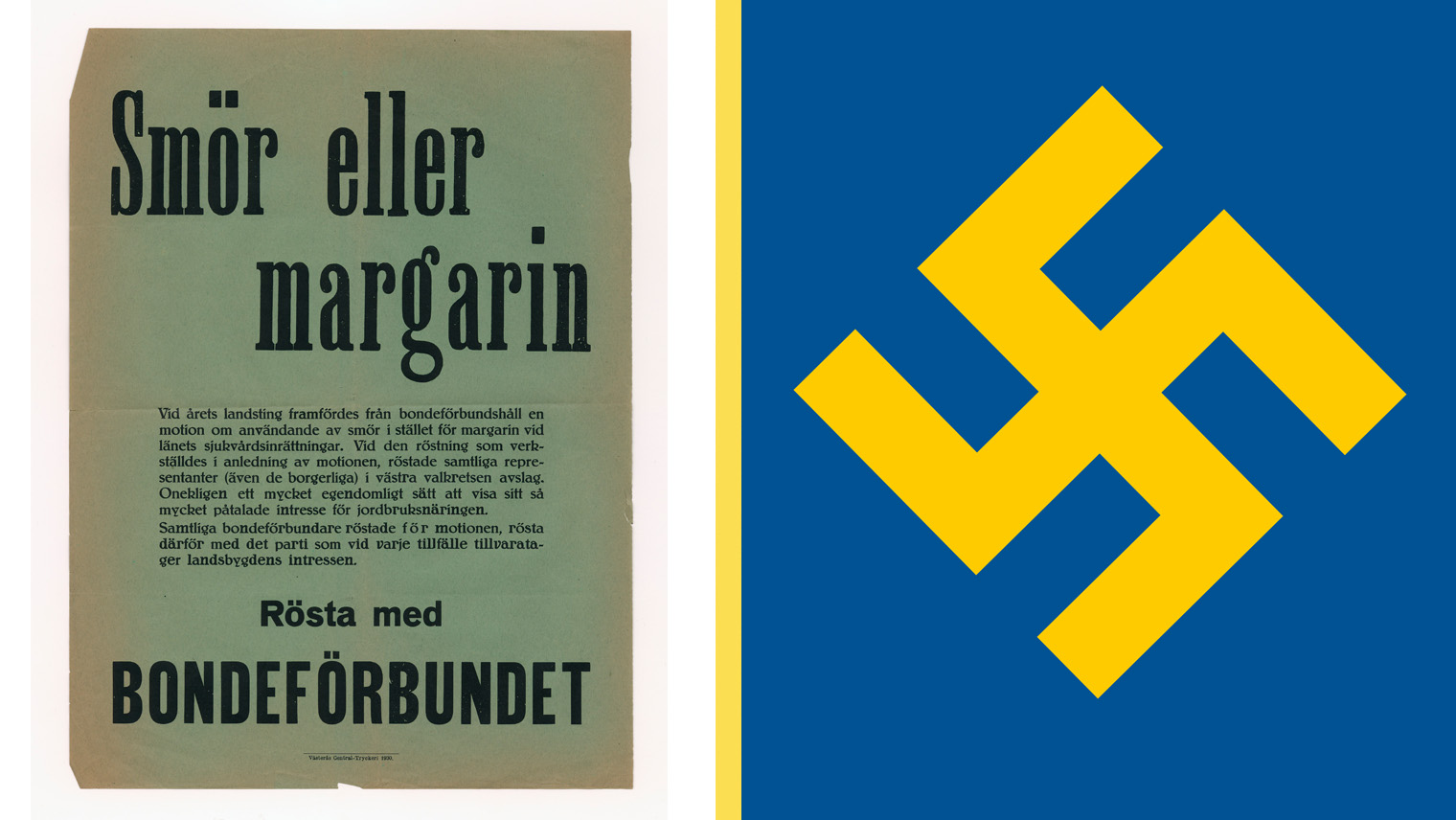
For many years, the party has made opposition to the Sweden Democrats – the most pro-Israel party in the parliament – a central part of its political identity. The problem is that seat math doesn’t care much about political identity.
READ ALSO: The Centre Party’s Hostile Statement: The Tidö Parties Are Nazis
For Magdalena Andersson to govern, she needs a parliamentary basis that includes both the Centre Party and the Left Party. At the same time, the Centre Party has had major problems with parts of the Left Party’s policies – and the Left is unlikely to accept economic policies dictated by the Centre’s highly paid urban women.
So Magdalena Andersson’s task is to unite a market-liberal Centre Party with a socialist Left Party, while also keeping the Greens happy and the Social Democrats trying to restore their image as the stable and responsible party of government.
Good luck with that, I say, from one Andersson to another – it’s not going to work.
The New Voter Base
But beneath all this lies a much bigger question to which Swedish politics will sooner or later have to relate – demography. I have written about this topic many times.
This is also where the discussion about clan voting comes in. And anyone who claims the term itself is “racist” neither understands their times nor how the world works in most places. // It would be odd at the same time to assume that Sweden is the only country in the world where family, clan, religion, ethnicity, and social networks have no political significance.
Jonas Andersson
Election results from several immigrant-dense areas show enormous differences compared to the rest of the country. That doesn’t mean you can look at a polling district and know exactly how any particular immigrant, Muslim, or newly minted Swede voted.
But when the same pattern recurs geographically and over time, it becomes politically unavoidable to discuss which voter groups the parties mobilize and how migration is changing the electorate.
This is also where the discussion about clan voting comes in. And anyone who claims the term itself is “racist” neither understands their times nor how the world functions in large parts.
And perhaps a large part of the Swedish political and media class has not traveled much, except perhaps to luxurious resorts far away from hardship and ordinary people?
It would also be odd to assume that Sweden is the only country in the world where family, clan, religion, ethnicity, and social networks have no political significance.
Even more interesting is what is happening with the left’s traditional voter base. The Social Democrats’ historical power was built on Swedish industrial workers and wide wage-earner groups.
But these voters are no longer as automatically Social Democratic. The rise of the Sweden Democrats has completely changed the old political map. As the traditional working-class base weakens, the Social Democrats have to find voters elsewhere.
I don’t think it’s a historical irony that massive immigration at the same time has created new voter groups where support for the red-greens is very strong.
In fact, I believe strategists on the left have long understood the political impact demographic change can have. We’ve seen the same destructive agenda effected across the West, not least during Biden’s years as America’s barely present president.
READ ALSO: SVT Demands Åkesson Choose Between Biden and Trump
That is my political conclusion – that the change in the electorate is real. And after this year’s election, it has become much harder to close your eyes to, even for those who don’t want to see.
200,000 New Citizens Under Tidö
This is where the Tidö parties’ own responsibility gets uncomfortable. During the parliamentary term, about 200,000 people became Swedish citizens. After the election, this triggered a heated debate on the right about who actually bears the responsibility.
Richard Jomshof wrote on X on September 22nd that it is of course the governing parties who are responsible, and that their unwillingness to listen to the Sweden Democrats on the issue was “one of the government’s absolutely biggest mistakes this term.” Then Hanif Bali chimed in.
“You guys forgot to put it into the Tidö Agreement, you didn’t say a word about it during negotiations. Did you forget?” wrote the former Moderate party MP.
And here Bali hits a very sore spot. Because no moratorium on new citizenships was ever included in the Tidö Agreement.
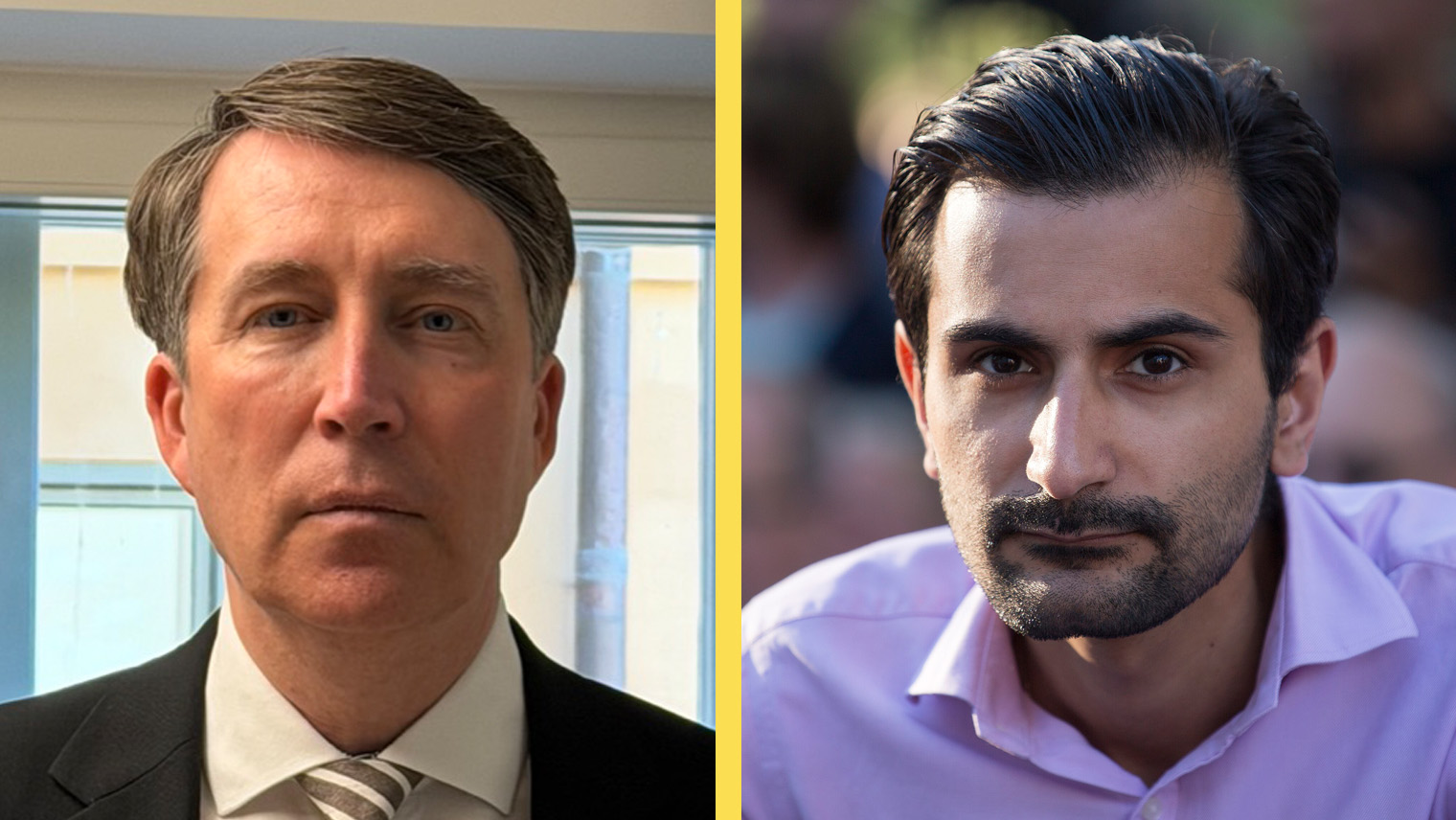
The Sweden Democrats demanded just such a halt shortly after the agreement was signed and later claimed the issue was pushed during the negotiations. But when the migration policy compromise was finally written, it contained no stop to the granting of citizenships.
READ ALSO: Dagerlind: I Know What It Means to Make Sweden Sweden Again – But Does SD?
SD submitted a motion for a moratorium as early as November 2022. In it, the party itself noted that the proposals in the motion were not directly covered by the Tidö Agreement.
Tidö parties had the reins of government – they had it for four years. They also had a parliamentary collaboration created specifically because the voters, for the first time, made possible a sweeping change in migration policy. Yet about 200,000 people became Swedish citizens during the term.
Jonas Andersson
So two things can be noted at once – SD tried early, after the change of government, to stop or pause new citizenships. But the party did not succeed in including any such halt in the agreement that formed the basis of the government cooperation.
What was said behind closed doors during the Tidö negotiations is another matter. Bali claims SD never raised it. SD representatives have later claimed the opposite.
But we know the outcome. There was no moratorium. And Swedish citizenships continued to be handed out on a rolling basis – even at twice the per capita rate of Biden’s USA.
Tidö’s Own Goal
This is where the right must dare to shine the spotlight on itself. It’s not enough to realize after the election that citizenship also means the right to vote in the national parliament. Nor is it enough to begin discussing only when the seats are counted how migration and demography affect the electorate.
READ ALSO: Closure Book Tidö Government: 207,500 New Citizenships
The Tidö parties had government power – for four years. They also had a parliamentary cooperation created precisely because the voters for the first time enabled a fundamental shift in migration policy.
Yet around 200,000 people became Swedish citizens during the term.

When hundreds of thousands of new voters are added, while support for red-green parties remains very strong in almost all heavily immigrant areas, it would be politically naive to refuse to discuss the matter.
And if the Tidö parties consider this a crucial problem, they can hardly, four years later, be satisfied with simply blaming each other.
What Will Tidö Do Now?
This leads to what is perhaps the most important question after the election. What will the Tidö parties do now? Will the Moderates try to lure back the Centre Party and recreate some version of the traditional center-right bloc? If so, how?
READ ALSO: The Centre Party’s New Leader: “No to SD’s Influence in Swedish Politics”
Will SD try to grow even more and become the obvious hub in a broader conservative bloc?
Or will the Tidö cooperation be formalized, going into the next election as an even more unified governing alternative, so voters know before election day who would be PM, which parties would be in government, and what policies they would carry out? But can one win, if a red-green government further pumps up the number of new citizens from Africa and the Middle East?
But there is one person who can now break the deadlock. A woman who claims to advocate a non-socialist policy – and who must decide whether irrational hatred of SD really outweighs Sweden’s future. Her name is Elisabeth Thand Ringqvist.
Jonas Andersson
Above all, the right must determine whether demographic development is a peripheral migration issue or one of the major political issues for the coming decades. Here, in my view, there is also a need to dare to begin discussing large-scale remigration, using other methods.
Yes, if you want Sweden to remain a country where the Swedish people live and make the laws.
The old Social Democrats’ Sweden is disappearing. The party that once built its power on Swedish industrial workers and wide wage-earner groups has over a long time seen its traditional working-class base weakened, while voters with foreign backgrounds have become an increasingly important part of the left’s voter base.
READ ALSO: This Could Be the Election That Changes Sweden Forever
Thus, Magdalena Andersson has not been handed a random political lifeline. She finds herself in the midst of a transformation of the Swedish electorate that has been ongoing for decades – and which the left, in my opinion, has had much greater political incentives to welcome than the right.
What’s truly remarkable is that the Tidö parties still seem taken by surprise. How is that even possible?
But Magdalena Andersson has her own problem.
She must try to build a government on a former governing party that has just had its worst result in over a hundred years, a Left Party that spent the campaign removing candidates after revelations of Jew-hatred and extremism, a Green Party that wants to dismantle Sweden as an industrial nation, and a Centre Party whose aversion to SD risks making any right-wing options impossible.
READ ALSO: After the 2026 Election: Sweden at the Breaking Point and The Point of No Return
But there is one person who can now break the deadlock. A woman who claims to represent a non-socialist policy – and who must decide whether the irrational hatred of SD really outweighs Sweden’s future. A woman who can now also take a clear stand against her own party’s dark history.
Her name is Elisabeth Thand Ringqvist.