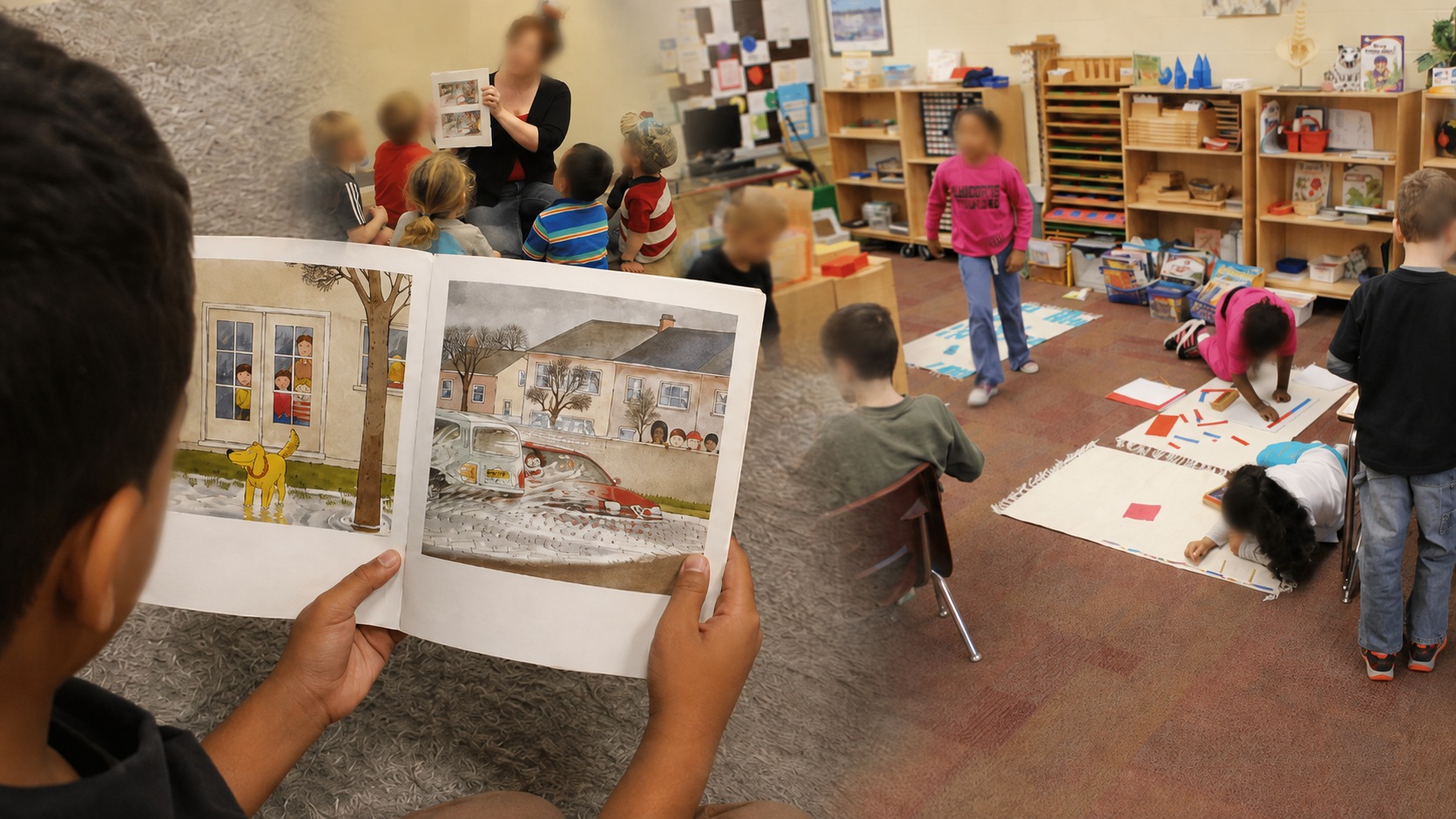
Children whose mother tongue is not Swedish should be able to have their knowledge of Swedish assessed as early as 2.5–3 years of age. This is proposed by a government inquiry aiming to give regions explicit responsibility to identify, at an early stage, children who risk falling behind linguistically. If a child is assessed to need support, the municipality is to be informed and able to provide interventions well before the start of school.
The proposal was presented on Wednesday and is part of the government’s efforts to strengthen children’s language development and counteract linguistic exclusion. The basis for the proposal is that insufficient knowledge of Swedish at an early age can have consequences later on, especially for children’s ability to benefit from education when they start school.
The inquiry proposes a new law giving regions responsibility for identifying children who need support in developing the Swedish language. The assessment will not be conducted through an entirely new check, but within the framework of the language screenings that child healthcare services already perform when children are about 2.5 to 3 years old.
The proposal is specifically aimed at children who are registered residents in Sweden, are not yet subject to compulsory schooling, and have a mother tongue other than Swedish.
The Municipality Gets Involved
If child healthcare services assess that a child needs support in their Swedish language development, the region is, according to the proposal, to notify the municipality where the child is registered.
The idea is then for the municipality to offer or provide information about activities where the child can engage more with the Swedish language. The government highlights preschools, open preschools, and libraries as examples of activities that can play a role.
The inquiry also wants the National Board of Health and Welfare to be tasked with supporting the work of child healthcare services and for assessments of children’s language development to have a clearer place in the expanded home visit programs used in certain areas.
Information for parents is also to be improved. Guardians are to receive better information about preschools and other initiatives that can contribute to their children’s Swedish language development.
The reasoning behind the proposal is the great importance the government attaches to language skills for both school results and integration.
– The Swedish language is the single most important key to integration. The earlier we can identify children who need extra language support, the stronger we can build Swedish community, says Minister of Culture Parisa Liljestrand in a press release.
Minister for Schools and Integration, Simona Mohamsson, also emphasizes that children who do not have the opportunity to develop their Swedish early risk having poorer prospects when they start school.
The Sweden Democrats, who support the government’s efforts in this area, also highlight the link between language and integration.
– Good knowledge of Swedish is crucial for children to get a good start in life and to become part of Swedish society. That’s why we must identify early when children risk falling behind linguistically and provide support before the problems grow, says the party’s social policy spokesperson Jessica Stegrud.
Not a Mandatory Language Test
However, this is not about introducing a special national language test that all young children with a foreign background must pass. Instead, the proposal means that child healthcare services are to use their existing checks to more systematically identify which children with a mother tongue other than Swedish need extra support.
The government has not yet decided to introduce the new system. The inquiry’s proposal will now be submitted for consultation, after which the government will decide if and in what form the legislation will proceed.
Minister for Social Affairs Jakob Forssmed describes early identification as a way to strengthen children’s chances both at school and later in life.
– Language is a key to learning and community. By identifying early those children who need support in their development of the Swedish language, we can strengthen their chances of succeeding in school—and in life, he says.