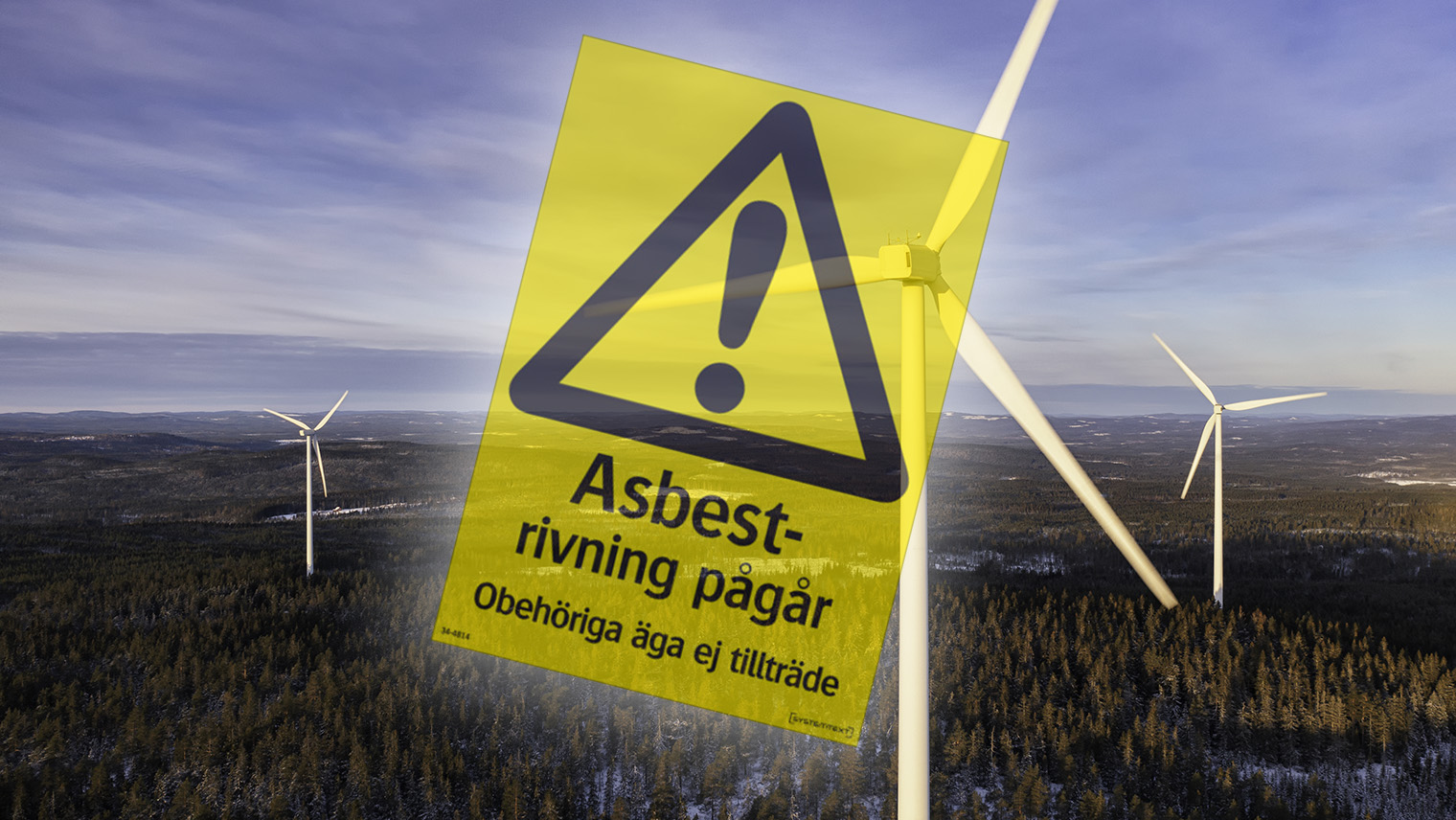
Several Swedish wind power facilities have already been forced to clean their turbines from deadly and banned asbestos. Now suspicions are growing that the problem is significantly larger than previously known.
Affärsvärlden’s columnist and expert Christian Sandström assesses that more cases are likely to be discovered as more wind parks are inspected. In addition to obvious health hazards, this could mean new clean-ups, regulatory investigations, and increased costs for an already unprofitable industry.
Four Confirmed Cases – But Hundreds of Turbines Affected
During the spring, Affärsvärlden has reported on several wind power facilities where asbestos has been found and subsequently removed. This includes the parks Storhöjden, Vitberget, Ljungbyholm, and Tomasliden.
According to Sandström, the cases concern turbines from the manufacturer Nordex, specifically models N149 and N163. In total, there are 64 already known turbines in the four parks where measures have been taken. The bigger question, however, is how many more turbines of the same type are in operation across the country. That question remains unanswered.
READ MORE: Asbestos found in several wind turbines: “Just the beginning”
Sandström points out that there are an additional twelve Swedish wind power facilities using the same turbine models. In total, this encompasses 268 wind turbines. Even if only a small portion of these turn out to contain prohibited components, it could mean extensive efforts for inspections and clean-ups.
Several Owners Unwilling to Answer
Some players, according to Affärsvärlden, have stated after their own checks that their turbines do not contain asbestos. These include SCA, Holmen, and Jämtkraft. Other owners, however, have been more silent or declined to comment on the matter. The reason for this is unclear.
This includes, for example, the London-based Renewable Power Capital (RPC), which is behind several Swedish wind projects. Two of their parks – Storhöjden and Vitberget – have already undergone asbestos removal.
At the same time, the company’s parks Sörlidberget and Knäsjöberget also use the same turbine type found in the known cases. This leaves the question of more discoveries open, and the likelihood of new asbestos findings is high.
“It Would Be Strange If There Weren’t More Cases”
Sandström has repeatedly stated that the discoveries are probably just the beginning. His reasoning is based on the fact that the same components and models have been installed in several locations.
If asbestos has already been found in some turbines of a specific model, there are, according to him, strong reasons to investigate other turbines of the same type. He also points to information that similar issues have occurred internationally with several manufacturers.
READ MORE: The Chemicals Agency investigates asbestos in wind turbines
This means the issue is not necessarily limited to a single brand or just a few Swedish parks. The hidden number of asbestos cases in Swedish wind turbines is thus significant.
Chemicals Agency Investigates
The Chemicals Agency has initiated a supervisory case regarding the information. The authority has clarified that there is a total ban on intentionally added asbestos in new products.
This means the issue is not only about working environment and exposure in practice, but also whether banned substances have occurred at all in products supplied to Sweden. The investigation could therefore be relevant to supply chains, importers, and the companies that own the facilities.
Why Asbestos Is So Serious
Asbestos is a collective term for mineral fibers that were previously widely used thanks to their resistance to heat and wear. The problem arises when the material is damaged or processed and microscopic fibers are released.
The fibers can be inhaled and lodge in the lungs, where they may cause severe diseases much later in life. Among the most well-known consequences are asbestosis, lung cancer, and mesothelioma—a particularly aggressive cancer of the lung lining. These diseases often only develop 20 to 40 years later.
Could Become Costly for the Wind Power Industry
If more parks need to be inspected or cleaned, costs could quickly skyrocket. Shutdowns, specialized cleaning, component replacements, and legal processes may follow.
This could also hit an industry already struggling with profitability problems, pressured electricity prices, and rising financing costs. Sandström therefore argues that companies owning or operating wind farms would be wise to act proactively—before new findings force measures to be taken.
Just the Beginning?
Today, there are about 6,000 wind turbines in Sweden. So far, only a handful of facilities have come into focus regarding the asbestos issue. But if more parks are systematically reviewed, the situation could quickly change.
The known cases so far indicate a significant chance that further discoveries await. The question is no longer whether there are problems—but how extensive they prove to be when more turbines are opened and examined.