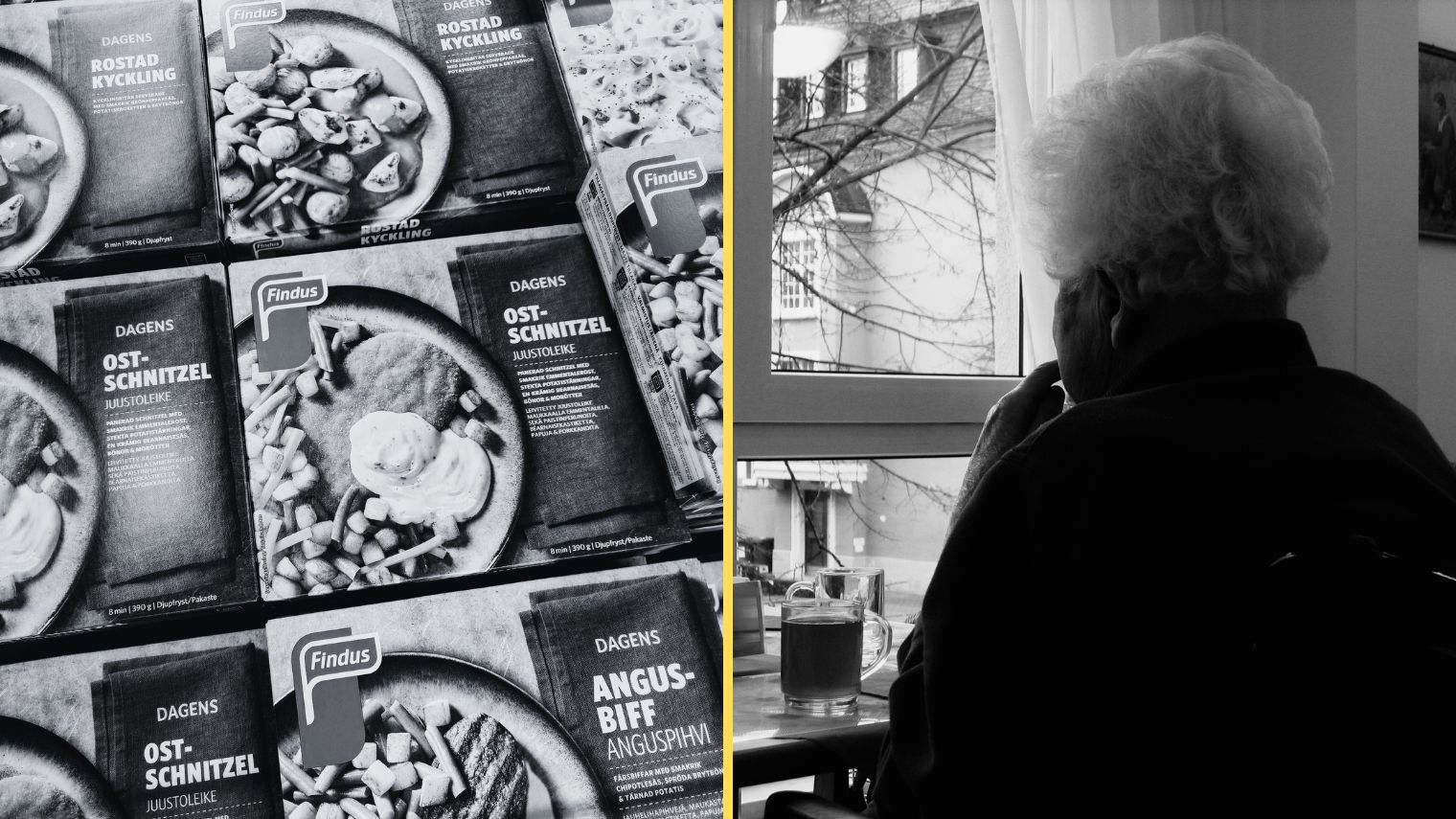
More and more testimonies point to shortcomings in municipal elderly care. Elderly people are denied hot meals, referred to ready-made dishes, and do not receive the care they have been granted and are entitled to. Criticism from relatives is mounting, and experts warn of the consequences.
When 91-year-old Gun-Britt in Falköping could no longer cook for herself, she applied for meal delivery from the municipality. She uses a walker and has difficulty standing – but was still denied.
– Unfortunately, I looked too healthy, she told Falköpings Tidning.
Although the municipality offers hot meal delivery to elderly in need, she was instead told to heat up ready meals herself. Something she says she can barely manage – and which has become her everyday life.
– It gets very monotonous. You almost feel sick when you fetch that box, she explains.
Sharp criticism from relatives
Relatives direct sharp criticism at the decision and argue that the municipality did not even consider her inability to cook or need for nutritious food.
– She has to eat a Dafgårds instead – that’s not nutritious, says a close relative.
Despite an appeal, the decision stands. The municipality refers to the Social Services Act and claims that if a person can heat food themselves the need is regarded as met.
The operations manager refuses to comment on ‘individual cases’ but claims that assessments are made individually.
The food issue is bigger than individual cases
Gun-Britt is far from alone. An investigation by Sveriges Radio shows that at least 42 municipalities have switched to scrapping hot food in home care – instead referring elderly people to store-bought ready meals.
The decision is often justified by savings and efficiency. In Hjo it is about approximately two million kronor a year saved on meals for the elderly.
READ ALSO: Municipality saves 30 million on elderly care
But the criticism is extensive. Relatives and elderly people testify to a reduced quality of life. In Gun-Britt’s case, relatives report that she has lost her appetite and become more depressed.
The National Food Agency meanwhile warns that the development risks leading to malnutrition – and thus increased long-term care needs. The savings, aside from being perceived as undignified, may also backfire economically in the end.
Denied nursing home – died after a fall
There is also a noteworthy case in Hjo that has stirred strong reactions. 92-year-old Berit Bergquist, who suffered from dementia and had fallen numerous times in her home, was denied a place in a nursing home. In January she fell again – and died a week later.
Her son Gunnar directs harsh criticism at the municipality. When he visited her home three weeks later, he was met by misery – poor hygiene and feces in the apartment, indicating that home care staff had not even been there.
READ ALSO: This is what the final stop looks like for those who built Sweden
At the same time, the municipality had stopped delivering cooked food to her during her last week. Instead, staff brought microwave meals – even though she lacked a microwave oven.
The responsible manager in the municipality refuses to comment on the ‘individual case’, but claims that they do everything possible to support the elderly at home. Berit’s son Gunnar disagrees.
Protests and private initiatives
The dissatisfaction has led to protests. In Hjo, around 1,300 people have signed a petition against the decision to remove hot meals for the elderly.
At the same time, a local hotel has started to deliver hot meals to the elderly – an initiative described as an emergency alternative, but which is more expensive than the municipality’s previous solution.
In home care, staff testify to stress and lack of time, which affects both the level of care and the ability to create a dignified mealtime situation.
There are discussions about training staff in nutrition, but critics argue the problem is much bigger than that.
Politicians concerned but divided
The issue has now reached the national level. All parliamentary parties express concern about developments – but disagree on solutions.
The center-right parties and the Sweden Democrats emphasize the responsibility of municipalities.
– One must prioritize core services, says SD’s social policy spokesperson Jessica Stegrud to SR.
The Liberals want to tighten legislation to ensure that the elderly have access to cooked food and greater self-determination.
Political battleground for the left-green parties
The left-green parties instead choose to direct criticism at the government, which they argue has prioritized tax cuts for the wealthy over investments in welfare.
– The government has put elderly care on a starvation diet, says Lena Hallengren, group leader for the Social Democrats, to SR.
Minister for the Elderly, Anna Tenje (M), rejects that criticism and points to the government’s efforts to map malnutrition among the elderly, an assignment given to the National Board of Health and Welfare.
The criticism: Not a dignified elder care
The municipalities claim that the legal requirement for “reasonable living conditions” is fulfilled. But in municipalities like Falköping and Hjo, relatives question what this means in practice.
Is it reasonable that a 90-year-old who cannot cook is expected to live on frozen meals? Is it acceptable that home care does not provide basic care?
READ ALSO: Home care Syrian in Vänersborg ‘probed’ 80-year-old woman’s genitals
And what happens when financial cutbacks outweigh the needs of the individual? The questions are piling up – while more and more elderly and their relatives testify to care that leaves much to be desired.
Hundreds of billions for Ukraine, aid and migration
Critics have also pointed out things like the fact that Sweden in recent years has sent nearly 130 billion tax kronor to the war in Ukraine and pays out aid of over 50 billion kronor to the third world every year.
Immigration to Sweden is also estimated to cost on the order of 100 billion kronor every year. All this while elderly Swedes are, for financial reasons, denied a dignified senior care.