An increasing number of young people in Sweden eat meat regularly and see it as an important part of a healthy diet. At the same time, climate arguments seem to carry less weight in everyday food choices. A new survey shows a clear shift—from ideals to pragmatism.
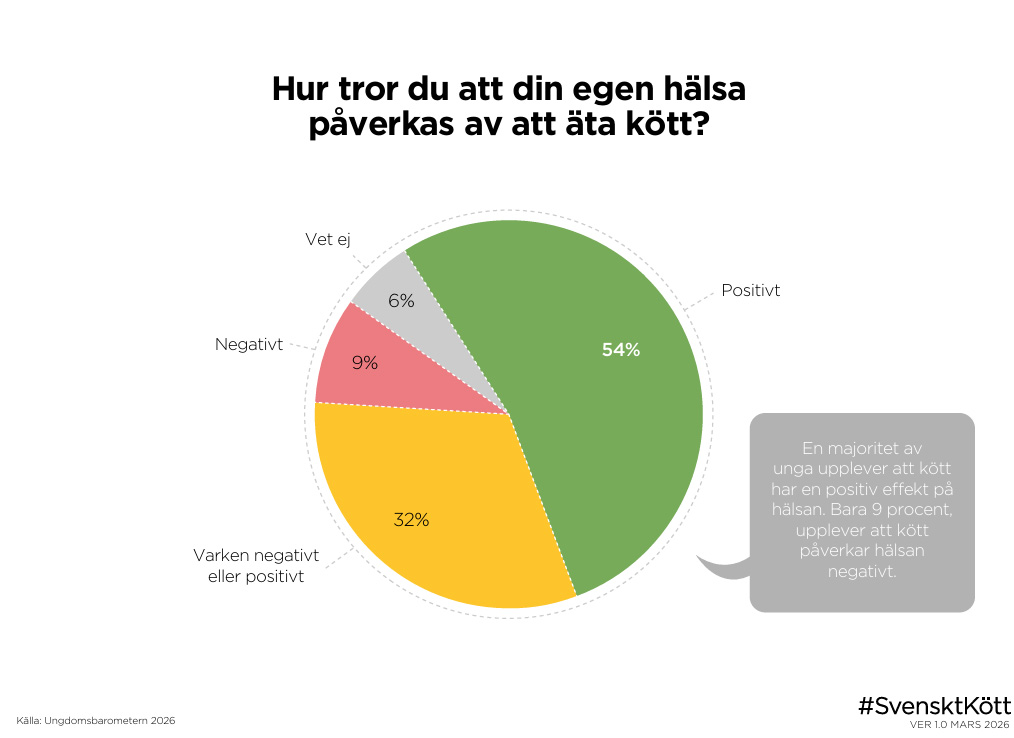
A new survey from Ungdomsbarometern 2026 shows that meat has gained a stronger position in young people’s everyday lives. No less than 54 percent of respondents state that meat has a positive effect on their health, while only 9 percent see it as negative.
At the same time, consumption is clearly increasing. The proportion of young people who eat beef several times a week or daily has risen sharply—from 57 percent in 2018 to 78 percent today. Pork consumption has also increased, from 37 to 47 percent.
The image that has long dominated the debate—that young people are abandoning meat for the sake of the climate—is thus becoming increasingly difficult to uphold.
“The notion that young people in general are turning their backs on meat does not correspond to how they actually eat today,” says Isabel Moretti, CEO of Svenskt Kött.
Sveriges Radio: “People eat meat to get protein”
Sveriges Radio is also highlighting the development. In a segment, young people are interviewed about their eating habits, where health and taste emerge as key motives and climate anxiety is notably absent.
Nabila in Västerås, one of the interviewees, explains her reasoning.
“People eat meat to get protein. It tastes good even if it’s not great for the climate.”
This quote captures a clear trend—the awareness of the climate issue is still there—but it doesn’t necessarily dictate behavior and takes a more reasonable place among life’s choices.
A More Pragmatic Generation
The change is driven by a broader shift in how young people view food and lifestyle. Today’s generation has grown up with economic uncertainty, a pandemic, and :censored:6:cdd6bbaa89: unrest—factors that seem to have fostered a more practical approach.
Instead of defining themselves through ideological food identities, such as vegetarianism or veganism, many prioritize what works in everyday life—food that is nutritious, filling, affordable, and easy to prepare.
This is clearly reflected in the statistics. The proportion of young people who eat completely vegetarian has dropped from 9 to 3 percent since 2019, and only 1 percent report eating a fully vegan diet.
“Choices are largely driven by taste, everyday practicalities, economy, and function, rather than fixed food identities,” says Johanna Göransson, analyst at Ungdomsbarometern.
Health Is the Main Driver
When young people themselves are asked why they choose meat, health comes out on top. Meat is linked to protein, energy, and lasting satiety—qualities considered important for a life with studies, work, and training.
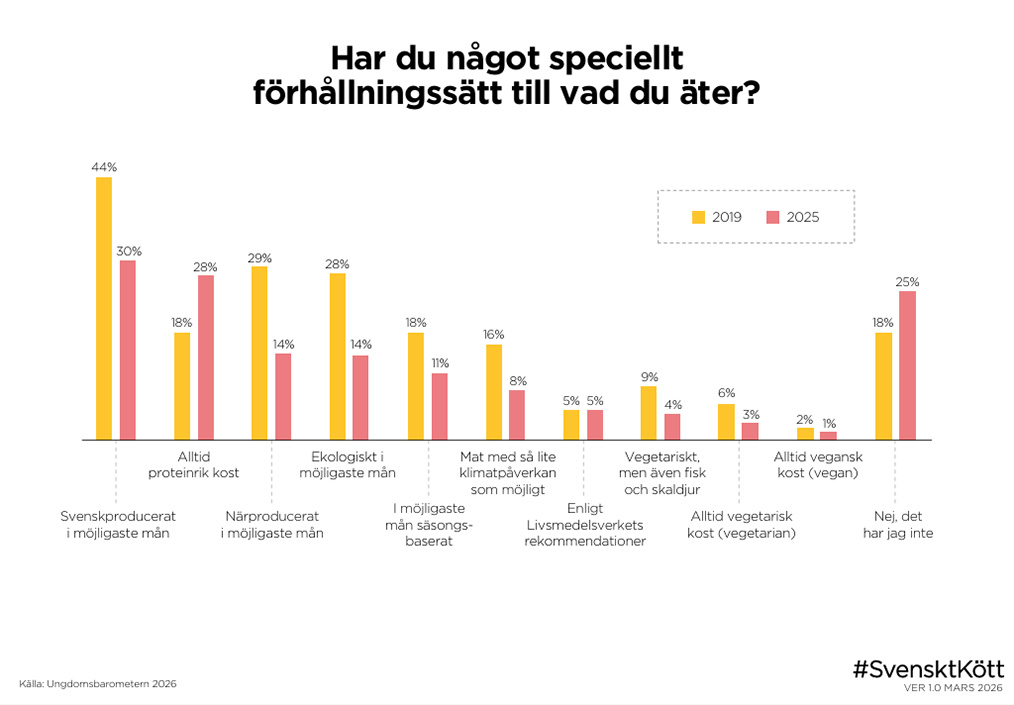
It is particularly interesting that young women are very much driving the trend, contradicting earlier assumptions that this group would be more likely to opt out of meat for climate-idealist reasons.
“For many young people, meat is primarily about their own health and ensuring they get enough nutrition to last through the day,” says Isabel Moretti.
Swedish Meat and Security in Troubled Times
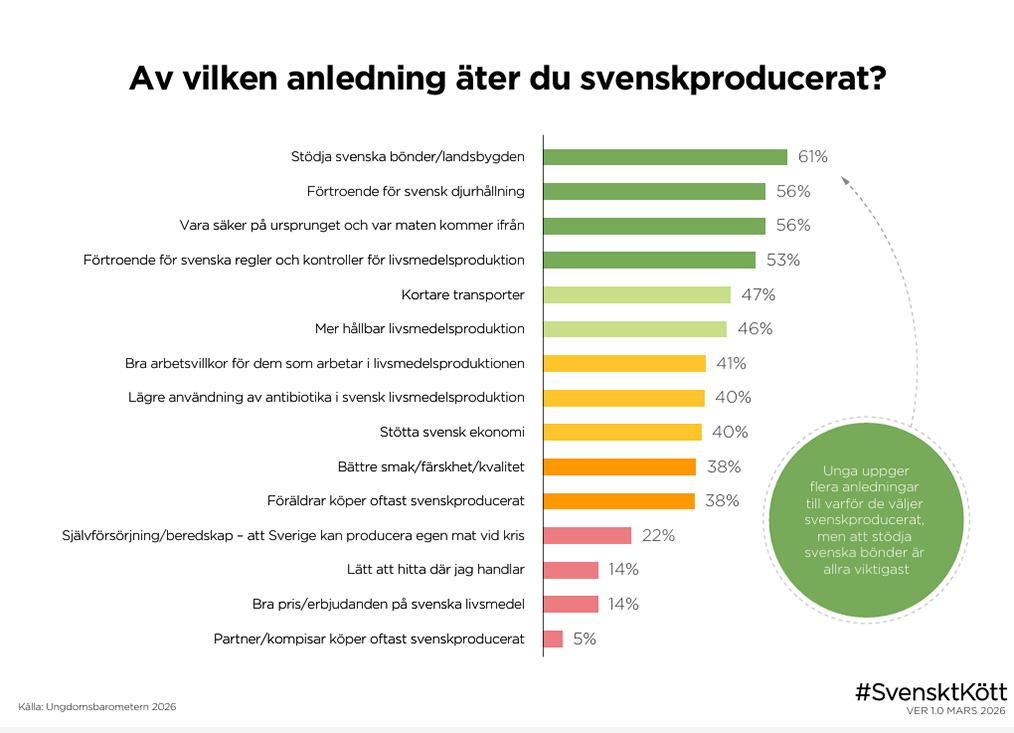
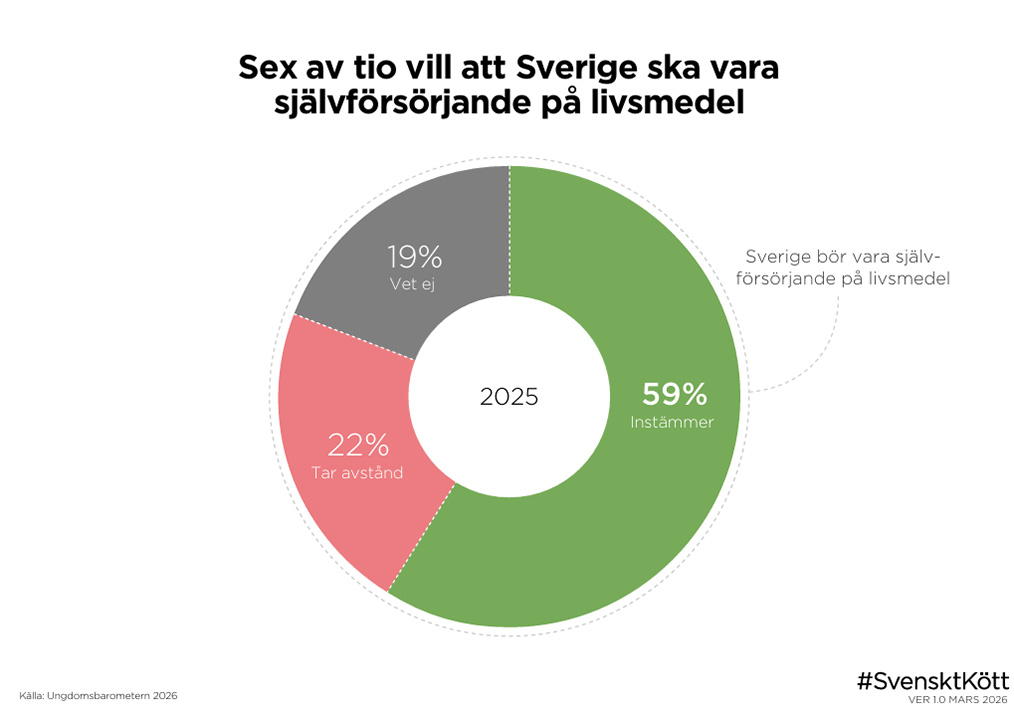
At the same time, origin continues to play an important role. Many young people associate Swedish meat with quality, oversight, and secure production. At a time when issues of food supply and national preparedness have become more topical, these factors weigh heavily.
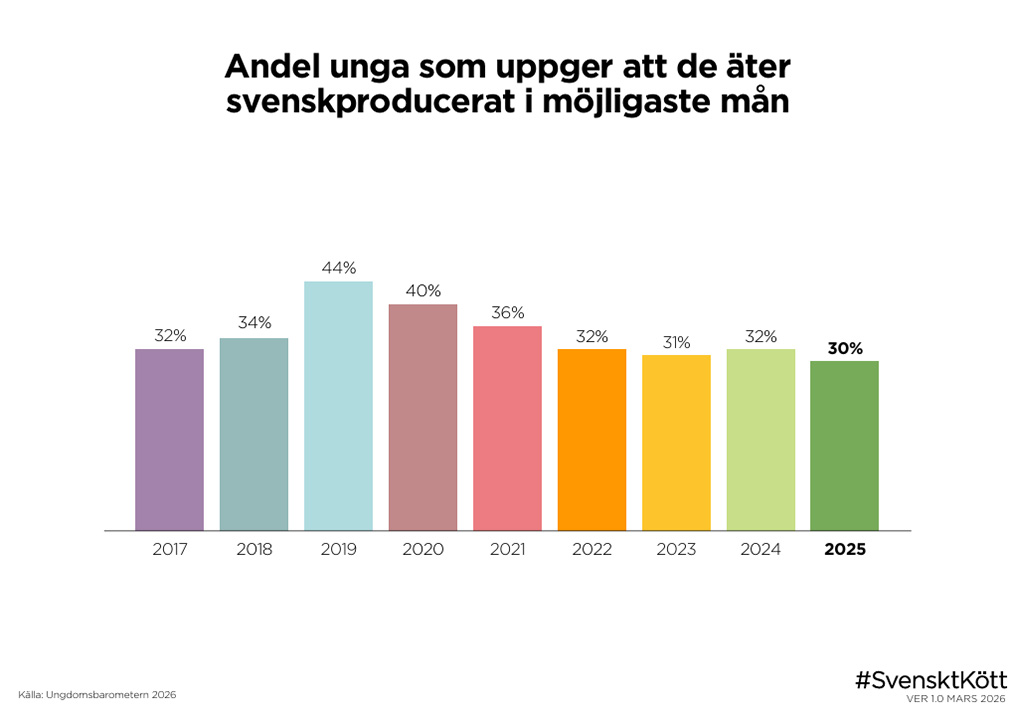
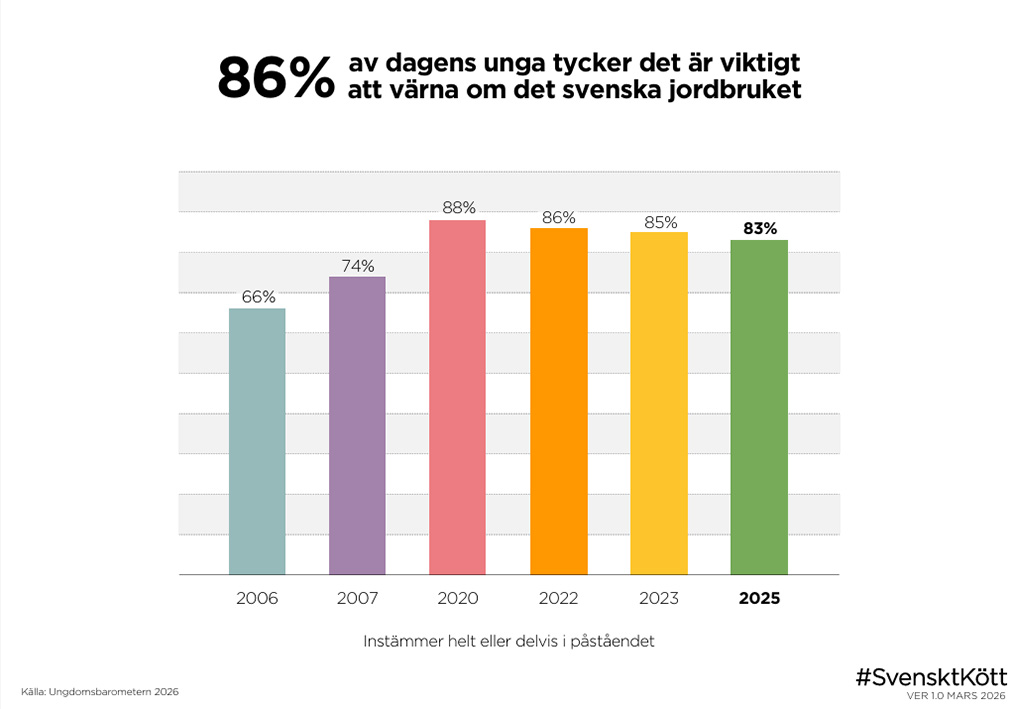
A large majority state that it is important to protect Swedish agriculture. For many, food choices are therefore not just about what is eaten—but also about where the food comes from.
The Climate Issue Loses Its Grip on the Plate
Overall, developments point to a shift in young people’s priorities. Climate arguments and previously strong warnings about reduced meat consumption no longer dominate decisions.
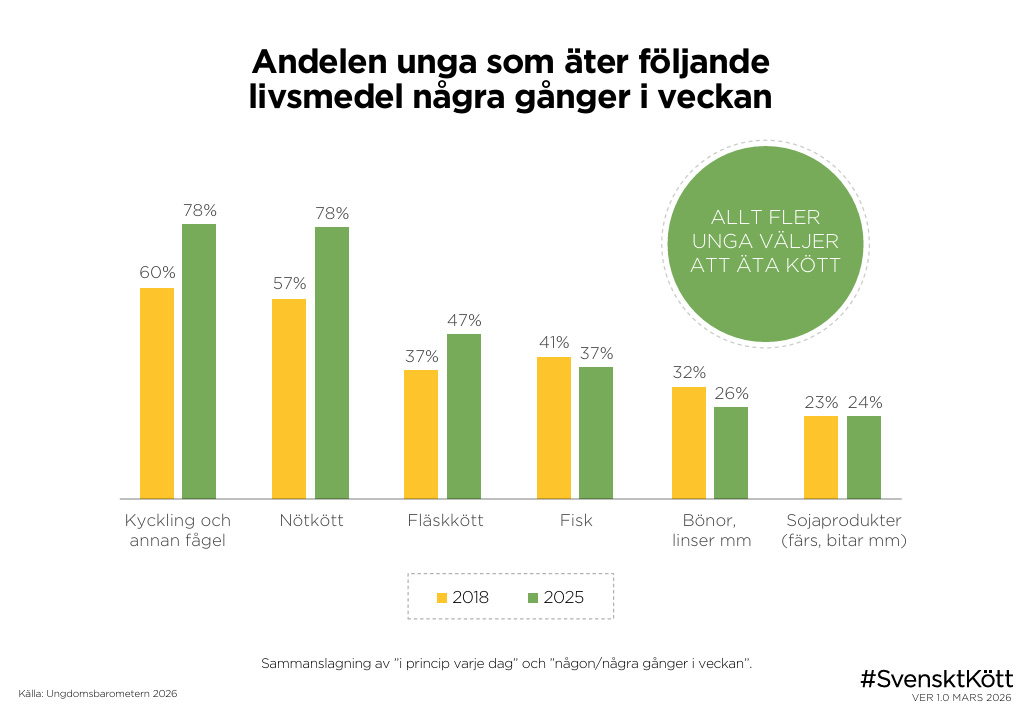
Instead, a more nuanced—or perhaps more pragmatic—attitude is emerging, where climate considerations are weighed against other factors such as health, economy, and life situation.
This does not mean that the climate issue is unimportant. But in practice, it often takes a back seat when everyday life comes calling.
Fact Box: Ungdomsbarometern 2026
The survey is based on responses from young people aged 15 to 24 and analyzes their eating habits, dietary preferences, and views on health. The study is conducted by Ungdomsbarometern on behalf of Svenskt Kött and places the results in the context of long-term consumer trends.